Hair Washing Frequency Guide: Scalp Biology and Best Practices
9 min read ·
Find your ideal wash cadence with this evidence-based Hair Washing Frequency Guide. Balance scalp sebum production, hair texture, and fibre health without causing breakage.

Quick answer: According to this Hair Washing Frequency Guide, the ideal cadence depends entirely on your scalp sebum production, hair fibre diameter, curl pattern, and lifestyle. Most people benefit from cleansing every 2 to 4 days, while fine or oily scalps may require daily washing and coiled or chemically treated hair thrives on weekly cleansing. The primary limitation is that washing frequency only manages surface sebum, microflora, and cosmetic build-up; it cannot alter genetically determined follicle density, androgenic thinning, or intrinsic sebum production rates.
Key takeaways
- Cleansing frequency must balance sebum removal against lipid barrier preservation.
- Sebaceous glands produce sebum continuously, and washing does not "train" them to produce more or less oil.
- Fine, straight strands look greasy quickly because sebum travels unobstructed down the fibre, whereas tight coils impede lipid migration.
- Over-washing with harsh surfactants strips cuticle lipids and causes mechanical friction, leading to breakage.
- Under-washing allows sebum accumulation, oxidised squalene, and Malassezia yeast overgrowth, which drives seborrhoeic dermatitis.
Hair Washing Frequency Guide: what the evidence shows
Dermatological research shows that scalp sebum excretion rates vary significantly between individuals, typically ranging from 0.5 to over 3.0 mg per 10 square centimetres every three hours. Sebaceous gland activity is largely driven by systemic androgens rather than surface washing routines. Clinical evaluations consistently demonstrate that infrequent washing does not reduce baseline sebum production.

When you clean your scalp, detergents emulsify excess sebum, cellular debris, environmental particulates, and cosmetic residues. If cleansing occurs too infrequently, accumulated sebum oxidises into free fatty acids and squalene peroxides. This biochemical environment promotes the proliferation of Malassezia restricta and Malassezia globosa, commensal yeast species that trigger scalp inflammation, itching, and scaling.
Conversely, washing too frequently with high-pH or high-detergency cleansers removes the protective 18-methyleicosanoic acid (18-MEA) monolayer bonded to the hair epicuticle. This lipid loss elevates the hair shaft's friction coefficient, increases moisture loss, and causes cuticular uplift, predisposing the fibre to mechanical snapping.
What the evidence does not show
Controlled research has not found that you can "train" your hair to be less oily by deliberately reducing washing frequency. Sebum production is regulated by internal hormonal signalling, predominantly dihydrotestosterone (DHT) binding to androgen receptors in sebaceous glands.
Furthermore, the evidence does not show that daily shampooing causes follicular hair loss or telogen effluvium. The loose hairs you notice in the shower drain during a wash are telogen-phase hairs that naturally detached from the follicle base days earlier; the mechanical action of washing merely dislodges them.
Finally, skipping shampoo entirely (the "no-poo" approach) lacks clinical backing. Studies assessing scalp condition in people who use only water show higher levels of oxidative stress markers, microbial dysbiosis, and cutaneous irritation compared to cohorts using formulated cleansers.
The biological mechanism: scalp physiology vs hair fibre
Understanding proper washing intervals requires looking at two distinct anatomical structures: the living scalp and the non-living hair fibre.
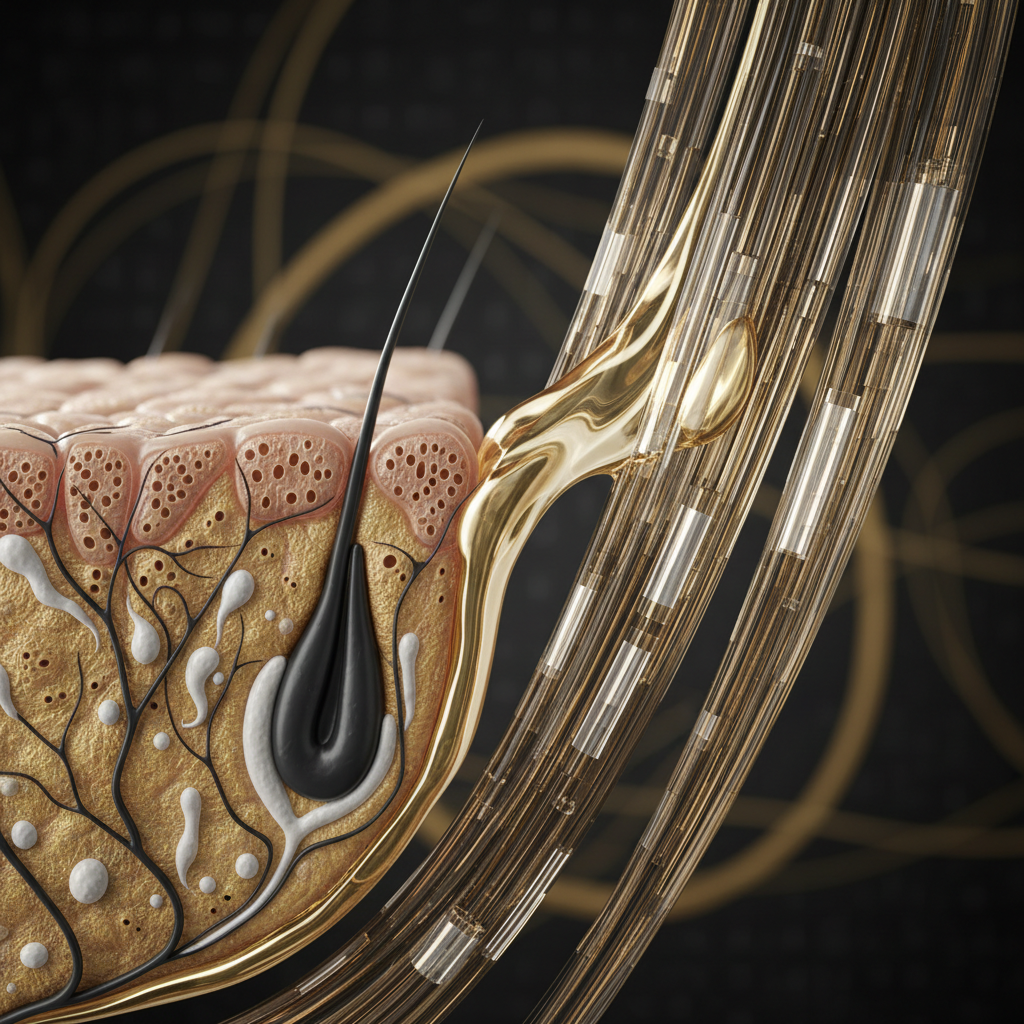
The scalp is dynamic skin with an average density of 100,000 hair follicles, each accompanied by one or more sebaceous glands. These glands secrete an acidic lipid blend (pH 4.5 to 5.5) that maintains barrier function.
The hair shaft, however, is dead keratinised protein. As sebum emerges from the follicular canal, capillary action spreads it along the fibre:
- Straight and fine hair: Provides a low-surface-area, direct pathway. Lipids migrate rapidly down the shaft, causing hair to look limp and greasy within 24 to 36 hours.
- Curly and coily hair: Structural twists and elliptical cross-sections create physical friction points that hinder lipid flow. While the scalp may have adequate oil, the ends remain vulnerable to moisture loss.
- Chemically processed hair: Bleaching, colouring, and permanent waving strip the hydrophobic cuticle layer, making fibres highly porous. Porous fibres absorb environmental moisture and become fragile when wet, making excessive washing a direct cause of cuticle erosion.
| Scalp and Hair Profile | Recommended Cleansing Interval | Primary Biological Goal | Common Pitfalls to Avoid |
|---|---|---|---|
| Oily scalp / Fine hair | Daily to every other day | Clear excess lipid layer before oxidation occurs | Skipping conditioner; using alkaline soap bars |
| Normal scalp / Medium hair | Every 2 to 3 days | Maintain balanced microflora and cuticle integrity | Using dry shampoo as a multi-day surfactant replacement |
| Dry scalp / Coarse hair | Every 3 to 5 days | Remove flakes without stripping outer epicuticle | Over-scrubbing with fingernails rather than pads of fingers |
| Curly / Coily (Afro textures) | Every 5 to 7 days (or weekly) | Preserve structural moisture; minimise wet friction | Allowing heavy leave-in products to build up on the scalp |
| Chemically treated / Bleached | Every 4 to 7 days | Minimise hygral fatigue and cuticle swelling | Using clarifying cleansers without intense barrier conditioning |
Signs of over-washing versus under-washing
Your scalp and hair fibre give distinct physical signs when your cadence is mismatched with your biology.
Signs you are washing too often
- Hair feels straw-like, tangles easily, and suffers from increased friction and snapping during combing.
- The scalp feels tight, itchy, or stinging shortly after drying, without greasy scaling.
- Accelerated colour fade in artificially dyed hair.
- Split ends multiply rapidly despite minimal heat styling.
Signs you are not washing often enough
- Visible oily sheen at the roots, accompanied by hair clumping into flat ribbons.
- Clinging, yellowish or greasy flakes on the scalp, which often indicate seborrhoeic dermatitis rather than simple dryness.
- Scalp tenderness or a dull, throbbing sensation around follicular openings, caused by micro-inflammation from oxidised lipids.
- Persistent scalp odour caused by sebum breakdown by cutaneous bacteria.
Practical steps to find your ideal cadence
To establish an effective washing routine, start with a baseline assessment and modify systematically:
- Audit your scalp at 48 hours: Wash your hair, allow it to air-dry, and avoid styling products. At the 48-hour mark, press a clean lens tissue against your crown. A distinct grease spot indicates high sebum output; no mark indicates lower output.
- Adjust for physical activity: High-intensity exercise deposits sodium chloride and lactic acid from sweat onto the scalp. If you sweat daily, you do not always need a full surfactant wash; a thorough water rinse or a light, low-detergent cleanse will clear crystalline salts without stripping lipids.
- Technique matters: Apply shampoo directly to the scalp and roots where sebum resides. Let the lather run through the lengths rather than bunching and scrubbing the delicate ends.
- Use appropriate water temperatures: Wash with lukewarm water (roughly 37 to 38 degrees Celsius). Excessively hot water swells the hair shaft excessively and strips protective lipids, while cold water poorly dissolves high-melting-point sebum components.
When the cause is something else
If altering your washing cadence does not resolve scalp discomfort, excessive greasiness, or flaking, the root cause may be dermatological or systemic:
- Seborrhoeic Dermatitis: Characterised by stubborn, erythematous patches with greasy scales. This is a medical inflammatory condition driven by yeast metabolism, requiring medicated antimicrobials (such as ketoconazole or zinc pyrithione) rather than routine cosmetic adjustments.
- Scalp Psoriasis: Presents as sharply demarcated, silvery-white plaques and thick scaling, requiring targeted topical treatments prescribed by a specialist.
- Hormonal Fluctuations: Polycystic ovary syndrome (PCOS), puberty, pregnancy, or thyroid imbalances can sharply elevate sebum production regardless of hygiene routines.
- Hard Water Mineral Accumulation: Calcium and magnesium ions bind to residual fatty acids, creating an insoluble film on the hair shaft that mimics oily, unwashed buildup.
When to seek professional advice
Consult a GP, dermatologist, or registered trichologist if you notice persistent scalp erythema (redness), weeping lesions, intense pruritus (itching) that disrupts sleep, or patches of visible hair thinning. Sudden, dramatic shedding accompanied by scalp pain should always be formally evaluated to rule out underlying cutaneous disorders or telogen effluvium.
Supporting your routine with Watermans
When tailoring your regimen, the formulation of your cleanser is just as vital as the frequency. Harsh sulphate cleansers can strip the moisture barrier, whereas overly heavy formulas leave residue that suffocates fine hair.
Watermans Grow Me Shampoo provides a balanced, targeted option suitable for a wide range of washing cadences. Formulated with dynamic ingredients such as biotin, rosemary, caffeine, niacinamide, and argan oil, it cleanses the scalp surface without aggressively depleting the fibre's essential lipid mantle. Paired with Watermans Condition Me Conditioner, which uses cholesterol, shea butter, and hydrolysed lupin protein to support shaft strength, this system helps keep hair looking fuller, thicker, and resilient whether you cleanse daily or twice weekly.
Frequently asked questions about Hair Washing Frequency Guide
How does this Hair Washing Frequency Guide apply to people who exercise daily?
If you exercise daily, you do not necessarily need to shampoo every day. Sweat is primarily water and mineral salts, not oil. You can often alternate between a targeted shampoo wash on heavy workout days and a thorough lukewarm water rinse on lighter days to remove salt residues without depleting cuticle lipids.
Can washing your hair every day cause permanent hair loss?
No. Daily washing does not cause alopecia or follicular miniaturisation. The hairs dislodged during shampooing are already in the telogen (resting) shedding phase. However, rough towel-drying, aggressive detangling of wet hair, and harsh cleansers can cause fibre snapping along the shaft, which is breakage rather than true hair loss.
Does dry shampoo count as washing in this Hair Washing Frequency Guide?
Dry shampoo does not cleanse hair or scalp tissue. It contains starches or silica that absorb liquid sebum, temporarily masking a greasy appearance. It leaves oil, dirt, and starch particles sitting on the scalp. Overusing dry shampoo without regular surfactant washes can clog follicular openings and exacerbate inflammatory scalp conditions.
Why does my hair feel dry even though my scalp gets greasy quickly?
This common issue occurs when sebum cannot easily travel down the shaft, often seen in wavy, curly, or porous hair, or when frequent washing strips the ends while sebaceous glands continue normal production at the roots. Focus your shampoo purely on the scalp skin and apply conditioner exclusively to mid-lengths and ends.
Should I wash my hair twice in one shower session?
Double cleansing is beneficial if you wash infrequently (such as once a week), use heavy styling waxes or silicones, or work in dusty environments. The first wash breaks down stubborn external grime and surface oils, while the second lather gently cleanses the scalp epidermis thoroughly. For daily washers, a single cleanse is entirely sufficient.
Recommended washing frequency summary
Applying a structured approach to your cleansing routine removes the guesswork from scalp health. By using this Hair Washing Frequency Guide to balance your unique hair geometry against your scalp's natural lipid production, you protect the cuticle from mechanical fatigue while preserving a clean, balanced environment for optimal hair vitality. Adjust your cadence as the seasons, your styling habits, and your physical activity shift, keeping individual scalp comfort as your primary benchmark.
Sources and references
- British Association of Dermatologists: Seborrhoeic Dermatitis Management Guidelines (2019)
- International Journal of Trichology: Shampoo and Conditioners - What a Dermatologist Should Know? (2015)
- Journal of the American Academy of Dermatology: The Biology of the Hair Follicle and Sebaceous Glands (2018)
- NHS: Scalp conditions, Dandruff and Seborrhoeic Dermatitis Clinical Guidance (2022)
Find these ingredients in Watermans products
- Biotin: you will find this ingredient in our Hair Growth Shampoo.
- Zinc: you will find this ingredient in our Hair Vitamins.
- Niacinamide: you will find this ingredient in our Hair Mask.
- Shea Butter: you will find this ingredient in our Curly Hair Conditioner.