Hair Types: Understanding Your Unique Characteristics
12 min read ·
Understanding your Hair Types is key to effective hair care, encompassing not just curl pattern but also factors like porosity, density, and strand thickness.
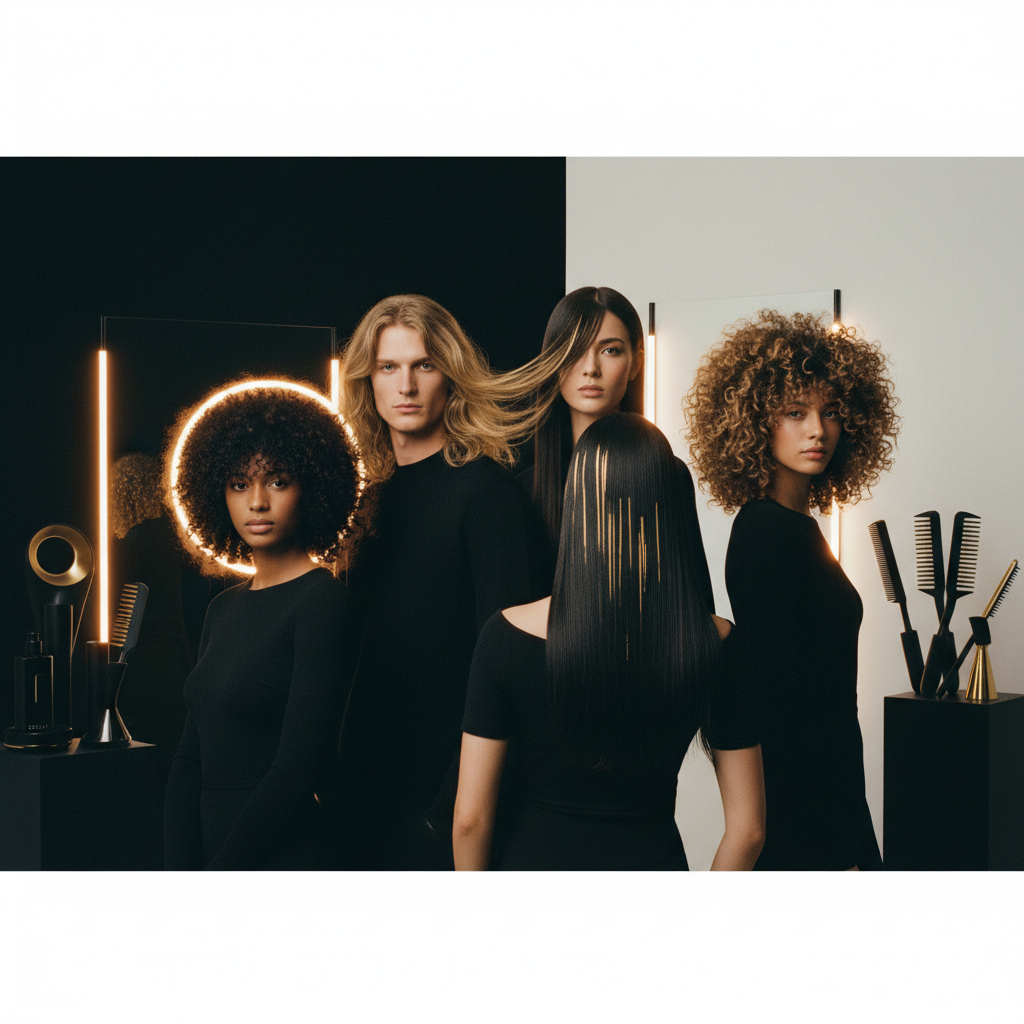
Quick answer: Hair Types refer to the classifications used to describe the characteristics of individual hair fibres and overall hair structure on the scalp. These classifications primarily include curl pattern (straight, wavy, curly, coily) but also consider porosity, density, and strand thickness. Recognising your Hair Types helps tailor hair care routines and product choices for optimal health and appearance, though it's important to remember that hair characteristics can vary even on a single head and evolve over time.
Key takeaways
- Hair is categorised by its natural curl pattern: straight (Type 1), wavy (Type 2), curly (Type 3), and coily (Type 4).
- Beyond curl pattern, hair characteristics like porosity, density, and strand thickness play crucial roles in how hair behaves and what it needs.
- Porosity indicates how well hair absorbs and retains moisture, influenced by the cuticle's condition.
- Density refers to the number of hair strands on the scalp, while strand thickness is the diameter of individual fibres.
- Understanding your unique combination of Hair Types helps you choose appropriate products and care methods to maintain hair health and appearance.
- Hair characteristics can change due to age, chemical treatments, environmental factors, or hormonal shifts, requiring adaptive care.
Hair Types: what the evidence shows
Hair types are broadly classified by curl pattern, but a comprehensive understanding involves several other properties of the hair fibre itself and how it grows from the scalp. While informal systems, like the Andre Walker Hair Typing System, have popularised categorising hair by its curl pattern, scientific understanding extends to properties like porosity, density, and individual strand thickness. These combined factors dictate how hair behaves, its vulnerability to damage, and its specific needs for cleansing, conditioning, and styling.
Curl Pattern: The Primary Visual Classification
Curl pattern is the most visible and commonly used characteristic for distinguishing Hair Types. This pattern is determined by the shape of the hair follicle; a round follicle tends to produce straight hair, while an increasingly oval or flat follicle produces wavy, curly, or coily hair. The more oval the follicle, the tighter the curl or coil. The distribution of keratin proteins within the hair fibre also influences its shape and resilience.
-
Type 1: Straight Hair
-
Characterised by a lack of natural curl. Hair strands tend to be smooth, often reflecting light well. Sebum, the scalp's natural oil, can travel easily down the straight shaft, potentially making this hair type prone to oiliness.
-
1A: Very fine, thin, and soft. It often struggles to hold a curl and can appear limp.
-
1B: Medium texture, with more body than 1A. It can hold a curl more readily.
-
1C: Coarse, thick, and sometimes resistant to curling. It can feel robust but may be difficult to style into different patterns.
-
Type 2: Wavy Hair
-
Exhibits a distinct "S" pattern, ranging from loose, barely-there waves to more defined undulations. Wavy hair can be prone to frizz, particularly in humid conditions.
-
2A: Fine, wavy hair with a loose, stretched "S" pattern. It can be easily straightened or curled without much resistance.
-
2B: Medium texture with more defined "S" waves that start closer to the scalp. This type is often more prone to frizz and can require specific products to enhance wave definition.
-
2C: Coarse, thick waves that are well-defined, often with some accompanying loose curls. It can be very susceptible to frizz and may resist styling.
-
Type 3: Curly Hair
-
Forms definitive curls that range from loose, bouncy spirals to tight corkscrews. The natural bends in curly hair make it more difficult for natural oils to travel down the hair shaft, often leading to increased dryness compared to straighter Hair Types. The raised cuticle also contributes to frizz.
-
3A: Large, loose curls with a circumference similar to a thick piece of sidewalk chalk. They tend to have good bounce and can appear shiny.
-
3B: Springy, well-defined curls with a circumference akin to a marker pen. These curls are more prone to frizz and require consistent moisture.
-
3C: Tightly packed, voluminous corkscrew curls, often with a circumference similar to a pencil. This type experiences noticeable shrinkage and can be quite delicate, requiring gentle handling.
-
Type 4: Coily Hair
-
Characterised by tightly packed, often small, zig-zag or "Z" pattern coils. This hair type can appear deceptively shorter than its actual length due to significant shrinkage. It is often the most fragile Hair Types due to fewer cuticle layers at each bend, making it highly susceptible to dryness and breakage. See also: Caring for Afro Hair and How to Moisturise Afro Hair.
-
4A: Densely packed, S-pattern coils with a circumference similar to a crochet needle. A visible curl pattern is typically present.
-
4B: Densely packed, Z-pattern coils with sharp angles. The curl pattern is less defined than 4A and can have a fluffy, cotton-like appearance when dry.
-
4C: Densely packed, very tight Z-pattern coils. It experiences the most shrinkage and is considered the most delicate Hair Types. It often has minimal definition without specific styling products and techniques.
Porosity: How Your Hair Absorbs Moisture
Beyond curl pattern, hair porosity is a critical factor in understanding your Hair Types and its needs. It refers to your hair's ability to absorb and retain moisture, which is directly linked to the condition of the hair's outermost layer, the cuticle. You can learn more in Understanding Hair Porosity: How Your Hair Absorbs and Retains Moisture.
- Low Porosity: The cuticles lie tightly flat, making it difficult for water and products to penetrate. Once moisture is in, it's well-retained. Products may tend to sit on the hair surface, leading to buildup.
- Medium Porosity: Cuticles are slightly raised, allowing for efficient moisture absorption and retention. This is often considered an ideal porosity, as hair is generally well-balanced.
- High Porosity: Cuticles are highly raised or damaged, allowing moisture to enter and exit rapidly. Hair with high porosity can dry quickly and is very prone to frizz and breakage, often requiring intense hydration and sealing.
Density: The Number of Strands on Your Head
Hair density refers to the number of individual hair strands per square centimetre on your scalp, not the thickness of each strand. It affects how full your hair looks and how products distribute. For example, individuals with Fine Hair may have low or medium density, while those with coarse hair can have high density.
- Low Density: Fewer hairs per square centimetre. The scalp is often easily visible, and hair can lack volume.
- Medium Density: An average number of hairs, providing a balanced appearance.
- High Density: Many hairs per square centimetre. The scalp is difficult to see, and hair typically appears very full and voluminous.
Strand Thickness: The Diameter of Individual Hairs
This characteristic describes the diameter of a single hair strand. It influences how strong hair feels, how it responds to styling, and its susceptibility to damage. For example, finer strands are more prone to damage and breakage, while coarser strands are generally more resilient.
- Fine: Individual strands are very thin and barely perceptible. This hair type can be prone to tangling and feels delicate.
- Medium: Strands are of average thickness, feeling like regular sewing thread.
- Coarse: Individual strands are thick and robust, feeling like a piece of string. Coarse hair is generally strong but can be resistant to chemical treatments or styling.
Elasticity: How Much Your Hair Can Stretch
Hair elasticity is the hair's ability to stretch without breaking and return to its original shape. Healthy hair has good elasticity, while poor elasticity can be a sign of damage. This property influences how hair reacts to styling and brushing. You can learn more about Hair Damage: Causes, Signs, and Solutions.
What you can do: Tailoring your hair care
Understanding your unique combination of Hair Types is foundational to building an effective hair care routine. When selecting products, consider all factors, not just curl pattern.
- Product Selection: Choose shampoos, conditioners, and styling products designed for your hair's specific needs. For example, fine, low-density hair benefits from lightweight formulas that won't weigh it down, while coarse, coily, high-porosity hair often requires rich, deeply moisturising products. Sulfate-Free Shampoo Benefits can be particularly relevant for curly and coily Hair Types to preserve moisture.
- Washing Frequency: Adjust how often you wash your hair based on its oiliness and dryness. Straight hair might need more frequent washing due to sebum distribution, whereas curly or coily Hair Types may benefit from less frequent washing to preserve natural oils and moisture.
- Conditioning and Hydration: All hair needs conditioning, but the intensity varies. High porosity hair, curly hair, and coily hair generally require richer conditioners, regular deep conditioning treatments, and leave-in conditioners to maintain Hair Hydration: The Science Behind Keeping Hair Moist. Consider humectants to draw moisture into the hair.
- Styling Techniques: Adapt your styling to complement your Hair Types. Protective Styling: A Comprehensive Guide can be beneficial for fragile curly and coily Hair Types, while heat styling should always follow Heat Styling Safety Best Practices.
- Detangling: Be gentle, especially with fine, curly, or coily hair, which is more prone to tangling and breakage. A wide-tooth comb or fingers are often preferred, starting from the ends and working upwards. See How to Detangle Afro Hair Without Breakage.
When the cause may be something else
While your inherent Hair Types are largely genetic, several factors can alter its characteristics or appearance over time, leading to concerns that might seem like a change in Hair Types but are actually due to external or internal influences.
- Chemical Treatments: Processes like colouring, perms, relaxers, or keratin treatments can significantly alter the hair fibre's structure, porosity, and strength. This can make naturally healthy hair more prone to damage or change its texture. See Chemical Hair Treatments: What They Are and How They Affect Hair.
- Heat Damage: Excessive or improper use of heat styling tools can degrade the hair's outer cuticle, increasing porosity and leading to dryness, frizz, and breakage, mimicking changes in Hair Types.
- Environmental Factors: Prolonged exposure to sun, wind, or harsh chemicals (like chlorine) can strip hair of moisture and damage the cuticle, affecting its texture and manageability.
- Hard Water: Water with high mineral content can leave deposits on the hair, making it feel rough, dull, and prone to breakage, which can be mistaken for a change in Hair Types. See Hard Water and Hair Damage: Understanding the Impact on Your Hair.
- Hormonal Changes: Fluctuations during puberty, pregnancy, menopause, or due to certain medical conditions can impact hair growth cycles, density, and even texture, potentially leading to perceived changes in Hair Types.
- Ageing: As we age, hair typically becomes finer, drier, and can lose some of its natural pigment (grey hair). The oil glands on the scalp also become less active.
- Medications and Health Conditions: Certain medications or underlying health issues can affect hair health, causing changes in texture, shedding, or even Hair Loss (e.g. Anagen Effluvium).
When to get professional advice
If you notice sudden, significant, or persistent changes in your Hair Types, scalp health, or experience unusual hair shedding or loss, it's advisable to consult a healthcare professional, such as a general practitioner or a dermatologist. They can help identify underlying medical conditions, nutritional deficiencies, or other factors contributing to the changes. This is especially important if you observe:
- Sudden or unexplained hair loss or thinning.
- Persistent scalp irritation, itching, or inflammation.
- New or worsening conditions like Dandruff: Causes and Treatments Explained or excessive oiliness.
- Hair texture changes that cannot be attributed to styling or chemical treatments.
Early diagnosis and intervention can prevent further damage and ensure appropriate management of any underlying issues affecting your Hair Types and overall health.
Hair Type Summary Table
| Hair Trait \ Type | Straight (1) | Wavy (2) | Curly (3) | Coily (4) |
|---|---|---|---|---|
| Curl Pattern | None | "S" curve | Spirals, loops | Tight "Z" or "S" coils |
| Follicle Shape | Round | Slightly Oval | Oval | Flat Oval to Kidney-bean |
| Sebum Distribution | Even | Variable | Uneven | Very uneven |
| Frizz Tendency | Low | Medium | High | Very high |
| Shrinkage | None | Low | Medium | Very high |
| Moisture Needs | Lower | Medium | High | Highest |
| Fragility | Low | Low to Medium | Medium to High | High |
Frequently asked questions about Hair Types
Can my hair type change over time?
Yes, your Hair Types can change. Factors like hormonal shifts (e.g., puberty, pregnancy, menopause), ageing, certain medications, or chemical treatments can alter hair texture, density, or porosity. For example, straight hair might develop a slight wave, or fine hair might become coarser. It's important to observe these changes and adjust your hair care routine accordingly.
Is one hair type better than another?
No, no single Hair Types is inherently "better" than another. Each has its unique characteristics, strengths, and challenges. The perceived "best" hair is often subjective and influenced by cultural preferences. The goal is to understand and care for your individual Hair Types to maintain its health and enhance its natural beauty.
How do I accurately determine my hair porosity?
One common, though anecdotal, way to check hair porosity is the "float test." Take a clean, product-free strand of hair and drop it into a glass of water. If it floats, you likely have low porosity. If it sinks slowly, it's medium porosity. If it sinks quickly, it's high porosity. For a more accurate assessment, observe how your hair absorbs water when wet, or consult a professional stylist.
Why is my hair so oily at the roots but dry at the ends?
This common concern often stems from a combination of Hair Types and habits. If you have a straighter curl pattern, sebum from your scalp can travel down the hair shaft easily, making roots oily. However, if your ends are damaged from heat, chemical treatments, or environmental exposure, they can become porous and dry. Regular conditioning for the ends and appropriate cleansing for the scalp can help balance this.
Can styling damage permanently change my hair type?
Extensive and repeated damage from heat styling, tight hairstyles, or chemical treatments can temporarily or semi-permanently alter your hair's texture and structure, increasing porosity and making it prone to breakage. While hair cannot fundamentally change its genetic Hair Types, severe damage can make it behave differently. New, healthy growth from the scalp will typically revert to your natural Hair Types.
Does hard water affect specific Hair Types more than others?
Hard water can affect all Hair Types, but those with higher porosity (often curly or coily hair) may experience more noticeable negative effects. The minerals in hard water can accumulate on the hair shaft, making it feel rough, dull, and prone to tangles and breakage. These effects can be more pronounced on hair that already struggles with moisture retention. Using a chelating shampoo or a shower filter can help mitigate these issues.
Understanding your unique Hair Types
Recognising your Hair Types is the first step towards a personalised and effective hair care regimen. By understanding the interplay of curl pattern, porosity, density, and strand thickness, you can make informed choices about products and practices that genuinely benefit your hair. This holistic approach moves beyond simplistic classifications, empowering you to embrace and nurture your hair's unique characteristics for optimal health and appearance.
Sources and references
- American Academy of Dermatology Association, "Hair loss: Diagnosis and treatment", ongoing.
- British Association of Dermatologists, "Hair Loss", ongoing.
- National Center for Biotechnology Information (NCBI), "Hair Cosmetics: An Overview", International Journal of Trichology, 2015.
- PubMed Central, "The Biology of Hair", Cell. 2004.
- National Institute of Health (NIH), "Skin and Hair: How Hair Grows", ongoing.
- University of California, San Francisco (UCSF) Health, "Hair Growth Cycle", ongoing.