Hair Textures and Types
3 min read ·
Understanding hair texture and type is fundamental to effective hair care, influencing product selection and styling techniques.
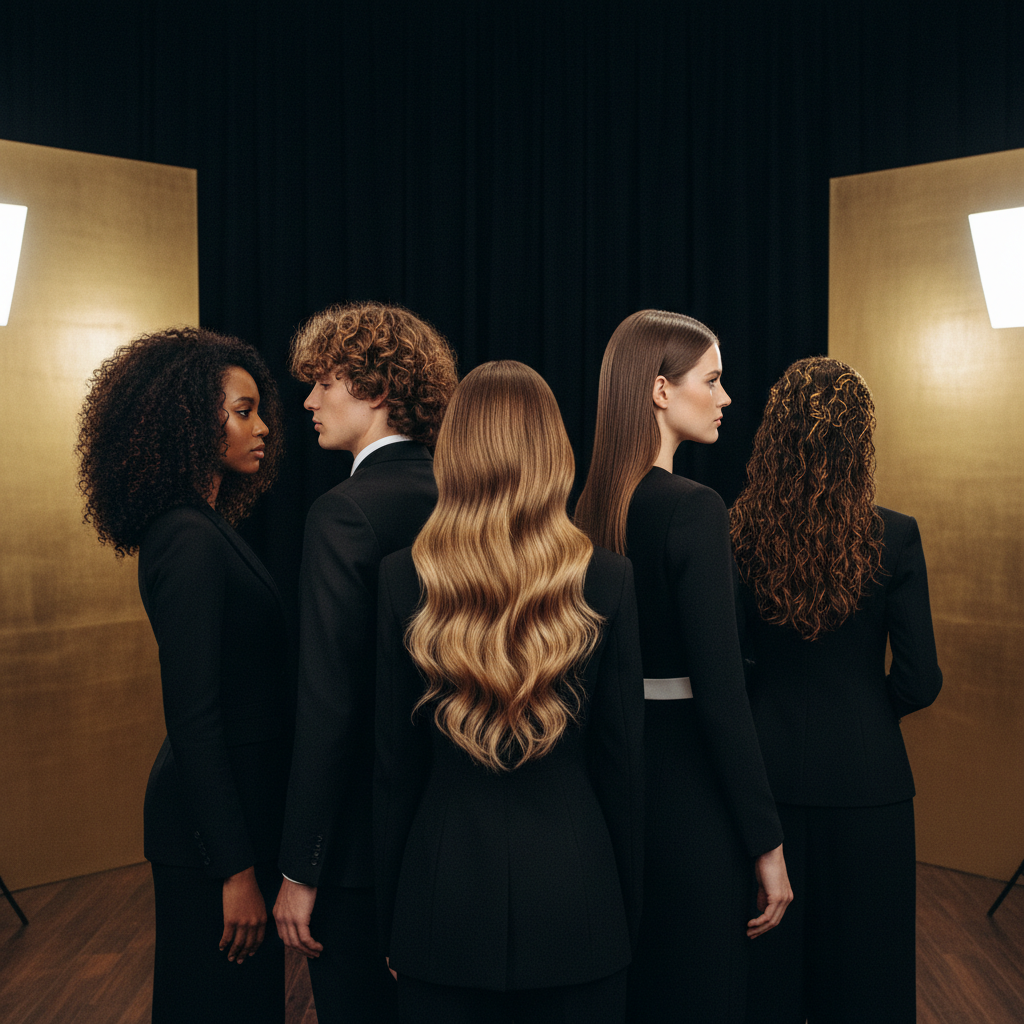
Understanding Hair Texture and Type
Hair texture and type are often used interchangeably, but they refer to distinct characteristics of the hair. Hair texture describes the circumference or thickness of an individual hair strand, while hair type refers to the natural shape or pattern of the hair as it grows from the scalp.
Hair Texture: Strand Thickness
Hair texture is categorized into three primary classifications: fine, medium, and coarse. This classification is determined by the diameter of each individual hair strand.
- Fine Hair: Fine hair strands have the smallest circumference. This hair type can be delicate and prone to breakage. It often struggles to hold styles and can appear oily more quickly due to its lower density and tendency for natural oils to spread more easily.
- Medium Hair: Medium hair strands are the most common and represent an average thickness. This texture is generally strong, resilient, and holds styles well. It is often considered the easiest to work with.
- Coarse Hair: Coarse hair strands have the largest circumference and are the thickest. This hair type is typically strong and durable, but it can be less pliable and may require more moisture to remain soft and manageable. Coarse hair can feel rough or dry if not properly conditioned.
It's important to note that a person can have different textures on different parts of their head, or even a combination of textures throughout their hair.
Hair Type: Curl Pattern
Hair type is primarily determined by the shape of the hair follicle, which dictates whether hair grows straight, wavy, curly, or coily. The most widely recognized system for categorizing hair type is the Andre Walker Hair Typing System, which classifies hair into four main types with sub-categories for each.
Type 1: Straight Hair
Type 1 hair is characterized by a complete lack of curl, growing straight from the scalp. It tends to be shiny due to the smooth surface allowing natural oils to travel down the hair shaft easily.
- 1A: Pin-straight, very fine, soft, and difficult to hold a curl.
- 1B: Straight, but with a medium texture and some body. Most common straight hair type.
- 1C: Straight, but very thick and coarse, with some natural wave or bend. Can be resistant to curling.
Type 2: Wavy Hair
Type 2 hair has a natural 'S' shape pattern. It tends to be less oily than straight hair but can be prone to frizz.
- 2A: Fine, thin waves that are easily straightened or curled. The 'S' pattern is loose and subtle.
- 2B: Medium texture waves that are more defined and can be slightly frizzy at the crown.
- 2C: Thicker, coarser waves that are more defined and begin closer to the scalp. Can be prone to frizz and difficult to straighten.
Type 3: Curly Hair
Type 3 hair forms distinct, well-defined curls that can range from loose loops to tight corkscrews. This hair type is often voluminous but can be prone to dryness and frizz due to the cuticle being raised in certain areas, making it harder for natural oils to travel down the hair shaft evenly.
- 3A: Large, loose curls, typically the size of a sidewalk chalk stick.
- 3B: Bouncy, tight curls, about the size of a Sharpie marker.
- 3C: Tightly packed corkscrew curls, often the size of a pencil.
Type 4: Coily Hair
Type 4 hair is characterized by very tight, often zigzag-shaped curls or coils that are densely packed together. This hair type is the most fragile and prone to shrinkage, which can make it appear much shorter than it is when wet. It requires significant moisture to maintain health and prevent breakage.
- 4A: Densely packed, S-shaped coils that are clearly defined.
- 4B: Z-shaped coils that have a sharp, angled pattern and are less defined than 4A. Can have a cotton-like texture.
- 4C: Very tight
Where Watermans fits
If you want a routine built around the science above, these are the products from the range that apply here: