The Science of Hair Structure
4 min read ·
Hair, a complex biological fibre, is primarily composed of keratin protein and features distinct layers that dictate its strength, elasticity, and appearance.
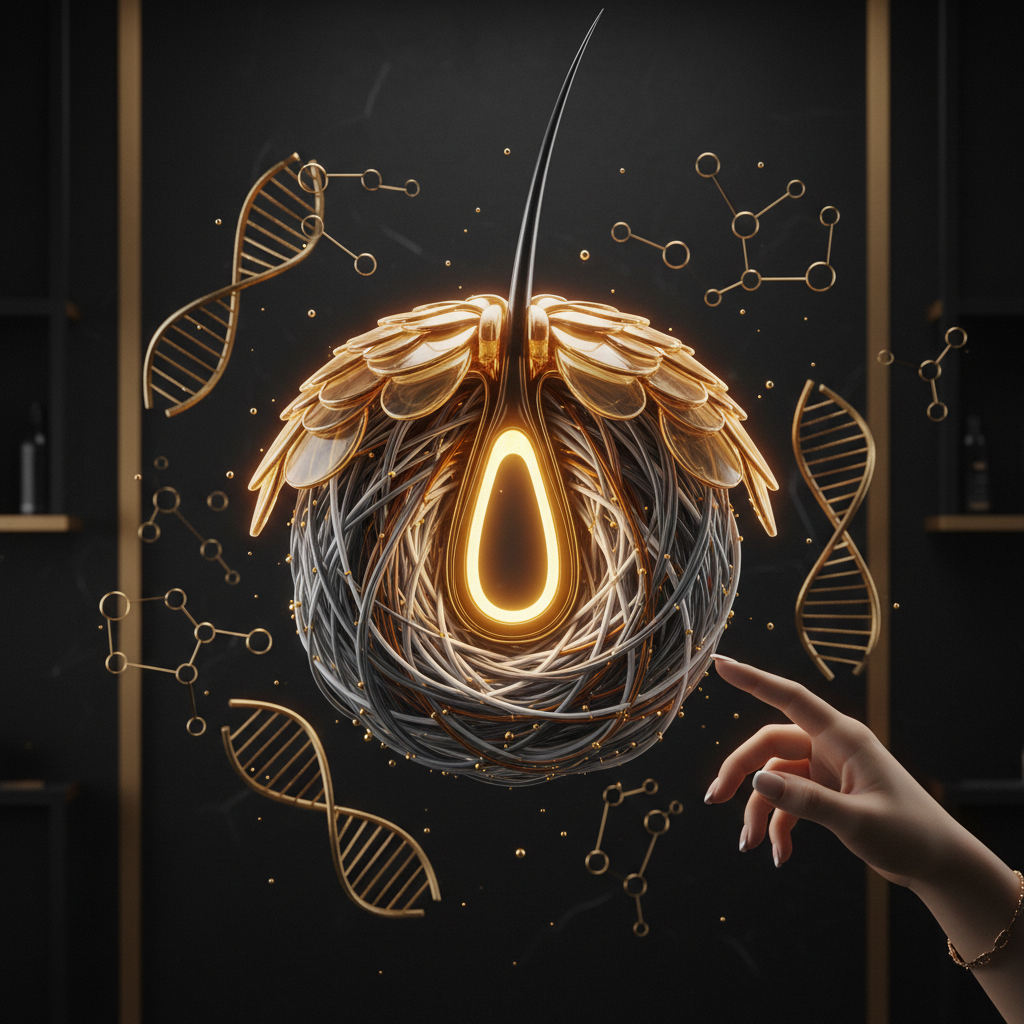
The Fundamental Units of Hair
At its core, hair is a complex biological fibre that originates from a follicle within the skin. The visible part of the hair, the hair shaft, is largely composed of a protein called keratin, which is also found in skin and nails. This hardy protein provides hair with its structural integrity and resilience.
The Hair Follicle: The Root of Hair Growth
The hair follicle is a tunnel-like structure in the epidermis (outer layer) and dermis (inner layer) of the skin. It plays a crucial role in hair production, anchoring each hair into the skin. At the base of the follicle is the hair bulb, which contains actively dividing cells that produce the components of hair. Blood vessels supply nutrients to these cells, supporting continuous hair growth.
Adjacent to the hair follicle are sebaceous glands, which produce sebum, a natural oil that lubricates the hair and scalp, providing a protective barrier and helping to maintain moisture.
Layers of the Hair Shaft
The hair shaft, the portion of hair extending beyond the skin, is composed of three primary layers:
- Cuticle: The outermost protective layer, the cuticle consists of overlapping, flattened cells, much like shingles on a roof. These cells, rich in cysteine, a sulfur-containing amino acid, are responsible for dictating how light reflects off the hair, influencing its shine. A healthy, smooth cuticle means shiny hair, as it reflects light uniformly. Damage to the cuticle, often caused by chemical treatments, heat styling, or environmental factors, can lead to a rough surface, resulting in dullness, tangling, and increased porosity.
- Cortex: The thickest layer of the hair shaft, the cortex lies beneath the cuticle. It comprises elongated, spindle-shaped cells made of keratin proteins that are bundled together by various bonds. The cortex is the primary determinant of hair's mechanical properties, including its strength, elasticity, and texture. It also houses melanin, the pigment responsible for natural hair colour. Two types of melanin exist: eumelanin (dark brown to black) and pheomelanin (reddish-yellow).
- Medulla: The innermost layer, the medulla, is not present in all hair types. It is typically found in thicker, coarser hair and is believed to have a more loosely packed, often hollow structure. Its exact function is not fully understood, but it may play a role in regulating heat and providing additional structural support.
Chemical Bonds in Hair
The strength and shape of hair are significantly influenced by the various chemical bonds within the cortex. These bonds can be categorized as follows:
- Disulfide Bonds (Cystine Bonds): These are strong, covalent bonds formed between two sulfur atoms of cysteine amino acids. Disulfide bonds are crucial for hair's structural integrity and its ability to maintain its shape. They are relatively resistant to water but can be broken and reformed by chemical processes, such as perms and relaxers, which alter hair's permanent shape.
- Hydrogen Bonds: These are numerous, weaker bonds formed between hydrogen and oxygen or nitrogen atoms. Hydrogen bonds are responsible for hair's temporary shape changes. They are easily broken by water (e.g., wetting hair) and heat (e.g., blow-drying) and reform as the hair dries or cools. This is why styling with heat or water can temporarily alter hair's curl or straightness.
- Ionic Bonds (Salt Bonds): Also weaker than disulfide bonds, ionic bonds are formed between positively and negatively charged amino acid groups. Like hydrogen bonds, they are easily disrupted by changes in pH (acidity or alkalinity) and can be temporarily broken by water. Maintaining an optimal pH balance in hair products is important to preserve these bonds and overall hair health.
Hair Porosity: An Indicator of Health
Hair porosity refers to the hair's ability to absorb and retain moisture. It is primarily determined by the state of the cuticle layer.
- Low Porosity: Hair with a tightly closed cuticle has low porosity. It resists moisture absorption but, once moisturized, tends to retain it well. Products can build up on the surface.
- Medium Porosity: This hair type has a moderately raised cuticle, allowing for balanced moisture absorption and retention. It is generally considered the ideal porosity for hair.
- High Porosity: Hair with a raised or damaged cuticle has high porosity. It readily absorbs moisture but struggles to retain it, leading to dryness, frizz, and tangling.
Understanding hair porosity is key to selecting appropriate hair care products that can effectively deliver moisture and nutrients.
Hair Elasticity: The Stretch Factor
Hair elasticity is its ability to stretch and return to its original length without breaking. A healthy cortex with intact bonds contributes to good elasticity. Hair with good elasticity can withstand styling and environmental stressors more effectively. Poor elasticity often indicates damage, making hair brittle and prone to breakage.
The Role of pH in Hair Health
PH, a measure of acidity or alkalinity, plays a significant role in maintaining hair health. The natural pH of hair and scalp is slightly acidic, typically ranging from 4.5 to 5.5. This acidic environment helps to keep the cuticle closed, protecting the inner cortex and maintaining moisture. Products with a pH outside this range can disrupt the cuticle, leading to damage and increased porosity. For example, alkaline products can cause the cuticle to swell and open, while highly acidic products can excessively contract it.
Maintaining the hair's natural pH balance through appropriate haircare products is essential for preserving its structural integrity and overall health.
Where Watermans fits
If you want a routine built around the science above, these are the products from the range that apply here: