Hair Shaft Miniaturisation: The Biological Process and How to Address It
9 min read ·
Learn what Hair Shaft Miniaturisation means, how DHT and genetics shrink follicles, and the science-backed methods to spot and manage progressive thinning.

Quick answer: Hair Shaft Miniaturisation describes the biological process where hair follicles progressively shrink under hormonal and genetic influences, producing progressively thinner, shorter, and less pigmented hair fibres over successive growth cycles. Eventually, terminal hairs become fine vellus hairs. The primary limitation is that once a follicle undergoes complete fibrosis and atrophies entirely, Hair Shaft Miniaturisation becomes irreversible. Early detection is critical because medical and cosmetic interventions can only preserve or partially thicken follicles that remain biologically active.
Key takeaways
- Miniaturisation occurs when androgen-sensitive hair follicles shrink, producing fibres with a drastically reduced cross-sectional diameter.
- Dihydrotestosterone (DHT) binding to androgen receptors in the dermal papilla is the primary driver in genetic pattern hair loss.
- Miniaturisation differs fundamentally from telogen effluvium (diffuse shedding) and mechanical breakage (fibre snapping).
- A scalp biopsy or dermoscopic examination showing more than 20 percent hair diameter diversity confirms the presence of active miniaturisation.
- Cosmetic haircare cannot alter underlying genetics, but it can optimise the scalp environment, reduce mechanical stress, and improve the appearance of fibre density.
Hair Shaft Miniaturisation: what the evidence shows
Clinical dermatology recognises follicular miniaturisation as the hallmark feature of androgenetic alopecia in both men and women. Hair Shaft Miniaturisation refers directly to the visible outcome of this process: the progressive reduction in the diameter and length of individual hair fibres emerging from the scalp.
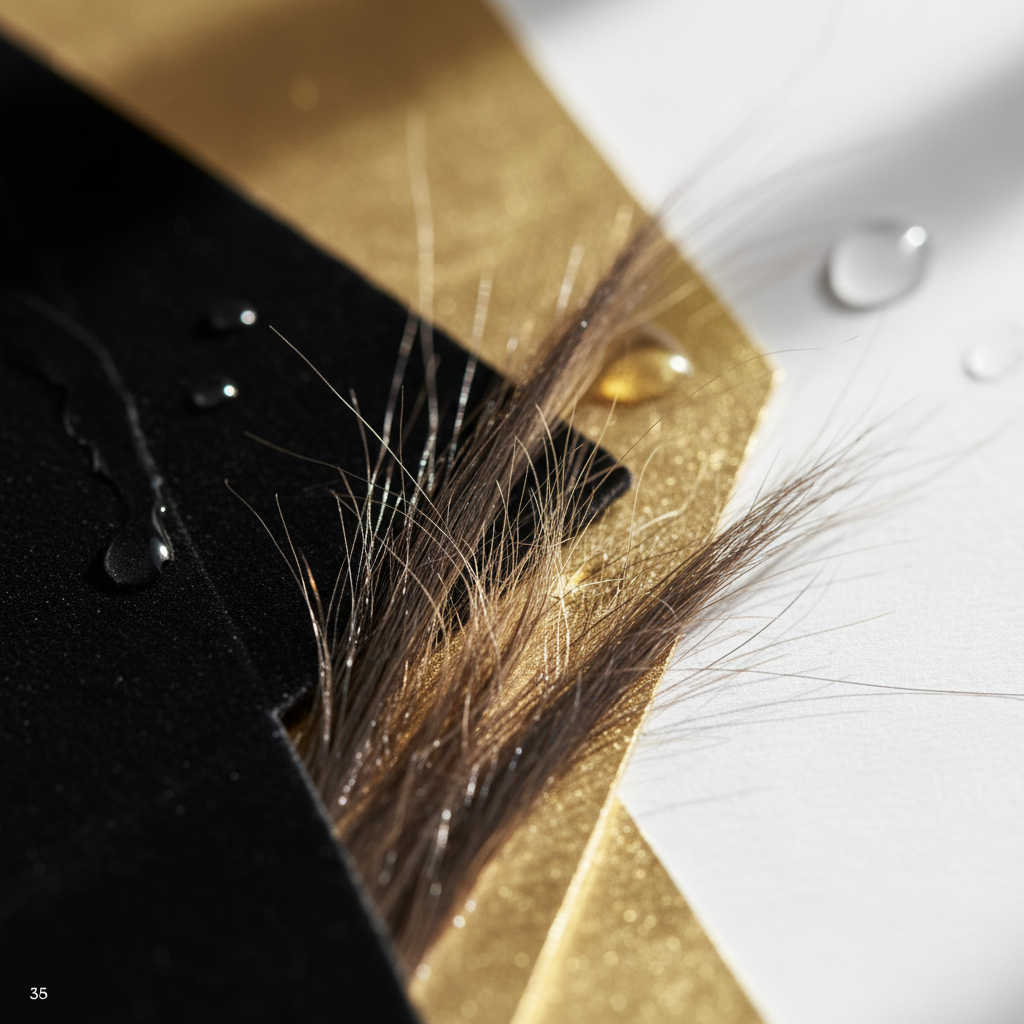
Under normal physiological conditions, scalp follicles produce terminal hairs. These fibres boast an average diameter of 60 to 80 micrometres (microns), contain a central medulla, and maintain an anagen (growth) phase lasting anywhere from two to seven years. When miniaturisation takes hold, the anagen phase shortens dramatically, often down to mere months, while the telogen (resting) phase lengthens.
With every consecutive cycle, the follicle matrix shrinks. The newly produced hair shaft emerges thinner and shorter than its predecessor. Over time, terminal hairs transition into intermediate hairs, and finally into vellus-like hairs measuring less than 30 micrometres across. These tiny hairs lack pigment and structural rigidity, contributing to the appearance of visible scalp thinning long before the follicles shut down completely.
Normal Cycle: Terminal Hair (60-80µm) -> Full Anagen (2-7 yrs) -> Shed -> Regrows Terminal Hair
Miniaturisation: Terminal Hair (70µm) -> Shorter Anagen -> Intermediate (45µm) -> Vellus (under 30µm)
The biological mechanism behind miniaturisation
The primary biochemical driver of this condition is the local conversion of testosterone into dihydrotestosterone (DHT) by the intracellular enzyme 5-alpha reductase (specifically type II within the hair follicle).
DHT binds to androgen receptors located in the dermal papilla cells of genetically susceptible follicles. This binding activates signalling cascades that alter the expression of growth factors:
- Suppression of follicular mitogens: Signalling molecules such as vascular endothelial growth factor (VEGF) and insulin-like growth factor-1 (IGF-1), which normally stimulate cell division in the hair matrix, become downregulated.
- Upregulation of inhibitory cytokines: Transforming growth factor-beta (TGF-beta) and Dickkopf-1 (DKK-1) are triggered, driving the follicle prematurely out of anagen and into the catagen (regression) phase.
- Micro-inflammation and perifollicular fibrosis: As the dermal papilla shrinks, low-grade inflammatory infiltrates gather around the follicular infundibulum. Over several years, connective tissue sheaths thicken, ultimately replacing healthy follicular tissue with rigid, fibrous collagen tracts.
Because receptor sensitivity and enzyme density vary across the scalp, follicles in the frontal hairline, temples, and crown are predominantly vulnerable, whereas follicles in the occipital region (the back of the head) generally resist DHT.
What the evidence does not show
There are several persistent myths regarding miniaturising hair that controlled research refutes:

- It is not caused by poor circulation alone: While microcirculation supports healthy tissue, reduced blood flow around miniaturised follicles is an effect of the shrinking tissue demand, not the root cause.
- It is not caused by clogged pores or sebum: Excess sebum and scalp yeast (such as Malassezia) can cause seborrhoeic dermatitis, which exacerbates shedding, but surface oils do not induce the genetic receptor binding that causes follicular shrinkage.
- Shampooing does not cause miniaturisation: Washing your hair dislodges fibres that have already detached within the telogen phase. It plays no role in genetic shaft narrowing.
- Cosmetics cannot permanently reverse end-stage fibrosis: No topical shampoo, oil, or supplement can resurrect a hair follicle that has completely vanished and scarred over. Claims of complete restoration from cosmetic products alone contradict biological evidence.
Signs to look for: identifying miniaturisation early
Recognising the signs of progressive thinning allows you to act before follicles undergo irreversible atrophy. Key indicators include:
- Hair diameter diversity (anisotrichosis): When viewing the scalp closely, you notice thick, medium, and very thin hairs growing side by side from adjacent follicles.
- Increased shedding of short, fine hairs: Finding shed hairs that are short, wispy, and tapered (rather than full-length shed hairs with a white bulb) indicates shortened growth cycles.
- Reduced ponytail circumference: A gradual loss of overall bulk without obvious patchy bald spots often points to widespread thinning across individual fibres.
- Loss of styling resilience: The hair struggles to hold volume or shape because thinner shafts have reduced tensile strength and cross-sectional stiffness.
A trichologist or dermatologist uses a dermatoscope (a high-magnification polarised light tool) to inspect the scalp. In healthy scalps, diameter variation remains below 10 to 15 percent. A variation exceeding 20 percent is considered diagnostic for androgenetic thinning.
Comparing hair conditions
To choose the right management strategy, you must distinguish shaft miniaturisation from other common hair concerns.
| Feature | Hair Shaft Miniaturisation | Telogen Effluvium | Hair Fibre Breakage |
|---|---|---|---|
| Primary Root Cause | Androgen sensitivity, genetics | Systemic stress, illness, deficiency | Mechanical, thermal, chemical trauma |
| Fibre Diameter | Progressively decreases across cycles | Normal, uniform fibre diameter | Normal root diameter, fractured ends |
| Shedding Pattern | Slow, progressive loss over years | Sudden, diffuse shedding (300+ daily) | Snapping during brushing or styling |
| Follicle Status | Follicles shrink and may fibrose | Follicles remain fully intact | Follicles unaffected |
| Reversibility | Progressive; requires early ongoing care | High; usually self-corrects in 3 to 6 months | High; resolved by altering haircare habits |
What you can do: clinical and cosmetic approaches
Managing miniaturisation requires realistic expectations and a two-pronged strategy: addressing follicular biology clinically while protecting remaining fibre calibre cosmetically.
Evidence-based clinical interventions
For true genetic miniaturisation, pharmaceutical and clinical options evaluated by bodies such as NICE and the British Association of Dermatologists include:
- Topical minoxidil: Prolongs the anagen phase and widens follicular blood vessels, helping intermediate follicles increase their diameter.
- Oral 5-alpha reductase inhibitors: Medications that lower systemic DHT levels to prevent further follicular shrinking, suitable under physician supervision.
- Low-level laser therapy (LLLT): Photobiomodulation cleared for stimulating cellular metabolism in active follicles.
Supportive scalp care and cosmetic thickening
Cosmetic formulations cannot alter DNA or eliminate systemic hormones, but they play a vital supportive role in preserving fibre integrity:
- Gentle scalp hygiene: Cleansing the scalp removes oxidative residues and reduces surface inflammation that compounds follicular stress.
- Protein-rich conditioning: Low molecular weight proteins and amino acids can temporarily adsorb to thinning hair shafts, swelling the fibre diameter and improving tactile density.
- Minimising physical strain: Fine, miniaturised hairs possess a thinner cuticle layer and snap under lower tensile loads. Detangle gently using wide-tooth combs and reduce high-heat styling tools.
The Watermans approach to hair vitality
For individuals seeking to optimise their daily wash routine alongside targeted hair care, Watermans focuses on nurturing the scalp environment.
Formulated without harsh sulfates, Watermans Grow Me shampoo incorporates caffeine, biotin, rosemary extract, niacinamide, and argan oil. While topical cosmetic formulations do not cure genetic pattern loss, keeping the scalp clean, refreshed, and clear of daily build-up ensures that emerging fine hairs have an ideal environment to grow. Furthermore, ingredients like hydrolyzed lupine protein work along the hair shaft to provide a fuller, thicker look and feel, helping individuals maximise the cosmetic appearance of fine or thinning strands.
When the cause may be something else
Not all shaft narrowing stems from classic pattern hair loss. Diffuse thinning can mimic miniaturisation under specific physiological conditions:
- Nutritional deficiencies: Chronic iron deficiency (ferritin below 30 to 50 ug/L), severe protein restriction, and zinc deficiencies can impair keratin synthesis, producing temporarily weaker, finer shafts.
- Thyroid dysfunction: Both hypothyroidism and hyperthyroidism disrupt normal hair cycling, leading to dry, brittle, and uniformly thin hair fibres.
- Age-related hair thinning (senescent alopecia): A natural reduction in follicular diameter that occurs in individuals over 50 to 60, largely independent of androgen levels.
- Scarring alopecias: Inflammatory conditions such as lichen planopilaris or frontal fibrosing alopecia destroy the follicle directly rather than gradually miniaturising it, leading to smooth, shiny patches of scalp.
When to get professional advice
Consult an NHS GP, board-certified dermatologist, or registered trichologist if you notice:
- Rapid, patchy, or painful hair loss accompanied by itching, redness, or burning.
- Sudden hair shedding following unexplained weight loss, fatigue, or major dietary shifts.
- Noticeable widening of your central parting over a period of 6 to 12 months.
A professional can perform blood panels, pull tests, and dermoscopic evaluations to confirm whether Hair Shaft Miniaturisation is present and recommend regulated treatment pathways.
Frequently asked questions about Hair Shaft Miniaturisation
Can Hair Shaft Miniaturisation be completely reversed?
Miniaturisation can be partially reversed if caught in its early stages while follicles remain viable. Medical treatments can enlarge intermediate follicles, encouraging thicker fibres. However, once a hair follicle completes its miniaturisation cycle, atrophies, and forms scar tissue (fibrosis), it cannot regrow terminal hair.
How quickly does Hair Shaft Miniaturisation happen?
Miniaturisation is typically a slow process that unfolds over several years or decades. Because a single human hair cycle lasts between two and seven years, a follicle usually passes through three to four increasingly smaller cycles before reaching a vellus state, meaning changes appear gradually over time.
How do dermatologists diagnose miniaturising hair shafts?
Dermatologists and trichologists diagnose miniaturisation using a trichoscope, a specialised handheld dermatoscope. By magnifying the scalp up to 70 times, they measure variations in shaft diameter. If more than 20 percent of hairs in an affected zone show reduced diameter compared to donor zones, miniaturisation is confirmed.
Does washing your hair too often cause hair shaft miniaturisation?
No. Frequent washing does not cause miniaturisation. Hair washing merely cleanses the scalp surface and dislodges telogen hairs that have already finished their growth phase and detached internally. Follicular miniaturisation occurs deep within the dermis and is governed by genetics, hormones, and cellular signalling.
Can a healthy diet stop Hair Shaft Miniaturisation?
A nutrient-dense diet provides the vitamins, minerals, and amino acids required for keratin production, preventing secondary shedding. However, diet alone cannot stop genetic Hair Shaft Miniaturisation, as dietary changes do not alter androgen receptor sensitivity or neutralise the activity of 5-alpha reductase in the follicle.
Understanding and managing hair changes
Recognising Hair Shaft Miniaturisation early provides the best opportunity to protect your hair's overall density and visual fullness. By understanding that this process involves the biological shrinkage of the hair follicle over successive cycles, you can avoid unproven quick fixes and focus on strategies backed by science. Combining validated clinical treatments with gentle, supportive scalp hygiene and fibre-strengthening haircare ensures you preserve existing follicle health while maximising the appearance, strength, and vitality of every strand.
Sources and references
- British Association of Dermatologists. Guidelines for the management of alopecia areata and androgenetic alopecia. British Journal of Dermatology, 2021.
- National Institute for Health and Care Excellence (NICE). Alopecia androgenetica: Scenario: Management. Clinical Knowledge Summaries, 2023.
- Sinclair, R. Male androgenetic alopecia. The Journal of Men's Health & Gender, 2004.
- Trueb, R. M. Molecular mechanisms of androgenetic alopecia. Experimental Gerontology, 2002.
- Messenger, A. G., & Rundegren, J. Minoxidil: mechanisms of action on hair growth. British Journal of Dermatology, 2004.
Find these ingredients in Watermans products
- Zinc: you will find this ingredient in our Hair Vitamins.
- Niacinamide: you will find this ingredient in our Hair Mask.