Hair Serum: An Evidence-Based Guide to Hair Fibre Care
11 min read ·
Hair Serum is a cosmetic hair product formulated to coat the hair fibre, offering benefits like smoothing, shine, and protection, but it does not penetrate deeply or treat follicular conditions.
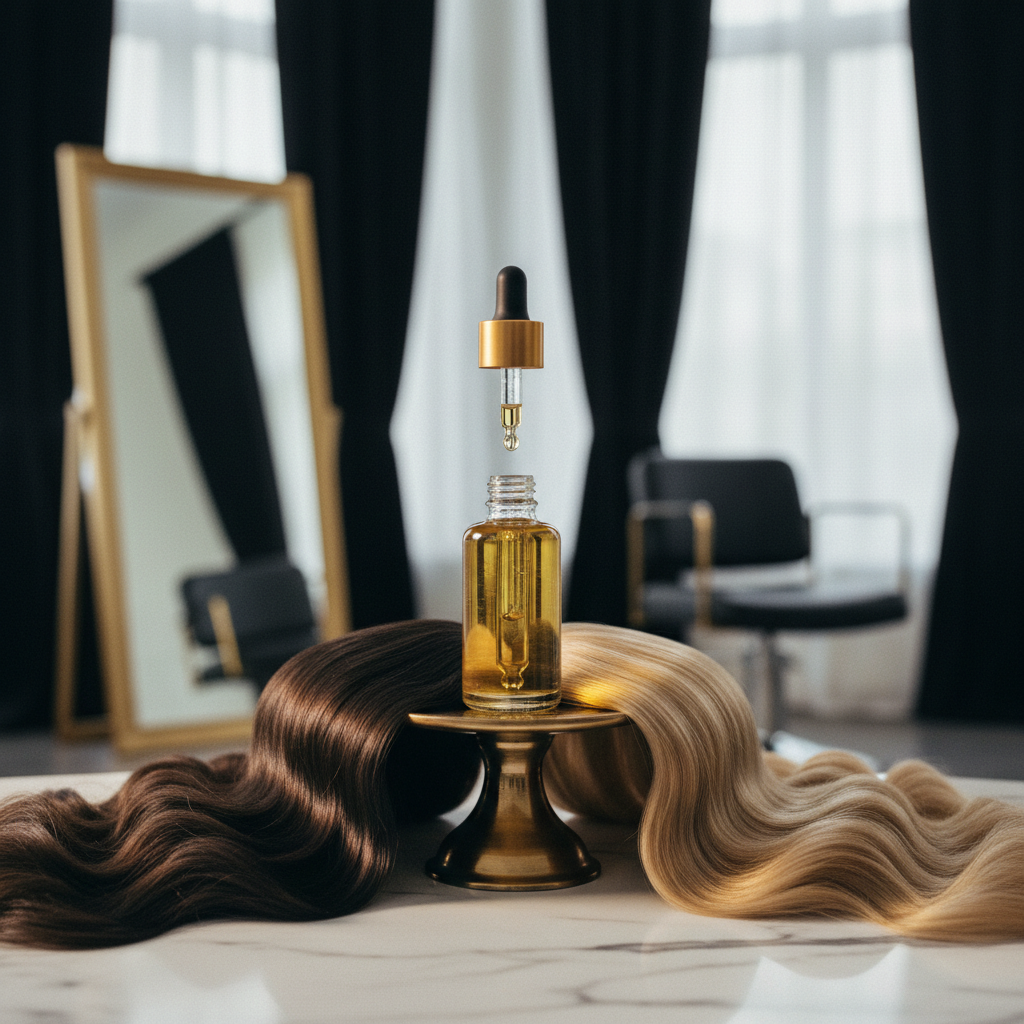
Quick answer: Hair Serum is a cosmetic product designed to coat the surface of individual hair fibres, creating a smoother, shinier appearance and providing a protective barrier against environmental stressors and styling damage. Unlike hair oils, which can penetrate the hair shaft, a Hair Serum primarily acts externally. While it can improve the look and feel of hair, it does not typically offer deep internal repair or directly influence hair growth from the follicle.
Key takeaways
- Hair Serum primarily works by coating the hair's outer surface, known as the cuticle, rather than penetrating deeply into the hair shaft.
- Its main benefits include enhancing shine, smoothing the hair fibre, reducing frizz, and offering a protective barrier against environmental factors like humidity and heat.
- Common ingredients in Hair Serum include silicones, plant extracts, and lightweight oils, which contribute to its surface-acting properties.
- Different types of Hair Serum are formulated to address specific concerns, such as frizz control, heat protection, or adding gloss.
- Applying the correct amount to damp hair, focusing on mid-lengths and ends, is crucial to avoid weighing hair down or making it appear greasy.
- While it improves hair's cosmetic appearance, Hair Serum does not typically treat underlying scalp conditions or promote hair growth from the follicle.
Hair Serum: what the evidence shows
A Hair Serum is a liquid-based hair cosmetic product formulated to address specific hair fibre concerns by forming a coating on the outer layer of the hair. This coating helps to smooth the hair's surface, enhance its visual appearance, and provide a degree of protection. It's important to distinguish Hair Serum from products that claim to penetrate the hair shaft for internal repair or target the scalp for follicular benefits. Its primary function is aesthetic and protective, improving the hair's manageability and appearance.
The mechanism of action for most Hair Serums involves the deposition of film-forming polymers and conditioning agents onto the hair cuticle. The hair cuticle, the outermost layer of the hair fibre, consists of overlapping cells. When these cells lie flat and smooth, hair reflects light effectively, appearing shiny and feeling smooth. Damage or environmental factors can cause these cuticle cells to lift, leading to rough-feeling, dull, and frizzy hair. A Hair Serum works to create a temporary, smooth surface, effectively "sealing" the cuticle for a polished look.
The role of common Hair Serum ingredients
Many Hair Serums rely on ingredients that create a thin, even film on the hair fibre. These include:
- Silicones: Ingredients such as dimethicone, cyclomethicone, and amodimethicone are prevalent in Hair Serums. They are effective at forming a smooth, non-greasy film over the hair cuticle. This film helps to reduce friction between hair strands, which can minimise tangling and breakage during styling. Silicones also contribute significantly to the hair's perceived shine by creating a uniform surface that reflects light. Some silicones, particularly amodimethicone, can also offer a degree of heat protection by slowing down heat transfer to the hair shaft (Gavazzoni Dias, M. F. R., 2015).
- Plant Extracts and Lightweight Oils: Botanical extracts like argan oil, camellia oil, or jojoba oil, when incorporated into a serum formulation, can provide emollient properties, contributing to softness and manageability without leaving a heavy or greasy residue. These ingredients typically sit on the hair's surface, complementing the film-forming agents.
- Hydrolysed Proteins: Small, hydrolysed proteins (e.g., hydrolysed wheat protein, keratin) may be included to temporarily strengthen the hair fibre's outer layer, potentially reducing breakage. However, these are surface-acting and do not provide deep structural repair to the hair's internal cortex (Gavazzoni Dias, M. F. R., 2015).
- Humectants: Ingredients like glycerin can attract and retain moisture from the air onto the hair surface, which can help to improve hydration and manage frizz, particularly in humid conditions. For more on how these work, see the encyclopedia entry on Humectants.
Controlled research indicates that cosmetic products formulated with film-forming ingredients like those found in Hair Serums can reduce friction, improve combability, and increase shine. These effects are primarily superficial and temporary, lasting until the next wash. Claims of deep repair or reversal of significant hair damage are not supported by the typical mechanism of a Hair Serum.
What Hair Serum does not do
It's important to clarify the limitations of Hair Serum. It is a cosmetic product designed for the hair fibre, not for the scalp or hair follicle. Therefore, a Hair Serum does not typically:
- Treat hair loss or alopecia: Conditions like androgenetic alopecia, telogen effluvium, or other forms of hair loss originate at the scalp and follicle level. A Hair Serum is not formulated to influence these biological processes.
- Promote hair growth: While some products are marketed as "hair growth serums," their efficacy often relies on specific active ingredients applied to the scalp, not the fibre-coating action typical of a Hair Serum. True hair growth requires addressing follicular health, often with medical intervention or validated active compounds like minoxidil.
- Deeply repair internal hair damage: Hair Serum primarily coats the outer cuticle. It does not penetrate the hair cortex to rebuild or repair damaged protein structures from within. For internal repair, products with conditioning agents designed to penetrate the hair shaft, or treatments targeting internal bonds, would be more appropriate (Robbins, C. R., 2012).
- Change hair texture permanently: Any smoothing or conditioning effects are temporary and will typically wash out with shampooing.
If you are experiencing genuine hair loss, which involves a reduction in the number of hairs from the scalp, or significant hair breakage due to internal structural damage, relying solely on a Hair Serum for treatment may delay seeking more appropriate interventions.
Using Hair Serum effectively
Choosing the right Hair Serum and applying it correctly can maximise its cosmetic benefits for your hair type and concerns. Understanding the different types available helps target specific needs.
| Hair Serum Type | Primary Function | Key Ingredients (Typical) | Best Application Method |
|---|---|---|---|
| Anti-Frizz Serum | Smooths unruly hair, reduces frizz | Silicones, lightweight oils, humectants | Apply sparingly to damp hair, focusing on mid-lengths and ends; can touch up dry hair. |
| Shine Serum | Enhances gloss and light reflection | High-refractive index silicones, light oils | Apply a tiny amount to dry hair as a finishing step for maximum shine. |
| Heat Protectant Serum | Shields hair from thermal styling damage | Heat-activated polymers, specific silicones | Apply evenly to damp hair before any heat styling (e.g., blow-drying, straightening). |
| Hydrating Serum | Adds surface moisture, improves elasticity | Humectants, emollient oils | Apply to damp hair, concentrating on dry or damaged areas. Avoid overuse. |
| Thickening/Volumising Serum | Creates appearance of fuller hair by coating | Polymers, body-building agents | Apply to roots and lengths of damp hair; often activated by blow-drying for lift. |
Application tips:
- Start with clean, damp hair: Most Hair Serums are best applied to freshly washed, towel-dried hair. This allows for even distribution and prevents product build-up on already styled hair.
- Use a small amount: A common mistake is applying too much. Start with a pea-sized amount for short or fine hair, increasing slightly for longer, thicker hair. Overuse can make hair look greasy or weigh it down.
- Warm the product: Dispense the serum into your palms and rub them together briefly. This warms the product, making it easier to spread evenly.
- Focus on mid-lengths and ends: These areas are typically older, more prone to damage, and benefit most from a Hair Serum. Avoid applying too much directly to the roots unless it's specifically a scalp-targeted product, which functions differently from a fibre Hair Serum.
- Distribute evenly: Gently rake your fingers through your hair to ensure the product covers all desired strands.
- Style as usual: After applying, you can proceed with your regular styling routine.
Hair Serum versus hair oil: understanding the difference
While often grouped, Hair Serum and hair oil serve different primary functions, though some products may blend characteristics. Understanding this distinction helps in choosing the right product for your needs.
- Hair Serum: Primarily a cosmetic styling and protective product. Its main action is to form a layer on the hair's surface, smoothing the cuticle, enhancing shine, and providing a barrier. It generally does not penetrate the hair shaft deeply. Its effects are largely superficial and temporary.
- Hair Oil: Primarily a nourishing and conditioning treatment. Hair oils, especially those rich in fatty acids (e.g., coconut oil, argan oil), have a molecular structure that allows them to penetrate the hair shaft to varying degrees, moisturising and strengthening from within. They can reduce protein loss and improve hair elasticity over time (Rele, A. S., & Mohile, R. B., 2003). Oils can be used as pre-shampoo treatments, leave-in conditioners, or overnight masks. For more information, consult the encyclopedia entry on Hair Moisturizers.
Many modern formulations may combine aspects, offering some oil-based conditioning within a serum-like texture. Always check the ingredient list and product claims to understand its intended action.
When to get professional advice
If you are experiencing significant hair breakage, sudden hair shedding (telogen effluvium), or persistent hair thinning (hair loss/alopecia), relying solely on a Hair Serum for treatment is not advisable. These conditions require assessment by a healthcare professional, such as a dermatologist or trichologist. They can diagnose the underlying cause, which may range from nutritional deficiencies to hormonal imbalances or autoimmune conditions, and recommend appropriate medical treatments.
Similarly, if you have persistent scalp irritation, excessive oiliness, or concerns about your hair's overall health that go beyond surface aesthetics, a professional can provide tailored advice and treatment plans. While a Hair Serum can cosmetically enhance your hair, it is not a solution for deeper physiological concerns.
Watermans Haircare solutions for healthy-looking hair
Watermans offers a range of products designed to support the appearance of healthy, strong-feeling hair. Our formulations are developed with ingredients chosen to improve the cosmetic condition of the hair fibre and support a healthy-looking scalp.
While this article focuses on the cosmetic effects of Hair Serum on the hair fibre, Watermans Grow More Elixir is a unique leave-on scalp treatment designed to support the scalp environment. It contains specific ingredients, such as rosemary extract, caffeine, and biotin, which are applied directly to the scalp. These ingredients aim to optimise conditions for healthy-looking hair by supporting the scalp and follicles. It differs from a traditional Hair Serum that coats the hair fibre, as its primary action is at the scalp level. For those looking for cosmetic benefits to the hair fibre, our shampoos and conditioners are formulated to improve the hair's manageability, shine, and overall appearance.
Frequently asked questions about Hair Serum
Is Hair Serum good for daily use?
Yes, many Hair Serums are gentle enough for daily use, especially those formulated for light conditioning, frizz control, or heat protection. The key is to use a small amount to avoid product build-up or weighing down the hair. Observe how your hair responds; if it starts to feel greasy or heavy, reduce the frequency or amount. Always refer to the specific product's instructions.
Can Hair Serum cause hair loss?
No, a Hair Serum applied to the hair fibre does not cause hair loss, which originates at the follicle. However, incorrect application, such as applying excessive amounts directly to the scalp, particularly if the scalp is sensitive or prone to build-up, could potentially clog follicles or lead to scalp irritation. This is distinct from actual hair loss. Always use Hair Serum as directed and primarily on the hair lengths, unless it is specifically formulated as a scalp treatment.
What is the difference between Hair Serum and leave-in conditioner?
A Hair Serum primarily coats the hair's surface to provide shine, smoothness, and protection, often with a lightweight, sometimes silicone-based, finish. A leave-in conditioner, on the other hand, is typically designed to penetrate the hair shaft more deeply, providing hydration, detangling, and internal conditioning benefits. While both are leave-on products, their primary mechanisms and effects on the hair fibre differ. Some products may offer a blend of both benefits.
Should I apply Hair Serum to wet or dry hair?
Most Hair Serums are best applied to damp, towel-dried hair. This allows for easier, more even distribution and helps to "lock in" moisture as the hair dries. For shine-boosting or frizz-touch-up purposes, a small amount can also be applied to dry hair as a finishing step. Heat protectant serums should always be applied to damp hair before heat styling to ensure even coverage.
How much Hair Serum should I use?
The amount of Hair Serum needed varies greatly depending on hair length, thickness, and texture. As a general guideline, start with a pea-sized amount for fine or short hair. For medium to long or thick hair, a dime-sized amount (around 2-3 drops) is often sufficient. Rub it between your palms to emulsify before applying. It's always better to start with less and add more if needed, to avoid making your hair appear greasy or weighed down.
Sources and references
- Gavazzoni Dias, M. F. R. (2015). Hair Cosmetics: An Overview. International Journal of Trichology, 7(1), 2-15. PubMed Central
- Robbins, C. R. (2012). Chemical and Physical Behavior of Human Hair (5th ed.). Springer Science & Business Media. (Chapter on Conditioners and Hair Treatment Products)
- Rele, A. S., & Mohile, R. B. (2003). Effect of mineral oil, sunflower oil, and coconut oil on prevention of hair damage. Journal of Cosmetic Science, 54(2), 175-192. PubMed
- The Hair Science. The Hair Follicle and Hair Growth Cycle. British Association of Dermatologists. (General information on hair biology)
- British Skin Foundation. Hair Loss. (General information on hair loss conditions)
Find these ingredients in Watermans products
- Biotin: you will find this ingredient in our Hair Growth Shampoo.