Hair Porosity Basics: The Science of Cuticle Permeability and Moisture
10 min read ·
Explore Hair Porosity Basics: learn how cuticle structure governs moisture retention, debunk the float test myth, and discover optimal routines for your hair.

Quick answer: Hair Porosity Basics refers to understanding your hair's ability to absorb and retain moisture, driven primarily by the structural integrity of the outer cuticle layer. Hair porosity typically falls into three categories: low, medium (normal), and high. While genetics largely determine your baseline cuticle arrangement, chemical processing, heat styling, and environmental weathering significantly alter this structure over time. However, porosity tests like the floating glass test are widely inaccurate, requiring a more scientific assessment of hair behaviour.
Key takeaways
- Hair porosity describes how easily water, oils, and cosmetic treatments pass through the cuticle into the hair cortex.
- Low porosity hair has tightly bound, overlapping cuticles that resist moisture absorption but retain water well once hydrated.
- High porosity hair features raised, chipped, or missing cuticles, absorbing water almost instantly while losing hydration just as quickly.
- Medium or normal porosity hair maintains a balanced, flexible cuticle layer that easily accepts and retains moisture with minimal effort.
- The popular "float test" in a glass of water is scientifically unreliable due to surface tension, product residue, and hair sebum levels.
- Porosity is dynamic; a single strand of hair can have low porosity near the root and high porosity near the weathered tip.
Hair Porosity Basics: what the evidence shows
Understanding Hair Porosity Basics requires examining the physical architecture of human hair fibres. The human hair shaft consists of three primary morphological components: the innermost medulla (often intermittent or absent in fine hair), the thick cortex composed of keratin protein bundles, and the protective outer cuticle.
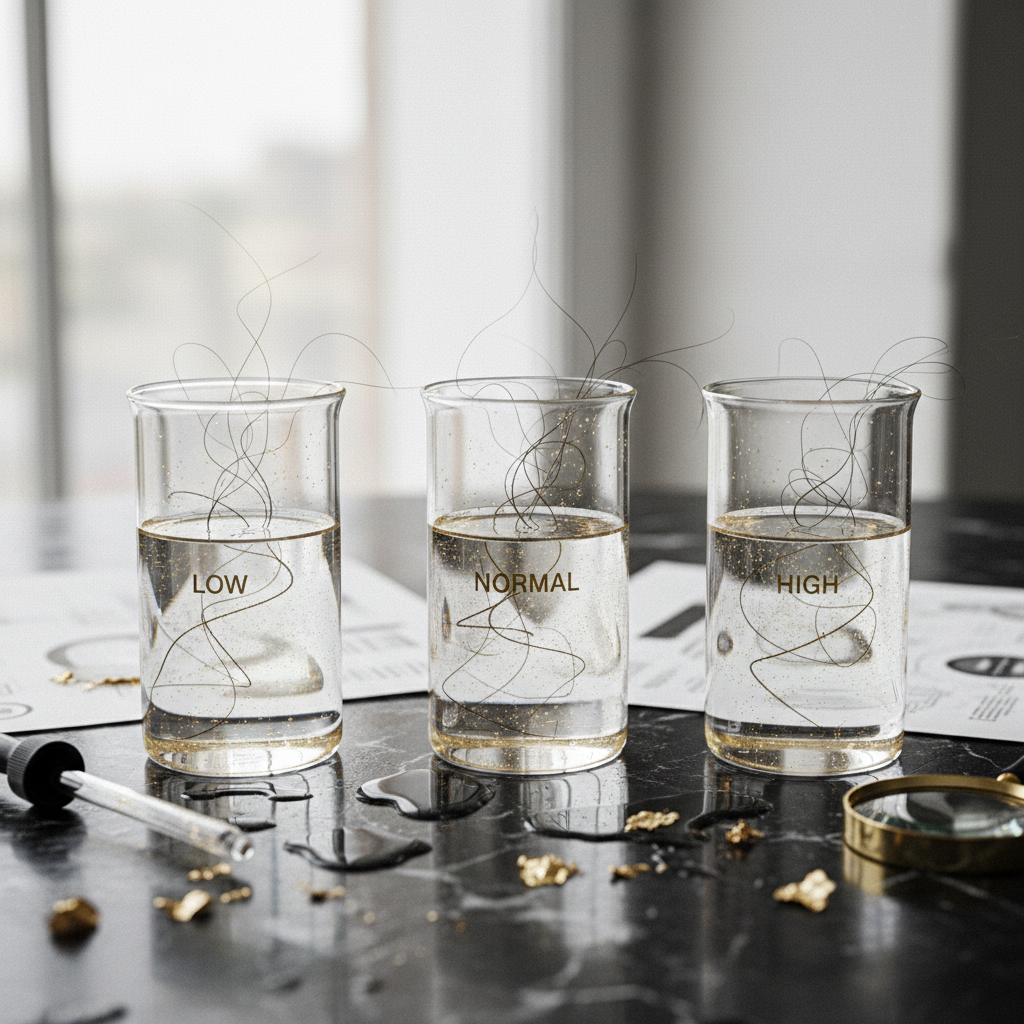
The cuticle is comprised of 5 to 10 overlapping layers of flat, scale-like cells that point toward the hair tip, anchored by an intercellular cementing substance known as the cell membrane complex (CMC). In healthy, virgin hair, these cuticle scales lie flat at an angle of roughly zero to five degrees. A natural lipid layer, predominantly 18-methyleicosanoic acid (18-MEA), coats the outer surface, imparting natural hydrophobicity (water-repellency).
Published cosmetic dermatology research indicates that hair porosity changes in response to physical and chemical stress. When hair undergoes alkaline chemical processes, such as bleaching or permanent waving at pH levels above 9.0, the cuticle scales swell and lift. This strips the protective 18-MEA lipid barrier and dissolves portions of the cell membrane complex. As a result, the cortex is directly exposed to the environment, transitioning the hair from a low or medium baseline into a high-porosity state.
 LOW POROSITY HIGH POROSITY
 [Cuticles Flat & Tight] [Cuticles Raised & Damaged]
 ========================= === / === \ === / === \ ===
 ------------------------- ---------------------------
 CORTEX CORTEX
 ------------------------- ---------------------------
 ========================= === \ === / === \ === / ===
 Resists water entry; Absorbs water instantly;
 retains it once inside. Loses moisture rapidly.
The three porosity classifications
Cosmetic science classifies hair porosity along a spectrum based on cuticle condition and moisture uptake.
Low porosity hair
In low porosity hair, the cuticle shingles lie tightly shingled and flat against the cortex. The lipid layer is largely intact, making the fibre strongly hydrophobic. Water beads on the surface of dry hair rather than sinking in immediately. While low porosity hair is inherently strong and less prone to mechanical breakage, it struggles to absorb conditioning agents, humectants, and chemical dyes. However, once water successfully penetrates the cortex, the tight cuticle seals it inside, preventing rapid dehydration.
Medium (normal) porosity hair
Medium porosity hair represents the cosmetic ideal. The cuticle scales are slightly loosened, allowing water vapour, conditioning lipids, and cosmetic formulations to enter the cortex without structural resistance. The internal moisture balance remains steady because the cuticle layer closes sufficiently to prevent rapid evaporation. Hair with normal porosity requires the least maintenance, styles reliably, and accepts chemical colour evenly.
High porosity hair
High porosity hair possesses cuticles that are permanently raised, cracked, separated, or eroded away entirely. This exposes the hydrophilic (water-attracting) keratin proteins in the cortex. High porosity hair absorbs water almost instantaneously, swelling dramatically when wet. However, because it lacks an intact outer barrier, moisture evaporates into the surrounding air just as rapidly. This continuous cycle of rapid swelling and rapid contraction is known as hygral fatigue, which weakens the fibre and leads to severe breakage.
| Feature | Low Porosity | Medium Porosity | High Porosity |
|---|---|---|---|
| Cuticle Structure | Flat, tightly closed, intact 18-MEA layer | Uniform, slightly raised, flexible | Lifted, chipped, missing, eroded CMC |
| Water Absorption | Very slow; water beads up on dry fibre | Steady, predictable absorption | Instantaneous absorption |
| Drying Time | Long (slow evaporation through tight scales) | Moderate, typical timeframe | Very fast (or remains damp if heavily damaged) |
| Product Behaviour | Sits on top; prone to rapid buildup | Absorbs smoothly and evenly | Absorbs product instantly; feels dry soon after |
| Tangle & Frizz Risk | Low; smooth surface reduces friction | Moderate; easily managed | High; raised cuticles snag and interlock |
| Protein Response | Stiffens easily with heavy protein treatments | Balanced tolerance | Requires hydrolysed proteins to patch cuticle gaps |
What the evidence does not show: the float test myth
A widespread myth across online haircare communities is that you can diagnose hair porosity by placing a shed strand in a glass of water. According to this claim, hair that floats has low porosity, hair that sinks halfway has normal porosity, and hair that sinks to the bottom has high porosity.
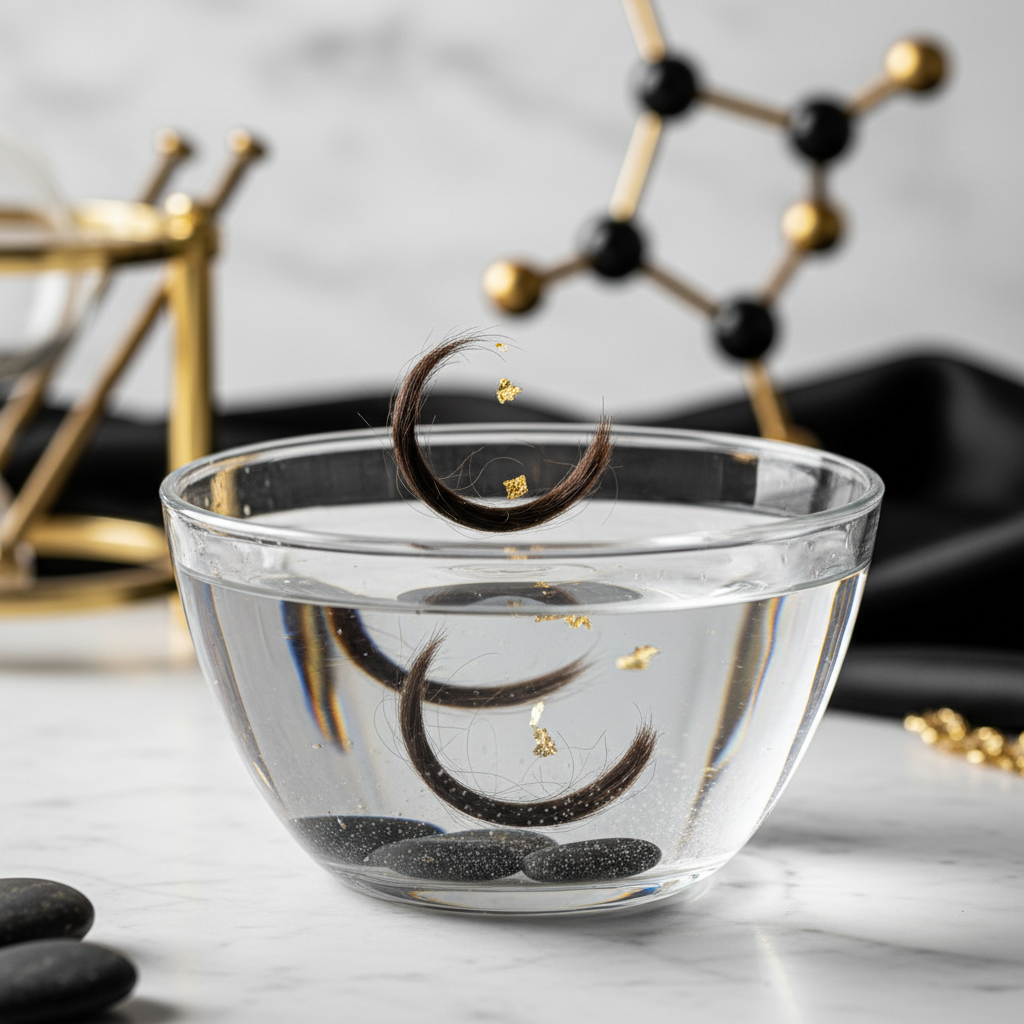
Cosmetic tribology and surface chemistry do not support this test. The float test fails for several physical reasons:
- Surface tension: Water has a high surface tension (approximately 72.8 mN/m at room temperature). Any lightweight, dry object placed gently on the surface will float, regardless of its internal porosity, until surface tension is physically broken.
- Sebum and product residue: Natural scalp oils (sebum), leave-in conditioners, and silicones are hydrophobic. A high-porosity strand coated in silicone or natural oil will float indefinitely.
- Fibre thickness and weight: Coarse strands have higher mass and break surface tension more readily than fine strands, causing them to sink regardless of cuticle health.
Instead of the float test, assess porosity by observing your hair during washing. If water beads on dry hair for several minutes under running water, it leans low. If it absorbs water the second it gets wet, tangles severely when wet, and dries within minutes, it is high porosity. Stylists also use the slide test: pinching a single dry strand near the end and sliding your fingers up toward the root. If the strand feels completely smooth, the cuticle is flat (low porosity); if it feels rough, bumpy, or catches your skin, the cuticle is lifted (high porosity).
The mechanism of porosity shifts
Porosity is rarely static from root to tip. As a hair fibre emerges from the scalp follicle, the cuticle is in pristine condition (virgin, low porosity). As the strand grows (at an average rate of 1 to 1.25 cm per month), it accumulates weathering damage from mechanical, thermal, and chemical sources.
- Chemical bleaching and permanent colour: Bleaching agents require an alkaline medium (ammonia or ethanolamine, pH 9.0 to 11.0) to lift cuticles and oxidise melanin inside the cortex. This irreversibly strips the 18-MEA surface lipid and oxidises disulphide bonds into cysteic acid, drastically increasing porosity.
- Thermal degradation: Heat styling tools operating above 185°C cause the moisture inside the cortex to boil rapidly, creating micro-cavities (bubble hair) and lifting cuticle edges permanently.
- Ultraviolet (UV) radiation: Sunlight breaks down amino acids in the cuticle and cortex, particularly cystine, leading to structural porosity along outer surface layers.
- Water pH and mineral deposits: Washing with alkaline water swells the cuticle, while hard water minerals like calcium and magnesium bind to the damaged cortex, mimicking high-porosity symptoms by interfering with product absorption.
Practical care strategies based on porosity
Adjusting your routine to your hair's structural porosity prevents product buildup on one extreme and chronic dryness on the other.
Managing low porosity hair
- Use gentle indirect heat when conditioning: Applying a warm towel or using a processing cap traps body heat, temporarily relaxing the tight cuticle scales to allow deep-conditioning agents to penetrate the cortex.
- Prioritise lightweight humectants: Heavy butters (such as raw shea) and thick oils sit on the surface of low-porosity strands, causing rapid buildup. Instead, choose humectants like glycerin, hyaluronic acid, and aloe vera, combined with lightweight carrier oils like argan or jojoba.
- Clarify periodically: Because cuticles are tightly packed, styling polymers accumulate rapidly on the exterior. Use a gentle clarifying shampoo every 2 to 4 weeks to clear surface residue.
Managing high porosity hair
- Incorporate hydrolysed proteins: Because high-porosity hair has structural voids along the cuticle, topical hydrolysed proteins (such as hydrolysed wheat, soy, or silk protein) temporarily patch these microscopic gaps, restoring tensile strength and reducing breakage.
- Embrace the LOC or LCO method: Layering Liquid (water or water-based leave-in), Oil, and Cream physically seals the exposed cortex. Lipids and occlusive emollients coat the lifted cuticle, slowing down water evaporation.
- Maintain an acidic pH balance: Rinses or conditioners formulated at a mildly acidic pH (between 3.5 and 5.0) encourage lifted cuticles to contract and flatten against the hair shaft, reducing friction and frizz.
When the cause may be something else
It is common to confuse hair porosity issues with underlying follicular conditions or scalp disorders. Porosity solely affects the hair shaft (the non-living fibre). If you are experiencing sudden diffuse shedding, patches of scalp showing, or a receding hairline, the problem is not high or low porosity.
Hair shedding (such as telogen effluvium) occurs at the follicle level inside the scalp due to systemic stressors, nutritional deficiencies, or hormonal fluctuations. Hair loss (such as androgenetic alopecia) involves the progressive miniaturisation of hair follicles. Porosity relates exclusively to hair breakage, texture, and moisture absorption along the shaft. Never mistake hair snapping off due to high-porosity hygral fatigue for follicular shedding.
Dedicated support from Watermans
For those seeking to maintain balanced fibre resilience alongside overall hair wellness, Watermans offers targeted cosmetic solutions. Watermans Grow Me Shampoo and Conditioner are formulated with a balanced blend of biotin, rosemary, caffeine, and hydrolysed lupin protein. While caffeine and botanical extracts support a clean, revitalised scalp environment, hydrolysed proteins work along the non-living hair shaft to coat and reinforce porous areas. This helps reduce fibre breakage during daily styling, supporting stronger-feeling and thicker-looking hair regardless of your baseline porosity.
Frequently asked questions about Hair Porosity Basics
Can you permanently change your hair porosity?
You can permanently increase hair porosity through chemical processes like bleaching, perming, or heat damage, because cuticle destruction cannot be biological repaired. However, you cannot permanently decrease high porosity back to low porosity. You can only manage high porosity cosmetically using conditioning agents, acidic rinses, and hydrolysed proteins until new hair grows in.
Why does low porosity hair take so long to dry?
Low porosity hair takes a long time to dry because its cuticle scales lie tightly flat and overlapping. Although it takes prolonged water exposure for the cortex to absorb moisture, once water penetrates behind those tightly shut cuticles, evaporation is heavily restricted. The moisture remains trapped beneath the dense, hydrophobic barrier.
Is high porosity hair always damaged?
While high porosity is frequently caused by bleach, thermal tools, and chemical relaxers, it is not always a sign of damage. Some people naturally have higher baseline porosity due to genetics, particularly those with naturally curly, coily, or kinky hair patterns where the hair shaft twists, naturally lifting the cuticle at bend points.
What are the main rules in Hair Porosity Basics for choosing products?
The core rule of Hair Porosity Basics is matching product molecular weight to cuticle density. Low porosity hair requires lightweight humectants and warmth to allow penetration without buildup. High porosity hair requires richer creams, sealing oils, and hydrolysed proteins to physically patch gaps in the lifted cuticle and trap escaping hydration.
Summary
Mastering Hair Porosity Basics gives you the practical understanding needed to treat hair according to its structural reality rather than guesswork. Porosity is not a measure of how clean or healthy your scalp is; it is a description of your cuticle's physical permeability. By tailoring your humectants, proteins, and conditioning sealants to how tightly your cuticles lie, you can protect the inner cortex, minimise mechanical breakage, and keep your hair resilient across its entire lifespan.
Sources and references
- Robbins, C. R. (2012). Chemical and Physical Behavior of Human Hair. 5th ed. Springer-Verlag.
- Draelos, Z. D. (2010). Hair Cosmetics. Dermatologic Clinics, 28(3), 479-496.
- Swift, J. A. (1999). The mechanics of fracture of human hair. International Journal of Cosmetic Science, 21(4), 227-239.
- Cruz, C. F., et al. (2016). Human Hair: A Physical and Chemical Approach. International Journal of Cosmetic Science, 38(4), 381-392.
- Sinclair, R. D. (2007). Healthy hair: what is it? Journal of Investigative Dermatology Symposium Proceedings, 12(2), 2-5.
Find these ingredients in Watermans products
- Aloe Vera: you will find this ingredient in our Curly Hair Conditioner.