Understanding Hair pH Balance: Your Guide to Healthier Hair
10 min read ·
Understanding Hair pH Balance is crucial for maintaining healthy, strong, and shiny hair, influencing everything from cuticle integrity to scalp health.
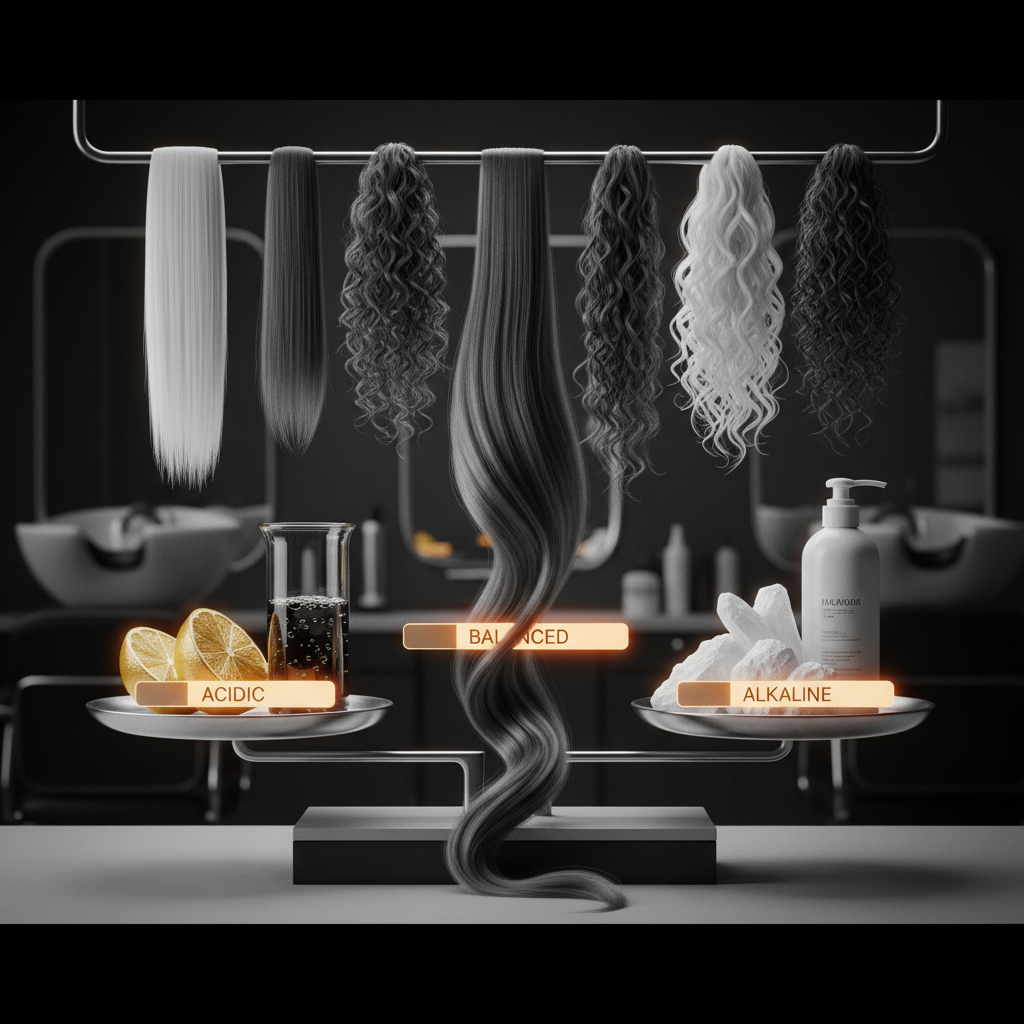
Quick answer: Understanding Hair pH Balance refers to the acidity or alkalinity of your hair and scalp, measured on a scale of 0 to 14. Maintaining an optimal, slightly acidic pH (typically between 4.5 and 5.5) is vital for keeping the hair's cuticle flat, preventing damage, and supporting a healthy scalp microbiome. Ignoring your hair's pH can lead to dryness, frizz, and breakage, while a balanced approach promotes strength and shine.
Key takeaways
- pH is a measure of acidity or alkalinity: The pH scale ranges from 0 (very acidic) to 14 (very alkaline), with 7 being neutral.
- Hair and scalp are naturally acidic: Healthy hair and scalp ideally sit within a slightly acidic pH range of 4.5 to 5.5.
- Maintaining this balance is crucial: An optimal pH keeps the hair cuticle smooth and closed, retaining moisture and strength.
- Alkaline products can cause damage: High pH products (like some dyes or relaxers) can lift the cuticle, leading to dryness, frizz, and breakage.
- Acidic rinses can help restore balance: Diluted apple cider vinegar or lemon juice can help reset pH after alkaline treatments, but commercial products are often more consistent.
- Understanding Hair pH Balance empowers better choices: Knowing your hair's ideal pH helps you select appropriate products and care routines.
Understanding Hair pH Balance: what the evidence shows
Understanding Hair pH Balance is fundamental to maintaining hair and scalp health. The pH scale, from 0 (highly acidic) to 14 (highly alkaline), measures the concentration of hydrogen ions in a substance. A pH of 7 is neutral. Healthy hair and the natural oils on your scalp, known as sebum, are slightly acidic, typically ranging between pH 4.5 and 5.5. This natural acidity is often called the "acid mantle" and plays a crucial role in the hair's integrity and protection.
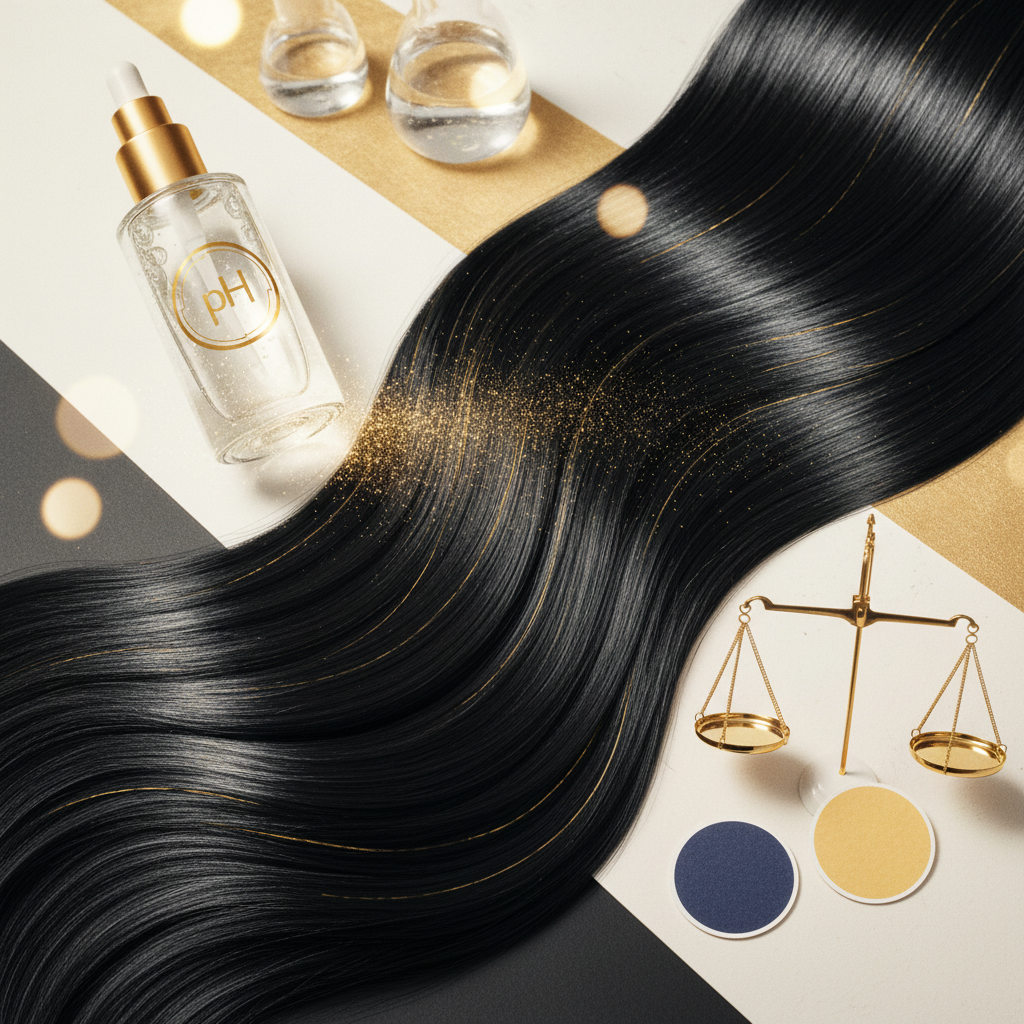
When hair is within this optimal acidic range, the cuticles, which are the outermost layers of each hair strand, lie flat and tightly closed. This smooth surface reflects light, giving hair its characteristic shine, and helps to seal in moisture and lipids. A closed cuticle also acts as a protective barrier, preventing environmental damage and minimising friction between hair strands.
Conversely, when hair is exposed to products with a high, alkaline pH (above 7), the cuticles tend to lift and open. This exposes the inner cortex of the hair, making it more vulnerable to moisture loss, protein degradation, and damage from styling or environmental factors. Hair that is frequently exposed to alkaline conditions can become dry, dull, brittle, and prone to tangling and breakage.
Research published in the International Journal of Trichology in 2014 reviewed the effects of pH on hair, highlighting that many common hair products, especially shampoos and hair dyes, can have alkaline pH levels that disrupt the hair's natural balance. The review emphasised that formulations with an acidic pH are more beneficial for cuticle health and overall hair condition. Another study in the Journal of the Society of Cosmetic Chemists in 1989 specifically examined the pH of commercially available shampoos, finding a wide range, with many being alkaline, reinforcing the need for awareness in product selection.
The mechanism of pH and hair health
The impact of pH on hair health is primarily due to its effect on the hair's outer layer: the cuticle. The hair shaft itself is primarily composed of keratin, a protein. The surface of healthy hair has a negative charge, which is maintained by the slightly acidic environment. This negative charge repels the hair strands from each other, reducing tangling.
When hair is exposed to an alkaline solution, several things happen:
- Cuticle lifting: The alkaline environment causes the overlapping cuticle scales to swell and lift, much like shingles on a roof becoming dislodged. This makes the hair rougher to the touch and causes it to appear dull.
- Moisture loss: With the cuticle open, the hair's internal moisture can evaporate more easily, leading to dryness and frizz.
- Protein degradation: The alkaline conditions can weaken the disulphide bonds within the keratin structure, making the hair more fragile and susceptible to damage and breakage.
- Increased friction: Rougher cuticles increase friction between hair strands, leading to tangles, knots, and further physical damage.
- Scalp irritation: An imbalanced pH on the scalp can disrupt its natural microbiome, potentially leading to dryness, itchiness, or even exacerbating conditions like dandruff.
Acidic solutions, on the other hand, cause the cuticle to contract and lie flat. This process smooths the hair, seals in moisture, and enhances shine and manageability. Conditioners are often formulated to be slightly acidic precisely for this reason, to help close the cuticle after shampooing.
Signs of imbalanced hair pH
Recognising the signs of imbalanced hair pH can help you adjust your haircare routine. If your hair is exhibiting these characteristics, it might be due to an alkaline environment:
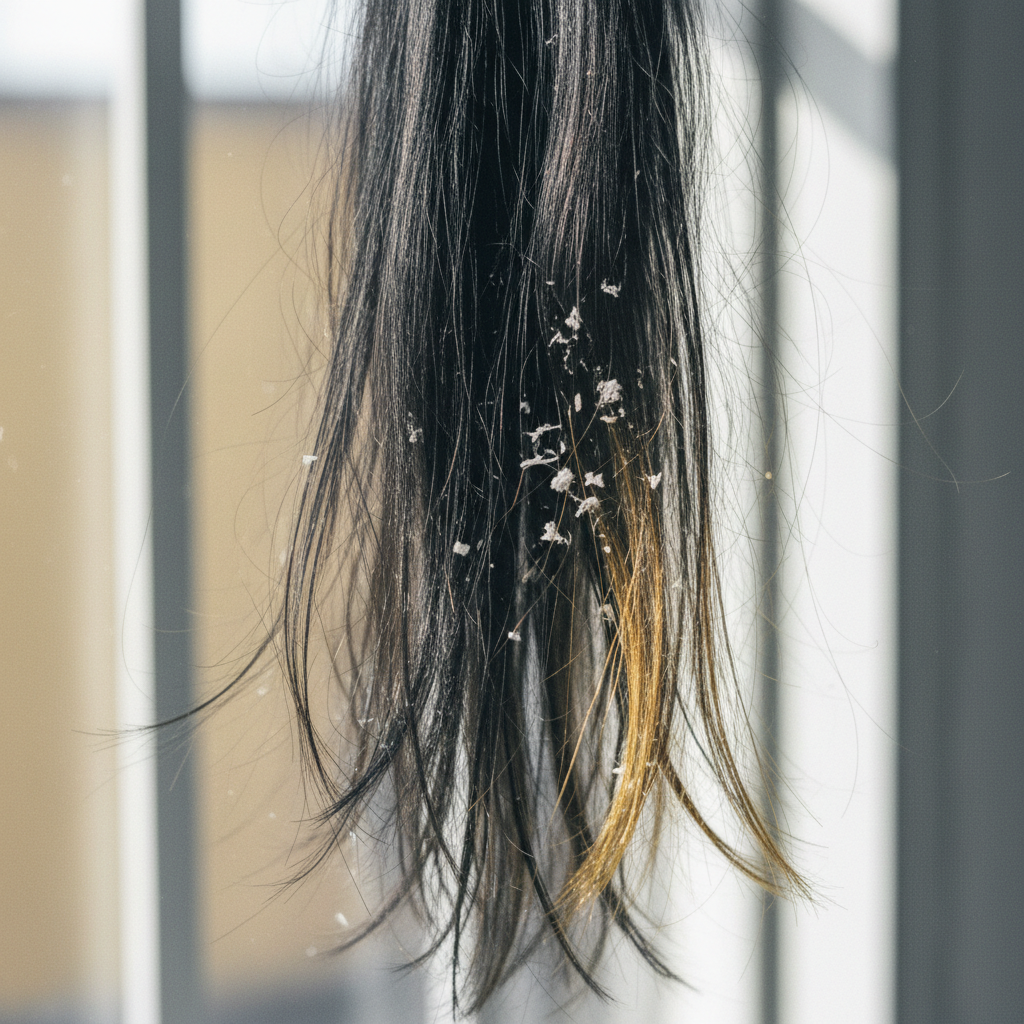
- Dryness and dullness: Hair lacks natural shine and feels rough or straw-like.
- Frizz and flyaways: The hair cuticle is lifted, causing individual strands to stand away from the main body of hair.
- Excessive tangling: Rough cuticles snag on each other, making hair difficult to comb or brush.
- Breakage: Hair becomes brittle and snaps easily, particularly during brushing or styling. This is hair fibre snapping, not hair loss from the follicle.
- Lack of elasticity: Hair feels stiff and doesn't stretch easily before breaking.
- Scalp irritation: Itchiness, flakiness, or a general feeling of discomfort on the scalp.
- Colour fading: For coloured hair, an open cuticle caused by high pH can lead to faster pigment washout.
What you can do to maintain hair pH balance
Maintaining the optimal pH for your hair involves thoughtful product selection and consistent care. Here are several strategies:
- Choose pH-balanced products: Look for shampoos and conditioners specifically labelled "pH balanced." These products are formulated to respect your hair's natural acidity. Many professional haircare lines prioritise this.
- Use acidic rinses cautiously: A diluted apple cider vinegar (ACV) rinse (1 part ACV to 5 parts water) can help to restore pH after shampooing, especially if you suspect your shampoo is alkaline. However, use sparingly (once every 1 to 2 weeks) to avoid over-acidifying and drying out your hair. Commercial leave-in conditioners and treatments are often a more reliable and gentler way to achieve this.
- Be mindful of chemical treatments: Hair colouring, perms, and chemical relaxers inherently involve alkaline chemicals to open the hair cuticle. Follow these treatments with pH-balancing conditioners or post-treatment products specifically designed to neutralise the hair and close the cuticle. This is a critical step in minimising damage.
- Regular conditioning: Conditioners are typically more acidic than shampoos and are designed to smooth the cuticle, restoring a healthy pH after cleansing.
- Water quality: Hard water, which has a higher mineral content, can sometimes be more alkaline. While you can't change your tap water's pH directly without filtration, using chelating shampoos occasionally can help remove mineral build-up that might affect hair texture and appearance.
Understanding Hair pH Balance: When to get professional advice
If you've been diligently trying to balance your hair's pH with appropriate products and care routines, but your hair continues to feel dry, brittle, or your scalp remains irritated, it might be time to seek professional advice. A trichologist or a dermatologist can help identify underlying issues that might be contributing to your hair or scalp concerns. They can rule out conditions such as dermatitis, psoriasis, or fungal infections, which require specific medical treatments that go beyond pH adjustments. Your stylist can also offer expert advice on product choices and in-salon treatments designed to restore hair health.
Product pH levels: a comparison
Understanding the typical pH ranges of various haircare products can help you make informed choices. This table provides general guidance, but specific product formulations can vary.
| Product Type | Typical pH Range | Impact on Hair and Scalp |
|---|---|---|
| Healthy Hair and Scalp | 4.5 to 5.5 | Cuticle flat, shiny, moisturised, healthy scalp microbiome |
| Shampoos (most) | 5.0 to 7.0 | Cleanses, some may slightly lift cuticle if higher pH |
| Conditioners | 3.5 to 5.0 | Closes cuticle, adds shine, moisturises, restores balance |
| Deep Conditioners/Masks | 3.5 to 5.5 | Intensive cuticle smoothing, deep moisture penetration |
| Hair Dyes | 9.0 to 11.0 | Opens cuticle to deposit colour, highly alkaline |
| Chemical Relaxers/Perms | 9.0 to 14.0 | Breaks and reforms hair bonds, extremely alkaline, requires neutralising |
| Apple Cider Vinegar | 2.0 to 3.0 | Highly acidic, must be diluted, closes cuticle |
| Tap Water | 6.5 to 8.5 | Varies by location, can be slightly alkaline |
Watermans Product Range
Watermans hair care products are expertly formulated with a pH between 4.5 and 5.5. This pH is carefully chosen to complement the natural acidity of your hair and scalp, helping to maintain the integrity of the hair's cuticle. By staying within this optimal range, Watermans products support healthy hair, reduce frizz, enhance shine, and minimise the risk of dryness and breakage, aligning with the principles of Understanding Hair pH Balance.
Frequently asked questions about Understanding Hair pH Balance
What is the ideal pH for hair?
The ideal pH for hair and scalp is slightly acidic, generally falling within the range of 4.5 to 5.5. This range helps keep the hair cuticle smooth and closed, protecting the inner cortex and retaining moisture. A balanced pH contributes to hair's natural strength, elasticity, and shine, while also supporting a healthy scalp environment.
Can hard water affect my hair's pH?
Yes, hard water can indirectly affect your hair's pH. Hard water contains dissolved minerals like calcium and magnesium, which can leave a residue on hair. While tap water itself usually has a pH between 6.5 and 8.5 (meaning it can be slightly alkaline), the mineral build-up can make hair feel rough, dull, and can interfere with the performance of pH-balanced products, making it harder for your hair to maintain its optimal acidity. Water quality varies significantly by location, for example, many areas of London are known for very hard water.
Are pH-balanced shampoos truly better?
Yes, pH-balanced shampoos are generally considered better for hair health. They are formulated to match the natural acidic pH of your hair and scalp, preventing the cuticle from excessively lifting during washing. This reduces dryness, frizz, and potential damage. Using a pH-balanced shampoo helps maintain the hair's structural integrity, leading to smoother, shinier, and healthier-looking hair over time.
Does hair dye change hair pH permanently?
Hair dye, especially permanent and demi-permanent formulas, significantly alters hair pH by being highly alkaline to open the cuticle and allow colour penetration. While the hair's pH will eventually return to a more natural level with subsequent washes and conditioning, the initial alkaline process and potential damage to the cuticle can have lasting effects on hair porosity and strength. Proper post-colour conditioning is vital to help re-acidify and close the cuticle.
How can I test my hair's pH at home?
Testing your hair's pH directly at home isn't straightforward, as commercial pH strips are designed for liquids and can't accurately measure the pH of a solid hair strand. However, you can test the pH of your shampoo or other liquid products by dipping a pH strip into a small sample. This gives you an indication of whether the products you use are acidic, neutral, or alkaline. Focus more on how your hair feels and looks, and the pH of your products, rather than trying to measure your hair directly.
What happens if my hair's pH is too low (too acidic)?
While generally less common than overly alkaline hair, hair that is too acidic can also experience issues. Extremely low pH can cause the cuticle to contract excessively, leading to brittleness and a lack of elasticity, making it prone to breakage. It can also make hair feel stiff and overly heavy. The key is balance; both extremes can be detrimental to hair health, highlighting the importance of Understanding Hair pH Balance.
Building a resilient foundation with pH-aware care
Understanding Hair pH Balance is not just a scientific concept; it's a practical approach to achieving and maintaining truly healthy hair. By recognising the impact of acidity and alkalinity on the hair cuticle and scalp, you can make informed decisions about the products you use and the treatments you undergo. Prioritising pH-balanced care creates a resilient foundation for your hair, leading to enhanced strength, vibrant shine, and a comfortable scalp. It's about working with your hair's natural biology, not against it, for long-term health and beauty.
Sources and references
- International Journal of Trichology, "pH of shampoos and conditioners: a review", 2014
- Journal of the Society of Cosmetic Chemists, "The pH of shampoos: a survey", 1989
- American Academy of Dermatology Association, "Hair care products"
- PubMed Central, "The role of the scalp microbiome in hair health", 2021
- NHS (National Health Service), "Dry scalp"
- British Association of Dermatologists, "Hair and scalp conditions"