Hair Loss: Causes, Types, and When to Seek Help
10 min read ·
Hair Loss is the medical condition where hair falls out from the scalp or body, often due to disruptions in the hair growth cycle.
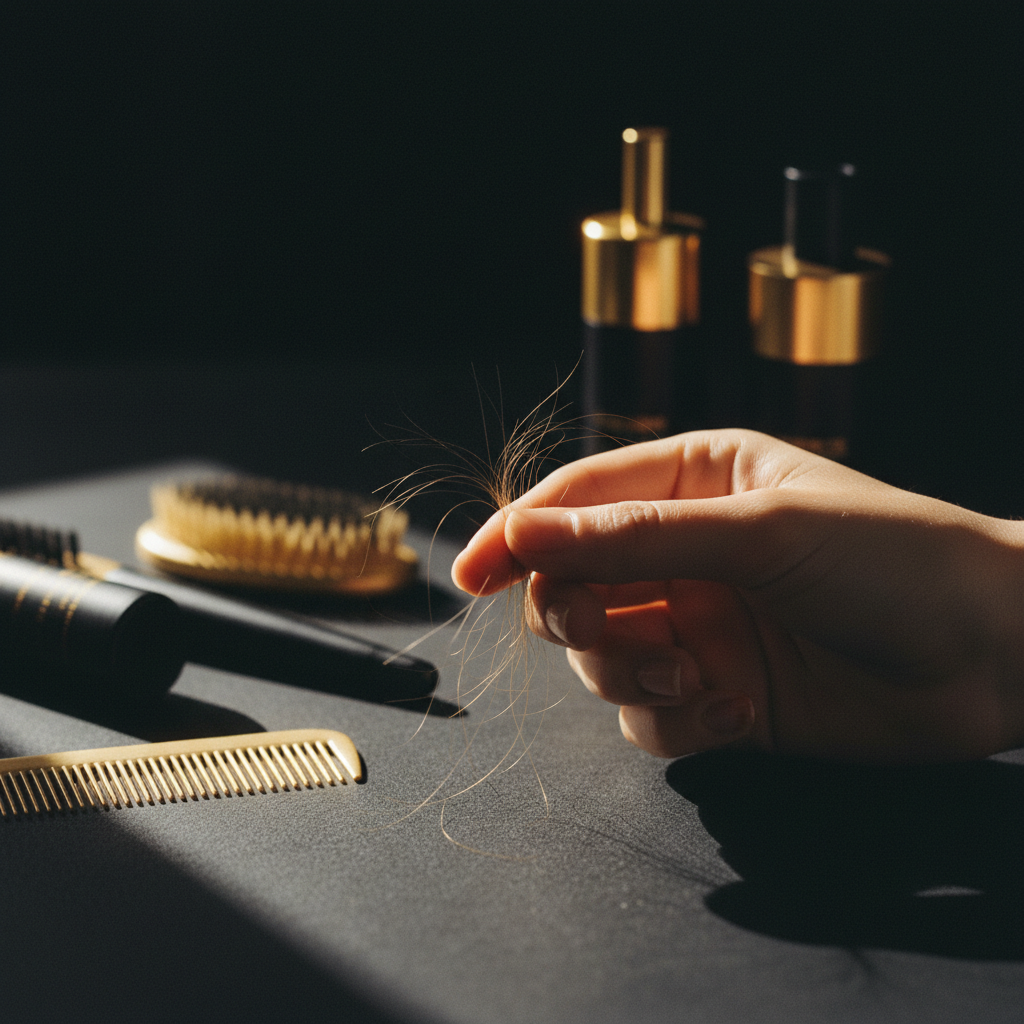
Quick answer: Hair Loss refers to the shedding of hair from the scalp or other parts of the body, distinct from hair breakage or normal daily shedding. It can manifest as thinning, patchiness, or complete absence of hair, affecting individuals of all ages. Understanding the specific type and underlying cause is crucial, as effective management depends on an accurate diagnosis by a healthcare professional, especially given the range of potential contributors from genetics to medical conditions.
Key takeaways
- Hair Loss is a distinct medical condition involving the premature shedding or cessation of hair growth, not hair breakage.
- The most common causes include genetic conditions like androgenetic alopecia, stress-induced telogen effluvium, and autoimmune disorders such as alopecia areata.
- Hair loss is classified by its pattern, distribution, and whether the hair follicle is permanently damaged or temporarily affected.
- Early diagnosis by a dermatologist or trichologist is vital for identifying the specific type of hair loss and determining the most appropriate management plan.
- While some types of hair loss are temporary and resolve on their own, others may require medical intervention to prevent progression.
Hair Loss: what the evidence shows
Hair loss, or alopecia, is a common concern characterised by a reduction in the number of hairs on the scalp or body. It's important to distinguish hair loss from normal daily hair shedding (losing 50 to 100 hairs per day as part of the natural hair cycle) and from hair breakage, where the hair fibre snaps along its shaft. True hair loss involves the hair follicle itself, either entering a resting phase too early, a shortened growth phase, or being damaged.
The Hair Growth Cycle: a foundation for understanding hair loss
Human hair follicles cycle through three primary phases: anagen (growth), catagen (transition), and telogen (resting and shedding). Disruptions to this finely tuned cycle are central to many forms of hair loss.
- Anagen (Growth Phase): This is the active growth period, lasting typically 2 to 7 years. Around 85 to 90% of hairs on a healthy scalp are in this phase, growing actively.
- Catagen (Transition Phase): A brief phase, lasting about 2 to 3 weeks, where hair growth stops, and the follicle shrinks.
- Telogen (Resting Phase): This phase lasts about 3 months. The hair rests in the follicle before eventually shedding, making way for new hair to begin the anagen phase. Roughly 10 to 15% of scalp hairs are normally in this phase.
When the balance of this cycle is disrupted, such as too many hairs entering the telogen phase prematurely, or the anagen phase shortening significantly, hair loss becomes noticeable.
Types of Hair Loss
Hair loss is not a single condition, but rather a symptom of various underlying issues. Understanding the type of hair loss is the first step towards effective management.
Androgenetic Alopecia (Pattern Hair Loss)
This is the most prevalent form of hair loss, affecting both men (male pattern baldness) and women (female pattern hair loss). It's primarily hereditary and hormonal.
- Mechanism: Androgenetic alopecia is linked to the sensitivity of hair follicles to dihydrotestosterone (DHT), a potent androgen. In genetically predisposed individuals, DHT can cause susceptible hair follicles to miniaturise. This means they gradually shrink, producing finer, shorter, and lighter hairs over time, eventually ceasing production altogether.
- Signs: In men, it typically begins with a receding hairline and/or thinning at the crown. In women, it often presents as diffuse thinning over the top and crown of the scalp, with the frontal hairline usually spared. Hair often appears less dense, and the scalp may become more visible.
Telogen Effluvium
This type of hair loss is characterised by sudden, widespread shedding, often occurring 2 to 4 months after a significant physical or emotional stressor.
- Mechanism: A large number of hairs (sometimes up to 70%) prematurely shift from the anagen (growth) phase into the telogen (resting) phase. Because telogen hairs are naturally shed, this results in an increased rate of shedding once those hairs complete their resting period.
- Triggers: Common triggers include severe illness (e.g., high fever, infection, major surgery), childbirth, significant weight loss, extreme psychological stress, certain medications (e.g., beta-blockers, anticoagulants), and nutritional deficiencies (e.g., iron deficiency, severe caloric restriction).
- Duration: Telogen effluvium is usually temporary. Once the underlying cause is addressed, hair growth typically recovers within 6 to 9 months, though full density may take longer.
Alopecia Areata
Alopecia areata is an autoimmune condition where the body's immune system mistakenly attacks healthy hair follicles.
- Mechanism: For reasons not fully understood, the immune system targets the hair follicles, leading to inflammation that disrupts the hair growth cycle. The exact triggers are thought to involve a combination of genetic predisposition and environmental factors.
- Signs: Typically presents as smooth, round, non-scarring patches of hair loss on the scalp. It can also affect other hair-bearing areas of the body, such as eyebrows or beards. In rare cases, it can progress to complete scalp hair loss (alopecia totalis) or total body hair loss (alopecia universalis).
Traction Alopecia
This form of hair loss is entirely preventable and caused by prolonged or repetitive tension on hair follicles.
- Mechanism: Consistent pulling on the hair shafts damages the follicles, leading to inflammation. Initially, this damage is reversible, but chronic traction can lead to permanent hair loss and scarring of the follicles.
- Causes: Commonly observed in individuals who wear tight hairstyles such as braids, dreadlocks, tight ponytails, hair extensions, or weaves. Prevention involves avoiding excessive tension on the hair, particularly at the hairline.
Other causes of hair loss
- Nutritional Deficiencies: Inadequate intake of essential nutrients such as iron, zinc, biotin, and vitamins (especially vitamin D) can impair hair health and growth, potentially leading to increased shedding. Severe protein or calorie restriction can also contribute.
- Thyroid Disorders: Both an overactive (hyperthyroidism) and underactive (hypothyroidism) thyroid can cause diffuse hair thinning and changes in hair texture due to hormonal imbalances affecting the hair cycle.
- Medications: A wide range of drugs can have hair loss as a side effect. These include chemotherapy agents, anticoagulants, antidepressants, certain blood pressure medications, and high doses of vitamin A.
- Scalp Infections: Fungal infections, such as tinea capitis (ringworm of the scalp), can cause localised patches of hair loss, often accompanied by scaling, redness, and itching. Bacterial infections can also lead to inflammation and hair loss.
- Trichotillomania: This is a compulsive disorder characterised by an irresistible urge to pull out one's own hair. It results in irregular patches of hair loss, often with broken hairs of varying lengths.
- Aging: As people age, hair follicles naturally produce finer hair, and the growth rate slows. This is a normal physiological change and often manifests as a general reduction in hair density rather than specific bald patches.
What the evidence does not show about hair loss
It's important to differentiate between evidence-based understanding and common myths. There is no scientific evidence to support claims that frequent shampooing, wearing hats, or exposure to everyday environmental factors like air pollution directly cause permanent hair loss for most people. While some cosmetic practices can lead to breakage or temporary hair shedding (e.g., heat styling, harsh chemical treatments), they typically do not cause permanent follicular damage unless extreme and prolonged. Similarly, while hard water can impact hair condition, controlled research has not found it to be a direct cause of hair loss.
When to get professional advice
If you notice sudden, significant hair shedding, developing bald patches, widespread thinning, or any associated scalp symptoms like itching, pain, or redness, it's advisable to seek professional medical advice. A dermatologist or trichologist can accurately diagnose the type of hair loss and its underlying cause. This may involve examining your scalp, reviewing your medical history, and sometimes performing blood tests or a scalp biopsy.
Early diagnosis is key, particularly for conditions where timely intervention can prevent progression or reverse the effects.
Management and Treatment Approaches for Hair Loss
Treatment strategies for hair loss are highly dependent on the specific diagnosis. A tailored approach is often necessary, combining medical treatments, lifestyle adjustments, and supportive hair care practices.
| Treatment Category | Mechanism of Action | Common Use Cases |
|---|---|---|
| Topical Medications | Directly applied to the scalp to stimulate follicles or reduce inflammation. | Minoxidil for androgenetic alopecia and some telogen effluvium; corticosteroids for alopecia areata. |
| Oral Medications | Systemic action to block hormones, suppress immune response, or provide essential nutrients. | Finasteride for male androgenetic alopecia; oral corticosteroids or immunosuppressants for severe alopecia areata; iron supplements for deficiency-related shedding. |
| Injections | Directly deliver substances into the scalp to target follicles. | Corticosteroid injections for patchy alopecia areata; Platelet-Rich Plasma (PRP) for androgenetic alopecia and general thinning. |
| Hair Transplantation | Surgical relocation of active hair follicles from donor to recipient areas. | Permanent solution for androgenetic alopecia in suitable candidates. |
| Lifestyle & Support | Addressing underlying health, nutrition, stress, and gentle hair care practices. | Supporting all types of hair loss, particularly telogen effluvium, and complementing medical treatments. |
Lifestyle adjustments for healthy hair and scalp
Supporting overall hair health can help mitigate some forms of hair loss and improve the condition of existing hair.
- Balanced Diet: Ensure adequate intake of protein, iron, zinc, and B vitamins. These are crucial for hair fibre production and follicle function. Specific deficiencies can be identified through blood tests and addressed with supplements under medical guidance.
- Stress Management: Chronic stress can exacerbate conditions like telogen effluvium and alopecia areata. Techniques such as mindfulness, yoga, or psychotherapy may help.
- Gentle Hair Care: Avoid excessive heat styling, tight hairstyles, and harsh chemical treatments that can damage the hair shaft and potentially stress follicles (see also: Hair Damage, Heat Styling Safety Best Practices, Chemical Hair Treatments). Use mild, sulfate-free shampoos and nourishing conditioners (see also: Sulfate-Free Shampoo Benefits, The Science of Conditioners).
- Scalp Health: Maintain a healthy scalp environment. Regular, gentle cleansing and addressing conditions like dandruff or excessive oiliness can support follicle function (see also: Understanding Scalp Health, Dandruff: Causes and Treatments Explained).
Frequently asked questions about Hair Loss
Is Hair Loss always permanent?
No, many types of hair loss are temporary. Telogen effluvium, for example, often resolves once the underlying trigger is removed. Hair loss from nutritional deficiencies or medication side effects can also be reversible. However, conditions like advanced androgenetic alopecia or scarring alopecias can cause permanent hair loss if not treated early.
Can diet cause hair loss?
Yes, severe nutritional deficiencies can contribute to hair loss. A lack of essential nutrients like iron, zinc, biotin, and protein can disrupt the hair growth cycle. However, a normal, balanced diet is usually sufficient, and extreme or fad diets are more likely to cause issues. Always consult a professional before taking supplements.
Is there a cure for all types of hair loss?
Currently, there is no single "cure" for all types of hair loss, but many conditions are highly manageable with effective treatments. For example, androgenetic alopecia can be slowed or partially reversed with medications like minoxidil or finasteride, and hair transplantation offers a surgical solution. Alopecia areata can often be managed with corticosteroids.
What's the difference between hair loss and hair shedding?
Hair shedding is a normal part of the hair growth cycle, where approximately 50 to 100 telogen hairs fall out daily. Hair loss, however, indicates an issue where hair is not regrowing or is shedding at an accelerated, abnormal rate. It suggests a disruption in the natural cycle or damage to the hair follicles themselves, leading to a noticeable reduction in hair density.
Does stress cause hair loss?
Yes, significant physical or emotional stress can lead to a type of hair loss called telogen effluvium. This causes a large number of hairs to prematurely enter the resting phase, leading to increased shedding several months later. Managing stress is an important part of preventing and recovering from this temporary form of hair loss.
A note on Watermans products for fuller-looking hair
Watermans products are formulated to support the appearance of healthier, fuller-looking hair and a healthy scalp environment. For individuals experiencing hair thinning, ingredients found in some Watermans products, such as biotin and zinc, are known to support normal hair health and growth when part of a balanced diet. Our Hair Growth Shampoo and Conditioner, for example, contain biotin, which contributes to the maintenance of normal hair. The GrowPro Hair Vitamins include zinc, an essential mineral that plays a role in hair tissue growth and repair. While Watermans products cannot treat medical hair loss conditions, they can complement a healthy hair care routine by improving the condition and feel of the hair fibre and supporting a good scalp environment.
Conclusion
Understanding hair loss requires distinguishing between normal daily shedding, hair breakage, and genuine follicular issues. With numerous causes ranging from genetic predispositions to temporary stressors and underlying medical conditions, identifying the specific type of hair loss is paramount. While some forms of hair loss are temporary and self-resolving, others may require medical intervention. Seeking advice from a dermatologist or trichologist is the most effective way to receive an accurate diagnosis and a personalised management plan to address hair loss and support overall hair health.
Sources and references
- American Academy of Dermatology Association, "Hair Loss: Diagnosis and Treatment", Year not specified, aad.org
- National Institute of Arthritis and Musculoskeletal and Skin Diseases (NIAMS), "Alopecia Areata: Questions and Answers", 2015, niams.nih.gov
- Mayo Clinic, "Hair loss", Year not specified, mayoclinic.org
- NHS, "Hair loss", Year not specified, nhs.uk
- British Association of Dermatologists, "Androgenetic Alopecia (Male and Female Pattern Hair Loss)", 2021, bad.org.uk
- British Association of Dermatologists, "Telogen Effluvium", 2021, bad.org.uk