Hair Loss: Causes and Types: An Evidence-Based Guide
10 min read ·
Understanding Hair Loss: Causes and Types involves recognising various conditions that lead to hair thinning or baldness, from genetic predispositions to temporary shedding due to stress, and distinguishing these from hair breakage.
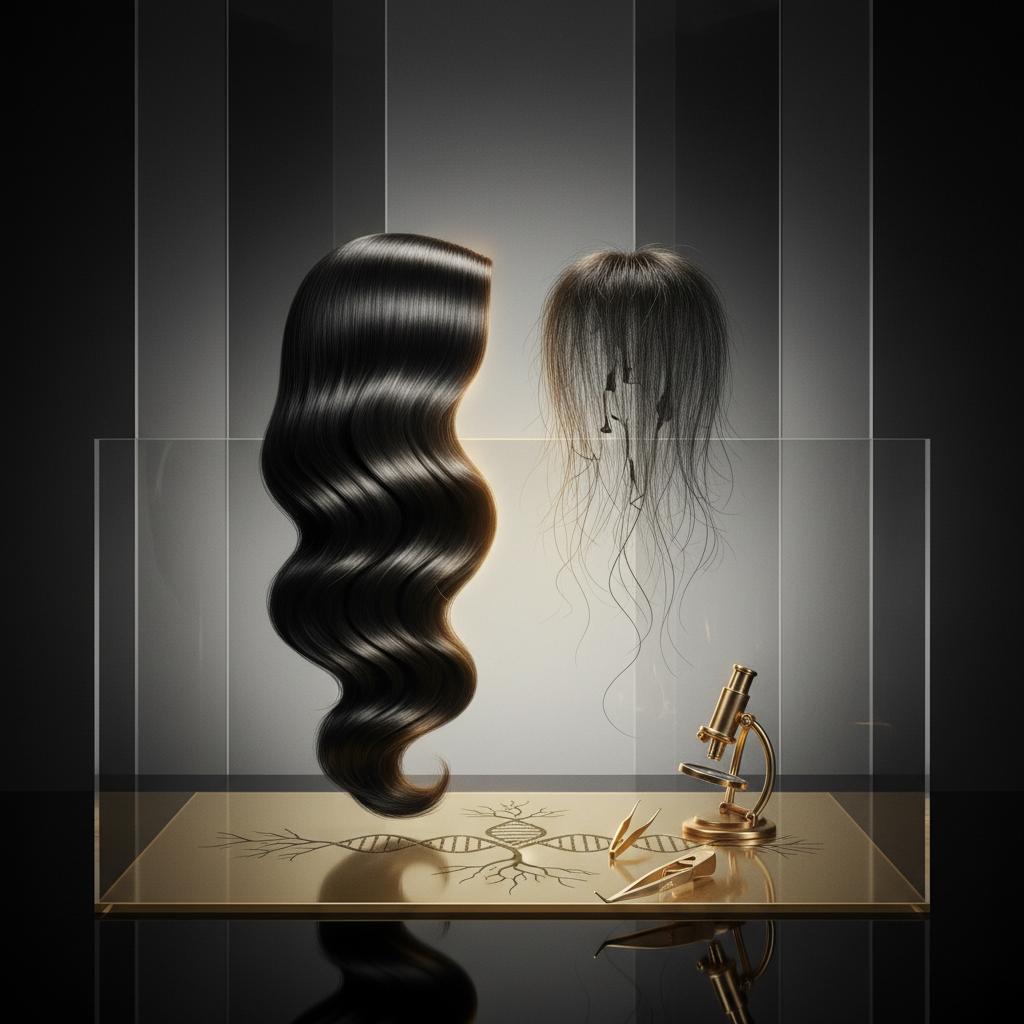
Quick answer: Hair Loss: Causes and Types refers to the conditions that lead to a reduction in the number of hairs on the scalp or body, either through shedding from the follicle (effluvium) or progressive miniaturisation of hair follicles (alopecia). These conditions are distinct from hair breakage, where the hair fibre snaps. While some causes are genetic and permanent, others are temporary and can resolve with treatment or time, but definitive evidence for many cosmetic treatments is still developing.
Key takeaways
- Hair loss is the reduction of hair from the scalp or body, distinct from hair breakage.
- Androgenetic alopecia, often called pattern hair loss, is the most common type, influenced by genetics and hormones.
- Telogen effluvium is a common form of temporary hair shedding triggered by stress, illness, or hormonal changes.
- Autoimmune conditions, nutritional deficiencies, and certain medications can also cause hair loss.
- Early identification of the specific type and cause of hair loss is important for appropriate management.
- Always consult a healthcare professional, such as a dermatologist, for an accurate diagnosis and treatment plan.
Hair Loss: Causes and Types: what the evidence shows
Hair loss, medically known as alopecia, involves a reduction in the number of hairs on the scalp or body. It's important to distinguish hair loss from hair shedding, which is the natural detachment of hairs during the telogen phase of the hair growth cycle, and from hair breakage, which is when the hair fibre itself snaps along the shaft. A clear understanding of Hair Loss: Causes and Types is essential for identifying the best course of action.
Understanding the hair growth cycle
To understand why hair loss occurs, it's helpful to know about the hair growth cycle. Hair follicles cycle through three main phases:
- Anagen (Growing Phase): This active phase lasts between 2 and 7 years. During anagen, hair cells divide rapidly, forming the hair shaft. At any given time, around 85 to 90% of your hair is in this phase.
- Catagen (Transition Phase): A short, transitional phase lasting approximately 2 to 3 weeks. Growth stops, and the hair follicle shrinks.
- Telogen (Resting/Shedding Phase): This phase typically lasts for 3 to 4 months. The hair follicle is at rest, and the old hair is shed to make way for new hair growth. About 10 to 15% of your hairs are in this phase at any given moment.
Disruptions to this cycle, such as a premature entry into the telogen phase, an extended telogen phase, or a shortened anagen phase, can contribute to various forms of hair loss.
Genetic predispositions: the most common cause of hair loss
Genetic factors play a significant role in many types of hair loss. Androgenetic alopecia, often called pattern hair loss, is the most prevalent form. It affects both men (male pattern baldness) and women (female pattern hair loss) and is largely hereditary. In this condition, hair follicles on the scalp become sensitive to dihydrotestosterone (DHT), a derivative of testosterone. This sensitivity causes the follicles to gradually miniaturise, producing progressively shorter, finer, and thinner hairs over time. This process can eventually lead to complete cessation of hair growth from affected follicles.
Hormonal changes and their impact on hair
Hormones have a powerful influence on the hair growth cycle. Fluctuations can trigger or exacerbate hair loss:
- Pregnancy and Postpartum: During pregnancy, high oestrogen levels prolong the anagen phase, leading to fuller hair. After childbirth, oestrogen levels drop sharply, causing a large number of hairs to enter the telogen phase simultaneously. This results in significant hair shedding, known as postpartum telogen effluvium, typically occurring 2 to 4 months after delivery.
- Thyroid Disorders: Both an underactive thyroid (hypothyroidism) and an overactive thyroid (hyperthyroidism) can disrupt the hair cycle. Hypothyroidism often causes dry, brittle hair and diffuse shedding, while hyperthyroidism can also lead to hair thinning.
- Menopause: Decreasing oestrogen and progesterone levels during menopause can contribute to diffuse hair thinning in women, often exacerbating genetically predisposed female pattern hair loss.
- Polycystic Ovary Syndrome (PCOS): This condition can lead to higher levels of androgens, potentially causing hair thinning on the scalp and increased body hair.
Medical conditions and treatments that cause hair loss
Several health issues and their treatments can lead to various types of hair loss:
- Autoimmune Diseases: Conditions like alopecia areata, lupus, and rheumatoid arthritis involve the immune system mistakenly attacking healthy hair follicles, leading to localised or widespread hair loss. Alopecia areata causes characteristic round or oval patches of hair loss.
- Scalp Infections: Fungal infections such as tinea capitis (ringworm of the scalp) can cause scaly patches and breakage, leading to localised hair loss. Bacterial infections can also contribute.
- Medications: Many medications list hair loss as a potential side effect. These include chemotherapy drugs (causing anagen effluvium), some anticoagulants, antidepressants, blood pressure medications (beta-blockers), and retinoids. The extent and type of hair loss vary depending on the drug.
- Nutritional Deficiencies: A lack of essential nutrients can impair hair growth. Deficiencies in iron (leading to anaemia), zinc, biotin, vitamin D, and protein have all been linked to hair thinning or shedding. Extreme calorie restriction or very low-protein diets can also cause telogen effluvium.
Stress: physical, emotional, and dietary
Significant physical or emotional stress can push a large number of hair follicles into the telogen phase prematurely. This delayed hair shedding, known as telogen effluvium, typically becomes noticeable 2 to 3 months after the stressful event. Examples of stressors include severe illness, major surgery, sudden weight loss, significant emotional trauma, or even chronic psychological stress. Dietary changes, such as crash dieting, can also act as a physical stressor.
Physical damage to the hair and scalp
Certain hair care practices and physical stressors can cause hair loss through direct damage:
- Traction Alopecia: This occurs from prolonged or repetitive tension on hair follicles, often due to tight hairstyles like braids, ponytails, dreadlocks, or hair extensions. It typically presents as hair loss along the hairline or at the temples. If the tension is sustained over many years, it can lead to permanent damage and scarring of the follicles.
- Chemical Damage: Over-processing with harsh chemical treatments such as relaxers, perms, or excessive bleaching can severely damage the hair shaft and, in some cases, the follicle itself. This primarily causes hair breakage, but severe chemical burns to the scalp can lead to scarring alopecia and permanent hair loss. To minimise this, understand 'Chemical Hair Treatments: What They Are and How They Affect Hair'.
- Heat Damage: Excessive or improper heat styling can weaken the hair shaft, leading to breakage. While not typically a direct cause of hair loss from the follicle, severe scalp burns from heat tools could potentially damage follicles permanently. Always follow 'Heat Styling Safety Best Practices'.
Types of Hair Loss: a comparative overview
Hair loss can manifest in several distinct ways, each with its own characteristics and underlying mechanisms. Understanding these types is crucial for accurate diagnosis and effective management.
| Type of Hair Loss | Primary Cause | Appearance | Common Affected Areas | Prognosis |
|---|---|---|---|---|
| Androgenetic Alopecia | Genetic predisposition, DHT sensitivity | Gradual thinning; receding hairline (men), widening part (women) | Crown, temples (men); diffuse scalp (women) | Progressive; often permanent without intervention |
| Telogen Effluvium | Major physical/emotional stress, illness, hormonal shift | Diffuse, sudden, widespread shedding; hair comes out easily | Entire scalp | Often temporary; resolves once cause is removed |
| Alopecia Areata | Autoimmune condition | Smooth, circular patches of hair loss; can be single or multiple | Scalp, beard, other body hair | Can spontaneously resolve or recur; variable |
| Anagen Effluvium | Chemotherapy, radiation, toxic chemicals | Rapid, extensive shedding; hairs often break before emerging from scalp | Entire scalp, sometimes body hair | Usually regrows after treatment stops, but may be fine |
| Traction Alopecia | Chronic pulling on hair follicles (tight hairstyles) | Hair loss along hairline, temples, or where tension applied | Hairline, temples, areas of tight styling | Reversible if caught early; permanent if chronic scarring |
| Scarring Alopecias | Inflammatory conditions destroying follicles | Patches of hair loss with visible scarring; permanent | Variable, often patchy | Permanent; follicles are destroyed |
What the evidence does not show about hair loss
Despite numerous claims, there is currently insufficient scientific evidence to support many proposed "cures" or cosmetic interventions for all types of hair loss. For example, while certain shampoos or topical treatments can improve the appearance of hair density or reduce breakage, there is no strong evidence that they can reverse established androgenetic alopecia or permanently cure autoimmune hair loss. Claims that hard water directly causes follicular hair loss are also not scientifically proven; hard water primarily affects hair texture and can lead to breakage, not hair loss from the root. Similarly, frequent shampooing, wearing hats, or specific hair drying techniques are generally not shown to cause hair loss from the follicle.
When to get professional advice for Hair Loss: Causes and Types
While some daily hair shedding is normal (typically 50 to 100 hairs), significant or sudden changes in your hair density or growth pattern warrant a consultation with a healthcare professional. It's advisable to see your GP or a dermatologist if you notice:
- Sudden or rapid hair loss.
- Patchy hair loss.
- Extensive hair shedding that doesn't resolve.
- Scalp pain, itching, redness, or scaling accompanying hair loss.
- Signs of hair thinning or balding that are concerning you.
Early diagnosis of Hair Loss: Causes and Types allows for timely intervention, which can often improve outcomes and potentially prevent further progression, especially for conditions like androgenetic alopecia or scarring alopecias.
Frequently asked questions about Hair Loss: Causes and Types
Can hair loss be reversed?
It depends on the cause. Hair loss from telogen effluvium or certain nutritional deficiencies often reverses once the underlying issue is resolved. Androgenetic alopecia can be managed with treatments to slow progression and stimulate regrowth, but it is often a lifelong condition. Scarring alopecias, where follicles are destroyed, cause permanent hair loss.
Is stress a direct cause of permanent hair loss?
Chronic or severe stress typically causes telogen effluvium, a temporary increase in hair shedding that usually resolves within months once the stressor is removed. While stress can exacerbate other forms of hair loss, such as alopecia areata, it is not generally considered a direct cause of permanent hair loss from the follicle itself.
How many hairs are normal to lose per day?
It's normal to shed approximately 50 to 100 hairs per day as part of the natural hair growth cycle. This amount can vary slightly depending on hair density and recent hair washing. If you notice significantly more hair coming out, especially when washing or brushing, it may indicate increased shedding.
Does diet affect Hair Loss: Causes and Types?
Yes, diet can significantly affect hair health and can be a contributing factor to hair loss. Deficiencies in essential nutrients like iron, zinc, protein, and certain vitamins (e.g., Vitamin D, Biotin) can lead to hair thinning or shedding. A balanced diet supports healthy hair growth, while restrictive or unbalanced diets can trigger telogen effluvium.
Can styling products cause hair loss?
Generally, styling products do not cause hair loss from the follicle. However, some products, especially those with harsh chemicals or strong hold, can cause hair breakage if used excessively or improperly. Products that cause scalp irritation or allergic reactions could potentially contribute to conditions that affect follicle health, but this is less common than breakage.
What is the role of genetics in hair loss?
Genetics are a primary factor in the most common type of hair loss, androgenetic alopecia. Your genetic makeup determines your susceptibility to the effects of hormones like DHT on your hair follicles. If your parents or grandparents experienced pattern baldness, you are more likely to inherit this predisposition for Hair Loss: Causes and Types.
Supporting your hair health with Watermans
Understanding Hair Loss: Causes and Types is the first step towards managing it effectively. For those looking to support their hair's appearance of fullness and health, Watermans offers products designed to stimulate the scalp and strengthen existing hair fibres. Our GrowMe Shampoo and Conditioner contain hydrolysed lupin protein, caffeine, and biotin, ingredients often used to support hair health. For specific nutrient support, Watermans Hair Vitamins include biotin, selenium, and zinc, which contribute to the maintenance of normal hair.
Sources and references
- American Academy of Dermatology Association, "Hair Loss: Diagnosis and Treatment."
- British Association of Dermatologists, "Androgenetic Alopecia."
- Mayo Clinic, "Hair loss."
- National Institute of Arthritis and Musculoskeletal and Skin Diseases (NIAMS), "Alopecia Areata."
- NHS, "Hair loss."
- PubMed Central, "Female Pattern Hair Loss: A Clinical and Therapeutic Review.", 2017. DOI: 10.3390/jcm6090082
- PubMed Central, "Telogen Effluvium: A Review of the Literature.", 2019. DOI: 10.3390/jcm8010011
- PubMed Central, "The role of nutrition in the pathogenesis and treatment of hair loss: a review.", 2018. DOI: 10.4103/ijdd.ijdd_73_17
- The Hair Scientific Group, "Hair Biology."
- University of Manchester, Centre for Dermatology Research.