Understanding the Hair Growth Cycle
5 min read ·
The hair growth cycle consists of four distinct phases: anagen, catagen, telogen, and exogen, each playing a crucial role in hair health and renewal.
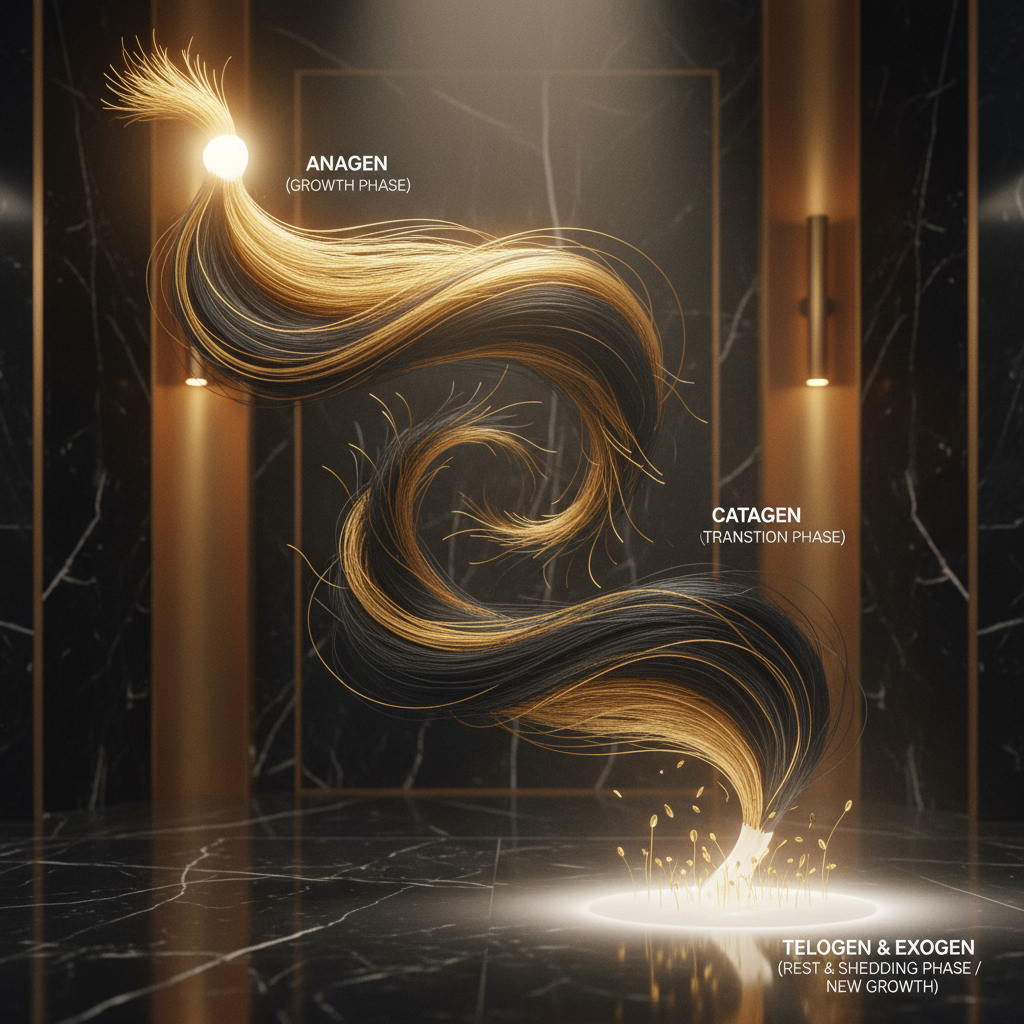
The Hair Growth Cycle: An Overview
Hair growth is a dynamic and continuous biological process, not a singular event. It occurs in distinct stages, collectively known as the hair growth cycle. This cycle is critical for maintaining healthy hair and understanding it provides insight into common hair concerns such as hair loss or thinning. Each hair follicle on the scalp operates independently, meaning that while some hairs are actively growing, others may be resting or shedding.
The Four Phases of Hair Growth
The hair growth cycle is traditionally described in three main phases: anagen, catagen, and telogen. However, increasingly, a fourth phase, exogen, is recognized as distinct from telogen due to its specific role in hair shedding.
Anagen (Growing Phase)
Anagen is the active growth phase of a hair follicle. During this period, cells in the hair bulb divide rapidly, forming new hair strands. The hair shaft pushes up and out, growing approximately 1 centimeter per month. The duration of the anagen phase is the primary determinant of hair length. For scalp hair, this phase typically lasts between two to seven years, but it can vary significantly among individuals and is influenced by genetics, age, and overall health.
During anagen, the hair bulb is deeply embedded in the dermis, receiving a rich supply of nutrients and oxygen from the blood vessels. This sustained supply fuels the rapid cell proliferation necessary for continuous growth.
Catagen (Transition Phase)
Following the anagen phase, the hair follicle enters catagen, a short transitional phase that lasts approximately two to three weeks. During catagen, hair growth ceases, and the hair follicle undergoes significant changes. The follicle shrinks in size, detaches from its blood supply (the dermal papilla), and the lower part of the follicle begins to degenerate. The hair bulb shrivels, and the hair shaft itself, now known as a "club hair," is prepared for shedding.
Less than 1% of all hairs are in the catagen phase at any given time.
Telogen (Resting Phase)
Telogen is the resting phase of the hair growth cycle, lasting for about three to four months. During this phase, the club hair remains in the follicle, but it is no longer actively growing. Though seemingly inactive, the telogen phase is crucial for the regeneration of the hair follicle. The dermal papilla, which provides nutrients to the growing hair, rests but remains dormant, awaiting reactivation for the next anagen phase.
Approximately 10-15% of scalp hairs are in the telogen phase at any given time. It is normal to shed 50-100 telogen hairs per day as new anagen hairs push them out.
Exogen (Shedding Phase)
Often considered a natural extension of telogen, the exogen phase is the active shedding of old hairs. While the hair has technically ceased growth during telogen, exogen is the process where the club hair is released from the follicle. This shedding is typically aided by everyday activities such as washing, brushing, or combing the hair. Concurrently, a new hair often begins its anagen phase in the same follicle, pushing the old hair out as it grows. This synchronization ensures a continuous cycle of hair renewal.
Factors Influencing the Hair Growth Cycle
Several factors can influence the duration and health of the hair growth cycle:
- Genetics: The length of your anagen phase is largely genetically determined, explaining why some individuals can grow very long hair while others cannot.
- Age: As individuals age, the anagen phase tends to shorten, and the telogen phase may lengthen, leading to thinner and less dense hair over time.
- Nutrition: A balanced diet rich in essential vitamins, minerals, and proteins is vital for healthy hair growth. Deficiencies can disrupt the cycle, leading to premature shedding or slowed growth.
- Hormones: Hormonal fluctuations, such as those experienced during pregnancy, childbirth, menopause, or due to thyroid imbalances, can significantly impact the hair growth cycle. Androgens, in particular, play a key role in pattern hair loss.
- Stress: High levels of physical or emotional stress can prematurely push a large number of hairs into the telogen phase, resulting in increased shedding known as telogen effluvium.
- Medications: Certain medications, including chemotherapy drugs, anticoagulants, and some antidepressants, can interfere with the hair growth cycle.
- Scalp Health: A healthy scalp environment is crucial. Conditions like dandruff, fungal infections, or inflammation can impede nutrient delivery to the hair follicles, thereby affecting growth.
Understanding Hair Loss and the Cycle
Most forms of hair loss are linked to disruptions in the hair growth cycle. For example:
- Androgenetic Alopecia (Pattern Hair Loss): In this common form of hair loss, follicles progressively miniaturize, and the anagen phase shortens with each cycle, leading to thinner, finer hairs and eventual baldness.
- Telogen Effluvium: This occurs when a significant number of hairs prematurely enter the telogen phase due to stress, illness, or nutritional deficiencies, leading to sudden, widespread shedding.
- Anagen Effluvium: This is a rapid shedding of growing hairs, often seen with chemotherapy, where the anagen phase is abruptly terminated.
Supporting a Healthy Hair Growth Cycle
While genetics play a significant role, various practices can support a healthy hair growth cycle:
- Balanced Nutrition: Ensure adequate intake of vitamins (especially B vitamins, D, E), minerals (iron, zinc, selenium), and protein. Biotin, a B vitamin, is often highlighted for its role in hair health.
- Gentle Hair Care: Avoid harsh brushing, excessive heat styling, and tight hairstyles that can cause traction on the hair follicles and lead to breakage or damage.
- Scalp Care: Maintain a clean and healthy scalp. Regular, gentle cleansing can prevent product buildup and inflammation, which can hinder follicle function.
- Stress Management: Incorporate stress-reducing activities such as meditation, yoga, or regular exercise into your routine.
- Targeted Hair Products: Some hair care products, such as hair growth shampoos, are formulated with ingredients that aim to support the hair growth cycle by nourishing the scalp or addressing specific concerns like thinning hair. For instance, Watermans Hair products contain scientifically backed ingredients that help to create an optimal environment for hair growth.
Hair Growth Cycle Phases Summary
| Phase | Average Duration | Characteristics |
|---|---|---|
| Anagen | 2-7 years (scalp) | Active growth; hair matrix cells divide rapidly |
| Catagen | 2-3 weeks | Transitional; follicle shrinks; hair detaches |
| Telogen | 3-4 months | Resting; hair is fully formed but not growing |
| Exogen | Varies | Active shedding of old hair; new hair often begins anew |
Understanding the intricacies of the hair growth cycle empowers individuals to make informed decisions about their hair care and address concerns proactively. By nurturing each phase, one can contribute to the overall health and vitality of their hair.
Find these ingredients in Watermans products
- Biotin, you will find this ingredient in our Hair Growth Shampoo.
- Zinc, you will find this ingredient in our Hair Vitamins.