Understanding the Hair Growth Cycle
4 min read ·
The hair growth cycle consists of four distinct phases: anagen, catagen, telogen, and exogen, each playing a crucial role in hair health and renewal.
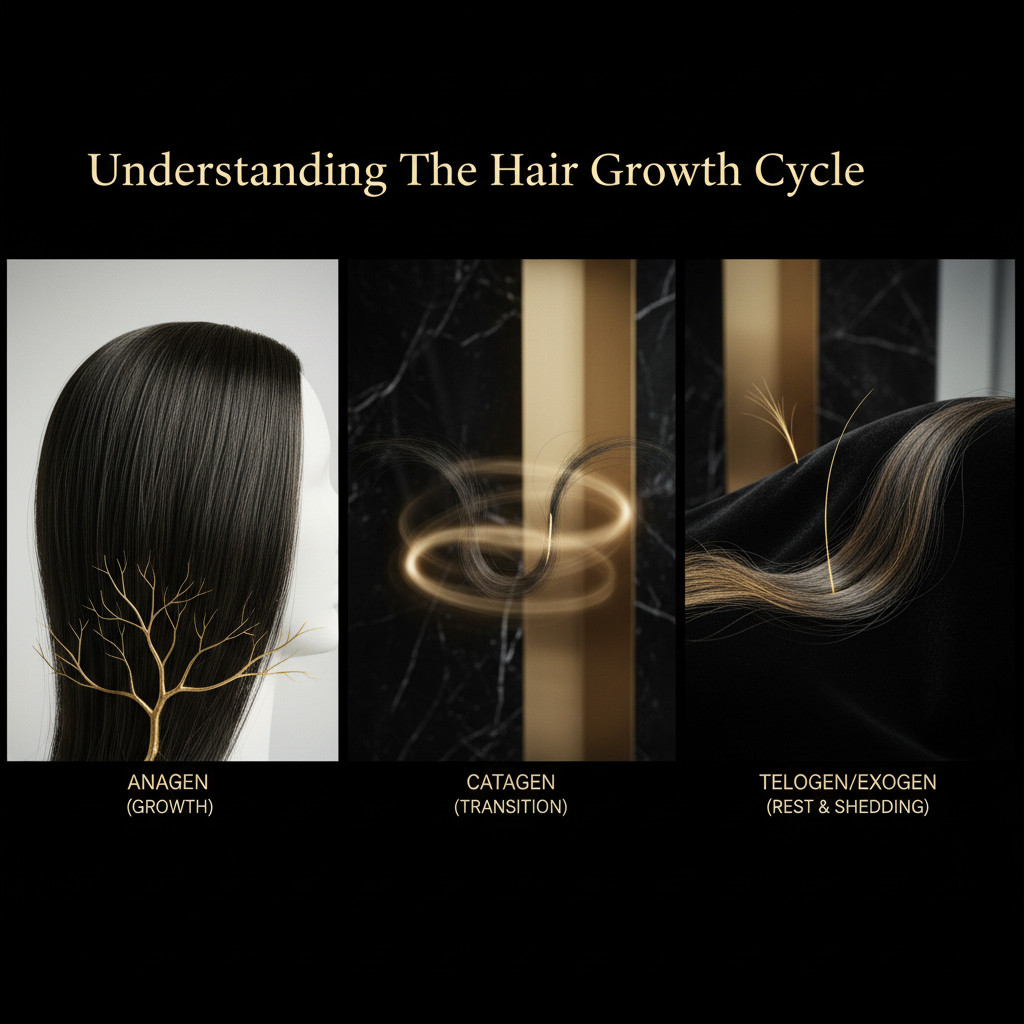
The Hair Growth Cycle: An Overview
Hair growth is a continuous, cyclical process involving distinct stages. Understanding this cycle is fundamental to comprehending hair health, hair loss, and the efficacy of hair growth treatments. Each hair follicle on the human body operates independently, meaning that each hair is in a different stage of the cycle at any given time. This asynchronous growth prevents all hair from falling out simultaneously, ensuring a consistent density of hair.
The Anagen Phase: Growth
The anagen phase is the active growth phase of hair. During this period, cells in the hair bulb, the base of the hair follicle, rapidly divide, leading to the formation of new hair cells. These new cells push the older cells upward, causing the hair shaft to grow longer. The duration of the anagen phase largely determines the maximum length a hair can achieve. For scalp hair, this phase typically lasts between two and seven years, though it can vary significantly based on genetics, age, and overall health. In contrast, the anagen phase for body hair is much shorter, usually lasting only a few months, which explains why hair on other parts of the body does not grow as long as scalp hair.
Factors influencing the anagen phase include nutritional intake, hormonal balance, and genetic predispositions.
The Catagen Phase: Transition
Following the anagen phase, hair enters the catagen phase, a short transitional stage. This phase typically lasts about two to three weeks. During catagen, the hair follicle shrinks, and the hair detaches from the blood supply and dermal papilla, which nourishes the growing hair. The hair stops growing, and the follicle prepares for a period of rest. Approximately 1-2% of all hairs are in the catagen phase at any given time.
The Telogen Phase: Rest
The telogen phase is the resting stage of the hair growth cycle. This phase generally lasts around three to four months. During telogen, the hair remains in the follicle but is not actively growing. A new hair often begins to form in the follicle beneath the resting hair, eventually pushing it out. This is a crucial period for the follicle to regenerate and prepare for a new anagen phase. About 10-15% of all hairs are typically in the telogen phase. While often referred to as the "resting phase," the telogen phase is metabolically active, preparing for the growth of new anagen hair.
The Exogen Phase: Shedding
The exogen phase is often considered a part of the telogen phase and involves the active shedding of old hair. During this stage, the new hair that began forming in the telogen phase fully emerges, pushing the old, club hair out of the follicle. It is normal to shed 50 to 100 hairs per day as part of this natural renewal process. Excessive shedding beyond this range can indicate an underlying issue and may warrant further investigation.
Factors Affecting the Hair Growth Cycle
Several internal and external factors can profoundly influence the hair growth cycle, leading to changes in hair density, growth rate, and overall health.
Nutritional Deficiencies
Healthy hair growth requires a steady supply of essential nutrients. Deficiencies in vitamins like biotin, vitamin D, and iron, as well as proteins and essential fatty acids, can disrupt the anagen phase, leading to weaker hair and increased shedding.
Hormonal Imbalances
Hormones play a significant role in regulating the hair growth cycle. Conditions such as thyroid disorders, polycystic ovary syndrome (PCOS), and postpartum hormonal shifts can lead to pronounced changes in hair growth patterns, often manifesting as thinning or excessive shedding.
Stress
Both acute and chronic stress can impact the hair growth cycle. Severe stress can prematurely push a significant number of hairs into the telogen phase, leading to a condition known as telogen effluvium, characterized by widespread shedding several months after a stressful event.
Medications and Medical Conditions
Certain medications, including some chemotherapy drugs, anticoagulants, and antidepressants, can interfere with hair growth. Various medical conditions, such as autoimmune diseases, can also affect hair follicles and growth.
Genetics
Genetic predisposition significantly influences the length of the anagen phase and the likelihood of developing conditions like androgenetic alopecia (pattern baldness), where hair follicles gradually miniaturize over successive cycles.
Maintaining a Healthy Hair Growth Cycle
Supporting a healthy hair growth cycle involves a holistic approach. Key strategies include:
- Balanced Nutrition: Consume a diet rich in proteins, vitamins, and minerals essential for hair health.
- Stress Management: Implement stress-reduction techniques to mitigate its impact on hair.
- Gentle Hair Care: Avoid harsh chemical treatments, excessive heat styling, and tight hairstyles that can damage hair and follicles.
- Targeted Hair Products: Utilizing products designed to support hair growth can provide beneficial nutrients directly to the scalp and follicles. For instance, a hair growth shampoo can deliver ingredients like caffeine and biotin to help stimulate the scalp and support healthy hair production.
Hair Cycle Phases at a Glance
| Phase | Duration | Key Characteristics |
|---|---|---|
| Anagen | 2-7 years | Active growth, cells rapidly divide, hair lengthens |
| Catagen | 2-3 weeks | Transitional phase, follicle shrinks, hair detaches |
| Telogen | 3-4 months | Resting phase, hair remains in follicle, new hair begins to form |
| Exogen | Varies | Active shedding of old hair, new hair emerges |
Find these ingredients in Watermans products
- Vitamin D, you will find this ingredient in our Hair Vitamins.