Anatomy of the Hair Follicle
4 min read ·
The hair follicle is a complex mini-organ responsible for hair growth and plays a crucial role in hair health and appearance.
Introduction
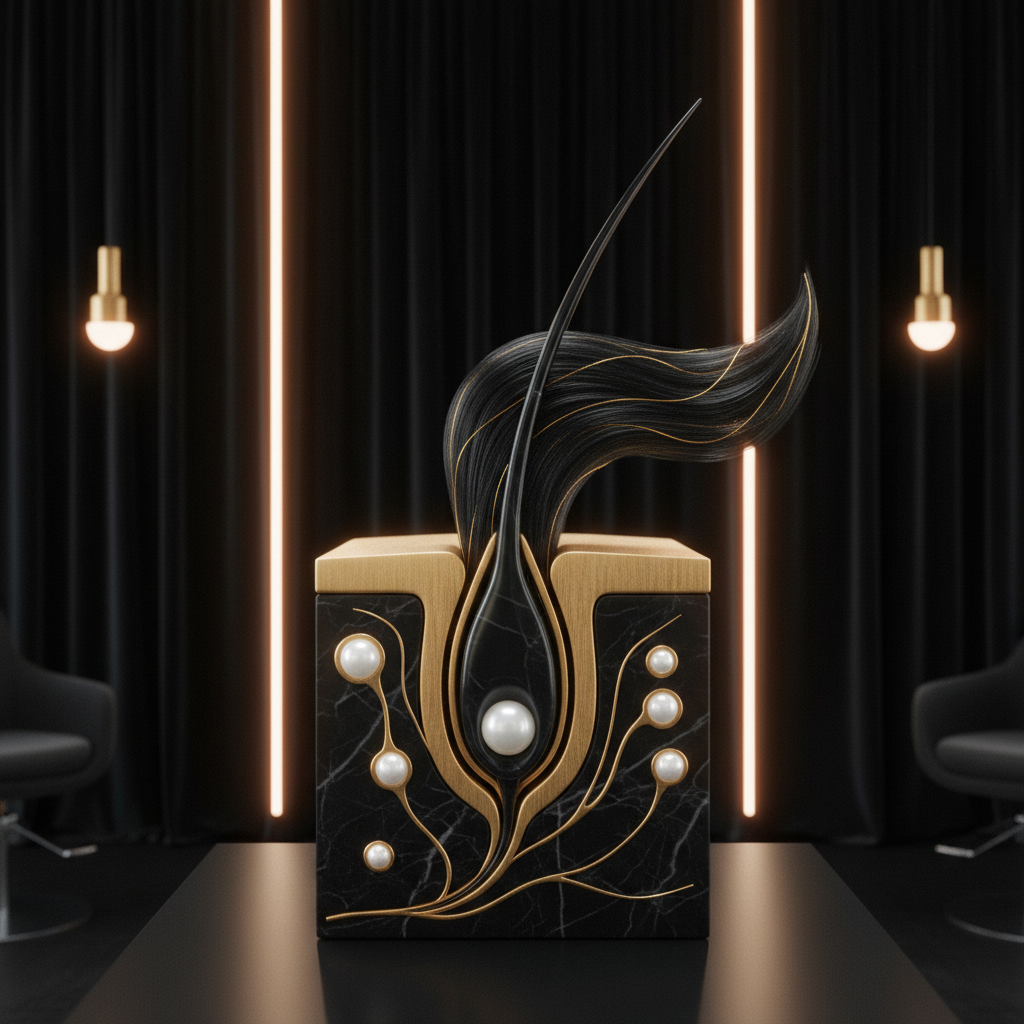
The hair follicle is a dynamic, self-renewing organ embedded in the skin (dermis) that produces hair fibres. Understanding its intricate structure and function is fundamental to comprehending hair growth, hair loss, and various hair conditions. Each hair follicle acts as a miniature factory, orchestrating a precise cycle of growth, regression, and rest.
Structure of the Hair Follicle
The hair follicle is a complex structure composed of several distinct parts, each with specialized roles:
- Hair Bulb: The base of the hair follicle, which is the most metabolically active region. It houses the dermal papilla and the germinal matrix.
- Dermal Papilla: A small, cone-shaped indentation at the base of the hair bulb, rich in blood vessels and nerves. It supplies nutrients to the hair follicle and signals to the matrix cells to grow.
- Germinal Matrix: Surrounds the dermal papilla and contains rapidly dividing cells (keratinocytes) that produce the hair shaft.
- Hair Shaft: The visible part of the hair that extends beyond the skin surface. It is primarily composed of keratin, a tough, fibrous protein. The hair shaft itself has three main layers:
- Medulla: The innermost layer, often absent in fine hair, containing large, loosely packed cells.
- Cortex: The main body of the hair shaft, providing strength, colour, and texture. It comprises elongated, spindle-shaped cells containing melanin (pigment).
- Cuticle: The outermost protective layer, consisting of overlapping, scale-like cells that protect the inner cortex from damage. When healthy, these scales lie flat, reflecting light and making hair appear shiny.
- Inner Root Sheath (IRS): A protective layer that guides the growing hair shaft out of the follicle. It is shed as the hair grows and is composed of three layers: Henle's layer, Huxley's layer, and the cuticle of the inner root sheath.
- Outer Root Sheath (ORS): An extension of the epidermis that surrounds the IRS. It provides structural support to the follicle and contains stem cells essential for hair regeneration.
- Sebaceous Gland: An oil-producing gland connected to the hair follicle. It secretes sebum, a natural oil that lubricates the hair and skin, providing moisture and a protective barrier against environmental damage.
- Arrector Pili Muscle: A small, involuntary muscle attached to the hair follicle. When it contracts (e.g., due to cold or fear), it pulls the hair follicle upright, causing "goosebumps."
- Nerve Endings: Sensory nerves surrounding the follicle detect touch and pressure, contributing to the hair's tactile function.
Hair Follicle and Hair Growth Cycle
The hair follicle undergoes a continuous, cyclical process of growth, regression, and rest. This cycle consists of three main phases:
- Anagen (Growth Phase): This is the active growth phase, during which hair cells rapidly divide in the germinal matrix, and the hair shaft extends. The duration of Anagen varies depending on the body location and genetic factors, lasting from 2 to 7 years on the scalp.
- Catagen (Transition Phase): A short transitional phase, lasting about 2-3 weeks, where hair growth stops. The follicle shrinks, and the dermal papilla detaches from the germinal matrix.
- Telogen (Resting Phase): The hair follicle is in a resting state, lasting approximately 3 months. The old hair remains in the follicle but is not actively growing. At the end of Telogen, a new Anagen phase begins, pushing out the old hair.
Approximately 85-90% of scalp hairs are in the Anagen phase, 1% in Catagen, and 10-15% in Telogen at any given time.
Hair Cycle Disorders
Disruptions to this cycle can lead to various hair conditions. For example, a shortened Anagen phase can result in thinner, shorter hair, while an increased number of hairs entering the Telogen phase prematurely can cause significant shedding, known as Telogen Effluvium.
Role in Hair Health
Healthy hair follicles are paramount for strong, vibrant hair. The dermal papilla's ability to nourish the germinal matrix directly influences hair thickness, growth rate, and overall quality. A well-functioning sebaceous gland ensures the hair is adequately moisturized, preventing dryness and breakage. The integrity of the cuticle, formed by the cells originating in the follicle, is crucial for protecting the internal structure of the hair shaft from environmental damage, chemical treatments, and mechanical stress.
Factors such as nutrition, hormones, stress, and genetics can significantly impact the health and function of the hair follicle. Understanding these internal and external influences on the follicle helps in addressing hair concerns effectively.
Conclusion
The hair follicle is a marvel of biological engineering, performing the complex task of producing and maintaining hair. Its intricate structure and cyclical activity are intrinsically linked to hair appearance and scalp health. A healthy hair follicle is the foundation for healthy hair, making its study crucial for the advancement of haircare science and the development of effective solutions for various hair and scalp conditions.
Where Watermans fits
If you want a routine built around the science above, these are the products from the range that apply here: