Hair Dye Allergy Symptoms: Identification, Clinical Causes, and Safe Management
9 min read ·
Learn to identify hair dye allergy symptoms, understand the risks of PPD reactions, distinguish allergy from irritation, and care for your scalp safely.
Quick answer: Recognising hair dye allergy symptoms early is critical for preventing severe dermatological reactions. Common signs range from mild scalp stinging, erythema, and itching to severe contact dermatitis, facial swelling, eyelid oedema, and blistering. Most reactions stem from paraphenylenediamine (PPD) and typically emerge 24 to 72 hours after application. However, a topical patch test does not detect immediate Type I systemic hypersensitivity, meaning severe, life-threatening anaphylaxis remains a rare but distinct medical emergency requiring immediate urgent care.
Key takeaways
- Most hair colour reactions represent allergic contact dermatitis (Type IV delayed hypersensitivity) driven by oxidative dyes like paraphenylenediamine (PPD).
- Classic symptoms include intense scalp itching, red patches, burning sensations, weeping blisters, and swollen eyelids or ears.
- Symptoms typically appear 24 to 72 hours after exposure, though prior sensitisation can build silently over years without visible issues.
- Irritant contact dermatitis mimics an allergy but occurs rapidly due to chemical harshness (such as high alkalinity or peroxides) rather than an immune response.
- Severe symptoms like facial swelling, throat tightness, dizziness, or wheezing demand immediate emergency medical intervention.
- Performing a 48-hour patch test before every single colouring treatment remains the frontline defence against acute clinical reactions.
Hair Dye Allergy Symptoms: what the evidence shows
Clinical dermatology categorises adverse responses to hair colouring into two distinct physiological classes: allergic contact dermatitis and irritant contact dermatitis. True allergic contact dermatitis accounts for the majority of severe presentations. The primary offending compound is paraphenylenediamine (PPD), alongside related chemical aromatic amines such as paratoluene diamine (PTD), resorcinol, and aminophenols.
Epidemiological data published in the British Journal of Dermatology indicate that patch-test clinic populations show PPD sensitisation rates between 4% and 6% across Europe and North America. In the general public, the prevalence sits closer to 0.8% to 1.5%.
When an allergic individual encounters these molecules, the immune system mounts a cell-mediated (Type IV) response. Memory T-cells recognise the dye-protein conjugate on the epidermal Langerhans cells, releasing pro-inflammatory cytokines that cause cellular breakdown, fluid accumulation, and tissue inflammation.
The clinical presentation of hair dye allergy symptoms usually follows a predictable pattern:
- Scalp pruritus (itching): Often the earliest subjective sign, feeling like persistent crawling or deep stinging.
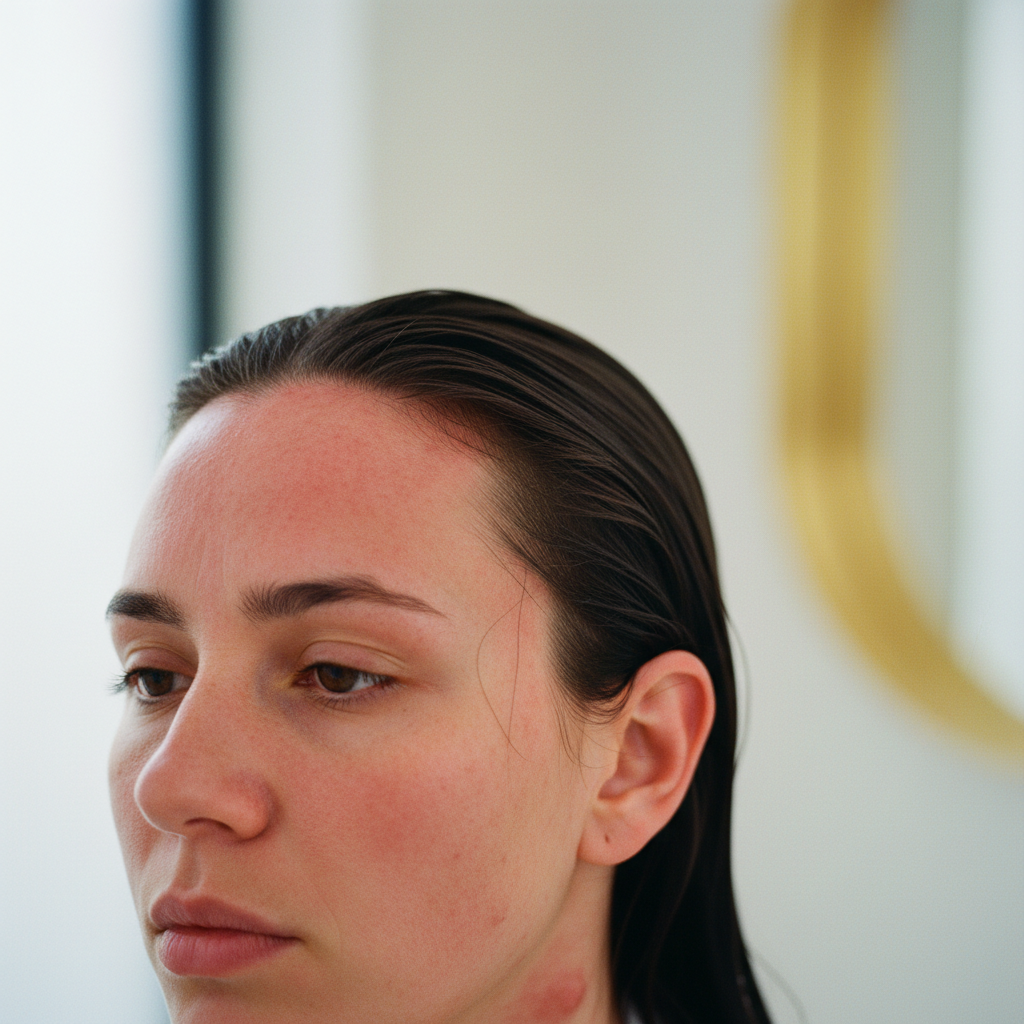
- Erythema: Vivid redness that maps closely to the hairline, nape of the neck, behind the ears, and across the scalp.
- Eczematous plaques and vesicles: Fluid-filled blisters or weeping sores that crust over within days.
- Secondary periorbital oedema: Swelling around the eyelids, forehead, and upper cheeks, caused by fluid tracking down facial tissue planes from scalp inflammation.
Unlike typical body skin, the scalp has a thick dermis and dense follicular structure. This can paradoxically mute sensory pain while magnifying swelling around thinner adjacent skin, such as the upper eyelids and temporal zones.
What the evidence does not show
There is no scientific basis to believe that "organic," "natural," or "ammonia-free" labels guarantee freedom from hair dye allergy symptoms. Ammonia is a respiratory and skin irritant that alters pH to open the cuticle, but it is rarely the underlying sensitising allergen. Dyes marketed as "ammonia-free" often rely on monoethanolamine (MEA) to swell the cortex, alongside the very same aromatic amines (such as PPD or PTD) responsible for allergic contact dermatitis.
Furthermore, evidence does not show that prior uneventful dyeing creates lifelong tolerance. Immune sensitisation can occur after decades of regular colouring. Each application introduces reactive hapten molecules to the skin, which can breach the threshold of immune memory at any time.
Finally, cosmetic shampoos, scalp oils, and topical conditioning treatments cannot stop or reverse an active Type IV allergic cascade. While gentle emollients can soothe an intact scalp, genuine allergic reactions require medical suppression of the immune pathway.
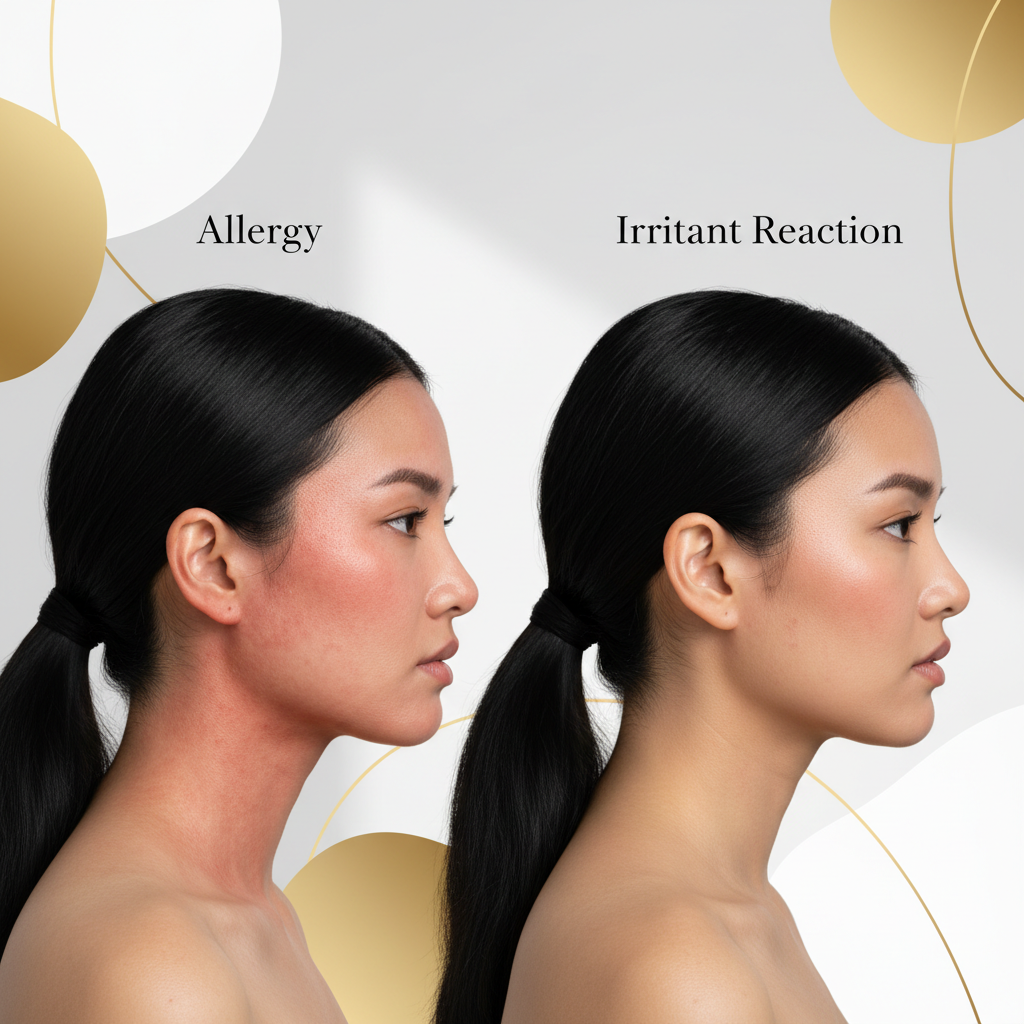
Allergy vs irritant reaction: clinical differences
Telling the difference between chemical irritation and a genuine immune reaction ensures you choose the right care pathway:
| Feature | Allergic Contact Dermatitis | Irritant Contact Dermatitis |
|---|---|---|
| Primary Cause | Immune T-cell response to allergens (e.g. PPD, PTD) | Direct chemical or physical damage (e.g. ammonia, hydrogen peroxide) |
| Onset Time | 24 to 72 hours post-exposure | Immediate to several hours post-application |
| Sensitisation Required? | Yes, prior exposure required | No, can happen on the very first exposure |
| Spread of Rash | Can spread beyond the application site (face, neck, eyelids) | Strictly confined to areas of direct product contact |
| Predominant Sensation | Intense itching, stinging, deep throbbing | Burning, raw pain, acute prickling |
| Physical Appearance | Spongiosis, weeping micro-vesicles, crusted plaques, swelling | Dry erythema, cracked skin, superficial flaking, chemical burns |
| Patch Test Result | Positive, shows persistent delayed reaction at 48 to 96 hours | Negative, or transient non-allergic redness that fades rapidly |
The underlying mechanisms of hair dye sensitisation
Permanent hair dyes rely on oxidation chemistry. Small, uncoloured precursor molecules (monomers like PPD) penetrate the cuticle into the cortex. Inside, hydrogen peroxide oxidises these precursors, which then couple with agents like resorcinol to create large, trapped pigment polymers.
During this process, unreacted monomer intermediates contact the epidermal barrier. Because these molecules have a low molecular weight (under 500 Daltons), they easily penetrate the skin barrier. Once inside, they act as haptens, binding to human skin proteins.
Dendritic cells (Langerhans cells) in the epidermis internalise these dye-protein complexes, migrate to local lymph nodes, and present them to naive T-lymphocytes. This creates a lasting population of antigen-specific memory T-cells. Upon subsequent dye application, these memory T-cells recruit cytotoxic agents, macrophages, and inflammatory cytokines into the scalp within 48 to 72 hours, resulting in the acute dermatitis characteristic of hair dye allergy symptoms.
What to do if symptoms develop
If you notice symptoms during or shortly after a colouring session, structured action reduces skin damage:
- Rinse thoroughly immediately: If symptoms arise while the product is on the hair, wash it out immediately with generous volumes of lukewarm water. Use a plain, unperfumed, mild shampoo to remove lingering chemical residues.
- Neutralise remaining oxidisers: In clinical settings, some dermatologists recommend applying an aqueous compress or mild 2% hydrogen peroxide rinse to completely oxidise any free monomer intermediates, followed by extensive rinsing.
- Avoid further chemical treatments: Do not bleach, tone, or apply essential oils to the irritated area. Damaged epidermal barriers absorb subsequent topicals rapidly, worsening dermatitis.
- Use cool, wet compresses: Soak clean cotton towels in cool water or physiological saline (0.9% sodium chloride) and rest them over inflamed areas for 10 to 15 minutes to reduce fluid build-up and ease burning.
- Apply non-perfumed barrier ointments: For dry, non-weeping edges around the hairline, apply pure white soft paraffin or a basic ceramide cream to protect the barrier.
When the cause may be something else
Not all scalp reactions stem from permanent colour chemistry. Before assuming PPD is to blame, check these alternative causes:
- Seborrhoeic dermatitis flare: Oxidative chemicals disrupt the scalp microbiome, triggering Malassezia yeast overgrowth that causes oily yellow flakes, itching, and redness.
- Bleach or persulphate reactions: Ammonium or potassium persulphates used in lighteners can trigger immediate contact urticaria (hives) via non-immunologic histamine release.
- Preservative allergies: Shampoos, conditioners, or post-colour rinses may contain isothiazolinones (such as methylisothiazolinone) or fragrance mixes, which cause allergic contact dermatitis independent of hair dyes.
- Folliculitis: Mechanical friction, heat, and chemical occlusion can allow staphylococcal bacteria to colonise hair follicles, creating small, itchy pustules.
When to seek professional advice
Mild, self-limiting dryness or slight redness can often be managed with rest and gentle care. However, you should see a doctor or dermatologist if you experience:
- Fluid-filled blisters, persistent weeping, or cracking that hints at secondary bacterial infection (such as impetiginisation).
- Facial oedema, especially puffiness spreading to the eyelids, forehead, or ears.
- Severe itching that interrupts sleep or fails to ease within 48 hours.
Emergency warning: If you experience difficulty breathing, swelling of the lips, tongue, or throat, dizziness, nausea, or a sudden drop in blood pressure, dial 999 (in the UK) or your local emergency services immediately. These signs indicate systemic anaphylaxis, an immediate Type I reaction that requires emergency intramuscular adrenaline.
Patch testing and future scalp care
Standard salon practice mandates an allergy alert test (patch test) 48 hours prior to colouring. Apply a small amount of the mixed product behind the ear or on the inner elbow, leave it undisturbed for 48 hours, and watch for erythema, papules, or pruritus.
If you have confirmed sensitisation to oxidative dyes, you must avoid traditional permanent and demi-permanent colours. Consider non-oxidative direct dyes, pure lab-verified henna (free from adulterated "black henna" containing illicit PPD), or vegetable-based stains.
Once the scalp fully clears, gentle care helps restore barrier resilience. Watermans products, including the Grow Me shampoo and Condition Me conditioner, are formulated to support scalp vitality and healthy-feeling hair. While cosmetic cleansers cannot treat or prevent immunological dye allergies, maintaining an optimal scalp environment with mild, sulphate-free formulations helps hair stay conditioned and resilient after chemical stress.
Frequently asked questions about Hair Dye Allergy Symptoms
Can hair dye allergy symptoms appear days after colouring?
Yes. Hair dye allergy symptoms almost always stem from a Type IV delayed hypersensitivity reaction. Unlike an immediate sting, this immune cascade typically takes between 24 and 72 hours (and occasionally up to 5 days) to produce visible redness, itching, and blistering.
Can you suddenly become allergic to hair dye you have used for years?
Yes. Sensitisation is an acquired immune response. Your immune system can encounter the chemical allergens repeatedly without an issue until a threshold is reached, creating memory T-cells that trigger symptoms on subsequent use.
Are ammonia-free hair dyes safe for people with a PPD allergy?
No. Ammonia is an alkalising agent, not an aromatic amine dye. Ammonia-free colours frequently rely on PPD or paratoluene diamine (PTD) to deposit pigment, meaning they will still trigger severe allergic contact dermatitis in sensitised individuals.
Does a hair dye allergy cause permanent hair loss?
A hair dye allergy causes dermatitis, blistering, and swelling, but it does not cause permanent hair loss or scar follicles under normal conditions. You may experience temporary shedding (telogen effluvium) from physiological stress, or shaft breakage if hair was chemically over-processed, but the follicles typically recover.
Scalp care and dye safety
Navigating hair colour safely requires a clear understanding of your skin's immune limits. By recognising early hair dye allergy symptoms, respecting the vital 48-hour patch test window, and distinguishing simple irritations from genuine delayed hypersensitivity, both stylists and clients can protect long-term scalp health and prevent serious dermatological complications.
Sources and references
- British Association of Dermatologists. Guidelines for the management of contact dermatitis. 2017.
- McFadden, J. P., et al. Paraphenylenediamine hair dye allergy: a review of the clinical and regulatory aspects. Contact Dermatitis, 2018.
- National Health Service (NHS). Allergic reaction to hair dye. Health A to Z guidance, 2022.
- Thyssen, J. P., et al. Contact allergy to paraphenylenediamine: European multicentre study. British Journal of Dermatology, 2012.
- Sosted, H., et al. Severe allergic reactions to hair dye: clinical characteristics and patch test results. Acta Dermato-Venereologica, 2008.