Patch Testing Hair Colour: Biological Mechanisms, Risks, and Best Practice
9 min read ·
Patch testing hair colour prevents severe allergic reactions like contact dermatitis. Learn the biological mechanisms, correct 48-hour timing, and key safety steps.
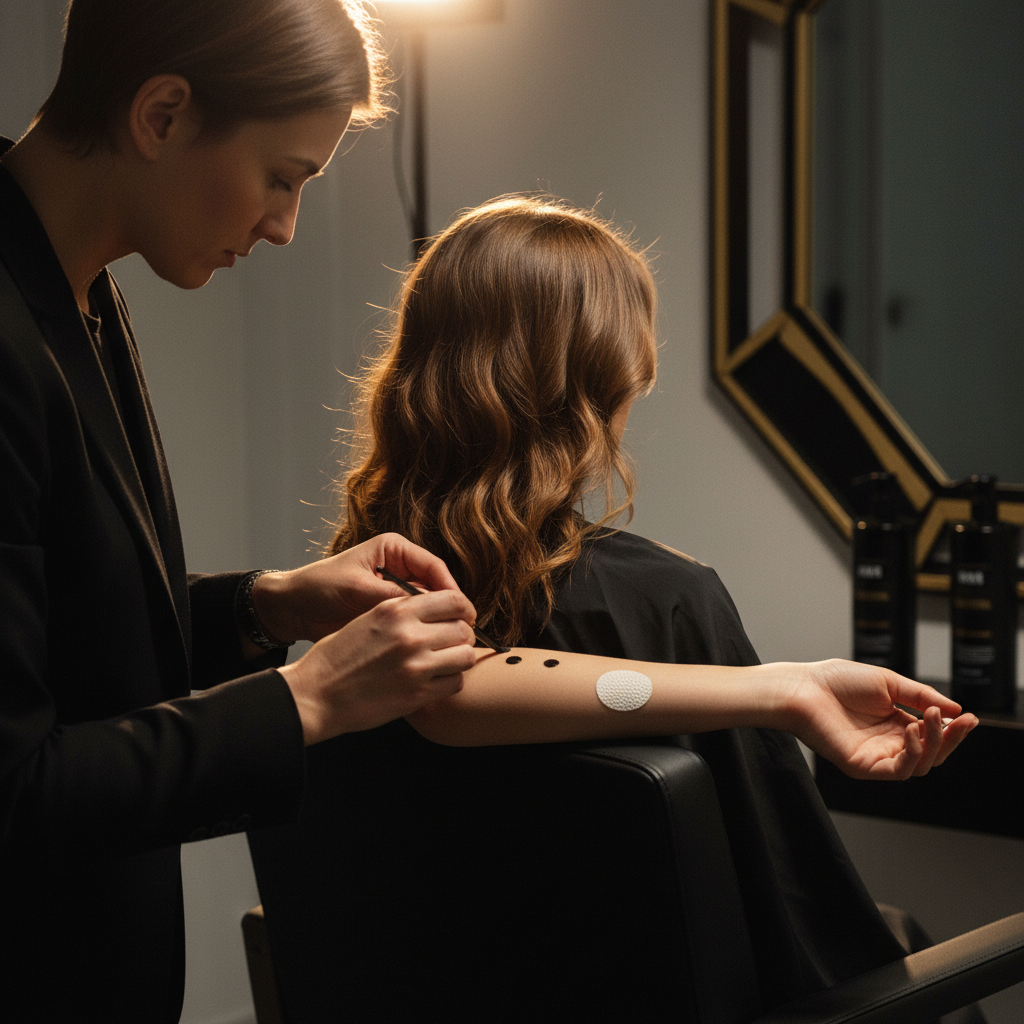
Quick answer: Patch testing hair colour is a mandatory skin screening method designed to identify allergic contact dermatitis before applying permanent or semi-permanent dye to the scalp. Performing a patch test 48 hours prior to service exposes a tiny area of skin to active oxidising dye, revealing delayed-type hypersensitivity triggered by aromatic amines like paraphenylenediamine (PPD). However, its main limitation is that open salon allergy alert tests screen primarily for acute contact allergies, not non-allergic chemical irritations or internal sensitivities.
Key takeaways
- The 48-hour window is non-negotiable: Type IV cell-mediated allergic contact dermatitis requires 24 to 48 hours to manifest visible skin reactions.
- PPD is the primary allergen: Paraphenylenediamine and its derivatives cause up to 80% of hair dye-related allergic contact reactions.
- Sensitisation can happen anytime: You can develop an allergy to an ingredient you have used safely for years without prior warning.
- Irritation differs from allergy: Burning or mild stinging during processing is often chemical irritancy rather than a true immune response.
- Severe reactions are medical emergencies: Severe swelling around the eyes, facial angioedema, or breathing difficulty demands immediate emergency medical attention.
Patch Testing Hair Colour: what the evidence shows
Patch testing hair colour remains the professional gold standard for reducing severe adverse cosmetic events in salons and home colouring routines. In clinical dermatology, formal patch testing involves standardised Finn Chambers applied to the back under occlusion for 48 hours. In a commercial hairdressing context, this is adapted as an open Allergy Alert Test (AAT). Stylists place a dab of unrinsed, mixed colourant behind the ear or in the crook of the elbow.
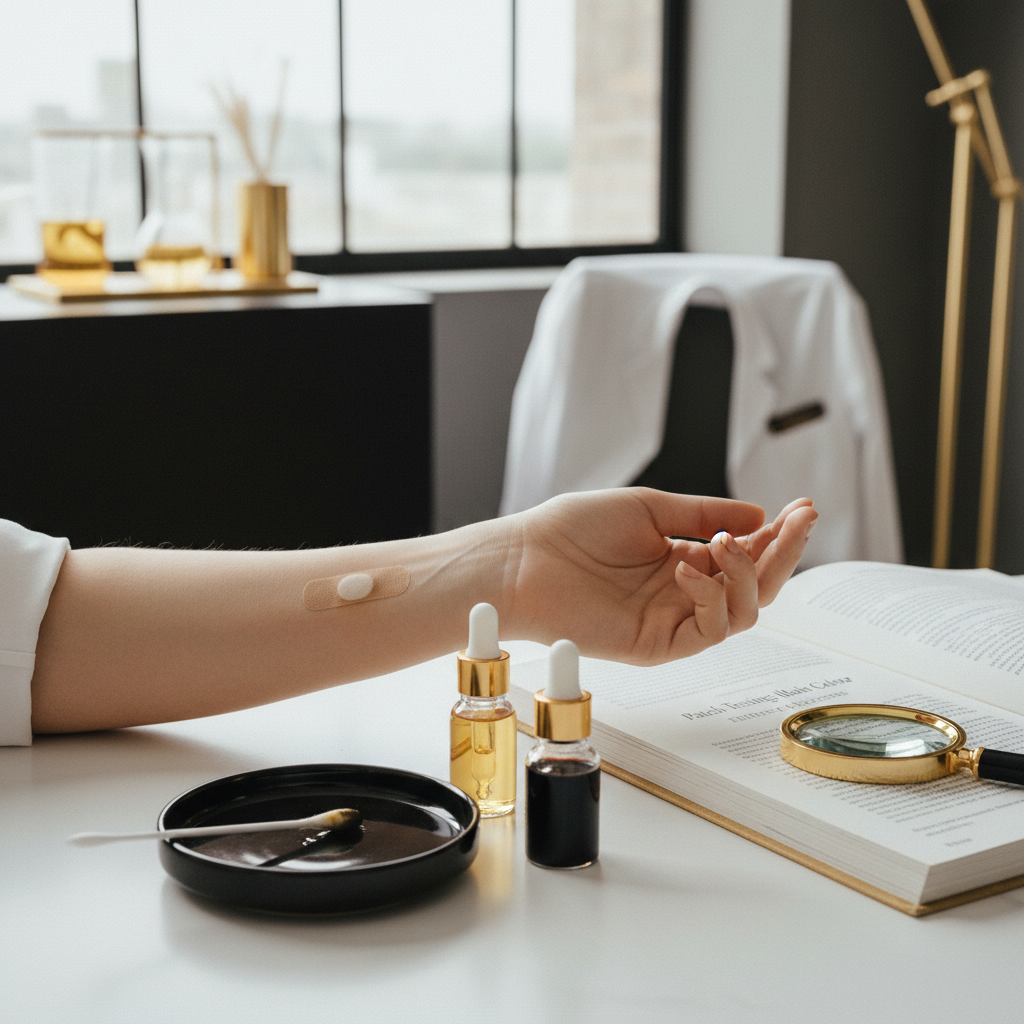
Clinical reviews published by the British Association of Dermatologists confirm that paraphenylenediamine (PPD), resorcinol, and toluene-2,5-diamine (PTD) are potent contact sensitisers. Epidemiological data indicates that between 1.5% and 4% of individuals in European populations display skin sensitivity to PPD when tested clinically.
The rationale for the 48-hour delay rests entirely on human immunology. Allergic contact dermatitis from hair dye is a Type IV delayed-type hypersensitivity reaction governed by T-lymphocytes. When an allergen penetrates the epidermal barrier, Langerhans cells present the antigen to regional lymph nodes. If your immune system has been previously sensitised, mobilised T-cells migrate back to the exposure site. This biological cascade takes 24 to 72 hours to produce visible erythema, edema, and microvesiculation. Testing for only 15 or 30 minutes before a colour appointment fails to detect this mechanism entirely.
What the evidence does not show
Consumer testing cannot guarantee complete biological immunity. Dermatological research shows that an open salon skin test does not replicate the exact conditions of a full head application.
First, an open skin test does not mimic the occlusive microenvironment created when wet colour is massaged across the scalp and trapped under body heat or processing caps. Second, open testing on intact forearm skin does not account for micro-abrasions, existing scalp dermatitis, or disrupted skin barrier function on the head.
A negative patch test also does not predict non-allergic chemical irritant reactions. Many individuals experience burning or tingling caused by high alkalinity (ammonium hydroxide) or oxidative stress (hydrogen peroxide), which are irritant mechanisms independent of immune-mediated allergies.
The immunological mechanism behind dye allergies
To understand why patch testing hair colour is so critical, you need to understand how oxidative hair colour alters molecules in your skin. Permanent dyes utilise precursor molecules, couplers, and an oxidising agent.
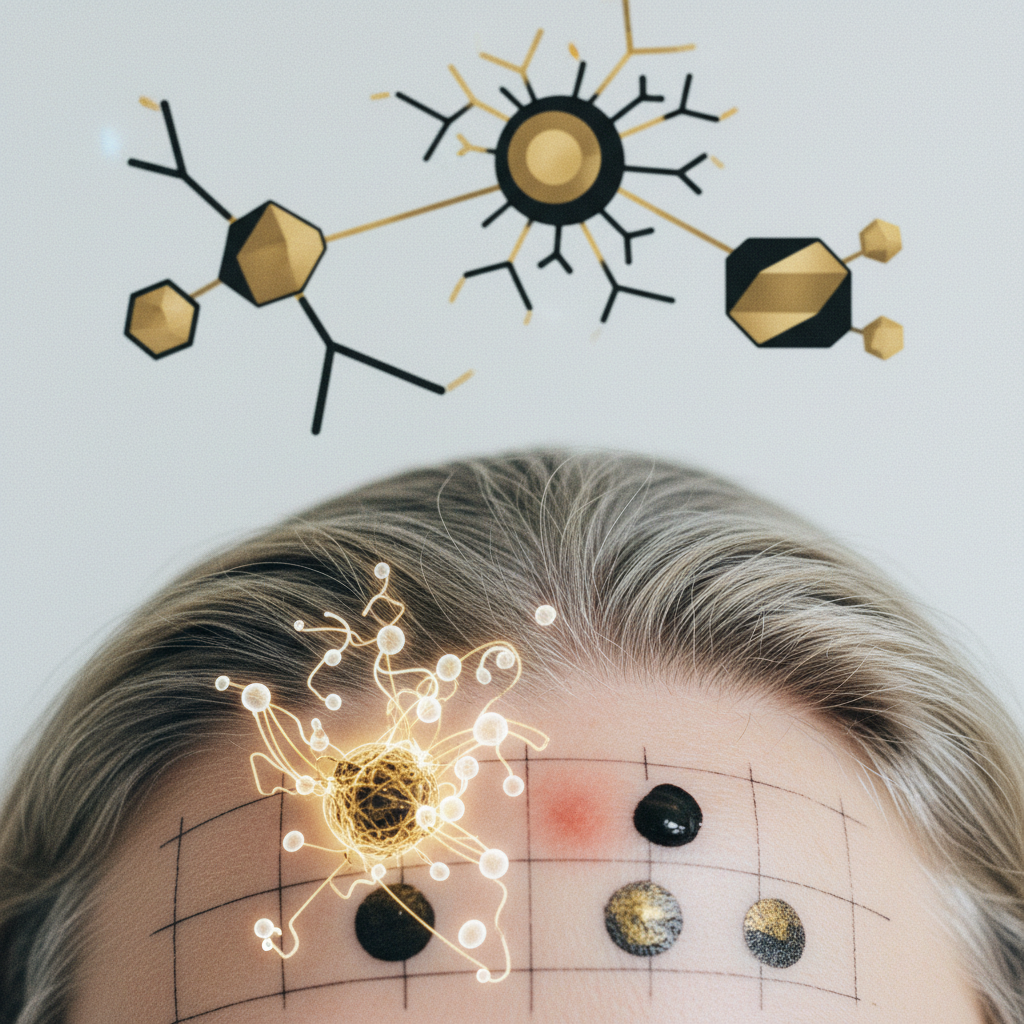
- Precursor penetration: Small, uncoloured molecules like PPD penetrate through the stratum corneum due to their low molecular weight.
- Oxidation and haptenisation: When exposed to hydrogen peroxide, PPD oxidises into intermediate reactive quinonediimines. These small molecules act as haptens. They bind covalently to native skin proteins, creating complete neo-antigens.
- Sensitisation phase: Dendritic cells in the skin capture these antigen complexes and migrate to local lymph nodes. The immune system generates antigen-specific memory T-cells. This phase occurs quietly without any outward skin symptoms.
- Elicitation phase: On subsequent exposure, the memory T-cells recognise the hapten-protein conjugate. Within 48 hours, they release pro-inflammatory cytokines, recruiting leukocytes and triggering vascular dilation, fluid leakage, and blistering.
Black henna tattoos represent a major cause of early sensitisation. These temporary skin designs frequently contain illegal, extremely high concentrations of raw PPD (often exceeding 10% to 15%) to produce an intense, fast-drying black stain. Exposure to black henna can cause lifelong sensitisation, meaning subsequent exposure to standard hair dye can spark severe, rapid reactions.
How to perform a patch test correctly
Carrying out an effective test requires following manufacturer guidelines precisely. Never take shortcuts with processing times or product formulations.
- Clean the test area: Wash a coin-sized patch of skin behind the ear or inside the crook of the elbow with mild soap and water. Pat dry.
- Mix the active formula: Combine the exact colourant cream and developer (hydrogen peroxide) in the proportions specified on the manufacturer instruction leaflet. Unmixed dye base does not accurately mimic the active chemical compounds formed during processing.
- Apply a small amount: Using a clean cotton bud, apply a thin layer of the mixture across a 1 cm by 1 cm area.
- Leave uncovered: Allow the product to dry completely. Do not wash, disturb, or cover the area for 48 hours.
- Monitor continuously: Inspect the site at 24 and 48 hours for any changes in texture, colour, or sensation.
Allergic contact dermatitis versus irritant contact dermatitis
Understanding whether a reaction stems from an immune response or a chemical irritation helps determine whether you can colour your hair in the future.
| Characteristic | Allergic Contact Dermatitis (ACD) | Irritant Contact Dermatitis (ICD) |
|---|---|---|
| Biological Mechanism | Type IV cell-mediated immune response | Direct physical or chemical cellular damage |
| Sensitisation Required? | Yes, prior exposure is necessary | No, can occur on the very first exposure |
| Typical Onset Time | 24 to 72 hours after exposure | Immediate to several hours during processing |
| Primary Trigger | Aromatic amines (PPD, PTD, resorcinol) | Ammonia, high pH, hydrogen peroxide concentrations |
| Visual Appearance | Intense erythema, raised papules, blistering, weeping | Generalised redness, dry scaling, sharp chemical erythema |
| Distribution | Can spread beyond the application site (face, neck) | Strictly confined to the direct application zone |
| Sensory Symptoms | Intense, unyielding itching and heat | Burning, stinging, or raw soreness |
| Future Product Use | Absolute contraindication for that chemical family | Manageable by adjusting pH, developer strength, or timing |
What to do if you react to a patch test
If you observe redness, itching, swelling, or raised bumps at the test site within 48 hours, wash the product off immediately with cool water and mild soap.
Do not proceed with the hair colour service. A localised skin reaction on your arm or behind your ear indicates that applying the mixture across your entire scalp could provoke a dangerous, systemic reaction.
For mild local reactions on the test patch, a non-prescription 1% hydrocortisone cream can help suppress inflammation. Document the reaction with clear photographs. Make a precise record of the brand, shade name, and batch number. You should consult a dermatologist or an allergy clinic for formal diagnostic patch testing to identify the exact offending molecule.
When to seek immediate medical advice
While most allergic patch test reactions remain localised to the application site, full-head applications without testing can escalate rapidly into systemic emergencies.
Seek urgent emergency care if you experience any of the following:
- Swelling around the eyes, eyelids, lips, or tongue (angioedema).
- A rash or hives spreading rapidly across your neck, chest, or torso.
- Difficulty swallowing, a feeling of tightness in your throat, or hoarseness.
- Shortness of breath, wheezing, or dizziness.
Anaphylaxis from hair dye is rare, but cases are well-documented in emergency medicine. If a full colour service triggers severe facial swelling, do not wait to see if it settles overnight. Contact emergency medical services immediately.
Supporting the scalp environment: the Watermans approach
Once you have safely navigated patch testing and confirmed your skin is free from acute sensitivities, maintaining the physical health of your scalp skin becomes the next priority. Chemical processing, whether through permanent oxidising dyes, high-lift blondes, or bleaches, temporarily challenges the scalp's delicate stratum corneum and moisture barrier.
Watermans focuses on non-sensitising, balanced hair and scalp care formulated to nurture hair condition and support the scalp microenvironment. Products such as Grow Me Shampoo and Condition Me Conditioner supply strengthening ingredients like hydrolysed lupin protein, biotin, allantoin, and rosemary extract. These botanical and nutrient-rich formulas are designed to revitalise hair that feels fragile after chemical services, supporting resilient-feeling strands and a cleaner, healthier-looking scalp without heavy, pore-clogging residues. Using mild, sulphate-free formulations between salon appointments helps keep the hair shaft strong and reduces breakage from regular styling.
Frequently asked questions about Patch Testing Hair Colour
Can I skip patch testing hair colour if I use the same brand?
No, you should never skip testing even when using a familiar product. The human immune system can develop sensitisation to paraphenylenediamine or related aromatic amines at any point in life, even after decades of symptom-free use. Additionally, cosmetic manufacturers periodically reformulate colour bases, preservatives, and fragrances without prominent packaging notices, introducing new compounds that your skin has never encountered before.
How long does a patch test for hair colour need to stay on?
The patch test formula should dry on the skin and remain unwashed for a full 48 hours. Type IV delayed-type hypersensitivity relies on T-cell migration and cytokine release, a biological process that rarely shows visible inflammation before 24 hours. Evaluating the skin too early, such as rinsing it off after two hours, produces false-negative results and puts you at risk of severe scalp dermatitis.
Does a natural or organic hair dye require a patch test?
Yes, natural and organic hair dyes require the exact same 48-hour patch test. Plant-based formulations and henna products frequently trigger allergic contact dermatitis from naturally occurring botanicals, essential oils, or added preservatives. Furthermore, some dyes marketed as herbal contain synthetic aromatic amines to achieve dark brown or black shades, presenting the identical PPD allergy risks of conventional box dyes.
Why does my scalp burn during colouring if my patch test was clear?
A clear patch test rules out a Type IV allergic allergy to dye couplers, but it does not test for chemical irritation. Burning or stinging during processing is usually irritant contact dermatitis caused by alkaline agents like ammonium hydroxide, or oxidative stress from high-volume hydrogen peroxide. Existing micro-abrasions, dry scalp, or washing your hair right before colouring increases this irritation without involving your immune system.
Summary on Patch Testing Hair Colour
Making patch testing hair colour a strict habit before every permanent or oxidative dye application is the single most effective way to prevent debilitating contact dermatitis. While an open test cannot simulate every variable of a full salon appointment, honouring the full 48-hour observation window protects your scalp, face, and overall wellbeing from aggressive allergic reactions. Always listen to your skin, watch for delayed redness or itching, and consult a qualified dermatologist whenever unexplained sensitivities arise.
Sources and references
- British Association of Dermatologists. Guidelines for the management of contact dermatitis. British Journal of Dermatology, 2017.
- Scientific Committee on Consumer Safety (SCCS). Opinion on p-Phenylenediamine (CAS 106-50-3). European Commission, 2012.
- National Health Service (NHS). Allergic contact dermatitis and hair dye reactions. NHS UK Health A to Z, 2023.
- McFadden, J. P., et al. Allergy to hair dye: history, epidemiology and clinical presentation. Contact Dermatitis, 2007.
- Thyssen, J. P., & Menne, T. Metal and hair dye allergy in Europe: epidemiological trends. Acta Dermato-Venereologica, 2010.