Hair Dye Allergies: Mechanisms, Symptoms, and Management
10 min read ·
Understand the mechanisms, symptoms, and diagnostic facts behind hair dye allergies, including guidance on PPD sensitisation, patch testing, and scalp recovery.
Quick answer: Hair dye allergies are immune-mediated contact reactions triggered primarily by oxidative aromatic amines such as paraphenylenediamine (PPD) and its derivatives. Symptoms range from mild scalp stinging, erythema, and pruritus to severe facial oedema and acute allergic contact dermatitis. The primary limitation in treating hair dye allergies is that true immunological sensitisation is permanent. Once your immune system develops memory T-cells against a dye component, patch avoidance and permanent cessation of the triggering chemical remain the only definitive preventative measures.
Key takeaways
- Paraphenylenediamine (PPD) and paratoluenediamine (PTD) cause the vast majority of allergic contact dermatitis cases linked to permanent hair colour.
- Allergic contact dermatitis is a delayed type IV hypersensitivity reaction, meaning symptoms typically develop 24 to 72 hours after exposure rather than immediately.
- Irritant contact dermatitis is distinct from an allergy; irritation causes immediate burning on broken skin, whereas allergy involves an immune reaction that worsens with subsequent exposures.
- Home patch testing 48 hours prior to colour application remains vital, though clinical patch testing by a dermatologist provides definitive diagnosis.
- Darker shades of permanent dye generally contain higher concentrations of aromatic amines than lighter or semi-permanent formulations.
Hair Dye Allergies: what the evidence shows
Clinical dermatology literature identifies hair dye allergies as one of the most common causes of cosmetic-related allergic contact dermatitis (ACD). According to surveillance data published by the British Association of Dermatologists and the European Society of Contact Dermatitis, paraphenylenediamine (PPD) consistently ranks among the top ten contact allergens in patch-tested populations.
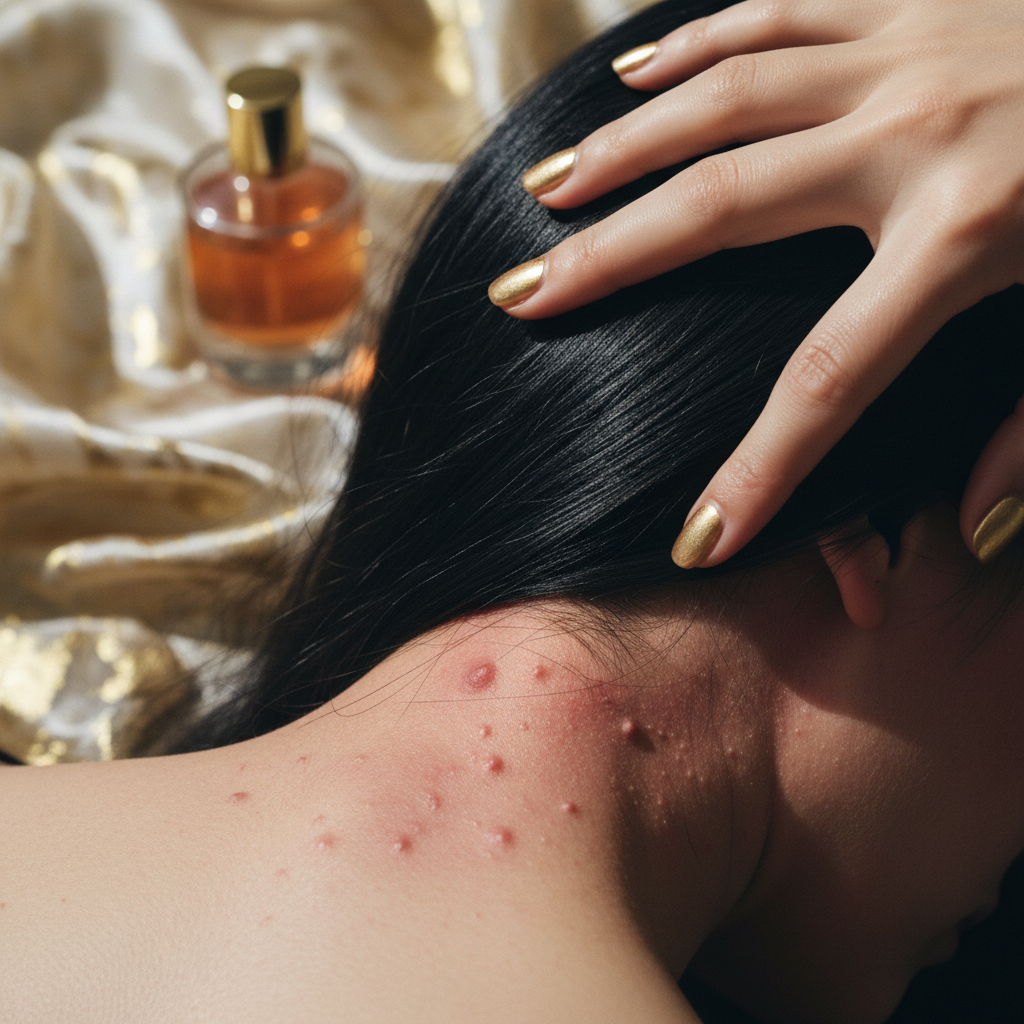
The mechanism behind these reactions is a cell-mediated, type IV delayed hypersensitivity response. PPD is an aromatic amine molecule small enough to penetrate the stratum corneum of the scalp. Once inside the epidermis, it binds to epidermal proteins to form a complete antigen (hapten-protein conjugate). Langerhans cells capture this antigen and present it to naive T-lymphocytes in the regional lymph nodes. This initial priming phase is known as sensitisation. You can use a dye for years without an issue while your immune system slowly builds this memory.
Once sensitisation occurs, subsequent contact with the allergen prompts memory T-cells to release inflammatory cytokines, primarily interferon-gamma and interleukins. This cascade produces clinical symptoms within 24 to 72 hours. These reactions manifest as intense pruritus, vesicular eruptions, weeping lesions, and swelling along the hair margin, ears, eyelids, and neck.
While PPD is the most widely documented culprit, other oxidative precursors carry significant sensitisation potential:
- Toluene-2,5-diamine (also known as paratoluenediamine or PTD)
- Resorcinol
- m-Aminophenol and p-Aminophenol
- 2-Methylresorcinol
European Union and UK cosmetic regulations restrict the maximum on-head concentration of free PPD base to 2.0% in finished cosmetic products. Despite these regulatory limits, even minute concentrations can trigger severe reactions in individuals who are already sensitised.
What the evidence does not show
Popular discussions around hair dye allergies frequently generate misconceptions regarding product safety, natural alternatives, and scalp mechanics.
First, the evidence does not show that black henna is a safe, plant-based hair dye. Pure, natural henna derived from Lawsonia inermis stains hair an orange-red tone and has an exceptionally low rate of allergenicity. However, so-called black henna used for temporary skin tattoos or dark hair dyeing is frequently adulterated with illegal, extremely high concentrations of synthetic PPD (sometimes exceeding 15% to 30%). Dermatological studies confirm that exposure to black henna tattoos is one of the leading causes of early, aggressive PPD sensitisation in adolescents and young adults.
Second, the evidence does not support the claim that "ammonia-free" dyes prevent allergic reactions. Ammonia is an alkaline agent used to swell the hair cuticle; it can cause chemical irritation or respiratory discomfort, but it is rarely a true contact allergen. Ammonia-free dyes replace ammonia with ethanolamine or other alkalising agents, but they almost always retain oxidative dyes like PPD or PTD to achieve permanent colour change.
Finally, having a sensitive scalp does not mean you have an allergy. Most individuals reporting burning sensations during application are experiencing non-allergic chemical irritation caused by hydrogen peroxide or high alkalinity, not an immune-driven allergic response.
Signs and symptoms: allergy versus irritation
Distinguishing between irritant contact dermatitis (ICD) and allergic contact dermatitis (ACD) is crucial for selecting appropriate management steps.
| Feature | Irritant Contact Dermatitis (ICD) | Allergic Contact Dermatitis (ACD) |
|---|---|---|
| Underlying Mechanism | Direct physical or chemical damage to skin barrier | Type IV T-cell mediated immune reaction |
| Typical Onset Time | Immediate to a few hours during or after application | Delayed; 24 to 72 hours after exposure |
| Distribution | Confined strictly to the exact area of chemical contact | Often spreads beyond the scalp to ears, neck, and eyelids |
| Primary Sensation | Stinging, burning, tightness | Severe, relentless itching (pruritus) |
| Visual Appearance | Dryness, mild erythema, superficial flaking | Oedema, intense redness, weeping vesicles, crusting |
| Prior Exposure Required | No; can happen on first exposure to strong chemicals | Yes; requires prior sensitisation to manifest |
| Response on Re-exposure | Similar severity depending on barrier condition and pH | Typically faster and significantly more severe |
What to do if you suspect a reaction
If you develop symptoms following the application of hair colour, systematic management helps mitigate tissue damage and chronic inflammation.
Immediate steps during application
If intense itching, burning, or facial swelling begins while the dye is on your hair, rinse the product immediately with copious amounts of lukewarm water. Avoid scrubbing aggressively with fingernails, as this compromises the epidermal barrier further. Wash the scalp with a mild, fragrance-free cleanser to remove lingering chemical residues.
Managing mild delayed reactions
If mild redness and itching appear 1 to 2 days later:
- Cease using all chemical styling products, essential oils, and hot styling tools.
- Apply a cold compress to inflamed areas to soothe pruritus.
- Over-the-counter hydrocortisone 1% cream may be applied to affected skin along the hairline, ears, or neck (avoiding the immediate eye area) for up to 7 days.
- Oral over-the-counter antihistamines can help reduce sleep disruption caused by itching, though their efficacy against cell-mediated contact dermatitis is secondary to topical corticosteroids.
When to seek emergency care
Severe reactions can escalate into life-threatening medical emergencies. Seek urgent medical attention immediately if you experience:
- Noticeable swelling of the eyelids, lips, tongue, or throat
- Difficulty breathing, wheezing, or tightness in the chest
- Dizziness, lightheadedness, or sudden drop in blood pressure
- Rapidly spreading blistering across the scalp and facial tissue
When the cause is something else
Not every adverse scalp symptom following a salon or home dye treatment stems from the dye intermediates. Several alternative conditions present with similar manifestations:
- Peroxide burn: High-volume developer (9% to 12% / 30 to 40 volume) combined with bleach can cause mild chemical burns. This results in pinpoint scabbing, raw skin, and acute pain rather than spreading allergic eczema.
- Seborrhoeic dermatitis: This chronic condition involves an inflammatory reaction to Malassezia yeast. Flare-ups can be aggravated by the alkaline pH shift caused by hair dye, producing greasy, yellowish flakes and red patches that mimic a mild dye reaction.
- Preservative allergies: Reactions may stem not from the pigment molecules, but from preservatives in the formulation, such as methylisothiazolinone (MI), methylchloroisothiazolinone (MCI), or fragrance mixes.
- Psoriasis: Scalp psoriasis creates well-demarcated, thick, silvery plaques. Chemical trauma from colour application can trigger a new plaque via the Koebner phenomenon.
Diagnostic evaluation and safe colouring alternatives
If you suspect an allergy, consult a dermatologist for formal epicutaneous patch testing. The standard European baseline patch series contains 1% PPD in petrolatum. Testing clarifies whether you are sensitised specifically to PPD, PTD, fragrance compounds, or cross-reacting substances.
Cross-reactivity is common. Individuals allergic to PPD often cross-react with:
- Azo dyes used in textiles
- Benzocaine, procaine, and related ester local anaesthetics
- Sulfonamide medications
- Para-aminobenzoic acid (PABA) formulations
For confirmed PPD-allergic individuals who still wish to colour their hair, safe options depend on the patch test results:
- Pure vegetable dyes: Certified 100% natural henna (Lawsonia inermis) and indigo (Indigofera tinctoria) do not cross-react with aromatic amines, provided they contain no synthetic additives.
- Direct dyes: Semi-permanent direct dyes do not require an oxidising agent or aromatic amine precursors. They deposit pre-formed colour onto the cuticle surface and generally carry a much lower sensitisation profile.
- Off-scalp highlighting: Highlighting using bleach foils keeps the chemical away from direct contact with the scalp stratum corneum, reducing systemic immune exposure, provided the bleach formula contains no toner with aromatic amines.
Supporting the scalp environment
During periods of scalp barrier disruption or recovery from contact dermatitis, maintaining a calm, well-hydrated follicular environment is critical. Irritation and dermatitis do not cause scarring hair loss directly, but severe, chronic inflammation and aggressive scratching can lead to temporary telogen effluvium or mechanical hair breakage along the weakened root area.
Watermans focuses on non-irritating, nutrient-dense hair and scalp formulations designed to support the scalp barrier without aggressive chemicals. Products like Watermans Grow Me Shampoo incorporate scalp-friendly ingredients including biotin, rosemary extract, niacinamide, and allantoin. These components help condition the scalp surface, nourish the epidermal barrier, and support fuller-feeling, healthier-looking hair during routine cleansing. While no topical cosmetic can reverse a confirmed chemical sensitisation, gentle hair care reduces unnecessary secondary friction and environmental stress on a delicate scalp.
Frequently asked questions about Hair Dye Allergies
Can I suddenly develop a hair dye allergy after colouring my hair safely for years?
Yes. Hair dye allergies are acquired through repeated exposure. Each time you apply an oxidative dye containing ingredients like PPD, your immune system encounters the molecule. For some individuals, this exposure eventually surpasses a biological threshold, prompting T-cell sensitisation. Once sensitised, subsequent applications will consistently trigger allergic contact dermatitis.
Will a 48-hour patch test always detect hair dye allergies?
Home patch tests catch the majority of moderate-to-severe sensitisations, but they are not infallible. If the test patch is washed off too quickly, applied over an insufficiently permeable area of skin, or evaluated before 72 hours, delayed type IV reactions can be missed. A negative home patch test significantly reduces risk, but dermatological patch testing remains the diagnostic standard.
Are "organic" or "natural" hair dyes safe for people with hair dye allergies?
Not automatically. Many products marketed as "organic" or "herbal" still contain synthetic oxidative chemicals like PTD or resorcinol to ensure permanent grey coverage. Always review the full ingredient list (INCI). Unless a product relies entirely on 100% pure botanical extracts like genuine henna or chamomile, it may still trigger an allergic reaction in sensitised individuals.
Does an allergy to hair dye cause permanent hair loss?
No. Allergic contact dermatitis affects the epidermal and upper dermal layers of the scalp and does not destroy the hair follicle bulb. However, intense secondary scratching can cause mechanical hair breakage, and the systemic stress of a severe inflammatory reaction can trigger temporary hair shedding known as telogen effluvium several weeks later.
If I am allergic to PPD, can I use PTD-based hair dye?
Usually not without professional medical guidance. While some individuals tolerate paratoluenediamine (PTD), clinical dermatology studies show cross-reactivity between PPD and PTD occurs in approximately 50% or more of sensitised patients. You should only attempt using PTD alternatives under the supervision of a consultant dermatologist following negative patch test results.
Safe approaches to hair colour and scalp care
Hair dye allergies represent a permanent immune adaptation that requires careful, life-long ingredient vigilance. Because aromatic amines like PPD remain the industry standard for permanent grey coverage, navigating hair colouring requires reading ingredient formulations rigorously, respecting mandatory 48-hour patch test protocols, and consulting medical professionals at the first sign of cutaneous inflammation. By distinguishing allergic contact dermatitis from basic scalp irritation and choosing validated non-oxidative alternatives, you can protect your scalp barrier and maintain healthy hair condition without compromising systemic wellbeing.
Sources and references
- British Association of Dermatologists. Guidelines for the management of contact dermatitis. British Journal of Dermatology, 2017.
- European Society of Contact Dermatitis. Diagnostic patch testing guidelines. Contact Dermatitis, 2019.
- Scientific Committee on Consumer Safety (SCCS). Opinion on p-Phenylenediamine. European Commission, 2012.
- National Health Service (NHS). Allergic reaction to hair dye. NHS UK Health A to Z, 2022.
- McFadden, J. P., et al. Clinical and experimental aspects of hair dye allergy. British Journal of Dermatology, 2007.
Find these ingredients in Watermans products
- Niacinamide: you will find this ingredient in our Hair Mask.