Conditioners: Types and Benefits: Understanding Hair Health and Maintenance
5 min read ·
Conditioners: Types and Benefits refers to the range of hair care products designed to improve hair's texture, appearance, and manageability by coating the hair shaft, which helps to smooth the cuticle, replenish moisture, and protect against damage.
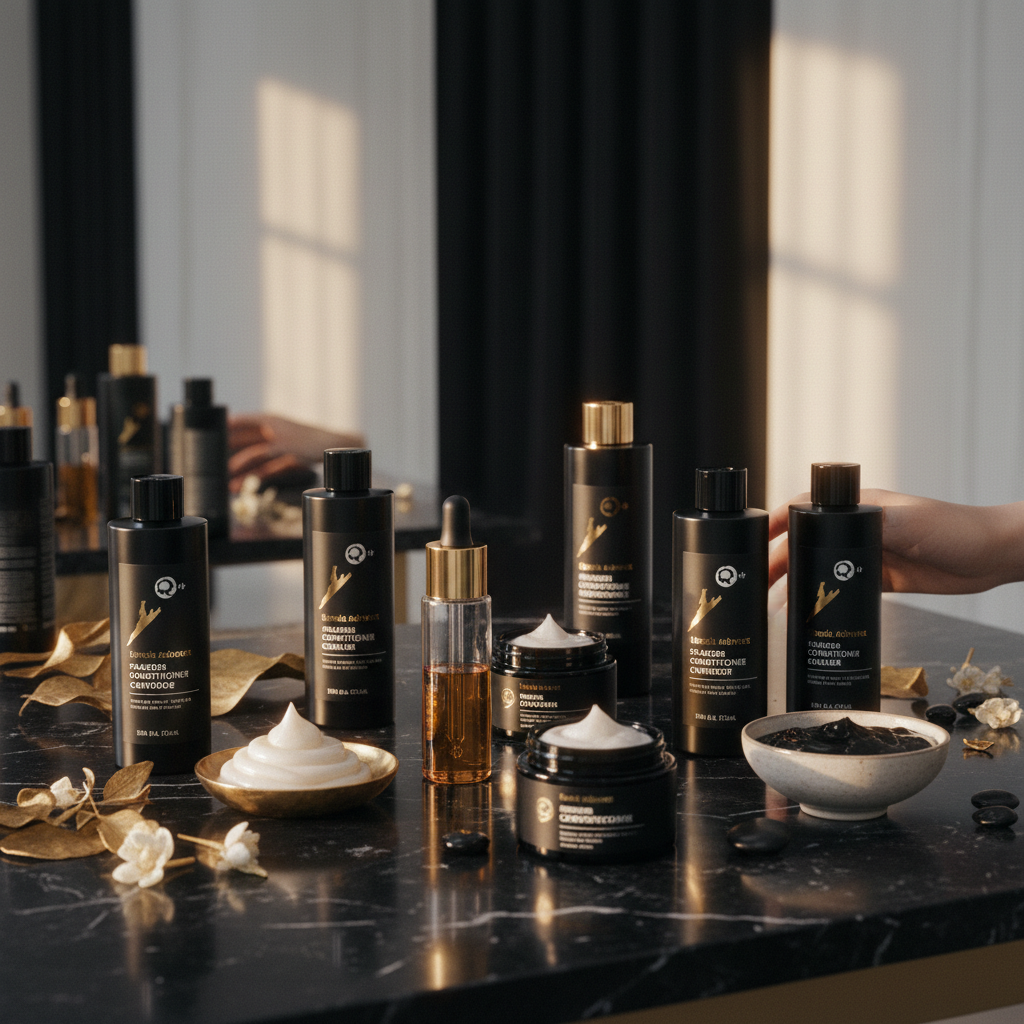
Quick answer: Conditioners: Types and Benefits encompasses various formulations designed to improve hair's texture, appearance, and manageability by smoothing the hair cuticle, replenishing moisture, and protecting against environmental or styling damage. While conditioners can enhance the cosmetic properties and resilience of hair, they do not treat or cure underlying hair loss conditions, which require different interventions. Their primary role is in external hair fibre care.
Key takeaways
- Conditioners smooth the hair cuticle, reducing friction and improving detangling, which can help minimise breakage.
- Different types of conditioners exist, including rinse-out, leave-in, deep conditioners, and co-washes, each suited for specific hair needs.
- Key ingredients like cationic surfactants, emollients, and humectants work by coating the hair shaft to impart softness, shine, and moisture.
- Using the right conditioner for your hair type and concerns can enhance manageability, protect against damage, and improve overall hair appearance.
- Conditioners primarily address the cosmetic and structural integrity of the hair fibre, not the biological processes of hair growth or hair loss.
Conditioners: Types and Benefits: what the evidence shows
Conditioners are a fundamental part of hair care routines, primarily designed to improve the feel, appearance, and manageability of hair after washing. Their main mechanism involves depositing conditioning agents onto the hair fibre, particularly the outermost cuticle layer, to smooth its surface. This smoothing action helps to reduce friction between hair strands, making them easier to detangle and less prone to mechanical damage and breakage (Journal of Cosmetic Science, 2011).
The benefits derived from conditioners stem from their ability to counteract the effects of shampooing, which can sometimes leave the hair cuticle rough and negatively charged. The positively charged ingredients in many conditioners, such as cationic surfactants, bind to the negatively charged areas of damaged hair. This neutralises static electricity, reduces frizz, and imparts a softer, smoother feel. Emollients and humectants in conditioners also contribute by providing a protective film and attracting moisture to the hair, respectively, enhancing its hydration and shine (International Journal of Cosmetic Science, 2012).
How conditioners work to improve hair fibre health
The structure of hair is critical to understanding how conditioners function. Each hair strand has an outer layer called the cuticle, made up of overlapping cells resembling scales. When healthy, these scales lie flat, giving hair a smooth, shiny appearance. Washing, styling, chemical treatments, and environmental exposure can lift these scales, leading to rough, dull, and tangled hair prone to breakage. Conditioners work by:
- Smoothing the cuticle: Cationic surfactants, often fatty amines or quaternary ammonium compounds, have a positive charge that attracts them to the negatively charged surface of damaged hair. They form a thin film that helps to flatten and smooth the cuticle scales. This reduces friction, making hair easier to comb and reducing tangles (Journal of Cosmetic Science, 2007).
- Reducing static electricity: By neutralising the negative charges on the hair surface, conditioners decrease static, leading to less frizz and flyaways.
- Imparting shine and softness: Emollients (like fatty alcohols or natural oils) and silicones create a smooth surface that reflects light more uniformly, enhancing shine. They also provide a lubricated feel, making hair softer to the touch. These ingredients can also form a protective barrier, reducing moisture loss and offering some protection against environmental stressors (Cosmetics & Toiletries, 2010).
- Improving manageability: By reducing tangles, frizz, and imparting a smoother texture, conditioners make hair easier to comb, style, and manage. This is especially beneficial for individuals with curly, coily, or fine hair that is prone to tangling.
- Moisturising the hair: Humectants (like glycerin or panthenol) draw moisture from the air into the hair, while occlusive agents (like oils and silicones) help to seal that moisture in. This process supports hair hydration, which is crucial for elasticity and preventing brittleness. Learn more about how these ingredients work in "Humectants: Understanding How They Hydrate and Protect Your Hair" and "Hair Hydration: The Science Behind Keeping Hair Moist".
Types of Conditioners and Their Specific Uses
There are several main categories of conditioners, each formulated for different application methods and hair needs. Understanding Conditioners: Types and Benefits for your hair type is key to selecting the most effective product.
- Rinse-Out Conditioners: These are the most common type, applied after shampooing and rinsed out after a few minutes. They provide daily detangling, smoothing, and basic moisture, making them suitable for most hair types as part of a regular wash routine.
- Leave-In Conditioners: As the name suggests, these are not rinsed out. They offer continuous hydration, detangling, and protection throughout the day. They are particularly beneficial for dry, damaged, curly, or fine hair that needs extra moisture or protection from heat styling and environmental factors. They can significantly reduce frizz and improve manageability.
- Deep Conditioners (Hair Masques): These treatments are richer and more concentrated than rinse-out conditioners, designed for intensive repair and hydration. They typically have a thicker consistency and are left on the hair for 5 to 30 minutes, sometimes with heat. They are ideal for significantly dry, damaged, chemically treated, or brittle hair, providing a boost of nourishing ingredients. See also "Hair Damage: Causes, Signs, and Solutions".
- Co-Washes (Conditioner-Only Washes): These products combine gentle cleansing with conditioning. They are designed to cleanse the hair and scalp without stripping natural oils, making them popular for individuals with very dry, curly, coily, or afro-textured hair. Co-washing helps maintain moisture balance and reduce frizz, as discussed in "How to Moisturise Afro Hair: A Guide to Hydration and Retention".
- Dry Conditioners: Similar in concept to dry shampoo, these are spray-on products that refresh and soften hair between washes without water. They typically contain lightweight oils and silicones to add shine, reduce static, and improve manageability. They are best for fine to medium hair types or for quick touch-ups.
What the evidence does not show regarding Conditioners: Types and Benefits
It
Find these ingredients in Watermans products
- Panthenol (Provitamin B5): you will find this ingredient in our Heat Protection Spray.