Hair Conditioners: Enhancing Hair Feel and Appearance
10 min read ·
Hair Conditioners are cosmetic formulations designed to improve the feel, appearance, and manageability of hair by smoothing the cuticle and reducing friction, though they do not address underlying hair loss.
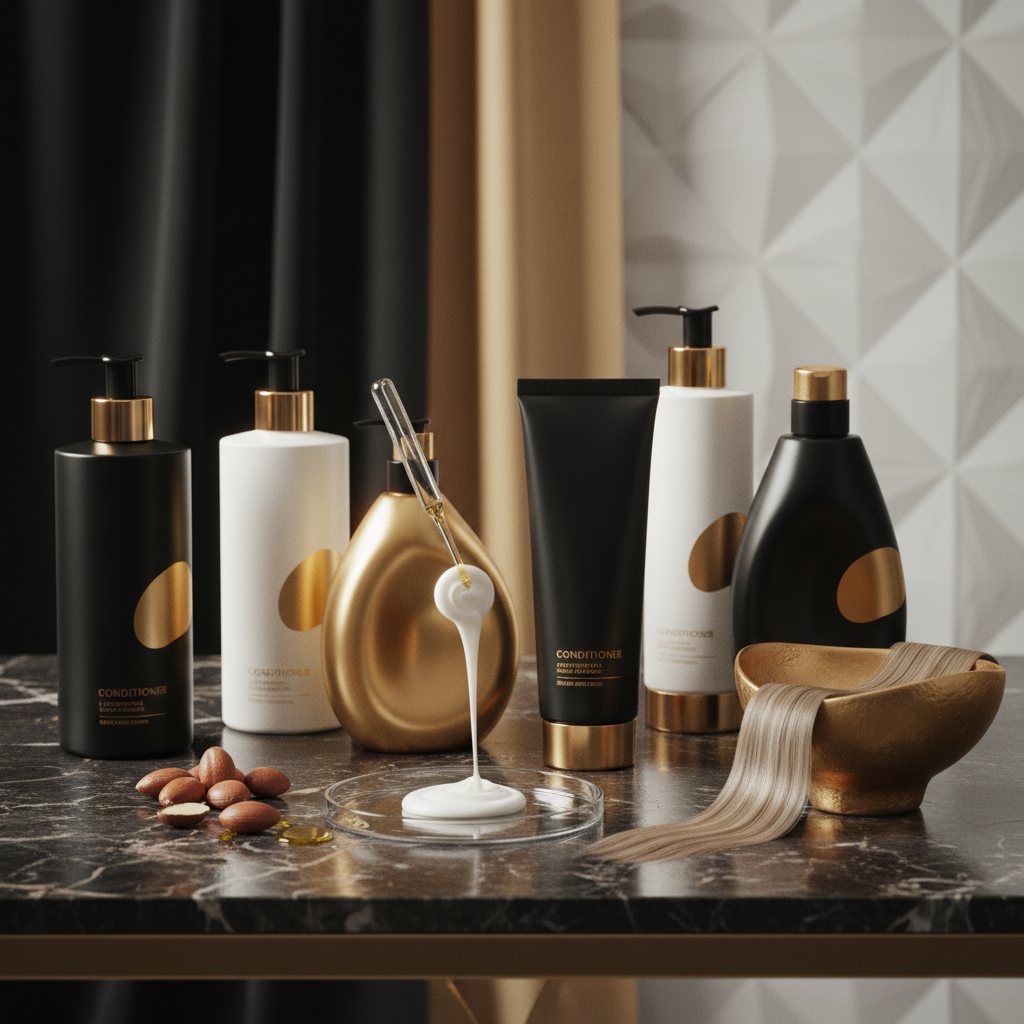
Quick answer: Hair Conditioners are cosmetic formulations applied to hair, typically after washing, to enhance its feel, appearance, and manageability. They work by depositing ingredients onto the hair fibre, primarily the cuticle, to smooth its surface and reduce friction. While highly effective for improving cosmetic qualities and protecting against mechanical damage, Hair Conditioners do not address the biological causes of hair loss or promote new hair growth from the follicle.
Key takeaways
- Hair Conditioners are cosmetic products that improve the hair's external qualities, such as smoothness, shine, and detangling.
- They work by depositing conditioning agents, often positively charged, onto the hair cuticle, smoothing it and neutralising static electricity.
- Different types, including rinse-out, leave-in, deep conditioners, and co-washes, cater to specific hair needs and conditions.
- The primary benefits are cosmetic, making hair feel softer, look shinier, and become more manageable, while also helping to protect against mechanical damage.
- Hair Conditioners do not treat genetic hair loss conditions like androgenetic alopecia or stimulate new hair growth from the scalp.
Hair Conditioners: What the Evidence Shows
Hair Conditioners are scientifically formulated cosmetic products designed to enhance the physical properties of the hair shaft. They aim to make hair feel softer, appear shinier, and become easier to manage. Their primary role is to mitigate the effects of shampooing, environmental exposure, and mechanical stress, all of which can leave the hair cuticle raised, rough, and susceptible to damage. By forming a protective and lubricating film, conditioners restore a smoother surface to the hair, improving its overall condition.
How Hair Conditioners Work: The Mechanism
The fundamental mechanism of Hair Conditioners involves the deposition of active conditioning agents onto the hair fibre. Hair, particularly when compromised by damage or chemical treatments, typically carries a net negative electrical charge. Most conditioning agents, especially cationic surfactants (such as cetrimonium chloride or behentrimonium methosulfate), are positively charged. This opposing charge allows them to be strongly attracted to and bind electrostatically with the negatively charged sites on the hair surface, primarily the cuticle.
Once deposited, these agents form a thin, lubricating film that provides several cosmetic benefits:
- Cuticle Smoothing: By coating the hair surface and temporarily filling in irregularities in the cuticle, conditioners create a smoother, more uniform surface. A smoother cuticle reflects light more effectively, which enhances the hair's natural shine.
- Friction Reduction and Detangling: The lubricating film significantly reduces the friction between individual hair strands. This makes wet hair easier to comb through and helps to prevent tangles and knots, which are a common cause of mechanical breakage.
- Static Neutralisation: The positive charge of cationic conditioners helps to neutralise the negative charges on hair, which reduces static electricity, frizz, and flyaways.
- Improved Tactile Properties: The hair feels softer, silkier, and more pliable due to the smoothed surface and reduced friction.
- Protective Layer: This surface film offers a degree of physical protection against external aggressors, including the stresses of heat styling, environmental pollutants, and daily mechanical actions like brushing.
Many Hair Conditioners also include other beneficial ingredients. Emollients, such as natural oils or silicones, impart softness and flexibility. Humectants, like glycerin or panthenol, attract and help retain moisture in the hair shaft. Hydrolysed proteins can temporarily reinforce the hair fibre, making it feel stronger and reducing the appearance of breakage. The pH of most Hair Conditioners is typically acidic, ranging from pH 3.5 to 5.0. This acidity helps to flatten the hair cuticle, which may have been raised by alkaline shampoos or chemical treatments. For more detail, see "The pH Scale and Hair".
Types of Hair Conditioners
Hair Conditioners come in a variety of formulations, each designed to meet specific hair needs and applied using different methods.
| Type of Hair Conditioner | Key Characteristics | Best Suited For |
|---|---|---|
| Rinse-out Conditioner | Applied after shampooing, left on for 1 to 5 minutes, then rinsed thoroughly. Formulations are generally lighter to avoid residue, providing daily detangling, smoothing, and shine. | Most hair types; daily use; individuals needing basic moisture and detangling after washing. |
| Leave-in Conditioner | Applied to damp hair after washing, without rinsing. Offers continuous conditioning, hydration, and protection throughout the day. Often includes ingredients for heat protection or as a styling aid. | Dry, frizzy, or tangled hair; coarse hair; chemically treated hair; those needing ongoing protection or styling support. (See "Hair Moisturizers" and "Heat Styling Safety Best Practices"). |
| Deep Conditioner / Hair Mask | More concentrated formulations with higher levels of conditioning agents, emollients, and active ingredients. Applied for longer periods (typically 5 to 20 minutes) to provide intensive hydration, repair, and strengthening. | Damaged, very dry, coarse, chemically treated, or colour-treated hair; generally used weekly or bi-weekly. (See "Maintaining Colour-Treated Hair: A Guide to Longevity and Health" and "Understanding Hair Damage"). |
| Cleansing Conditioner (Co-wash) | Formulated with mild cleansing agents and a high proportion of conditioning ingredients. Used in place of shampoo to gently cleanse hair while simultaneously conditioning, helping to preserve natural oils and moisture. | Dry, curly, coily, or afro-textured hair types prone to dryness; can help maintain moisture for those with sensitive scalps. (See "Hair Cleansing and Conditioning" and "Caring for Afro Hair"). |
What Hair Conditioners Do Not Show (or is Mixed Evidence)
It is important to understand that Hair Conditioners are cosmetic products that act on the external structure of the hair shaft. They do not:
- Treat or cure hair loss (alopecia) or promote new hair growth: While conditioners can make existing hair feel thicker and reduce breakage, they do not influence hair follicles or promote new hair growth. Conditions like androgenetic alopecia or anagen effluvium require different, often medical, approaches. For persistent hair shedding or loss, a healthcare professional should be consulted.
- Permanently repair hair: The "repair" benefits are temporary and cosmetic. Hair Conditioners can smooth the cuticle and temporarily fill in gaps, but they cannot fuse broken protein bonds or reconstruct the internal structure of severely damaged hair. The hair fibre, once grown, is essentially dead tissue.
- Significantly alter hair structure: They do not change the fundamental chemical or physical structure of the hair fibre itself; instead, they coat its surface.
- Stimulate the scalp for growth: While some conditioners may contain ingredients beneficial for scalp health (see "Understanding Scalp Health"), their primary function is for the hair shaft, not the follicle. Claims of direct hair growth stimulation from conditioners are not supported by robust evidence.
Evidence is mixed regarding whether Hair Conditioners cause significant product build-up that impedes hair health, especially when a proper cleansing routine is followed. Regular, effective shampooing should prevent excessive accumulation.
What You Can Do: Choosing and Using Hair Conditioners
Choosing the right Hair Conditioners is crucial for achieving desired results. Consider your hair type, current condition, and specific concerns:
- Hair Type: Fine hair often benefits from lighter, volumising formulas that won't weigh it down. Coarse, thick, or curly hair typically requires richer, more moisturising options. (See "Fine Hair: A Complete Guide to Understanding and Care" and "Caring for Curly Hair").
- Hair Condition: If your hair is dry, damaged, or chemically treated, look for deep conditioners or formulas rich in emollients, humectants, and proteins. These can offer more intensive care. (See "Understanding Hair Damage").
- Scalp Condition: For an oily scalp, focus conditioner application primarily on the mid-lengths and ends of your hair, avoiding the roots to prevent weighing them down or exacerbating oiliness. For sensitive scalps, seek fragrance-free or hypoallergenic options.
Application Technique: Always apply Hair Conditioners predominantly to the mid-lengths and ends of your hair, as these areas are typically older and more prone to damage. Distribute the product evenly and leave it on for the recommended time before rinsing thoroughly for rinse-out types. For leave-in conditioners, apply sparingly to damp hair, ensuring even coverage without oversaturation.
When the Cause May Be Something Else
If you are experiencing significant hair issues despite diligent use of Hair Conditioners, the root cause may not be cosmetic and could lie elsewhere:
- Hair Shedding or Loss: If you observe excessive hair shedding (hair falling out from the root, such as in telogen effluvium) or progressive hair loss (like alopecia), this is not a problem Hair Conditioners can solve. Such issues often require investigating underlying medical causes, including nutritional deficiencies, hormonal imbalances, or other health conditions. It is important to consult a healthcare professional for diagnosis and advice.
- Severe Hair Breakage: While conditioners reduce breakage by smoothing the cuticle and reducing friction, if you experience severe breakage close to the scalp or along the hair shaft, it might indicate extreme chemical damage, poor handling techniques, or underlying hair shaft disorders. (See "Understanding Hair Damage").
- Scalp Conditions: Persistent scalp irritation, flakiness, or itchiness might point to specific scalp conditions that require targeted treatments beyond general conditioning. (See "Understanding Scalp Health").
Watermans and Frojus: Supporting Your Hair Conditioning Routine
At Watermans, we understand the importance of effective Hair Conditioners for healthy-looking and feeling hair. Our formulations are designed to complement our shampoos, providing the necessary moisture, smoothness, and protection that your hair needs. For those with afro, curly, or wavy hair, Frojus offers specially formulated conditioners to deliver intense hydration and detangling, addressing the unique needs of these hair types and helping to reduce breakage and enhance curl definition. These products are developed to support your hair's cosmetic health and manageability.
Frequently asked questions about Hair Conditioners
How often should I use Hair Conditioners?
Most people can use Hair Conditioners every time they shampoo their hair. For very dry, coarse, or damaged hair, or for those using co-wash methods, daily use may be beneficial. If your hair is fine or gets greasy quickly, you might condition less frequently, or focus on the mid-lengths and ends to avoid weighing down the roots.
Can Hair Conditioners cause hair loss?
No, Hair Conditioners do not cause hair loss (alopecia), which originates from the hair follicle. If applied excessively to the scalp, particularly with richer formulas, they could potentially contribute to scalp build-up or temporarily weigh down hair, making it appear thinner or feel heavy. However, this is distinct from true hair loss from the root. Ensure thorough rinsing and appropriate application for your hair type.
Are natural oils better than commercial Hair Conditioners?
Natural oils, such as coconut or argan oil, can provide emollient benefits and help to seal the hair cuticle, reducing moisture loss. Commercial Hair Conditioners are complex formulations designed to offer a broader range of benefits, including detangling, static reduction, and specific conditioning properties through ingredients like cationic surfactants and humectants. Both have their place, but commercial conditioners are engineered for balanced performance.
What is the difference between a conditioner and a hair mask?
The main difference lies in concentration and intensity. A regular rinse-out conditioner is designed for daily or frequent use, providing surface-level smoothing and detangling. A hair mask, or deep conditioner, has a richer, more concentrated formula with higher levels of active ingredients, intended for less frequent, more intensive treatment to provide deeper hydration, repair, or strengthening. (See "Hair Hydration: Maintaining Moisture for Healthy Hair").
Can I leave Hair Conditioner in my hair?
Only if it is specifically formulated as a "leave-in conditioner". Standard rinse-out Hair Conditioners are designed to be rinsed out thoroughly after a short period. Leaving them in can lead to product build-up, potentially making hair feel heavy, greasy, or dull, and may irritate the scalp. Always follow the product's instructions for optimal results and to maintain scalp health.
Support for Healthy, Manageable Hair
Hair Conditioners are an indispensable part of most hair care routines, offering significant cosmetic benefits by smoothing the hair cuticle, reducing friction, and enhancing overall manageability and appearance. They play a crucial role in maintaining the visible health of your hair, helping it to feel softer, look shinier, and be more resilient to mechanical stress. While they are not a solution for hair loss or a permanent repair for severe damage, their consistent use supports the external integrity and aesthetic quality of the hair fibre, contributing to a healthy-looking head of hair.
Sources and references
- American Academy of Dermatology Association, "Hair loss: Diagnosis and treatment", AAD.org, accessed 2023.
- S. E. Davis, "Hair Cosmetics", Journal of the American Academy of Dermatology, vol. 45, no. 5, 2001, pp. S105-S117.
- J. J. K. Van Neste, "Cosmetic properties of hair and their measurement", Clinics in Dermatology, vol. 28, no. 3, 2010, pp. 248-251.
- PubMed Central, "The role of conditioners in improving hair health and appearance", PMC, accessed 2023.
- NHS, "Hair loss", NHS.uk, accessed 2023.
Find these ingredients in Watermans products
- Argan Oil, you will find this ingredient in our Hair Growth Shampoo.