Hair Conditioner: Understanding its Science and Benefits
9 min read ·
Hair Conditioner is a hair care product designed to improve the feel, appearance, and manageability of hair by smoothing the cuticle and providing hydration. Its primary role is cosmetic, enhancing hair's external qualities, though some formulations offer temporary repair.
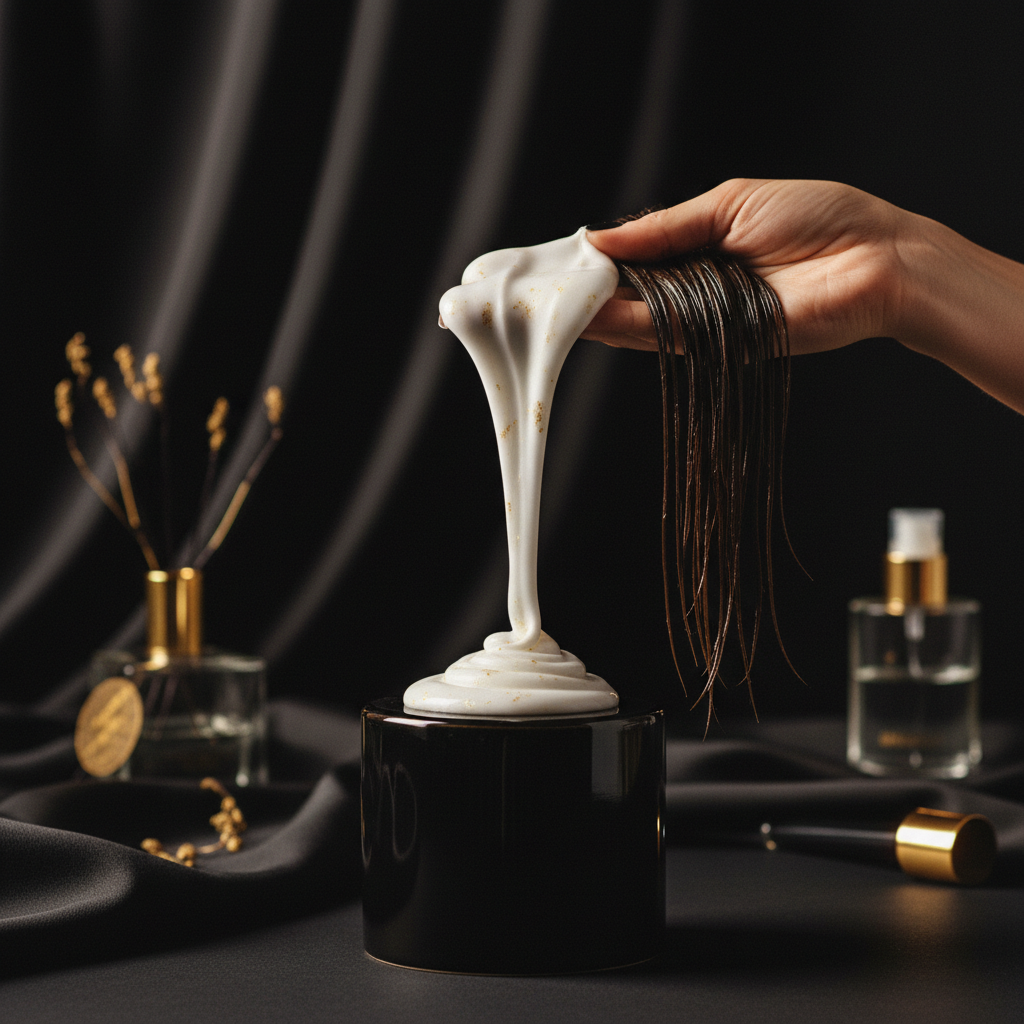
Quick answer: Hair Conditioner is a hair care product primarily designed to enhance the cosmetic qualities of hair by coating the hair shaft, smoothing the outer cuticle layer, and increasing manageability. It typically contains ingredients that reduce static, detangle, add shine, and provide a softer feel. While it improves the hair's appearance and feel, it does not permanently alter hair structure or treat underlying follicular issues.
Key takeaways
- Hair Conditioner works by depositing positively charged ingredients onto the negatively charged hair surface, smoothing the cuticle.
- Its main benefits are improved detangling, reduced friction, increased shine, and a softer feel.
- Different types, such as rinse-out, leave-in, and deep conditioners, offer varying levels of intensity and benefits.
- Key ingredients include cationic surfactants, emollients, humectants, and sometimes proteins or silicones, each playing a specific role.
- Choosing the right Hair Conditioner depends on hair type, concerns (e.g., dryness, oiliness, damage), and desired results.
- Proper application, focusing on mid-lengths and ends, is crucial for optimal results and to avoid weighing hair down.
Hair Conditioner: what the evidence shows
Hair Conditioner is a widely used cosmetic product formulated to improve the tactile and visual characteristics of hair. The evidence shows that its primary mechanism involves the interaction of its ingredients with the hair's outer layer, the cuticle. When hair is washed with shampoo, especially those with anionic surfactants, it can develop a negative charge, causing the cuticle scales to lift. This lifted cuticle makes hair feel rough, appear dull, and more prone to tangling and breakage.
Conditioners typically contain cationic surfactants (positively charged molecules) which are attracted to the negatively charged areas of the hair. This neutralises the static charge, flattens the cuticle, and forms a smooth, protective film around each hair strand. This film reduces friction between individual hair fibres, leading to easier detangling, increased shine, and a smoother feel. Research in cosmetic science confirms this electrostatic interaction as fundamental to conditioner efficacy (G. Zappulla et al., 2011, International Journal of Cosmetic Science).
Beyond this primary function, Hair Conditioner formulations are designed to address various hair needs:
- Improved manageability: By reducing friction and tangles, conditioners make hair easier to comb and style, which can indirectly minimise mechanical damage and breakage.
- Enhanced shine and smoothness: A smooth, closed cuticle reflects light more uniformly, resulting in a shinier appearance.
- Temporary moisture and hydration: Humectants attract and retain water from the environment, while emollients provide a softening and lubricating effect. This can make hair feel more hydrated, though it doesn't alter the hair's internal moisture content permanently.
- Reduced static electricity: The neutralisation of negative charges by cationic surfactants significantly reduces static, preventing flyaways.
- Temporary repair: Some conditioners include hydrolysed proteins or amino acids that can temporarily fill in gaps and smooth rough spots on the hair shaft, improving tensile strength and elasticity against breakage. However, these effects are generally superficial and temporary, rinsing away with subsequent washes.
It's important to understand that the benefits of Hair Conditioner are largely cosmetic and temporary. While it significantly improves the appearance and feel of hair, it does not cure underlying hair or scalp conditions, nor does it promote hair growth or treat alopecia. Its role is to protect the existing hair fibre and enhance its aesthetic qualities.
The mechanism behind Hair Conditioner performance
The effectiveness of Hair Conditioner stems from a synergistic blend of ingredients that interact with the hair fibre at a microscopic level. The hair shaft, particularly when wet or damaged, carries a net negative electrical charge. This is due to the ionisation of carboxyl groups on the hair's surface.
- Cationic Surfactants: These are the workhorses of most conditioners. Ingredients like behentrimonium chloride or cetrimonium chloride possess a positively charged head that is strongly attracted to the negatively charged hair surface. They neutralise the static charge, making hair less prone to tangling and static flyaways. They also deposit a thin, lubricating film that smooths the cuticle scales, reducing friction and increasing slip.
- Fatty Alcohols: Cetyl, stearyl, and cetearyl alcohols are common in conditioners. Despite being alcohols, they are long-chain fatty alcohols that act as emollients, providing a creamy texture and contributing to the lubricating and softening effects without drying the hair. They also help to thicken the product.
- Humectants: Ingredients such as glycerine, propylene glycol, and panthenol attract and hold water from the atmosphere onto the hair surface. This temporary hydration can make hair feel softer and more pliable. For more on how these work, see the entry on Humectants: Understanding How They Hydrate and Protect Your Hair.
- Emollients/Oils: Various botanical oils (e.g., argan oil, jojoba oil) or silicones (e.g., dimethicone) form a protective layer on the hair, enhancing shine, providing slip, and reducing moisture loss from the hair shaft. Silicones, in particular, can offer significant smoothing and heat protection.
- Proteins: Hydrolysed proteins (e.g., wheat protein, keratin) have smaller molecular weights, allowing them to penetrate the cuticle more easily. They can temporarily reinforce the hair structure, patch damaged areas, and improve elasticity, offering a temporary strengthening effect against breakage. This is especially beneficial for hair that has undergone chemical treatments or heat styling.
- pH Adjusters: Many conditioners are formulated to be slightly acidic (pH 3.5 to 5.0). This acidic environment helps to close and flatten the hair cuticle, which has been opened by alkaline shampoos or chemical processes. A closed cuticle contributes to smoother hair, enhanced shine, and better retention of moisture and colour.
This intricate combination of ingredients works to create a smoother, more manageable, and healthier-looking hair fibre without fundamentally altering its biological structure.
Hair Conditioner types and their benefits
There are several categories of Hair Conditioner, each formulated to deliver specific benefits and suitable for different hair needs.
| Conditioner Type | Application | Key Benefits | Best For | Typical Frequency | Limitation |
|---|---|---|---|---|---|
| Rinse-Out Conditioner | After shampoo, rinse | Daily detangling, cuticle smoothing, basic hydration | All hair types, especially normal to oily | Every wash | Temporary effects, may not be enough for very dry/damaged hair |
| Leave-In Conditioner | On damp hair, don't rinse | Continuous hydration, detangling, heat/UV protection | Dry, damaged, curly, fine, tangled hair | Daily or as needed | Can build up if overused, may weigh down fine hair |
| Deep Conditioner / Mask | 10-30 mins, optional heat, rinse | Intensive moisture, repair, protein boost | Very dry, damaged, chemically treated, coarse hair | 1-2 times per week | Can over-condition if used too often, may leave residue if not rinsed well |
| Cleansing Conditioner (Co-wash) | In place of shampoo, rinse | Gentle cleansing, moisture retention | Very dry, curly, coily, textured hair | As needed (e.g., alternate with shampoo) | May not thoroughly cleanse scalp for all hair types, can lead to build-up |
| Pre-Shampoo Conditioner (Pre-poo) | Before shampoo, on dry/damp hair | Protects from shampoo stripping, detangles before wash | Dry, fragile, chemically treated hair, sensitive scalps | As needed before shampoo | Adds an extra step to wash routine, not a primary conditioning agent |
Signs your hair needs a good Hair Conditioner
Your hair will often communicate its needs. Here are some signs that a well-chosen Hair Conditioner could improve your hair health and appearance:
- Difficulty detangling: If your hair feels rough and snags easily when wet or dry, it's a strong indicator that the cuticle is raised and needs smoothing. Hair Conditioner helps reduce friction, making detangling easier and preventing breakage.
- Lack of shine or dull appearance: Hair with a smooth, intact cuticle reflects light better. If your hair looks dull or lacks lustre, a conditioner can help flatten the cuticle and enhance its natural shine.
- Rough or coarse texture: When hair feels straw-like or rough to the touch, it suggests a compromised cuticle. Conditioners can deposit emollients and smooth the fibre, improving its texture.
- Excessive frizz: Frizz often occurs when the hair's cuticle is open, allowing moisture from the air to penetrate and swell the hair shaft unevenly. A conditioner helps to seal the cuticle, reducing frizz, especially in humid conditions. See our entry on How to Reduce Frizz in Hair for more details.
- Increased static electricity: If your hair often flies away or sticks up, it's likely due to an imbalance of electrical charges on the hair surface. The cationic surfactants in Hair Conditioner neutralise these charges.
- Breakage during styling or brushing: While Hair Conditioner does not prevent hair loss from the follicle, it significantly reduces hair breakage along the shaft by improving elasticity and reducing friction. If you notice many short, broken pieces of hair, improved conditioning could help.
Frequently asked questions about Hair Conditioner
What's the difference between conditioner and deep conditioner?
Rinse-out Hair Conditioner is for daily use, offering basic detangling and smoothing. Deep conditioners, or hair masks, are more intensive treatments with higher concentrations of active ingredients. They are left on longer, typically 10 to 30 minutes, to provide deeper hydration, repair, and nourishment, making them suitable for dry, damaged, or chemically treated hair.
Can Hair Conditioner cause hair loss?
No, Hair Conditioner applied correctly to the hair shaft will not cause hair loss, which originates from the follicle. If conditioner is applied heavily to the scalp, it might temporarily clog pores or exacerbate an oily scalp for some individuals, leading to a greasy feel or mild irritation, but it does not cause follicular hair loss or alopecia. Hair loss is a distinct issue from hair breakage.
How often should I use Hair Conditioner?
Most people can use rinse-out Hair Conditioner every time they wash their hair. Leave-in conditioners can be applied daily to damp hair. Deep conditioners are typically used once or twice a week, depending on hair needs. Listen to your hair; if it feels weighed down or greasy, you might be over-conditioning or using too much product.
Should I apply Hair Conditioner to my scalp?
Generally, no. Hair Conditioner is formulated to treat the hair shaft, which is the oldest and most vulnerable part of your hair, especially the mid-lengths and ends. Applying it directly to the scalp can lead to product build-up, weigh down roots, and potentially exacerbate oily scalp conditions for some individuals. Focus application from the ears down.
Can Hair Conditioner damage my hair?
When used correctly, Hair Conditioner is highly beneficial and does not damage hair. However, over-conditioning, using products too rich for your hair type, or not rinsing thoroughly can lead to build-up, making hair appear dull, greasy, or limp. These are cosmetic issues, not damage to the hair fibre itself.
Is there a specific pH level for Hair Conditioner that is best?
Yes, Hair Conditioners are generally most effective when formulated with a slightly acidic pH, typically ranging from 3.5 to 5.0. This acidity helps to flatten and seal the hair's cuticle, which is often raised by the more alkaline pH of some shampoos or chemical treatments. A closed cuticle leads to smoother, shinier hair and better moisture retention.
Optimising your routine with Watermans Hair Conditioner
Watermans Hair Conditioner is formulated to complement our shampoos, providing a balanced approach to hair health. Our conditioners contain a blend of ingredients chosen to smooth the cuticle, improve detangling, and enhance the overall appearance and feel of your hair.
By incorporating Watermans Hair Conditioner into your routine, you can expect improved manageability, reduced friction during styling, and a softer, shinier finish. Our formulations are designed to support the cosmetic health of your hair, making it look and feel its best. Always follow application instructions for optimal results.
Sources and references
- G. Zappulla, M. L. Nicoli, C. M. L. Caramella, S. G. Pirotta. (2011). 'Evaluation of hair damage and conditioning effects of some cosmetic formulations.' International Journal of Cosmetic Science, 33(3), 263-270.
- Robbins, Clarence R. (2012). Chemical and Physical Behavior of Human Hair (5th ed.). Springer Science & Business Media.
- Draelos, Zoe Diana. (2010). Hair Cosmetics: An Overview. Journal of Cosmetic Dermatology, 9(2), 114-123.
- British Association of Dermatologists. (Ongoing). Patient information leaflets on hair and scalp conditions. Available from dermatology.org.uk
- PubMed Central. (Ongoing). Database of biomedical and life sciences journal literature. Available from ncbi.nlm.nih.gov/pmc
Find these ingredients in Watermans products
- Argan Oil: you will find this ingredient in our Hair Growth Shampoo.