Hair Brushing Techniques: An Evidence-Based Guide to Brushing Your Hair
10 min read ·
Understanding effective Hair Brushing Techniques is crucial for maintaining hair health, preventing breakage, and distributing natural oils, but improper methods can cause damage.
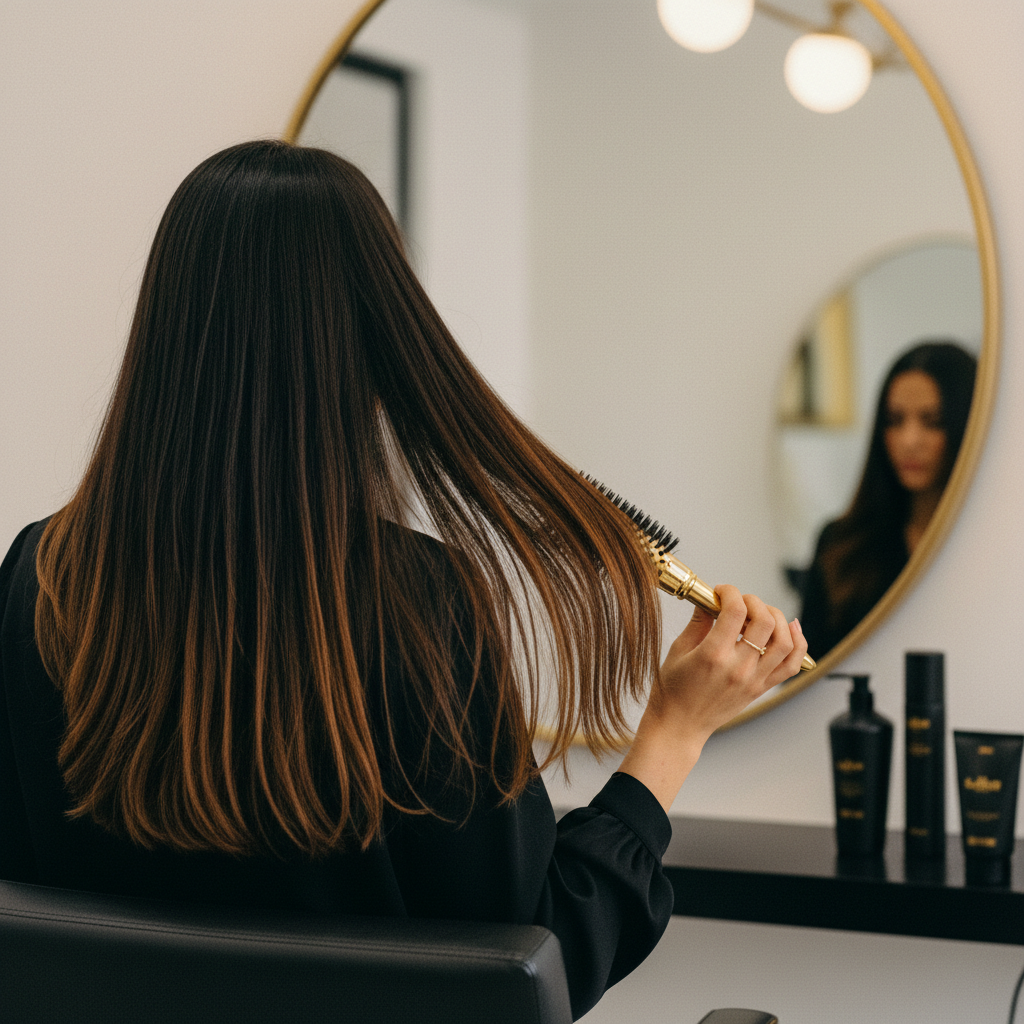
Quick answer: Effective Hair Brushing Techniques involve selecting the right tool for your hair type and condition, starting detangling from the ends, and using a gentle approach to minimise friction and prevent breakage. While brushing helps distribute scalp oils and remove loose hairs, excessive or aggressive brushing, especially on wet hair or with unsuitable brushes, can lead to fibre damage. The key is gentle, mindful practice tailored to individual hair needs.
Key takeaways
- Gentle, mindful Hair Brushing Techniques are crucial for minimising fibre damage.
- Selecting the correct brush type for your hair (fine, thick, curly, wet, dry) prevents breakage and maintains hair integrity.
- Always start detangling from the ends and work upwards to avoid pushing knots together and causing more damage.
- Brushing helps distribute natural scalp oils, conditioning the hair and enhancing shine.
- Aggressive brushing, especially on wet hair, can lead to significant breakage and cuticle damage.
- Regular cleaning of brushes is essential to prevent the transfer of product build-up and oils back to clean hair.
Hair Brushing Techniques: what the evidence shows
Brushing is a daily ritual for many, often seen as a simple act of tidiness. However, the way you brush your hair can significantly impact its health and appearance. The primary goals of Hair Brushing Techniques are to detangle, distribute natural oils, and remove loose hair and debris, but doing it incorrectly can cause considerable mechanical damage to the hair fibre.
The hair fibre itself is composed of three main layers: the medulla (innermost, not always present), the cortex (middle, providing strength), and the cuticle (outermost protective scales). Repeated friction from brushing can lift and damage these cuticle scales, making the hair rougher, more prone to tangling, and increasing the risk of breakage. This is especially true if the hair is already weakened by chemical treatments, heat styling, or environmental factors.
The mechanism of damage: friction and force
Hair is most vulnerable to mechanical damage when wet. Water absorption swells the hair shaft and temporarily weakens the keratin bonds, making it more elastic but also more susceptible to stretching and snapping. Brushing wet hair aggressively with inappropriate tools generates high levels of friction and tensile force, which can easily lead to breakage. Research indicates that wet hair can tolerate less force than dry hair before breaking, highlighting the need for extreme gentleness and specialised tools.
For dry hair, the damage mechanism is cumulative friction. Each stroke, if too harsh, contributes to cuticle erosion. Over time, this wears down the protective outer layer, exposing the cortex and leading to dullness, frizz, and increased vulnerability to further damage.
Distributing natural oils and promoting scalp health
Beyond detangling, appropriate Hair Brushing Techniques play a role in scalp and hair health. Gentle brushing helps to distribute sebum, the natural oil produced by the scalp's sebaceous glands, down the hair shaft. Sebum acts as a natural conditioner, providing lubrication and protection to the hair fibre. This distribution can contribute to shinier, softer-feeling hair and may help reduce oiliness at the scalp by moving excess sebum away. However, it's important to distinguish this from claims of "stimulating hair growth", which lack strong scientific backing. While gentle scalp massage, potentially performed with a brush, can temporarily increase blood flow, controlled research has not found a direct link between brushing and accelerated hair growth or the prevention of pattern hair loss (alopecia).
Tools for the job: selecting the right brush
Choosing the correct brush or comb is as important as the technique itself. Different hair types and conditions require different tools to minimise damage and maximise benefits.
- Wide-tooth combs: Essential for detangling wet hair, especially for curly, coily, or fine hair. Their widely spaced teeth glide through knots with less resistance, reducing pulling and breakage. Always use a detangling product or conditioner to add slip.
- Paddle brushes: Ideal for medium to thick, straight or wavy hair when dry. Their broad, flat base and flexible bristles make them effective for smoothing and detangling large sections of hair. Look for paddle brushes with rounded tips to avoid scratching the scalp.
- Boar bristle brushes: These natural fibre brushes are known for their ability to distribute scalp oils evenly. They are gentle on the hair and can enhance shine, making them suitable for fine to normal hair. However, they may not be effective for detangling very thick or curly hair.
- Detangling brushes (flexible bristles): Designed with flexible plastic bristles that bend and separate tangles rather than pulling at them. These are particularly useful for all hair types, especially for those prone to knots, and can often be used on both wet and dry hair.
- Vented brushes: Feature openings that allow airflow, speeding up drying when used with a hairdryer. They are generally suitable for all hair types during blow-drying.
Effective Hair Brushing Techniques: a step-by-step approach
Adopting mindful Hair Brushing Techniques can significantly reduce fibre damage and improve your hair's overall condition.
- Prepare your hair: If hair is wet, gently towel-dry to remove excess water. Apply a leave-in conditioner or detangling spray, especially for fine, curly, or coily hair, to provide slip and protection. For dry hair, ensure it's not excessively tangled before starting.
- Start from the ends: This is perhaps the most crucial step. Begin detangling at the very ends of your hair, gently working through small sections. Once the ends are free of tangles, move a few inches up the hair shaft and repeat. Continue this process, gradually moving towards the roots. This prevents pushing knots further down, which creates larger, harder-to-remove tangles and increases breakage.
- Hold sections firmly: When detangling, hold the section of hair above where you are brushing. This reduces tension on the scalp and roots, preventing discomfort and pulling hair from the follicle.
- Use gentle strokes: Avoid aggressive pulling or ripping through tangles. Instead, use short, gentle strokes. If you encounter a stubborn knot, don't force it. Use your fingers to carefully loosen it first, or apply more detangling product.
- Brushing frequency: For most hair types, brushing once or twice a day is sufficient to distribute oils and remove loose hairs. Excessive brushing (more than 100 strokes a day) can cause unnecessary friction and cuticle damage without providing additional benefits.
What the evidence does not show
It is important to clarify that despite popular belief, there is no scientific evidence to suggest that regular brushing "stimulates hair growth" in the sense of increasing the number of follicles or accelerating the growth cycle. While gentle scalp stimulation may improve blood flow, this has not been definitively linked to preventing or treating hair loss (alopecia). Similarly, aggressive brushing or using the wrong tools primarily causes hair breakage (the fibre snapping along the shaft), not hair loss (the hair coming out from the follicle). These are distinct phenomena.
Signs of improper brushing
Recognising the signs of incorrect Hair Brushing Techniques can help you adjust your routine before significant damage occurs:
- Increased hair breakage: You notice short, broken pieces of hair, especially around the middle or ends of the strands, rather than full strands with a bulb at the root.
- Split ends: The very tips of your hair strands divide or fray, indicating cuticle damage.
- Rough or frizzy texture: Damaged cuticles lift, making the hair feel rougher and look frizzy. For more on this, see "Dealing with Frizzy Hair" and "How to Reduce Frizz in Hair: An Evidence-Based Guide".
- Hair pulling or pain during brushing: This is a clear indicator that you are using too much force or an unsuitable tool.
- Static electricity: Excessive friction from brushing can generate static, especially in dry hair, making it fly away.
When to get professional advice
If you are experiencing significant hair breakage that doesn't improve with adjusted Hair Brushing Techniques, or if you notice unusual hair shedding, persistent scalp irritation, or any concerns about hair loss, it's wise to consult a dermatologist or trichologist. These professionals can rule out underlying medical conditions or nutrient deficiencies that might be contributing to your hair issues.
Caring for your brushes
Just as important as choosing the right brush is keeping it clean. Brushes accumulate loose hair, dead skin cells, product residue, and scalp oils. A dirty brush can redeposit these onto your clean hair and scalp, potentially leading to dullness or even scalp issues. Aim to clean your brushes weekly:
- Remove loose hair: Use a comb or your fingers to pull out all trapped hair from the bristles.
- Wash gently: Fill a basin with lukewarm water and a small amount of mild shampoo. Swish the brush in the water, focusing on cleaning the bristles. For boar bristle brushes, avoid soaking the wooden handle.
- Rinse thoroughly: Rinse the brush under clean running water until all soap residue is gone.
- Dry properly: Shake off excess water and lay the brush on a clean towel with the bristles facing down to allow air circulation. Ensure it's completely dry before reuse.
Frequently asked questions about Hair Brushing Techniques
Is it better to brush hair wet or dry?
For most hair types, it's generally better to detangle dry hair or damp hair with a wide-tooth comb and a detangling product. Wet hair is more fragile and susceptible to breakage due to the temporary weakening of its structure when water-logged. If you must detangle wet hair, always use a wide-tooth comb or a specialised detangling brush, and apply a leave-in conditioner or detangling spray to reduce friction.
How often should I brush my hair?
Brushing once or twice a day is usually sufficient for most hair types. This helps distribute natural oils and removes loose hairs and environmental debris. Excessive brushing beyond this, such as the old "100 strokes a day" adage, offers no additional benefits and can actually increase friction and mechanical damage to the hair cuticle, leading to breakage.
Can brushing cause hair loss?
Aggressive or improper Hair Brushing Techniques primarily cause hair breakage, where the hair fibre snaps along the shaft, rather than true hair loss from the follicle. While severe, sustained pulling could potentially contribute to traction alopecia over time, typical brushing habits usually result in breakage. If you notice large amounts of hair coming out from the root, it's more likely shedding or an underlying issue than just brushing.
What kind of brush is best for fine hair?
For fine hair, a brush with soft, flexible bristles, such as a natural boar bristle brush or a detangling brush with gentle plastic bristles, is often recommended. These brushes are designed to detangle without excessive pulling or stress on delicate strands, helping to distribute oils gently and reduce the risk of breakage. Avoid stiff or metal bristles that can snag and snap fine hair.
Should I brush my hair before washing it?
Yes, it's often beneficial to gently brush or comb your hair before washing it, especially if you have long or easily tangled hair. This can help to pre-detangle any knots, making the washing process smoother and reducing tangling when the hair is wet and more vulnerable. It also helps to dislodge loose hairs and product build-up, allowing your shampoo to work more effectively.
Can I brush my scalp?
Gentle brushing or massaging the scalp with a soft-bristled brush can help exfoliate the scalp, remove dead skin cells, and distribute natural oils. While some claim this stimulates hair growth, scientific evidence for this is limited. Avoid aggressive scrubbing, especially if you have a sensitive or irritated scalp, as this can cause micro-abrasions. See "Scalp Exfoliation: Uncovering the Evidence for a Healthier Scalp" for more details.
Watermans and Hair Brushing Techniques
Watermans hair care products are formulated to support strong, healthy-looking hair, which can better withstand the mechanical stress of brushing. Our shampoos and conditioners, such as Watermans Grow Me® Shampoo and Conditioner, contain hydrolysed proteins and natural extracts designed to nourish the hair from root to tip. By improving the hair's condition, elasticity, and overall resilience, Watermans products can help reduce the likelihood of breakage that can occur even with gentle Hair Brushing Techniques. When hair is well-conditioned and moisturised, it tangles less readily and allows brushes to glide through more smoothly, making your brushing routine more effective and less damaging. For those with afro or curly hair, our Frojus range offers specific formulations to enhance moisture and slip, further aiding detangling.
Sources and references
- American Academy of Dermatology Association, "Hair care: How to shampoo and condition", aad.org
- Gavazzoni Dias, M.F.R., "Hair cosmetics: an overview", International Journal of Trichology, 2015, ncbi.nlm.nih.gov/pmc/articles/PMC4389139/
- Keating, C., et al., "Hair Breakage: A Review of the Pathogenesis and Management", Journal of Drugs in Dermatology, 2021, jddonline.com/articles/hair-breakage-a-review-of-the-pathogenesis-and-management-S1545961621P1031X/
- Robbins, C.R., "Chemical and Physical Behavior of Human Hair", Springer, 2012.
- Souza, M., et al., "Evaluation of the effect of brushing on the human hair fibre", International Journal of Cosmetic Science, 2009, onlinelibrary.wiley.com/doi/abs/10.1111/j.1468-2494.2009.00512.x