Hair Breakage Treatment: An Evidence-Based Guide
7 min read ·
An evidence-based guide to Hair Breakage Treatment, explaining why hair snaps, how proteins and lipids reinforce fibres, and how to stop mechanical failure.
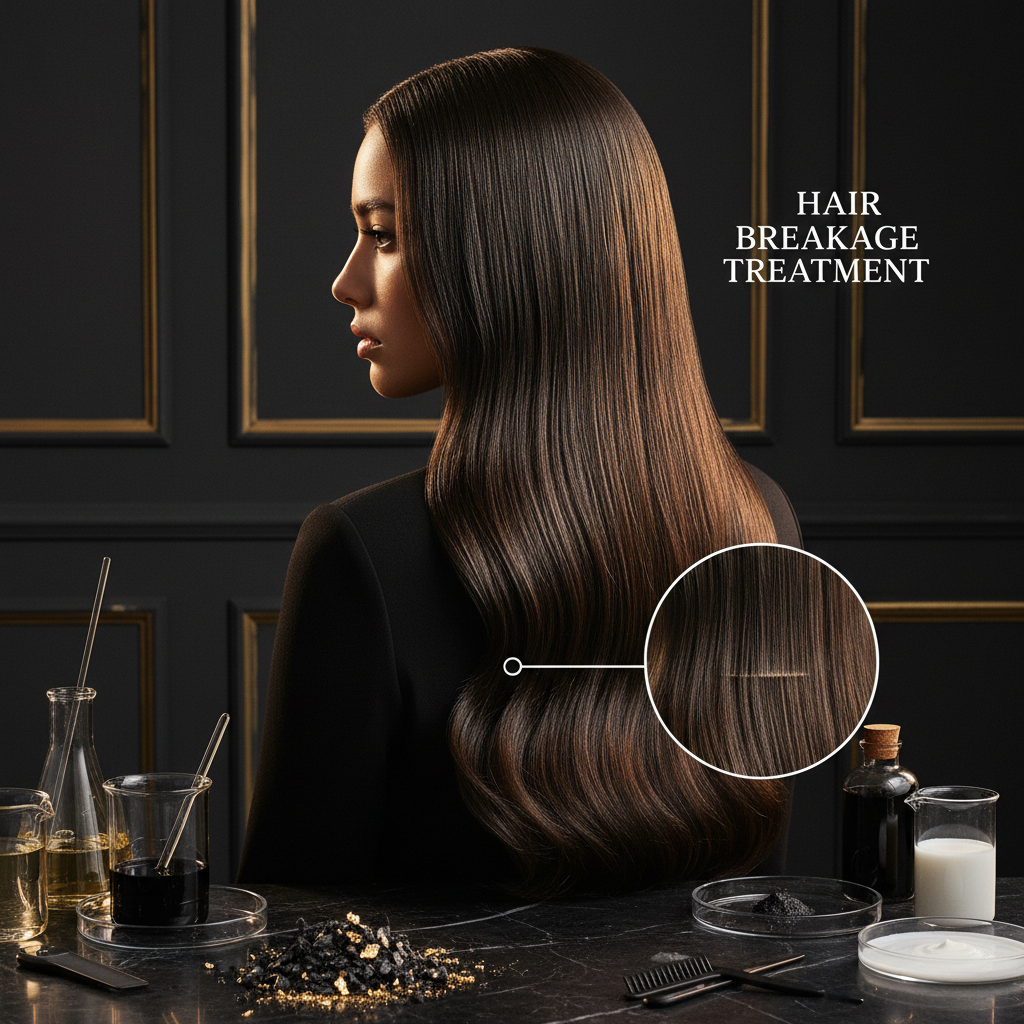
Quick answer: An effective Hair Breakage Treatment focuses on reinforcing the structural integrity of the hair shaft and restoring its lipid barrier rather than repairing the living follicle. True breakage occurs when the cuticle degrades and the inner cortex snaps under mechanical or chemical tension. Because hair is non-living keratinised tissue, no cosmetic treatment can permanently rejoin broken fibres. Real treatment involves preventing structural failure through protein conditioning, lipid replenishment, pH-balanced formulas, and minimising friction, while trimming away unsalvageable split ends.
Key takeaways
- Hair breakage is structural failure along the fibre, distinctly different from follicular shedding or genetic hair loss.
- Hair fibres are dead protein structures; treatments cannot biologically "heal" or permanently weld fractured keratin.
- Chemical processing, heat styling above 185°C, and mechanical friction represent the primary drivers of tensile weakness.
- Proven treatment strategies rely on hydrolysed proteins to temporarily fill cortical defects and cationic conditioning agents to reduce surface friction.
- Mechanical management, such as detangling wet hair with wide-tooth tools and adjusting washing frequency, provides the highest return on structural preservation.
Hair Breakage Treatment: what the evidence shows
Research published in the International Journal of Cosmetic Science shows that hair fibre tensile strength depends primarily on the intact cortex, which constitutes roughly 85% to 90% of total hair mass. The cortex consists of intermediate filament proteins packed with cysteine-rich microfibrils bound together by cross-linking disulphide bonds. When these bonds break down through bleaching, permanent waving, or thermal stress, the tensile strength drops sharply.
A true cosmetic treatment works through two distinct mechanisms: internal reinforcement and external friction reduction.
First, low-molecular-weight hydrolysed proteins (often derived from wheat, silk, or keratin, typically between 150 and 1,500 Daltons) penetrate slightly beneath lifted cuticle scales. These fragments lodge within micro-voids in the damaged cortex, creating temporary hydrogen and ionic bonds that elevate the force required to snap the fibre.
Second, cationic surfactants (such as cetrimonium chloride or behentrimonium methosulphate) deposit a microscopic, hydrophobic conditioning layer across the negatively charged, damaged hair cuticle. This neutralises electrostatic charge and reduces the wet-combing force by up to 80% to 90%, preventing the snap that occurs during styling.
What the evidence does not show
The haircare market often promises permanent structural rebonding or biological healing. Peer-reviewed cosmetic chemistry paints a more restrained picture:
- No permanent repair: Once the protein chain in hair snaps completely, no topical product can fuse it back together permanently. Polypeptide chains cannot re-establish their original biological matrix outside a living cell.
- Topical products do not halt shedding: A hair breakage treatment applied to the lengths has zero effect on follicular cycling, hormonal hair loss, or telogen effluvium. Conflating shaft breakage with root shedding leads to incorrect interventions.
- Bond builders have finite limits: While bis-aminopropyl diglycol dimaleate and similar cross-linking technologies create artificial bridges between free sulphur atoms in damaged disulphide pathways, they rinse out over repeated surfactant cycles and cannot withstand continued abusive styling habits.
The physical mechanisms behind fibre fracture
To treat breakage, you must identify how the fibre fractures. Hair breakage typically falls into three biomechanical categories:
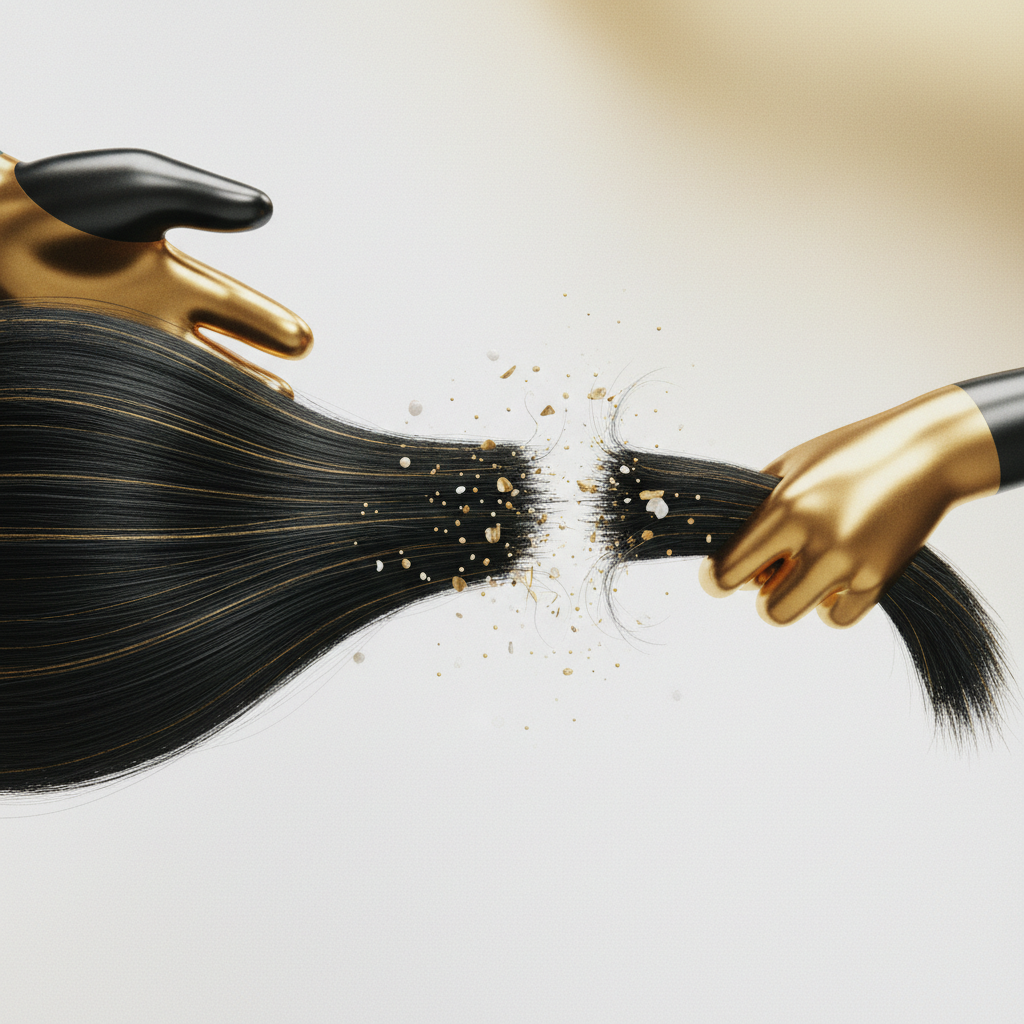
1. Cuticle stripping and weathering
Healthy virgin hair has an outer layer of 6 to 10 overlapping cuticle cells sealed by 18-methyleicosanoic acid (18-MEA), a protective lipid. Everyday weathering, alkaline tap water, and harsh surfactants remove this fatty acid layer. The exposed cuticle edges lift and flake away. Without the cuticle shield, the inner cortex dries, loses elasticity, and splits longitudinally.
2. Disulphide bond degradation
Chemical lighteners (bleach) use alkaline persulphates to swell the cuticle and penetrate the cortex to dissolve melanin. In doing so, they convert strong disulphide bonds into cysteic acid. Once cysteic acid levels rise significantly, the hair fibre loses its resilience against stretching, snapping at minimal mechanical loads.
3. Thermal degradation
Applying styling tools at temperatures exceeding 185°C produces structural transformation within the alpha-keratin matrix, converting it into fragile beta-keratin. If damp hair encounters hot metal plates, the moisture trapped within the cortex vaporises instantly. This produces internal steam pockets known clinically as bubble hair, an irreversible structural defect where the hair snaps cleanly at the site of the void.
Breakage versus shedding: diagnostic differences
It is vital to distinguish between fibre fracture and shedding from the scalp. Treating one with products meant for the other yields poor results.
| Diagnostic Marker | Hair Breakage | Root Shedding (Telogen) |
|---|---|---|
| Fibre Length | Short, uneven fragments with frayed ends | Full-length strand matching typical length |
| White Bulb | Absent at the ends of the fibre | Visible tiny, firm white keratin bulb at the root |
| Primary Location | Mid-lengths, crown canopy, nape, or split ends | Uniform shedding across the entire scalp |
| Underlying Cause | Chemical damage, heat, dry friction, styling tension | Systemic shifts, hormones, stress, dietary deficits |
| Treatment Path | Protein conditioners, bond builders, trims | Scalp support, dietary review, GP assessment |
Effective hair breakage treatment strategies
Implementing a successful regimen requires addressing both the internal protein balance and external mechanical protection.
Protein and moisture cycling
Fibre elasticity requires a strict balance. Excessive protein treatments without emollients cause hair to become rigid and brittle, increasing snap risk. Conversely, over-saturating hair with water and heavy oils without structural protein produces hygral fatigue, where constant swelling and contracting weakens the cell membrane complex. Balance deep conditioning masks containing hydrolysed vegetable protein with emollient fatty alcohols (cetyl, stearyl, or cetearyl alcohol).
Friction reduction
Rough fabrics like standard cotton pillowcases strip natural sebum and pull at compromised cuticles overnight. Switching to silk or satin pillowcases lowers surface abrasion. Similarly, swapping terry-cloth bath towels for smooth microfibre wraps eliminates aggressive tugging on damp, fragile fibres.
Managing heat and water temperature
Dial down heated styling tools to 150°C to 175°C, and never apply heat without a high-grade silicone or polymer-based thermal protectant. Wash hair in lukewarm water (around 37°C) rather than hot water, which swells the cuticle excessively and strips conditioning lipids.
Supporting hair density with Watermans
When addressing overall hair health, combining fibre-strengthening habits with balanced scalp maintenance produces the best visible density. While length breakage requires topical conditioning, thinning at the root demands targeted scalp care.
Watermans Grow Me Shampoo offers a gentle, sulphate-free cleanse that purifies the scalp environment without stripping the natural lipid barrier from compromised mid-lengths. Formulated with hydrolysed lupin protein, biotin, rosemary, and niacinamide, it helps maintain an optimal scalp environment for healthy-looking hair.
Pairing a mild cleanser with Watermans Condition Me Conditioner reinforces fragile lengths. Its blend of cholesterol, shea butter, and hydrolysed protein works to smooth ruffled cuticles and restore manageability, helping prevent the mechanical snap that occurs during daily styling.
Frequently asked questions about Hair Breakage Treatment
Can a hair breakage treatment permanently repair split ends?
No cosmetic treatment can permanently glue split ends back together. Split ends occur when the protective cuticle wears away entirely, leaving the cortex split into separate frayed bundles. While conditioning products containing silicones or cationic polymers temporarily bind the split strands for a smoother appearance, the effect washes away with water. The only definitive remedy for split ends is cutting them off with sharp shears.
How often should I use a protein treatment on breaking hair?
Use an intensive protein-based treatment every 2 to 4 weeks, depending on the severity of your hair damage. Excessive protein without adequate moisture makes hair stiff and brittle, worsening mechanical breakage. Monitor the fibre: if it feels dry, rough, and snaps without stretching, pause protein treatments and switch to hydrating masks rich in fatty acids and emollients until flexibility returns.
Why does my hair break off at the crown?
Hair at the crown is particularly vulnerable because it experiences the brunt of environmental and mechanical friction. The crown receives maximum sun exposure, absorbs the weight of tight ponytails or buns, and rubs against pillows during sleep. To treat crown breakage, loosen styling tension, apply leave-in conditioners to the canopy, and switch to soft scrunchies without metal clasps.
How long does an effective hair breakage treatment take to show results?
A topical Hair Breakage Treatment reduces wet-combing snap and friction instantly upon application. However, seeing an overall reduction in broken fragments around your shoulders and clothing usually takes 4 to 8 weeks of consistent practice. This gives time for chemical habits to moderate and new, protected growth to emerge past vulnerable sections.
Conclusion
Managing fragile hair requires an honest appraisal of physical habits and cosmetic chemistry. Because hair is an inanimate fibre, an effective Hair Breakage Treatment works by shielding existing proteins, restoring surface slip, and eliminating the stresses that trigger snapping. By lowering tool temperatures, treating wet hair gently, balancing hydrolysed proteins with rich emollients, and trimming off worn split ends, you protect the fibre's natural resilience and maintain smooth, fuller-looking hair over the long term.
Sources and references
- International Journal of Cosmetic Science, "Chemical and physical behaviour of human hair", 2017.
- Robbins, C. R., Chemical and Physical Behavior of Human Hair, 5th ed., Springer, 2012.
- Journal of Cosmetic Dermatology, "Hair breakage: Mechanisms, causes and prevention", 2020.
- British Association of Dermatologists, "Hair shedding and hair breakage clinical guidelines", 2021.
Find these ingredients in Watermans products
- Niacinamide: you will find this ingredient in our Hair Mask.
- Shea Butter: you will find this ingredient in our Curly Hair Conditioner.