Hair Breakage Mechanisms: The Biophysics of Fibre Fracture
9 min read ·
Discover the science behind Hair Breakage Mechanisms. Learn how mechanical stress, heat, and chemical processing fracture the fibre, and how to stop it.
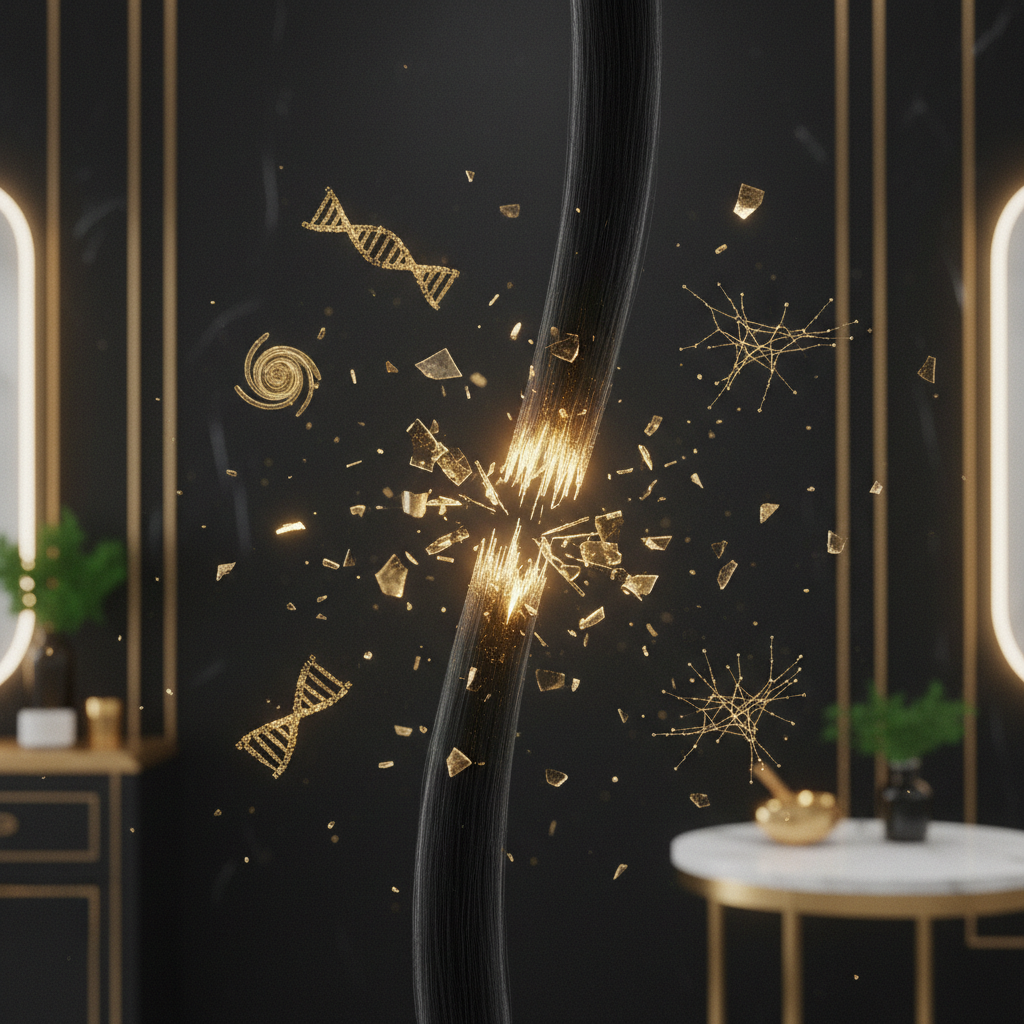
Quick answer: Hair Breakage Mechanisms describe the physical, chemical, and structural processes that cause a hair shaft to fracture and snap rather than shed naturally from the follicle. These failure events occur when external stressors, such as tensile force, thermal degradation, chemical oxidation, or friction, overwhelm the keratinised cortex and protective cuticle scales. While conditioning treatments can lubricate the fibre and temporarily mask surface cracks, cosmetic products cannot permanently re-fuse severed bonds or reverse structural fatigue once critical fracture thresholds are crossed.
Key takeaways
- Hair breakage is a mechanical failure along the fibre shaft, distinct from follicular hair shedding (telogen effluvium) or genetic hair loss (alopecia).
- The hair fibre relies on an intact cuticle layer and a cortex rich in keratin intermediate filaments cross-linked by disulphide bonds.
- The primary physical triggers are mechanical stress (stretching and brushing), chemical processing (bleaching and perming), thermal breakdown (temperatures above 185°C), and environmental oxidation.
- Hair fibres are significantly weaker when swollen with water, exhibiting up to 30 to 50 percent elongation before snapping at lower tensile forces.
- Prevention relies on reducing friction, maintaining cuticle lipid layers (18-MEA), buffering heat, and managing tensile loads.
Hair Breakage Mechanisms: what the evidence shows
Understanding Hair Breakage Mechanisms requires looking closely at the composite architecture of human hair. Each strand functions like a high-performance bio-composite cable. The outer protective sheath, the cuticle, consists of five to ten overlapping cellular scales. These scales shield the inner cortex, which makes up roughly 80 to 90 percent of the fibre's total volume and provides its tensile strength.
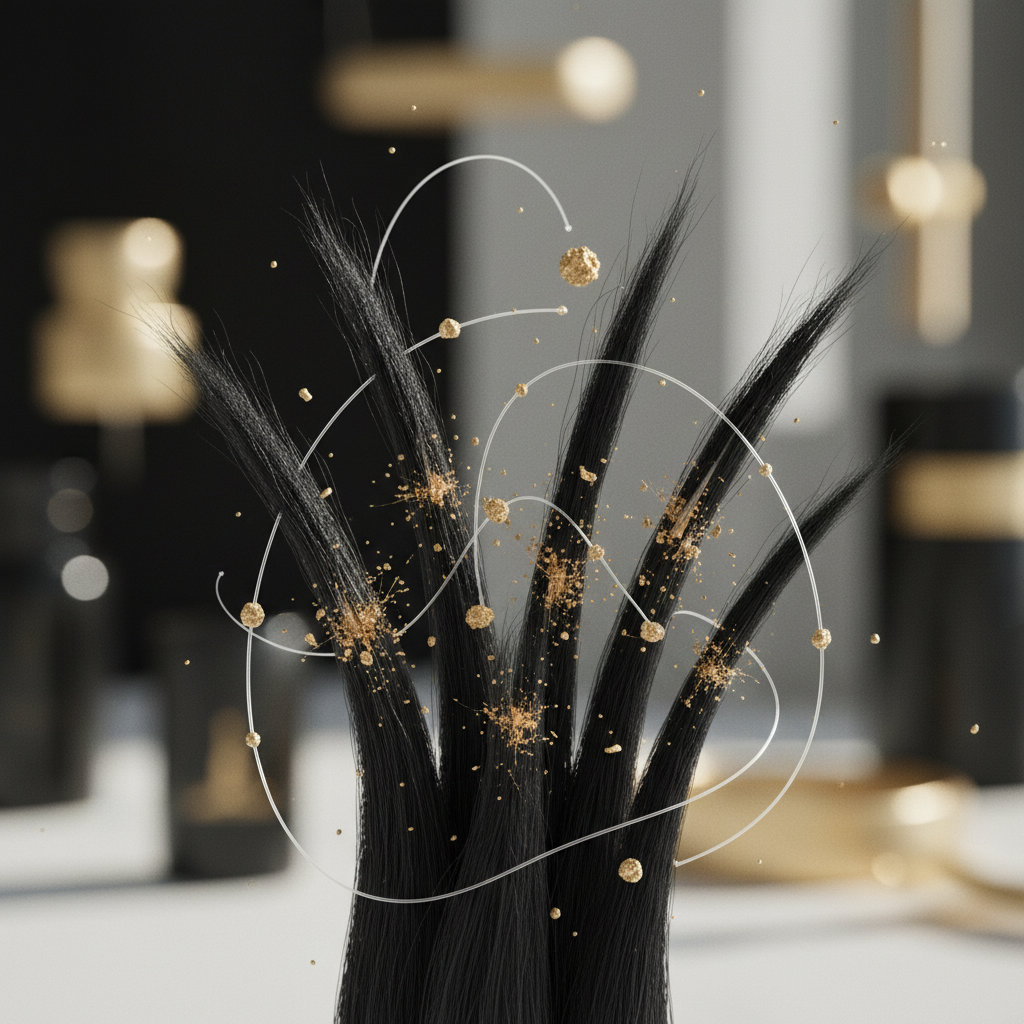
When mechanical or environmental loads are applied, the fibre absorbs energy through elastic deformation. If the stress remains within physiological limits, the fibre returns to its original length. However, when forces exceed the elastic limit, the fibre undergoes irreversible plastic deformation before catastrophic fracture occurs.
Biophysical research identifies four distinct pathways that lead directly to fibre fracture:
- Tensile overload: Stretching a dry hair beyond roughly 30 percent of its baseline length causes irreversible deformation of the alpha-helical keratin proteins in the cortex. Continuing past 45 to 50 percent results in immediate mechanical tensile failure.
- Cuticle stripping and crack propagation: Repeated abrasion from dry brushing or backcombing chips away cuticle edges. Once the cortex is exposed, microscopic surface micro-cracks propagate inward into the cortical cells under everyday movement.
- Chemical bond cleavage: Alkaline lightening agents (bleach) and permanent colour treatments break covalent cystine disulphide bonds, forming cysteic acid. This removes the molecular scaffolding that gives hair its rigidity and elasticity.
- Thermal denaturation: Exposing damp hair to flat irons above 160°C boils trapped water inside the cortex, causing rapid steam expansion known clinically as bubble hair. Dry heat exceeding 185°C directly denatures keratin proteins and decomposes structural lipids.
Mechanical, chemical, and thermal breakdown compared
The visual pattern of a break point under microscopy reveals the specific mechanism that caused it.
| Mechanism | Primary Stress Type | Structural Site Targeted | Microscopic Appearance | Reversibility |
|---|---|---|---|---|
| Tensile Strain | Excessive pulling, tight styling | Alpha-helices within cortical intermediate filaments | Clean, stepped fracture or fibrillar fraying | Irreversible |
| Abrasion & Friction | Brushing, rough drying, pillow friction | Cuticle margins and 18-MEA lipid layer | Stripped, jagged edges; exposed cortical fibrils | Irreversible (cosmetic smoothing only) |
| Chemical Oxidation | Bleach, permanent relaxers, perms | Cystine disulphide cross-links | Porous, collapsed shaft with longitudinal splits | Irreversible |
| Thermal Degradation | Blow dryers, straighteners, curlers | Keratin matrix and cell membrane complex (CMC) | Blistered fibres, melted cuticles, internal cavities | Irreversible |
| Hygral Fatigue | Chronic swelling and contracting in water | Cuticle scale junctions and internal cortex bonds | Weakened, mushy feel; snapping under minimal tension | Irreversible |
What the evidence does not show
Popular hair advice often blurs the line between cosmetic fibre care and scalp health, creating widespread misconceptions about how hair snaps.

First, scientific evidence does not show that split ends or fibre breakage can be permanently repaired by leave-in conditioners, oils, or bond-building cosmetic treatments. These products deposit polymer films, silicones, or ionic agents that temporarily paste fractured fibrils together or reduce inter-fibre friction. Once washed away, the underlying structural discontinuity remains. The only permanent resolution for a split end is cutting it off.
Second, the evidence does not show that hard water minerals directly sever hair shafts. While calcium and magnesium ions bind to the hair surface and create a rough, grippy texture that increases combing friction, they do not chemically dissolve keratin bonds. The breakage that occurs in hard water areas stems from the physical force of detangling coated, high-friction hair, not from chemical erosion by the water itself.
Finally, evidence does not support the idea that dietary vitamins immediately strengthen the existing ends of long hair. Dietary nutrients influence cell division in the follicular matrix under your scalp. Once a hair fibre emerges past the skin surface, it is biologically non-living tissue. Ingesting supplements will not reinforce hair that was chemically lightened or heat-damaged two years ago.
Identifying the signs of fibre breakage
Stylists and consumers frequently confuse hair breakage with natural shedding. Distinguishing between them is essential for choosing the right solution:
- Missing bulb: Examine the hairs found on your brush, clothing, or bathroom floor. Shed hairs from natural follicular turnover (telogen phase) possess a small, white, bulbous root at one end. Broken hairs lack this bulb, showing blunt, split, or frayed ends instead.
- Uneven fibre lengths: If strands around your crown, temples, or ends measure varying, irregular lengths without a deliberate layered haircut, you are experiencing shaft fracture.
- Micro-white dots (Trichorrhexis nodosa): Small, chalky specks visible along individual strands indicate points where the cuticle has completely eroded, causing cortical cells to splay outwards like two broomsticks pushed together. Fracture usually happens right through these dots.
- Frizz that resists moisture control: True breakage manifests as short, wiry fibres standing away from the bulk of the hair mass, unaffected by standard smoothing creams.
What you can do to prevent hair breakage
Because hair cannot self-repair, long-term fibre integrity depends entirely on preventative management and friction reduction.
Reduce mechanical friction during styling
Comb your hair gently starting from the ends and moving upward toward the roots, using wide-tooth tools or flexible-bristle brushes. Never vigorously rub your hair dry with a coarse cotton towel; blot gently with a microfibre cloth instead to avoid stripping the delicate cuticle margins.
Handle wet hair with extreme care
When saturated with water, hair absorbs up to 30 percent of its dry weight, breaking secondary hydrogen bonds. The wet fibre swells, softening the internal matrix and making it far more vulnerable to plastic deformation. Never stretch wet hair into tight elastics or aggressive ponytails, and apply detangling conditioners before running combs through damp strands.
Establish heat defence protocols
Always apply a heat protectant containing polymers like quaternised silicones or hydrolysed proteins before applying direct heat. Keep thermal styling tools strictly below 185°C. Minimise the use of flat irons on chemically processed hair, as lightened strands have a significantly reduced thermal degradation threshold.
Maintain the cuticle lipid barrier
Natural hair fibres are coated with 18-methyleicosanoic acid (18-MEA), an essential lipid layer that repels water and ensures low surface friction. Alkaline treatments instantly remove this layer. Use lipid-rich conditioners and light emollients to replace lost surface lubricity, keeping combing forces low.
When the cause may be something else
If you notice significant thinning, a widening hair parting, or patches of visible scalp, you may not be dealing with shaft breakage.
Genetic hair thinning (androgenetic alopecia) causes the hair follicle to miniaturise over time, producing progressively finer, shorter vellus hairs without necessarily breaking along the shaft.
Similarly, systemic shocks like high fever, rapid weight loss, severe stress, or hormonal changes can trigger telogen effluvium, where large volumes of whole hairs enter the resting phase and shed from the root prematurely.
Fungal infections, such as tinea capitis, can also colonise the scalp, causing hair to break flush with the skin line. If you notice scalp redness, scaling, pain, or shedding exceeding 100 to 150 hairs with white bulbs per day, consult a trichologist or dermatologist for an accurate diagnosis.
A supportive approach to hair strength
While cosmetic routines cannot alter hair biology once formed, keeping the scalp clean and the fibre coated with functional ingredients can make a noticeable difference in daily breakage resistance.
Watermans products, such as Grow Me Shampoo and Condition Me Conditioner, are formulated to support an optimal scalp environment while providing essential surface conditioning. By delivering hydrolysed lupin protein, caffeine, biotin, and hydrating emollients, the regimen helps improve fibre lubrication, manageability, and tensile resistance during daily brushing, keeping mechanical breakage risks to a minimum.
Frequently asked questions about Hair Breakage Mechanisms
What is the primary difference between hair shedding and hair breakage?
Hair shedding occurs when a hair completes its natural growth cycle and leaves the follicle, typically displaying a small white bulb at its base. Hair breakage is the physical fracturing of the hair shaft anywhere along its length, leaving irregular, jagged fragments without a follicular bulb.
How do chemical treatments alter Hair Breakage Mechanisms?
Chemical treatments like bleaching, perming, and relaxing use alkaline agents to swell the cuticle and break structural disulphide bonds within the cortex. This weakens the internal protein scaffold, lowering the fibre's tensile strength and making it much more vulnerable to snapping under normal styling pressure.
Does wet hair break more easily than dry hair?
Yes. Water penetrates the hair shaft and breaks weak hydrogen bonds, allowing the cortex to swell. While wet hair can stretch further than dry hair, its structural elasticity is compromised. It requires far less force to cause permanent deformation and catastrophic fracture when pulled while wet.
Can split ends ever be fused back together permanently?
No. Split ends represent a complete mechanical separation of cortical cells. Cosmetic serums and conditioners can temporarily bond the split fibrils using polymers or waxes until your next wash, but only a trim can permanently remove the fractured section.
How does heat styling trigger hair fracture?
Heat styling tools operating above 185°C denature cortical keratin proteins and melt the protective lipid membrane. If applied to damp hair, the heat rapidly boils water inside the fibre, generating steam pockets that burst the cuticle from within and cause immediate structural failure.
Conclusion
Understanding Hair Breakage Mechanisms allows you to make informed decisions that protect the structural integrity of your hair. Fibre fracture is an irreversible mechanical failure driven by physical strain, excessive heat, harsh chemical processing, and friction. By treating the cuticle as a delicate biological barrier, using targeted thermal protection, handling wet hair with care, and keeping surface friction low, you can successfully prevent fractures and maintain strong, resilient lengths.
Sources and references
- British Journal of Dermatology: "The chemistry and mechanics of hair breakage", 2009.
- Journal of Cosmetic Science: "Tensile properties of human hair fibres under diverse environmental conditions", 2013.
- International Journal of Trichology: "Hair cosmetics: An overview", 2015.
- Skin Appendage Disorders: "Thermal and mechanical damage to hair fibres during everyday grooming", 2018.
- Society of Cosmetic Chemists: "Chemical and physical behaviour of human hair", 5th Edition, 2012.