Frontal Fibrosing Alopecia Care: Clinical Insights and Daily Management
9 min read ·
Frontal Fibrosing Alopecia Care combines clinical anti-inflammatory treatments and gentle routines to halt scarring hairline recession and protect existing follicles.

Quick answer: Effective Frontal Fibrosing Alopecia Care combines early medical intervention from a dermatologist with ultra-gentle daily hair routines to preserve remaining follicles. Frontal fibrosing alopecia (FFA) is a primary cicatricial (scarring) alopecia where an overactive immune system destroys hair follicles along the front hairline and temples, replacing them with scar tissue. While topical anti-inflammatory treatments and prescription therapies can arrest progression, destroyed follicles cannot regrow, making prompt diagnosis and protective handling the core priorities of day-to-day management.
Key takeaways
- Frontal fibrosing alopecia is a primary scarring alopecia characterised by a receding front and temporal hairline, frequently accompanied by loss of eyebrow hair.
- Follicular destruction in FFA is permanent. The primary goal of medical management is halting disease activity rather than regrowing lost hair.
- Daily scalp care must prioritise barrier protection, eliminating mechanical tension, and reducing chemical or physical irritation.
- Evidence regarding leave-on facial products, such as chemical sunscreens, remains under ongoing scientific debate, but switching to mineral-based sun protection is widely recommended as a precaution.
- Cosmetically, maintaining the health of existing hair shafts with non-stripping cleansers prevents secondary breakage from mimicking further disease progression.
Frontal Fibrosing Alopecia Care: what the evidence shows
Clinically proven Frontal Fibrosing Alopecia Care relies on suppressing the underlying lymphocytic inflammation before irreversible fibrosis occurs. First described by Steven Kossard in 1994, FFA is considered a clinical variant of lichen planopilaris (LPP). The condition predominantly affects postmenopausal women, though it is increasingly diagnosed in premenopausal women and men.
Histological studies demonstrate that T-lymphocytes target the upper portion of the hair follicle, specifically the bulge region where epithelial stem cells reside. Once these stem cells are destroyed, the follicle undergoes permanent fibrotic replacement. Dermatologists measure treatment success not by hair regrowth, but by halting the retreat of the hairline, reducing perifollicular erythema (redness), and eliminating follicular hyperkeratosis (scaling around the hair base).
Standard clinical treatments supported by guidelines from the British Association of Dermatologists (BAD) include:
- Topical and intralesional corticosteroids: High-potency topical steroids (such as clobetasol propionate 0.05%) or triamcinolone acetonide injections applied to active margins to calm acute inflammation.
- Topical calcineurin inhibitors: Tacrolimus (0.1%) or pimecrolimus ointment, useful for reducing inflammation without the risk of steroid-induced skin atrophy.
- Oral 5-alpha reductase inhibitors: Finasteride or dutasteride, which multiple retrospective cohort studies associate with stabilisation in postmenopausal women.
- Systemic anti-inflammatories: Hydroxychloroquine, oral tetracyclines (such as doxycycline), or low-dose oral retinoids for rapidly progressive cases.
+--------------------------+---------------------------------+---------------------------------+
| Clinical Feature | Active Disease Phase | Inactive / Burned-Out Phase |
+--------------------------+---------------------------------+---------------------------------+
| Scalp Appearance | Perifollicular redness, scaling | Pale, smooth, shiny, scar tissue|
| Follicular Ostia | Visible, often plugged | Completely absent (no pores) |
| Symptoms | Itching, burning, tenderness | Generally asymptomatic |
| Eyebrow Involvement | Patchy thinning, active loss | Partial or total absence |
| Primary Clinical Focus | Medical anti-inflammatory drugs | Protective styling, scalp care |
+--------------------------+---------------------------------+---------------------------------+
What the evidence does not show
There is no scientific evidence that over-the-counter cosmetic products, hair oils, or dietary supplements alone can stop or reverse frontal fibrosing alopecia. Because FFA is an immune-mediated scarring disease, relying exclusively on cosmetic treatments while avoiding dermatological evaluation leads to preventable, permanent follicle loss.
Furthermore, while observational case-control studies have identified a statistical association between FFA and the regular use of facial sunscreens or moisturisers, causality has not been proven. The British Association of Dermatologists notes that evidence is mixed. Researchers debate whether facial skincare ingredients provoke a lichenoid reaction in genetically susceptible people or whether patients simply use more sunscreen because their receding hairline leaves the upper forehead exposed. Complete avoidance of sun protection is medically inadvisable, as ultraviolet radiation causes cellular damage and increases skin cancer risk. Dermatologists generally recommend swapping chemical UV filters for physical, mineral-based blocks containing zinc oxide or titanium dioxide.
How to recognise the signs of frontal fibrosing alopecia
Early detection drastically improves long-term outcomes. Because the condition develops slowly, changes are often dismissed as normal age-related thinning until significant retreat has occurred.
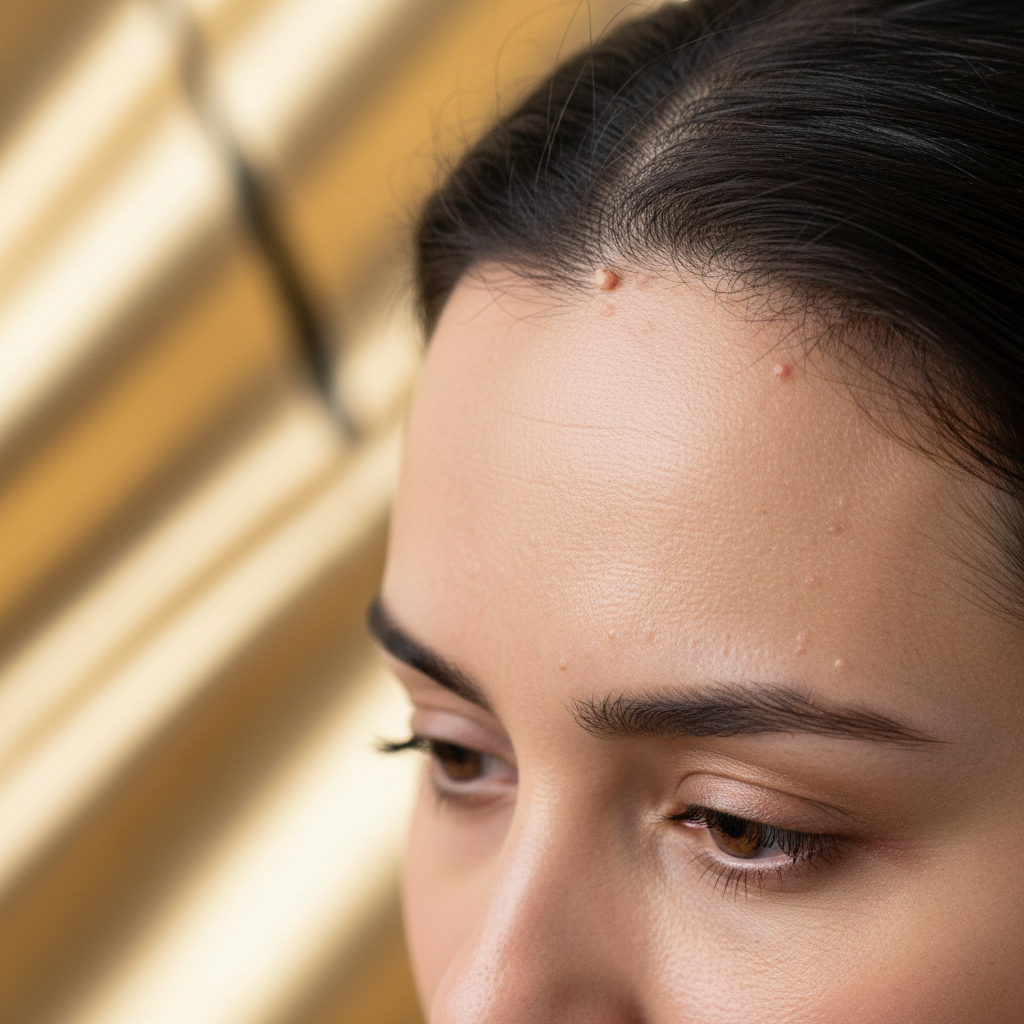
Common signs include:
- The "lonely hair" sign: Isolated, single terminal hairs left behind on the pale, receded band of the forehead where the previous hairline used to sit.
- Loss of eyebrow hair: Eyebrow thinning (often starting at the lateral outer third) frequently precedes hairline recession by months or years.
- Perifollicular erythema and casts: Redness and collar-like scales hugging the base of individual hairs along the margin.
- Absence of follicular openings: The exposed skin looks noticeably pale, smooth, and shiny compared to chronically sun-damaged forehead skin.
- Sensory symptoms: Up to 50 percent of individuals experience localised itching (pruritus), burning, or pain along the hairline margin.
- Facial papules: Small, skin-coloured, rough bumps appearing on the temples and cheeks, caused by inflammation around facial vellus follicles.
Practical daily care and styling routines
Day-to-day Frontal Fibrosing Alopecia Care focuses on mitigating external stress so that compromised follicles are not shed prematurely.
1. Gentle cleansing and scalp hygiene
Wash the scalp regularly using mild, sulphate-free shampoos formulated around a physiological pH (5.0 to 5.5). Keeping the scalp clean removes sebum, dead skin flakes, and environmental pollutants that can aggravate perifollicular inflammation. Avoid aggressive scrubbing. Instead, use the pads of your fingers to gently distribute lather, rinsing thoroughly with lukewarm water.
2. Eliminate mechanical tension
Tension accelerates follicular trauma. Avoid tight ponytails, buns, cornrows, heavy extensions, or hard headbands that rest directly against the frontal margin. If you wear wigs or hairpieces to disguise hairline recession, secure them without clips or adhesives that anchor onto the fragile hairline perimeter. Choose lightweight, breathable caps lined with silk or satin.
3. Review skincare and sun protection
Apply facial creams and sunscreens with care. When applying daily facial products, leave a 1 to 2 centimetre buffer zone below the active hairline. For sun protection along the exposed frontal strip, select non-nano mineral sunscreens containing zinc oxide or titanium dioxide rather than chemical filters (such as avobenzone or octocrylene), or wear a broad-brimmed, loose-fitting UV hat.
4. Minimise chemical and thermal stress
Chemical processing (such as bleach, peroxide, permanent hair dyes, and chemical relaxers) can trigger scalp contact dermatitis, which exacerbates underlying lichenoid inflammation. If you choose to colour your hair, opt for gentle, non-ammonia formulations, patch test meticulously, and ensure the dye is kept off the scalp skin. Keep heated styling tools well away from the roots.
When the cause might be something else
A receding hairline is not always frontal fibrosing alopecia. Misdiagnosis can lead to inappropriate treatments. A dermatologist will differentiate FFA from:
- Traction alopecia: Caused by prolonged mechanical pulling. Unlike FFA, traction alopecia typically preserves a thin rim of fine hairs along the hairline (the "fringe sign") and does not cause eyebrow loss or scarring.
- Female pattern hair loss (androgenetic alopecia): Characterised by diffuse thinning over the crown and widening of the central part, while the frontal hairline is normally preserved without scarring.
- Alopecia areata: An autoimmune condition causing smooth, circular bald patches. Unlike FFA, follicular pores remain visible, and the hair has the potential to regrow completely.
- Cutaneous lupus erythematosus: Can cause scarring alopecia, but typically presents with distinctive disc-shaped plaques, pigmentation changes, and systemic markers.
When to seek professional medical advice
Schedule an evaluation with a dermatologist specialising in hair and scalp disorders the moment you notice unusual hairline recession, eyebrow thinning, or persistent itching along the hair perimeter.
Do not wait for large areas of bare skin to appear. Once a follicle is replaced by fibrotic scar tissue, regeneration is biologically impossible. A dermatologist uses a dermatoscope to inspect the follicular ostia, search for active inflammation, and, if necessary, perform a 4-millimetre scalp punch biopsy to confirm the diagnosis.
Cosmetic support for hair vitality: Watermans
While primary cicatricial alopecias require prescription medical therapy to halt disease activity, supporting the condition of existing, unaffected hair fibres helps maximise overall density.
Watermans Grow Me Shampoo provides a gentle, sulphate-free cleansing base that respects the scalp's delicate barrier. Formulated with hydrolysed lupin protein, biotin, caffeine, and rosemary extract, it cleanses without abrasive stripping, keeping existing hair shafts hydrated and resilient against mechanical breakage. For individuals managing scalp sensitivity alongside a clinical treatment plan, non-irritating cosmetic support ensures that remaining hair stays in optimal condition.
Frequently asked questions about Frontal Fibrosing Alopecia Care
Can hair lost from frontal fibrosing alopecia grow back?
No, hair lost to frontal fibrosing alopecia cannot grow back naturally. Because FFA is a scarring alopecia, the inflammation destroys the epithelial stem cell reservoir within the hair follicle bulge, replacing the structure with fibrous scar tissue. This is why immediate medical care is critical: treatments focus on arresting inflammation to protect and keep every remaining follicle along your hairline.
What is the most effective Frontal Fibrosing Alopecia Care plan?
The most effective Frontal Fibrosing Alopecia Care combines prescription anti-inflammatory medications from a dermatologist (such as topical steroids, tacrolimus, or oral 5-alpha reductase inhibitors) with gentle daily hair habits. This routine includes avoiding tight hairstyles, switching to mineral sunscreens, and washing with mild, pH-balanced shampoos to prevent scalp irritation.
Should I stop using sunscreen if I have frontal fibrosing alopecia?
No, you should not stop using sun protection entirely. Although some studies note a correlation between chemical sunscreens and FFA, proof of direct causation is lacking. Leaving exposed scalp and facial skin unprotected increases the risk of ultraviolet damage and skin cancers. Instead, switch to a physical (mineral) sunscreen containing zinc oxide or titanium dioxide, and wear broad-brimmed hats.
How quickly does frontal fibrosing alopecia progress?
The progression of frontal fibrosing alopecia varies considerably between individuals. On average, the hairline recedes at a rate of roughly 0.5 to 2 centimetres per year if left untreated. In some people, the disease remains active for several years before burning out spontaneously, whereas in others, it progresses steadily without medical intervention.
Can hair transplants fix a hairline damaged by frontal fibrosing alopecia?
Hair transplantation is generally approached with extreme caution in frontal fibrosing alopecia. If performed while the disease is still active, the immune system can attack and destroy the newly transplanted follicles. Surgeons typically require the condition to be completely stable and free of inflammation for at least one to two years before considering surgery, and long-term graft survival rates remain lower than in pattern baldness.
Closing thoughts on managing frontal fibrosing alopecia
Facing a scarring hair loss diagnosis can feel daunting, but an early, well-structured approach to Frontal Fibrosing Alopecia Care makes a profound difference in halting hairline retreat. By partnering with a qualified dermatologist for targeted anti-inflammatory medical treatment and adopting low-tension, barrier-supportive daily hair routines, you can successfully protect your existing hair and maintain long-term scalp health.
Sources and references
- British Association of Dermatologists. (2020). Guidelines for the Management of Frontal Fibrosing Alopecia. British Journal of Dermatology.
- Kossard, S. (1994). Postmenopausal frontal fibrosing alopecia: Scarring alopecia in a pattern distribution. Archives of Dermatology, 130(6), 770-774.
- Vañó-Galván, S., et al. (2014). Frontal fibrosing alopecia: a multicenter review of 355 patients. Journal of the American Academy of Dermatology, 70(4), 670-678.
- Robinson, G., et al. (2020). The Frontal Fibrosing Alopecia Severity Index (FFASI): a validated scoring system. British Journal of Dermatology.
- National Health Service (NHS). (2023). Hair loss (Alopecia). NHS Health A-Z.