Lichen Planopilaris: Evidence, Symptoms, and Management
8 min read ·
Lichen Planopilaris is a rare, scarring scalp disorder that causes permanent hair loss. Discover its causes, early signs, diagnosis, and evidence-based treatments.

Quick answer: Lichen Planopilaris is a rare, chronic inflammatory scalp disorder and the follicular subtype of lichen planus. It causes primary cicatricial (scarring) hair loss by directing T-cell lymphocytes to attack and permanently destroy hair follicle stem cells in the infundibulum and bulge areas. Once these stem cells are destroyed, the follicle is replaced by fibrotic scar tissue, making hair regrowth impossible. Early medical diagnosis by a dermatologist is essential because treatments can arrest inflammation, but they cannot restore lost follicles.
Key takeaways
- Lichen Planopilaris (LPP) is an autoimmune condition that causes permanent, scarring hair loss.
- The inflammation targets epithelial stem cells within the hair follicle bulge, preventing future hair growth.
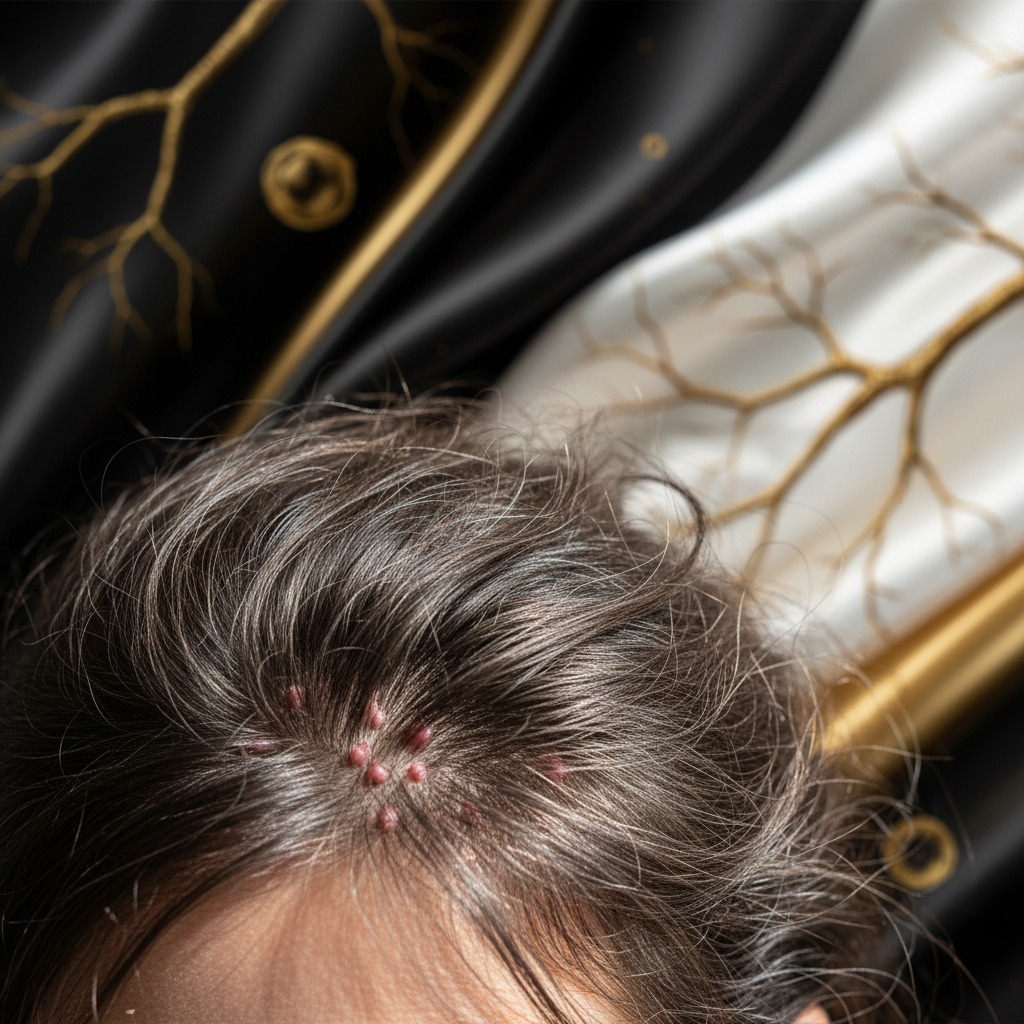
- Classic symptoms include scalp pain, intense itching, burning, perifollicular redness (erythema), and hard scales around the hair base (hyperkeratosis).
- Cosmetic hair products, dietary changes, and regular shampoos cannot treat or cure LPP, though gentle care reduces physical irritation.
- Medical management focuses on dampening immune activity using topical, intralesional, or systemic anti-inflammatory therapies prescribed by a dermatologist.
Lichen Planopilaris: what the evidence shows
Lichen Planopilaris is categorised by dermatologists as a primary lymphocytic cicatricial alopecia. Published clinical data show that it most commonly affects middle-aged adults, with a marked predominance in women (often reported at a ratio of roughly 3 to 1 or 4 to 1).
In patients with this condition, the immune system mistakenly targets the hair follicle as foreign tissue. Specifically, cytotoxic CD8+ T-lymphocytes cluster around the upper portion of the follicle. Studies using scalp biopsies confirm that this inflammatory infiltrate concentrates around the infundibulum and the bulge area. The bulge is critical because it houses the multipotent epithelial stem cells responsible for regenerating the follicle during the normal hair growth cycle.
When these stem cells are destroyed by chronic inflammation, the follicle collapses. The body replaces the structure with fibrous connective tissue, leaving a smooth, shiny scar where a follicular opening used to be. Dermatologists refer to this loss of follicular ostia as the hallmark of cicatricial alopecia.
There are three recognised clinical variants of Lichen Planopilaris:
- Classic LPP: Patchy hair loss scattered across the crown and vertex, often surrounded by active redness and scaling at the margins.
- Frontal Fibrosing Alopecia (FFA): Symmetrical, band-like recession of the frontal and temporal hairline, frequently accompanied by loss of eyebrow hair.
- Graham-Little-Piccardi-Lassueur Syndrome (GLPLS): A rare triad involving patchy scarring scalp alopecia, non-scarring loss of pubic and axillary hair, and keratosis pilaris-like papules on the trunk and limbs.
What the evidence does not show
There is no scientific evidence that Lichen Planopilaris is contagious, caused by poor hygiene, or triggered directly by standard hair styling products. You cannot catch LPP from shared brushes, salon towels, or direct contact with an affected person.
Furthermore, current research does not support the idea that cosmetic shampoos, scalp oils, or natural supplements can reverse scarring alopecia. While cosmetic formulations may soothe an irritated scalp or improve the cosmetic feel of surviving hair, they lack the pharmaceutical mechanism required to alter T-cell mediated autoimmune destruction. Expecting a topical cosmetic wash to halt LPP delays proper clinical treatment and risks further irreversible hair loss.
Evidence regarding specific environmental triggers (such as particular ingredients in sunscreens, cosmetics, or viral infections) remains conflicting and unproven. While researchers continue to examine environmental and genetic associations, no single external agent has been conclusively proven to cause the disease.
Biological mechanism of follicular destruction
The destructive process in Lichen Planopilaris follows a defined immunological pathway:

- Loss of immune privilege: Healthy hair follicles maintain an immunosuppressive microenvironment known as "immune privilege", which shields them from auto-reactive immune cells. In LPP, this privilege collapses, marked by the abnormal upregulation of major histocompatibility complex (MHC) class I and II molecules.
- Perifollicular infiltration: Activated T-cells migrate toward the follicle, releasing pro-inflammatory cytokines such as interferon-gamma (IFN-γ).
- Bulge apoptosis: The inflammatory cascade triggers programmed cell death (apoptosis) in the follicular stem cells located in the bulge.
- Fibrosis: Without stem cells to direct cyclical regrowth, fibroblasts migrate into the space, laying down dense collagen. The follicle is permanently replaced by a fibrous tract, closing the pore permanently.
Signs and clinical symptoms to look for
Early recognition of LPP gives patients the best chance of preserving existing hair. The condition can be subtle initially, but several clinical signs should prompt an immediate dermatological referral.
- Scalp sensations: Patients frequently report burning, tenderness, tingling (trichodynia), or severe pruritus (itching) in affected zones.
- Perifollicular erythema: A distinct pink or violet ring of inflammation encircling individual hair follicles at the periphery of thinning patches.
- Perifollicular hyperkeratosis: Visible cast-like scaling or gritty collars wrapping around the base of hair shafts as they emerge from the scalp.
- Loss of follicular ostia: Smooth, shiny patches of scalp skin where visible pore openings have disappeared completely.
- Positive pull test at margins: Gentle traction on hairs at the active perimeter of a patch often yields easily extracted anagen or catagen hairs with intact root sheaths.
Lichen Planopilaris compared to other scalp conditions
Because patchy hair loss can arise from various mechanisms, distinguishing Lichen Planopilaris from other conditions is essential for proper management.
| Feature | Lichen Planopilaris (LPP) | Alopecia Areata | Androgenetic Alopecia | Discoid Lupus Erythematosus (DLE) |
|---|---|---|---|---|
| Type of loss | Primary cicatricial (scarring) | Non-scarring | Non-scarring (miniaturisation) | Primary cicatricial (scarring) |
| Follicular openings | Lost in scarred zones | Preserved | Preserved | Lost; follicular plugging common |
| Primary immune cell | T-lymphocytes | T-lymphocytes | Non-autoimmune (hormonal/genetic) | T-lymphocytes and B-cells |
| Typical scalp sensations | Burning, pain, severe itching | Usually none; occasional tingling | None | Pain, tenderness, photo-sensitivity |
| Reversibility | Irreversible once scarred | Fully reversible potential | Progressive thinning; partial regrowth | Irreversible once scarred |
| Distinctive clinical sign | Perifollicular erythema and casts | Exclamation mark hairs | Patterned thinning, miniaturised fibres | Deep follicular plugs, pigment changes |
What you can do: clinical and supportive care
If you suspect or have been diagnosed with LPP, an integrated strategy combining clinical therapy with gentle cosmetic hair practices is required.
Medical treatments (dermatologist-led)
Medical intervention is the only proven method to arrest the progression of the disease. Standard clinical treatments include:
- Topical and intralesional corticosteroids: High-potency topical steroids (such as clobetasol propionate) or triamcinolone acetonide injections directly into active margins to suppress local inflammation quickly.
- Topical calcineurin inhibitors: Tacrolimus or pimecrolimus formulations, especially useful for long-term maintenance without steroid-induced skin thinning.
- Systemic medications: In rapidly progressive cases, dermatologists may prescribe oral hydroxychloroquine, doxycycline (used for its anti-inflammatory properties), oral retinoids, or targeted immunomodulators such as JAK inhibitors.
Supportive, non-damaging daily care
While supportive care does not treat the condition, it helps protect delicate, remaining hair and calms peripheral irritation:
- Avoid mechanical tension, tight ponytails, extensions, and aggressive brushing.
- Limit chemical processing (such as bleaching, perming, or chemical relaxers) while the scalp is actively inflamed.
- Wash the scalp regularly with lukewarm water and mild, non-stripping cleansers to prevent secondary build-up around scaling follicles.
- Protect the scalp from UV radiation with physical coverings like soft scarves or UPF hats, as sun exposure can exacerbate skin inflammation.
The role of cosmetic products
Cosmetic hair products cannot cure, treat, or arrest the autoimmune attack of Lichen Planopilaris. Their sole function is aesthetic: caring for the surviving hair shafts and keeping the scalp environment clean.
If you are managing scalp conditions alongside general hair maintenance, Watermans offers products formulated to clean the scalp gently and support the feel of remaining hair. Watermans Grow Me shampoo provides a mild cleansing base free of harsh sulphates, containing ingredients such as biotin, rosemary, and niacinamide that help keep surviving strands conditioned and improve manageability. However, cosmetic products like those from Watermans must always be viewed strictly as complementary cosmetic hygiene, never as an alternative to prescribed dermatological medication.
When to see a doctor
You should seek an urgent referral to a dermatologist or a qualified trichologist if you notice:
- Any bald patches where the skin appears shiny, smooth, or devoid of visible pores.
- Persistent scalp burning, tenderness, or itching that does not respond to regular anti-dandruff care.
- Scaling collars or redness tightly restricted to the base of individual hairs.
- A receding frontal hairline or thinning of the eyebrows.
A dermatologist will typically perform a dermoscopic evaluation (trichoscopy) and a 4 mm punch biopsy of an active margin to confirm the diagnosis microscopically before initiating treatment.
Frequently asked questions about Lichen Planopilaris
Can hair grow back after Lichen Planopilaris burns out?
Hair cannot grow back in areas where Lichen Planopilaris has caused permanent scarring. The disease destroys the epithelial stem cells located in the follicular bulge, replacing the entire follicular structure with fibrous scar tissue. Medical therapies aim strictly to stop active inflammation and protect remaining, undamaged follicles from future destruction.
How is Lichen Planopilaris diagnosed accurately?
A dermatologist diagnoses the condition through clinical examination, trichoscopy (magnified scalp visualisation), and a scalp punch biopsy. Trichoscopy reveals characteristic perifollicular scaling and erythema. A 4 mm punch biopsy, evaluated by a dermatopathologist, provides definitive confirmation by showing a lichenoid lymphocytic infiltrate concentrated around the infundibulum and bulge.
Does stress cause Lichen Planopilaris?
Stress does not directly cause Lichen Planopilaris, which is an autoimmune disorder driven by specific T-cell mechanisms. However, acute physical or psychological stress can influence neurogenic inflammation and immune dysregulation, potentially acting as a flare factor in individuals already predisposed to the disease.
Can hair dyes or styling products make LPP worse?
Chemical processing does not cause the underlying autoimmune reaction, but harsh chemicals, bleaches, and heat tools can exacerbate existing inflammation. When the scalp barrier is already compromised by active disease, chemical irritants can worsen burning, itching, and hair breakage along the surviving fibre shafts.
Managing life with Lichen Planopilaris
Receiving a diagnosis of Lichen Planopilaris can feel overwhelming due to the permanent nature of cicatricial hair loss. However, an early diagnosis combined with active medical treatment significantly improves the likelihood of halting the disease before extensive scarring occurs. Work closely with a medical specialist to control inflammation, handle your hair with minimal physical stress, and focus your care routine on protecting the follicles you have.
Sources and references
- British Association of Dermatologists (BAD). Guidelines for the Management of Lichen Planopilaris.
- National Institute for Health and Care Excellence (NICE). Alopecia: Diagnosis and Management.
- Harries, M. J., et al. "Lichen planopilaris." British Journal of Dermatology, 2018.
- Chiang, Y. Z., et al. "Primary cicatricial alopecias: diagnosis and treatment." American Journal of Clinical Dermatology, 2012.
- Stefanato, C. M. "Histopathology of alopecia: a clinicopathological approach to diagnosis." Histopathology, 2010.
Find these ingredients in Watermans products
- Niacinamide: you will find this ingredient in our Hair Mask.