Free Radicals and Keratin Damage: Science, Causes, and Protection
9 min read ·
Free Radicals and Keratin Damage occur when reactive oxygen species attack hair proteins. Discover the evidence, mechanisms, and real solutions to protect your hair.
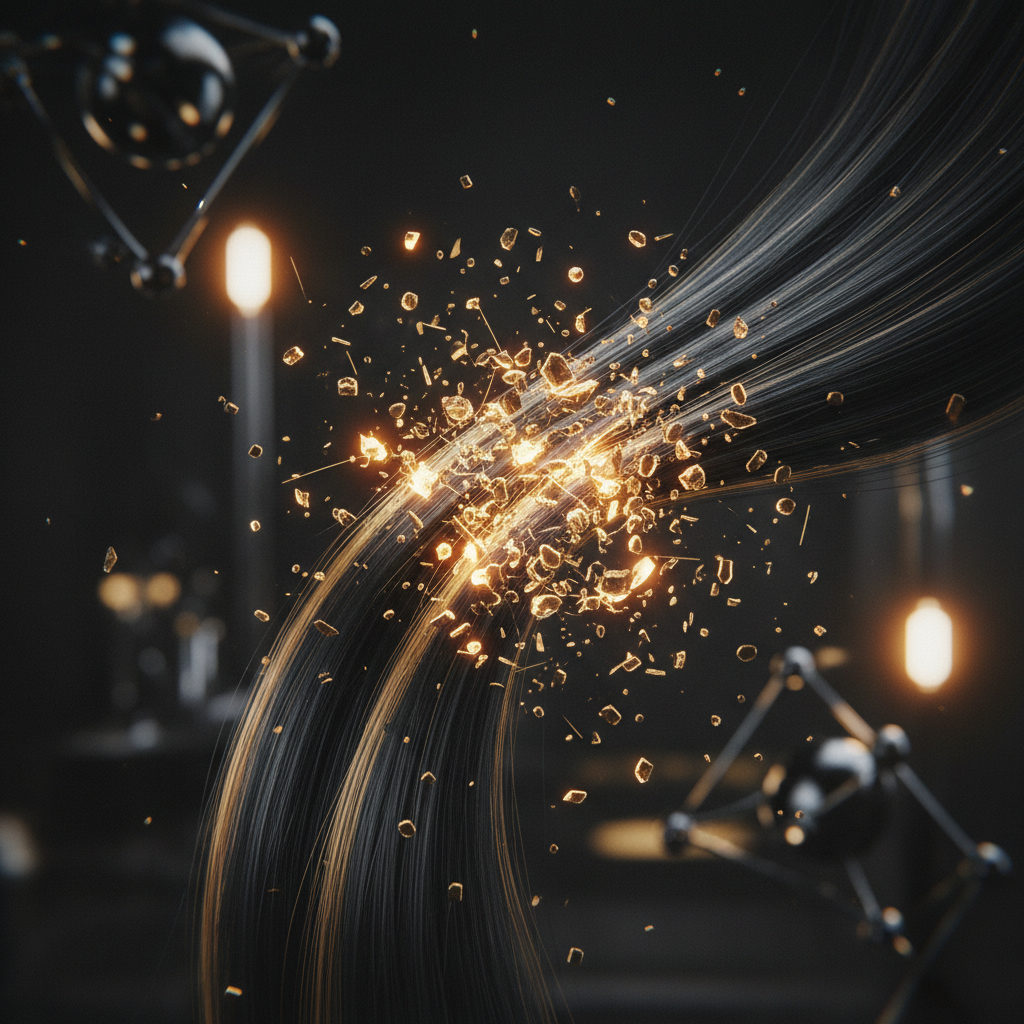
Quick answer: Free Radicals and Keratin Damage occur when highly reactive oxygen species (ROS) from ultraviolet light, pollution, heat, and chemical treatments attack the structural proteins of the hair shaft. These unstable molecules cleave disulphide bonds, oxidise amino acids such as cystine and tryptophan, and degrade the protective cuticle. The main limitation is that hair fibre is biologically non-living tissue; once oxidative degradation breaks down the keratin matrix within the shaft, the internal protein architecture cannot naturally regenerate, requiring external conditioning and protective measures instead.
Key takeaways
- Free radicals are unstable, electron-seeking molecules generated by solar radiation (UVA and UVB), urban pollution, bleaching, and excessive thermal styling.
- Keratin accounts for roughly 85% to 90% of the dry weight of a hair fibre, relying heavily on cystine disulphide bonds for tensile strength and elasticity.
- Oxidative attack degrades cystine into cysteic acid, directly weakening the structural core of the hair and increasing porosity.
- Unlike living skin cells, the visible hair shaft lacks cellular antioxidant repair enzymes, leaving dead fibre vulnerable to cumulative environmental degradation.
- Topical antioxidants, UV filters, metal-chelating agents, and lipid-replenishing conditioners help minimise further structural decay, but they cannot biologically regenerate destroyed keratin.
Free Radicals and Keratin Damage: what the evidence shows
Scientific research confirms that Free Radicals and Keratin Damage represent a primary pathway of environmental hair degradation. When environmental stressors interact with hair, they generate reactive oxygen species (ROS), including singlet oxygen, hydroxyl radicals, and superoxide anions. These free radicals trigger a cascade of chemical reactions known as photoxidation or chemical oxidation, depending on the trigger.
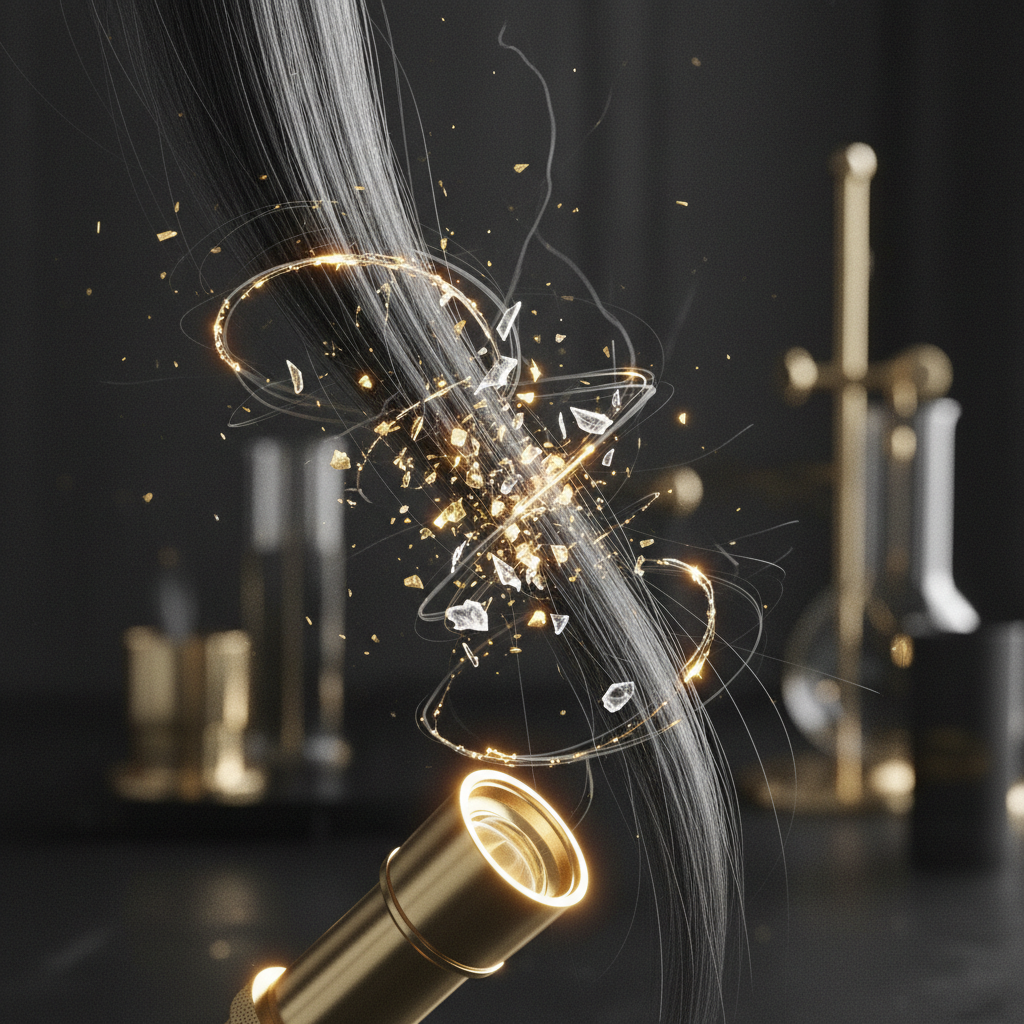
Keratin is a fibrous protein rich in sulphur-containing amino acids, predominantly cystine. In healthy hair, cystine forms covalent disulphide bonds between adjacent polypeptide chains. These cross-links give hair its rigidity, elasticity, and resistance to environmental stress. Peer-reviewed investigations in cosmetic science reveal that free radicals preferentially attack these sulphur centres. The disulphide bridge oxidises, creating cysteic acid residues. As cysteic acid levels rise, the hair loses its natural mechanical strength.
Solar radiation is one of the most prolific drivers of this process. UVB radiation (290 to 320 nm) primarily damages the protein networks of the outer cuticle, targeting tryptophan and cystine. UVA radiation (320 to 400 nm), which penetrates deeper into the hair cortex, interacts with endogenous photosensitisers to generate free radicals that degrade cortical keratin and bleach natural melanin pigments. Research demonstrates that unpigmented or bleached hair suffers higher levels of radical-induced keratin degradation than dark hair, as melanin naturally acts as a sacrificial photoprotective filter.
The molecular mechanism of oxidative structural loss
The progression of oxidative degradation follows a predictable molecular pathway across the hair shaft:
- Initiation: Environmental inputs such as solar UV light, ozone, high heat above 185°C, or residual hydrogen peroxide break weak chemical bonds in the hair, creating an initial population of free radicals.
- Propagation: Because free radicals contain unpaired valence electrons, they rapidly strip electrons from neighbouring molecules. Within the hair shaft, they attack the hydrocarbon side chains and sulphur groups of the keratin protein matrix.
- Disulphide Cleavage: The cystine linkage (-S-S-) is split by hydroxyl and superoxide radicals. Subsequent reactions yield oxidized intermediates, eventually forming stable cysteic acid (-SO3H) residues.
- Lipid Degradation: Free radicals also attack 18-methyleicosanoic acid (18-MEA), the primary surface lipid covalently bound to the outer epicuticle. Stripping 18-MEA transforms the hair surface from hydrophobic (water-repelling) to hydrophilic (water-absorbing).
- Structural Weakness: As the cuticle scales lose their lipid seal and the cortex loses its cross-linked disulphide network, the hair becomes mechanically brittle, porous, and prone to transverse fracture.
What the evidence does not show
It is critical to separate verified cosmetic chemistry from exaggerated marketing claims. Controlled research does not show that free radical damage to the dead hair shaft causes follicular hair loss or medical alopecia. Alopecia areata, androgenetic alopecia, and telogen effluvium originate inside the living scalp tissue and hair bulb, governed by hormones, genetics, autoimmune responses, or systemic stress.
While oxidative stress on the living scalp skin can compromise the epidermal barrier and inflame the hair follicle, free radical breakdown of the hair length is purely a structural issue. It causes hair breakage, not follicular shedding. Furthermore, cosmetics cannot "repair" broken disulphide bonds back into their virgin, biological state. While modern cosmetic bond-builders and protein conditioners can temporarily patch damaged areas or form secondary synthetic bridges, the underlying biological matrix remains permanently modified.
| Structural Marker | Healthy Virgin Hair | Hair Affected by Free Radical Keratin Damage |
|---|---|---|
| Cysteic Acid Content | Low (typically < 1% to 2% of total amino acids) | High (frequently > 4% to 7% due to oxidation) |
| Surface Hydrophobicity | High; water beads easily on the cuticle | Low; cuticle is hydrophilic, absorbing water rapidly |
| Cuticle Condition | Flat, tightly shingled, sealed with 18-MEA | Chipped, lifted, depleted surface lipids, exposed cortex |
| Tensile Elasticity | Stretches up to 30% when wet without snapping | Snaps readily under low to moderate mechanical tension |
| Porosity & Swelling | Controlled moisture uptake (pH 4.5 to 5.5) | Excessive swelling in water, severe protein leaching |
Identifying the signs of oxidative damage
Distinguishing between mechanical friction, heat damage, and free radical-driven protein decay requires looking at specific fibre behaviours. When free radicals degrade keratin, you will observe:
- Increased rough texture: Stripping of 18-MEA and cuticle erosion leads to high surface friction, causing strands to snag against one another.
- Loss of elasticity: When wet, healthy hair can stretch and bounce back. Keratin-depleted hair stretches minimally before snapping cleanly along the shaft.
- Colour shift and dullness: Free radicals oxidise melanin granules, turning dark hair brassy or red and causing dyed shades to fade rapidly.
- Extreme porosity: Strands absorb water almost instantly, dry unevenly, and become intensely frizzy in humid conditions due to moisture entering the exposed cortex.
- Split ends and mid-shaft fractures: As the cross-linked internal matrix degrades, the fibre splits longitudinally or breaks off under ordinary brushing.
Practical strategies to mitigate oxidative stress
Because hair cannot self-repair through cellular turnover, your strategy must focus on prevention, quenching external radicals, and fortifying compromised fibres.
Quench radicals with topical antioxidants
Cosmetic formulations containing stable forms of vitamin C, vitamin E (tocopherol), polyphenols, green tea extract, and ferulic acid help neutralise free radicals on the fibre surface before they oxidise internal proteins. Applying leave-in treatments enriched with these compounds before sun or pollution exposure reduces UV-induced cysteic acid formation.
Filter solar radiation
Wearing hats provides total physical shielding. When styling hair that will face direct sunlight, leave-in sprays formulated with cinnamidopropyltrimonium chloride or specific benzophenone derivatives help absorb UVA and UVB wavelengths, sparing keratin and melanin from photolysis.
Remove catalytic heavy metals
Tap water often deposits trace metal ions, particularly copper and iron, onto the hair shaft. When exposed to sunlight or hydrogen peroxide, these metals act as catalysts in the Fenton reaction, exponentially accelerating free radical generation. Using a chelating shampoo containing disodium EDTA or citric acid removes these mineral catalysts.
Seal the cuticle and replenish lipids
Acidic conditioners formulated between pH 3.5 and 5.0 help flatten lifted cuticle scales. Emollients such as fatty alcohols, hydrolysed wheat or keratin proteins, and natural oils coat the hair shaft, mimicking lost 18-MEA lipids and reducing mechanical friction during styling.
Supportive care from Watermans
When managing hair exposed to continuous daily stress, maintaining an optimal scalp environment and supporting fibre resilience is essential. Watermans approaches hair wellness by focusing on the scalp-to-strand ecosystem. Formulations such as Watermans GrowMe Shampoo incorporate rosemary extract, niacinamide, and caffeine, delivering topical antioxidants directly to the scalp while gently cleansing away environmental particulates, pollutants, and heavy residues without stripping delicate moisture.
Paired with Watermans ConditionMe Conditioner, which features hydrolysed lupin protein and cholesterol, this regimen helps fortify the surface feel of oxidatively stressed strands. While topical products cannot biologically regenerate broken internal disulphide links, providing structural slip, cuticle alignment, and antioxidant support helps preserve existing fibre strength and shields against future mechanical breakage.
When the cause may be something else
If your hair is breaking or thinning rapidly, free radicals might not be the primary culprit. Distinguish between fibre structural failure and other conditions:
- Chemical over-processing: High-volume bleaching or excessive chemical relaxing cleaves disulphide bonds far more aggressively in minutes than environmental free radicals do over months.
- Excessive direct heat: Flat irons and curling wands operated above 200°C degrade keratin through thermal denaturation, melting the protein structure directly.
- Telogen effluvium: If you notice white bulb roots coming out in the shower or brush, this is follicular shedding caused by physiological stress, illness, or hormonal shifts, not keratin breakage.
- Nutritional deficiency: Insufficient dietary protein, iron, or zinc disrupts the follicle's initial keratin synthesis, leading to weaker hair growth at the root rather than environmental breakdown along the lengths.
When to seek professional advice
Consult a qualified trichologist or dermatologist if you experience sudden diffuse thinning, bald patches, scalp burning, or flaking. These symptoms indicate scalp pathology or systemic conditions that topical haircare cannot treat. If your concerns are purely cosmetic, such as extreme breakage, severe split ends, or chemical frying, a professional hair stylist can evaluate fibre porosity, perform an in-salon bond-building treatment, or trim away severely degraded lengths that are beyond cosmetic conditioning.
Frequently asked questions about Free Radicals and Keratin Damage
Can Free Radicals and Keratin Damage lead to permanent baldness?
No. Free Radicals and Keratin Damage affect the non-living hair fibre that extends past the scalp surface, leading to structural weakness and breakage. They do not kill or shut down the living hair follicle beneath the scalp, which means they do not cause permanent baldness or androgenetic alopecia.
Can a shampoo reverse Free Radicals and Keratin Damage?
A shampoo cannot biologically rebuild destroyed keratin or reverse oxidised disulphide bonds. Once the cystine cross-links have converted into cysteic acid, that specific chemical change is permanent. However, quality shampoos and conditioners can deposit protective conditioning agents and hydrolysed proteins that temporarily improve strength, slip, and manageability.
Does hard water increase free radical damage on hair?
Yes, indirect evidence confirms this. Hard water frequently contains dissolved metal ions such as copper, iron, and calcium. Trace copper absorbed into the hair fibre acts as a catalyst under UV light, accelerating free radical generation and significantly speeding up the breakdown of keratin.
How do antioxidants protect hair from free radicals?
Antioxidants work by donating electrons to unstable free radicals, neutralising them before they can strip electrons from the cystine and tryptophan amino acids within the keratin matrix. Applying leave-in products with antioxidants creates a sacrificial chemical barrier against environmental oxidants.
Protecting your hair from oxidative breakdown
Managing Free Radicals and Keratin Damage requires an understanding of hair as a non-living, non-regenerative fibre. Once reactive oxygen species from UV light, pollution, and chemical treatments oxidise vital disulphide bonds into cysteic acid, the structural integrity of the hair shaft is compromised. By pairing physical protection and topical antioxidants with chelating washes and lipid-replenishing conditioners, you can defend your hair against environmental decay, preserve its natural tensile strength, and keep the cuticle sealed against premature breakage.
Sources and references
- Journal of Photochemistry and Photobiology B: Biology - "Photocatalyzed oxidation of hair proteins: An overview of UV-induced damage", 2004.
- International Journal of Cosmetic Science - "Oxidative damage to human hair and its prevention by antioxidants", 2011.
- Journal of the Society of Cosmetic Chemists - "The effect of ultraviolet light on the chemical and physical properties of human hair", 1993.
- Chemical Society Reviews - "The chemistry of human hair: Structural properties and environmental degradation", 2015.
Find these ingredients in Watermans products
- Zinc: you will find this ingredient in our Hair Vitamins.
- Niacinamide: you will find this ingredient in our Hair Mask.