Folliculitis Causes and Prevention: An Evidence-Based Guide
9 min read ·
Learn the biological mechanisms behind Folliculitis Causes and Prevention, from microbial triggers to targeted scalp hygiene routines and clinical treatments.

Quick answer: Understanding Folliculitis Causes and Prevention requires looking at how hair follicles become inflamed, infected, or physically irritated. Most scalp cases stem from bacterial overgrowth (predominantly Staphylococcus aureus), fungal proliferation (Malassezia), or friction from headwear and improper shaving. Effective prevention focuses on gentle cleansing, antimicrobial hygiene, and reducing physical trauma to the scalp barrier. However, persistent or deep pustules require medical diagnosis, as cosmetic adjustments cannot cure deep-seated bacterial infections or non-infectious inflammatory variants.
Key takeaways
- Folliculitis is an inflammation of one or more hair follicles, presenting as small, itchy, or tender red bumps and pustules.
- The most common infectious trigger is Staphylococcus aureus, though yeast species such as Malassezia also cause fungal forms.
- Physical triggers include tight headwear, close shaving, heavy oils that occlude pores, and prolonged sweat exposure.
- Prevention relies on maintaining an acidic scalp pH (around 4.5 to 5.5), prompt washing after sweating, and avoiding cross-contamination of hair tools.
- Folliculitis is distinct from acne, scalp psoriasis, and seborrhoeic dermatitis, though they can co-exist.
- Severe or scarring variants (such as folliculitis decalvans) require urgent dermatological treatment to prevent permanent follicular damage.
Folliculitis Causes and Prevention: what the evidence shows
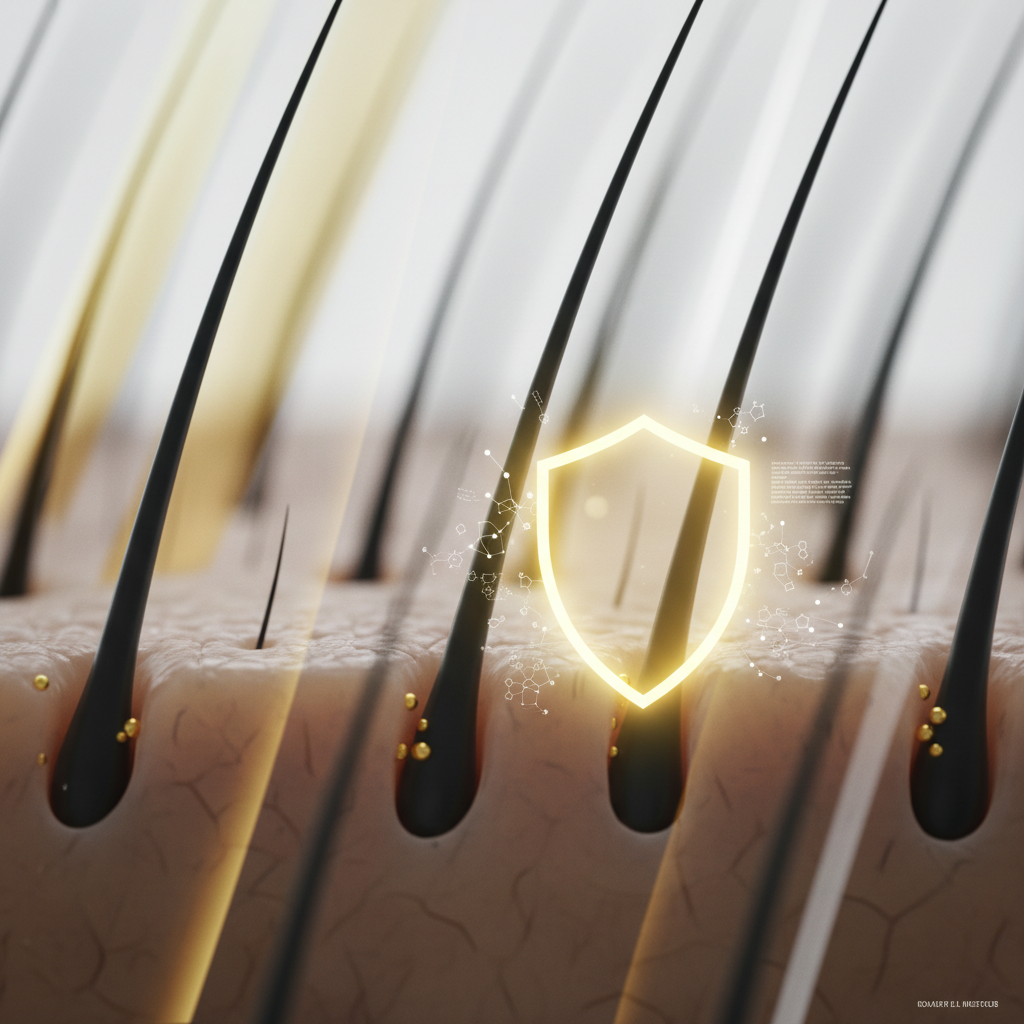
Clinical dermatology categorises folliculitis by its depth (superficial versus deep) and its primary trigger (infectious versus sterile). Exploring Folliculitis Causes and Prevention through clinical data reveals that the hair follicle is a delicate micro-environment. It hosts a resident microbiome that thrives within sebum-rich channels. When the follicular opening becomes physically blocked, damaged, or colonized by opportunistic pathogens, the immune system mounts an inflammatory response.
Primary causes: bacterial, fungal, and mechanical triggers
- Bacterial infection: Staphylococcus aureus accounts for the majority of superficial bacterial folliculitis cases. When the skin barrier weakens through scratching, harsh surfactants, or abrasions, these bacteria penetrate the follicular ostium, causing micro-abscesses. Gram-negative bacteria can also emerge, often following long-term oral antibiotic use for acne.
- Fungal infection (Pityrosporum / Malassezia): Malassezia yeasts feed on free fatty acids in human sebum. In hot, humid conditions, or when natural immunity fluctuates, these yeasts multiply rapidly within the upper follicle, producing uniform, intensely itchy papules rather than classic bacterial pustules.
- Mechanical irritation and occlusion: Constant friction from cycling helmets, tight caps, or tight hair extensions physically traumatises the hair shaft at the surface. Thick, non-breathable waxes and heavy unrefined oils form an occlusive barrier over the pore, trapping sweat, exfoliated keratin, and sebum.
- Shaving and depilation: Shaving against the grain pulls the hair fibre, causing micro-cuts and allowing curved hairs to pierce the follicular wall as they re-emerge (pseudofolliculitis).
Effective prevention protocols
Evidence demonstrates that preventive care succeeds when you address both microbial loads and physical barrier integrity:
- Cleanse promptly after exertion: Sweat raises the scalp surface pH, creating an alkaline shift that favours pathogen reproduction. Washing within 30 to 60 minutes of heavy sweating removes pooled salts and sebum.
- Maintain an acidic scalp mantle: Healthy skin operates at a pH between 4.5 and 5.5. Cleansers that respect this range help preserve the natural lipid matrix and deter pathogenic bacteria.
- Sanitise grooming tools: Combs, clipper guards, and brushes easily harbour bacterial biofilms. Disinfecting tools with medical-grade sanitiser or washing them in hot, soapy water weekly prevents reinfection.
- Avoid heavy occlusive pomades: If you are prone to scalp breakouts, swap heavy mineral oils and dense butters for lightweight, water-soluble formulations that rinse away thoroughly.
What the evidence does not show
Clinical research does not support the common belief that scalp folliculitis is merely a sign of "poor personal hygiene". Even individuals who wash daily can develop the condition if their skin barrier is disrupted or if their microbiome falls out of balance.
Furthermore, evidence does not show that natural plant oils (such as raw coconut or olive oil) cure infectious folliculitis. While some botanical extracts demonstrate laboratory-level antibacterial activity in vitro, applying raw, heavy lipids to an actively inflamed follicle often worsens occlusion and feeds Malassezia yeasts. Finally, over-the-counter clarifying shampoos do not cure deep bacterial carbuncles or chronic inflammatory conditions like folliculitis decalvans; deep forms require prescription intervention.
The biological mechanism: from pore occlusion to inflammation
A hair follicle comprises an epidermal invagination housing the hair root, sebaceous gland, and follicular canal. The process unfolds in clear stages:
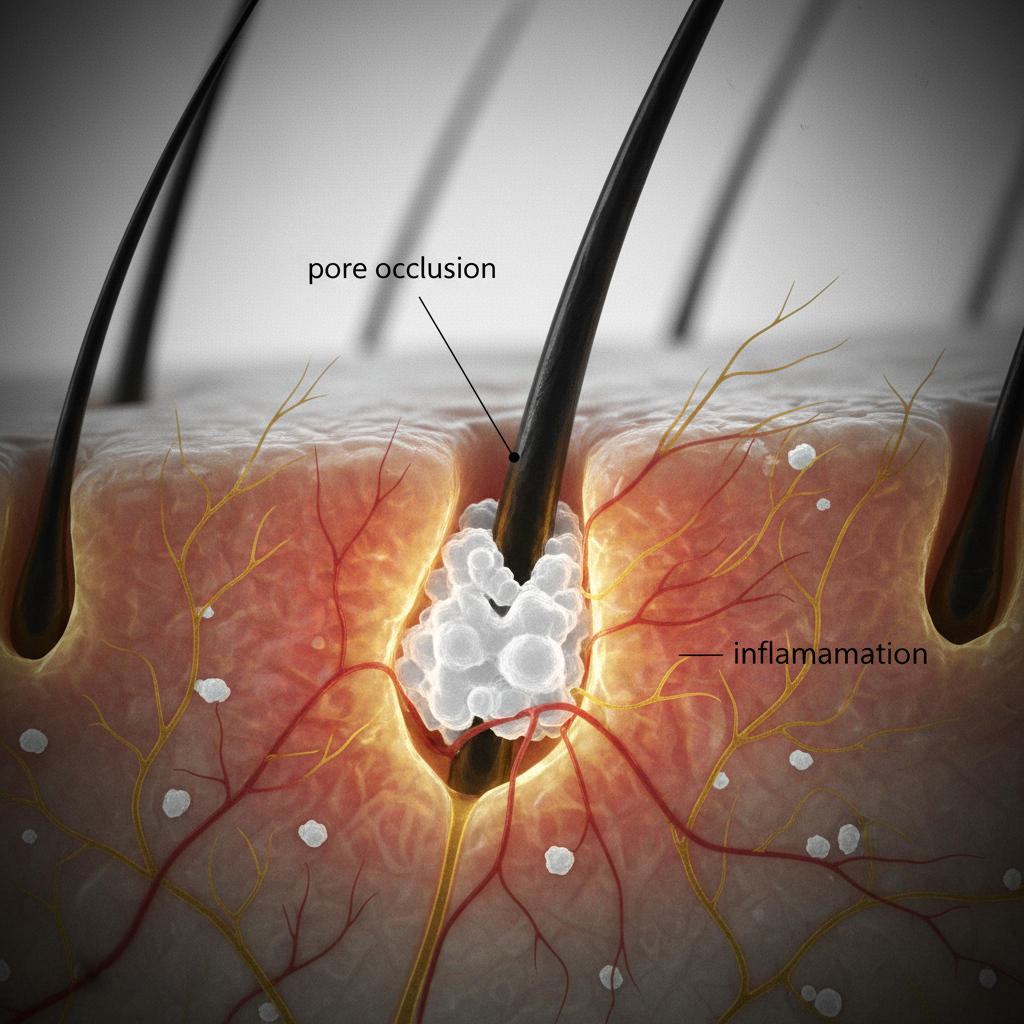
- Barrier disruption: Micro-trauma occurs at the infundibulum (the funnel-like upper portion of the follicle). This happens via friction, chemical irritation, or manual extraction.
- Infundibular plugging: Keratinocytes fail to desquamate properly, sticking together alongside excess sebum. This creates an anaerobic or semi-anaerobic plug.
- Microbial overgrowth: Pathogens trapped beneath the plug multiply. Bacteria release toxins and enzymes, while yeasts metabolise sebum triglycerides into irritating free fatty acids.
- Neutrophil recruitment: The host immune system detects bacterial antigens or fungal cell walls. It responds by flooding the area with neutrophils and inflammatory cytokines (interleukin-1, tumour necrosis factor-alpha).
- Pustule formation: The accumulation of cellular debris, dead neutrophils, and fluid creates a visible, yellow-white pustule surrounded by an erythematous (red) inflammatory halo.
Clinical signs: identifying scalp folliculitis
Folliculitis displays distinct physical characteristics that differentiate it from general scalp sensitivity:
- Perifollicular erythema: Small, pinpoint rings of redness centred precisely around individual hair fibres.
- Superficial pustules: Fragile yellow or white domes pierced through the exact centre by a hair strand.
- Sensory changes: Localised itching (pruritus), burning sensations, or sharp tenderness when hair moves or when you rest your head on a pillow.
- Crusting: Burst pustules leave small, honey-coloured or brown crusts that cling to the base of the hair shaft.
Folliculitis vs other common scalp conditions
| Condition | Primary Cause | Visual Presentation | Primary Sensation | Impact on Hair Growth |
|---|---|---|---|---|
| Bacterial Folliculitis | Staph. Aureus overgrowth | Red papules with central yellow pustules pierced by hair | Tender, stinging, mildly itchy | Usually none; rare scarring in deep forms |
| Fungal Folliculitis | Malassezia yeast proliferation | Clusters of uniform, tiny red bumps; rare white heads | Intense, persistent itching | None; temporary shedding if severely inflamed |
| Seborrhoeic Dermatitis | Immune reaction to yeast by-products | Greasy, yellowish flakes on erythematous plaques | Burning, itching | None; occasional diffuse telogen shedding |
| Scalp Acne | Sebaceous hyper-keratinisation (C. Acnes) | Comedones (blackheads/whiteheads), deeper cysts | Dull ache, pressure | None |
| Folliculitis Decalvans | Chronic neutrophilic inflammation | Tufted hairs (doll's hair), thick crusts, bleeding | Painful, throbbing | Permanent follicular loss (cicatricial alopecia) |
What you can do: an evidence-based scalp routine
A targeted daily routine keeps the scalp microbiome balanced and physically resilient:
- Wash with clarifying surfactants periodically: Incorporate cleansers containing mild antimicrobial agents such as piroctone olamine, salicylic acid, or diluted tea tree oil (at concentrations of 2% to 5%). Salicylic acid acts as a keratolytic agent, dissolving the sticky sebum plugs in the infundibulum.
- Practise friction-free drying: Blot wet hair with a clean microfibre towel rather than vigorously rubbing it, which shears the delicate outer layers of the follicular opening.
- Launder bed linen frequently: Pillowcases accumulate facial oils, dead skin cells, and bacteria. Changing pillowcases every 2 to 3 days reduces overnight bacterial transfer.
- Mind your shaving technique: If you shave your scalp, always use a clean, sharp single-edge blade or quality electric shaver. Shave with the direction of hair growth using a non-comedogenic shaving gel.
Supporting a healthy scalp environment with Watermans
Maintaining an optimal scalp environment is an essential part of general hair wellness. Formulations like Watermans Grow Me Shampoo offer a revitalising cleanse that sweeps away daily sebum accumulation, sweat residues, and environmental debris without stripping the scalp barrier. With balancing ingredients such as rosemary extract, biotin, and allantoin, it helps nurture a fresh, clean foundation where hair follicles can thrive comfortably.
When the cause may be something else
If your scalp bumps do not clear with standard hygiene measures, you may not be dealing with standard superficial folliculitis:
- Pseudofolliculitis: Common in tightly coiled afro hair textures, this condition occurs when shaved hair curves back and pierces the surrounding skin, inciting a foreign-body inflammatory reaction without initial bacterial infection.
- Eosinophilic folliculitis: An uncommon, intensely itchy dermatosis often linked with immune system variations.
- Contact dermatitis: An allergic reaction to hair dyes (such as paraphenylenediamine/PPD), preservatives, or fragrances that mimics tiny follicular bumps.
When to seek medical advice
Consult a GP, dermatologist, or qualified trichologist if you notice any of the following:
- Pustules that enlarge into painful, deep nodules or coalescing boils (furuncles and carbuncles).
- Spreading redness accompanied by systemic symptoms such as fever, chills, or swollen lymph nodes at the base of the skull or neck.
- Signs of scarring, such as hair failing to re-emerge, skin looking shiny and smooth, or multiple hairs emerging from a single scarred opening (tufting).
- No noticeable improvement after two weeks of meticulous over-the-counter antiseptic and clarifying care.
Frequently asked questions about Folliculitis Causes and Prevention
Can poor diet cause scalp folliculitis?
Diet does not directly cause follicular bacterial or fungal infections. However, diets high in refined carbohydrates and high-glycaemic foods trigger insulin spikes, which increase systemic sebum production. Excess sebum provides extra fuel for resident organisms like Malassezia, potentially aggravating symptoms in predisposed individuals.
What is the most effective approach to Folliculitis Causes and Prevention?
The most effective approach to Folliculitis Causes and Prevention combines gentle antimicrobial hygiene with physical care. Wash the scalp promptly after sweating, keep hair tools sanitised, avoid thick pore-blocking pomades, and use a pH-balanced cleanser containing salicylic acid or piroctone olamine to prevent keratin plugs from forming.
Will hair fall out permanently from folliculitis?
Superficial folliculitis affects only the upper neck of the follicle and does not damage the hair bulb or dermal papilla. Hair growth continues normally once the inflammation clears. However, deep or chronic scarring forms (such as folliculitis decalvans) can destroy the follicular stem cells, leading to permanent, patchy hair loss if left untreated.
How does hot water affect scalp folliculitis?
Washing your hair with very hot water strips the protective lipid barrier of the scalp, causing compensatory sebum overproduction. It also triggers vasodilation, increasing local redness, itching, and inflammation. Use lukewarm water to preserve the scalp barrier and calm irritation.
Is scalp folliculitis contagious?
Most cases are not considered directly contagious because the responsible microbes (Staphylococcus and Malassezia) already reside naturally on human skin. However, sharing unwashed towels, pillowcases, razors, or combs can transfer high concentrations of pathogenic bacteria between individuals, particularly if the recipient has micro-cuts on their scalp.
The path forward for healthy hair follicles
Managing the balance of your scalp takes patience, consistency, and a clear understanding of biological mechanisms. By mastering Folliculitis Causes and Prevention, you protect your skin barrier, neutralise common irritants, and prevent microbial overgrowth before it turns into painful inflammation. Treat your scalp as an extension of your face: keep it clean, balanced, and free from unnecessary physical friction to ensure your hair follicles remain healthy and supported over the long term.
Sources and references
- British Association of Dermatologists. Folliculitis Patient Information Leaflet. 2022.
- National Health Service (NHS). Folliculitis Overview and Treatment Guidelines. 2023.
- American Academy of Dermatology. Folliculitis: Signs, Symptoms, and Causes. 2021.
- Journal of the American Academy of Dermatology. Infectious and non-infectious folliculitis: An updated review. 2020.
- International Journal of Trichology. Scalp Conditions and Their Clinical Distinctions. 2019.