Contact Dermatitis Haircare: Evidence, Triggers, and Scalp Management
7 min read ·
Discover evidence-based strategies for Contact Dermatitis Haircare: identify triggers, soothe scalp inflammation, prevent shedding, and repair your skin barrier safely.
Quick answer: Managing Contact Dermatitis Haircare requires identifying and eliminating triggering topical ingredients, soothing an inflamed scalp barrier, and adopting chemically simplified wash routines. Contact dermatitis occurs as either an irritant reaction or a delayed allergic response to hair dyes, fragrances, or preservatives. While switching to fragrance-free and gentle formulations stops acute flare-ups and prevents inflammatory shedding, topical haircare cannot cure underlying immune sensitisations, which require strict lifetime avoidance of confirmed chemical triggers.
Key takeaways
- Contact dermatitis on the scalp falls into two categories: Irritant Contact Dermatitis (ICD) and Allergic Contact Dermatitis (ACD).
- The most frequent culprits in salon and home haircare are paraphenylenediamine (PPD) in hair dyes, methylisothiazolinone (MI) preservatives, and synthetic fragrances.
- Severe scalp inflammation can trigger temporary hair shedding (telogen effluvium), but it does not cause permanent destruction of the hair follicle unless chronic secondary infection occurs.
- Patch testing performed by a dermatologist remains the only gold standard method to distinguish between an irritant response and a true type IV allergy.
- A supportive haircare routine during a flare-up relies on physiological pH cleansers (pH 4.5 to 5.5), zero fragrance, and minimal surfactant concentrations.
Contact Dermatitis Haircare: what the evidence shows
Research indicates that the scalp epidermis possesses a robust barrier compared to facial skin, yet it remains highly vulnerable to cosmetic dermatitis due to the high density of hair follicles, which act as rapid entry points for topical allergens. Evidence compiled by the British Association of Dermatologists and international contact dermatitis research groups highlights that haircare formulations are among the leading causes of cosmetic-related contact dermatitis.
The clinical presentation differs markedly depending on the mechanism:
- Irritant Contact Dermatitis (ICD): Accounting for roughly 80% of all contact dermatitis cases, ICD results from direct physical or chemical damage to the stratum corneum without involving immune system memory. Strong alkaline relaxers, concentrated sulfates, and high-volume hydrogen peroxide strip skin lipids, denature keratin, and cause immediate stinging, redness, or peeling.
- Allergic Contact Dermatitis (ACD): This is a delayed type IV, cell-mediated hypersensitivity reaction. Initial exposure sensitises T-lymphocytes over 10 to 14 days. Subsequent exposures trigger inflammatory mediator release within 24 to 72 hours, producing intense pruritus (itching), erythema, swelling, and vesicular weeping that frequently spreads beyond the hairline to the ears, eyelids, and neck.
Scientific patch-test data consistently shows that paraphenylenediamine (PPD), commonly used in permanent oxidative hair colour, has an allergy prevalence rate between 1.5% and 4% in the general population. Preservatives such as methylchloroisothiazolinone/methylisothiazolinone (MCI/MI) and fragrance mixes represent the next most prevalent triggers in leave-in and rinse-off hair products.
What the evidence does not show
Controlled dermatological studies do not show that contact dermatitis directly causes classical androgenetic alopecia or scarring alopecia. An acute flare-up may provoke telogen effluvium (premature shifting of growing hairs into the shedding phase) due to high systemic or localised cytokine levels, but the stem cell niche in the follicle bulge remains intact. Once inflammation resolves, shedding typically normalises within three to six months.
Furthermore, evidence does not show that "all-natural" or "organic" hair formulations are inherently safer for dermatitis-prone scalps. Botanical extracts, essential oils (such as tea tree, lavender, and citrus oils), and plant-derived fragrances contain complex terpenes and oxidised compounds that represent some of the most potent sensitising allergens identified in cosmetic dermatology.
Mechanisms: how hair products breach the scalp barrier
Healthy scalp skin maintains an acid mantle with a natural pH of 4.5 to 5.5. This acidic environment regulates antimicrobial peptides and enzymes responsible for synthesising ceramides and free fatty acids. When high-pH hair products (such as alkaline soaps, bleach, or ammonium-based perms with a pH of 9.0 to 11.0) contact the scalp, they disrupt lipid bilayer integrity.
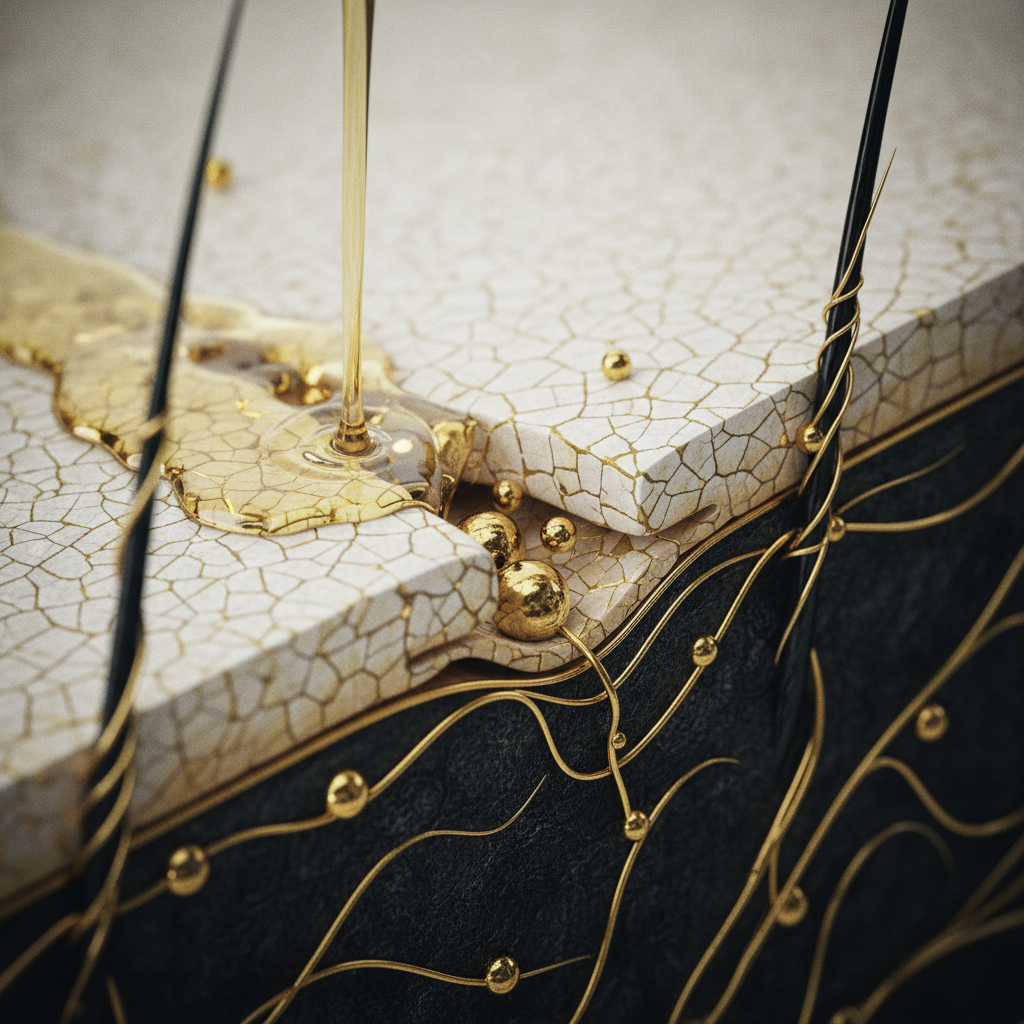
In irritant pathways, harsh surfactants like sodium lauryl sulfate (SLS) solubilise the intercellular lipid matrix, allowing transepidermal water loss (TEWL) to spike rapidly. In allergic pathways, low-molecular-weight molecules (haptens) penetrate the breached barrier and bind to epidermal proteins. Antigen-presenting Langerhans cells process these hapten-protein complexes and present them to naive T-cells in regional lymph nodes. Once memory T-cells are established, any future micro-exposure triggers a targeted immune attack, releasing interferon-gamma and interleukins that cause the intense itching and swelling typical of an allergic episode.
| Feature | Irritant Contact Dermatitis (ICD) | Allergic Contact Dermatitis (ACD) |
|---|---|---|
| Primary mechanism | Non-immune physical or chemical barrier destruction | Type IV delayed T-cell hypersensitivity |
| Onset of symptoms | Minutes to hours after application | 24 to 72 hours post-exposure |
| Key symptoms | Stinging, burning, tightness, dry fissures | Intense itching, weeping vesicles, spreading rash |
| Common haircare culprits | Bleach, relaxers, harsh surfactants, excessive heat | PPD (hair dyes), MI/MCI, fragrance mix, cocamidopropyl betaine |
| Margins | Strictly confined to areas of direct product contact | Spreads beyond contact zone (eyelids, ears, neck) |
| Diagnostic method | Clinical elimination; patch testing is negative | Dermatological patch testing (positive at 48 to 96 hours) |
Signs to look for: identifying the reaction
Differentiating between contact dermatitis and other scalp dermatoses requires monitoring symptom timing and distribution. Watch for:
- Erythema and swelling at the margin: Redness that extends 1 to 2 centimetres past the hairline onto the forehead, temporal region, and behind the ears is a hallmark of ACD from shampoo or dye.
- Secondary eyelid edema: Volatile fragrance components or rinse-off water carrying hair dye chemicals often cause pronounced swelling of the upper eyelids before scalp symptoms peak.
- Sensory cues: A predominant sensation of sharp burning or chemical heat usually signals ICD. Uncontrollable, sleep-disrupting itch indicates ACD.
- Flaking versus weeping: Fine, dry scaling across the scalp points to mild irritant damage or lipid stripping. Yellow crusting, oozing micro-blisters, and inflamed papules point to an active allergic reaction.
Practical steps: rebuilding a safe haircare routine
When dealing with active dermatitis, simplify your regime immediately to halt external barrier stress:
- Conduct a cosmetic pause: Discontinue all styling sprays, dry shampoos, hair perfumes, leave-in serums, and chemical dyes. Strip your routine down to a single, fragrance-free, hypoallergenic cleanser.
- Wash with physiological water temperatures: Hot water increases skin microcirculation and strips remaining ceramides. Wash hair in lukewarm water (around 35 to 37 degrees Celsius) to reduce pruritus and minimise vascular dilation.
- Inspect the ingredient deck: Scan product labels for notorious sensitising agents. Look out for paraphenylenediamine, toluene-2,5-diamine, methylisothiazolinone, quaternium-15, DMDM hydantoin, and unspecified "parfum" or "fragrance".
- Targeted scalp hydration: Use lightweight, non-comedogenic emollients containing squalane or pure colloidal oat extracts to reduce TEWL without clogging follicular openings.
- Salon precautions: Always insist on a 48-hour open patch test behind the ear or on the inner elbow before applying permanent colour or in-salon chemical straightening treatments.
When the cause may be something else
Scalp dermatitis shares visual characteristics with several distinct dermatological conditions that do not respond to simple allergen avoidance:
- Seborrheic dermatitis: Driven by an inflammatory reaction to Malassezia yeast overgrowth, this condition presents with greasy, yellowish flakes localized to the vertex, nasolabial folds, and eyebrows, rather than spreading allergic plaques.
- Scalp psoriasis: Produces sharply demarcated, thick, silvery-white plaques with underlying vascular ectasia (which bleeds if scraped, known as the Auspitz sign). Psoriasis is an autoimmune condition influenced by genetics rather than topical triggers.
- Atopic dermatitis: A systemic atopic condition often accompanied by asthma or hay fever, characterized by widespread flexural eczema and a genetically deficient filaggrin barrier.
When to seek professional advice
Mild irritant reactions usually resolve within 7 to 10 days of removing the offending product. However, consult a GP, trichologist, or consultant dermatologist if you observe:
- Facial or orbital swelling, facial hives, or any sensation of throat tightness (which requires immediate emergency medical attention).
- Extensive weeping, honey-coloured crusts, or swollen lymph nodes in the neck, which suggest a secondary bacterial infection (typically Staphylococcus aureus).
- Severe flare-ups that resist over-the-counter elimination strategies, requiring formal epicutaneous patch testing to pinpoint the exact allergen series.
- Prolonged diffuse hair shedding persisting longer than eight weeks post-reaction.
Watermans: gentle formulation philosophy
When designing high-performance hair products, scalp tolerability must sit alongside follicle vitality. Watermans products are formulated to support the scalp ecosystem by maintaining an optimal physiological pH balance and avoiding harsh, moisture-stripping sulfates. By focusing on nutrient-dense, balanced botanicals and clinically proven scalp-conditioning agents, Watermans formulations are built to promote a stronger-feeling, revitalised hair canopy while respecting delicate scalp barriers.
Conclusion
Navigating Contact Dermatitis Haircare successfully demands an evidence-based strategy rooted in trigger identification, chemical simplification, and dedicated barrier repair. By distinguishing between irritant stress and true allergic hypersensitivity, you can eliminate aggressive culprits like PPD, potent biocides, and synthetic fragrances before they damage the scalp environment. Respecting the scalp's natural pH and lipid architecture prevents inflammation-induced shedding and preserves optimal long-term hair health.
Sources and references
- British Association of Dermatologists. (2020). Hair dye reactions and patch testing guidelines.
- European Society of Contact Dermatitis. (2022). Guideline for diagnostic patch testing in cosmetic dermatitis.
- National Institute for Health and Care Excellence (NICE). (2021). Dermatitis - contact: Scenario: Management of contact dermatitis.
- Goossens, A. (2016). Contact allergy to cosmetics and systemic symptoms. Cosmetics, 3(4), 38.
- Sosted, H., et al. (2006). Contact allergy to hair dyes: a review of the frequency and clinical presentation of p-phenylenediamine allergy. Contact Dermatitis, 54(5), 246-257.