Follicular Miniaturisation Mechanics: The Biology of Hair Shrinkage
8 min read ·
Follicular miniaturisation mechanics explain how androgens cause hair follicles to shrink over time, transforming thick terminal hairs into fine vellus strands.
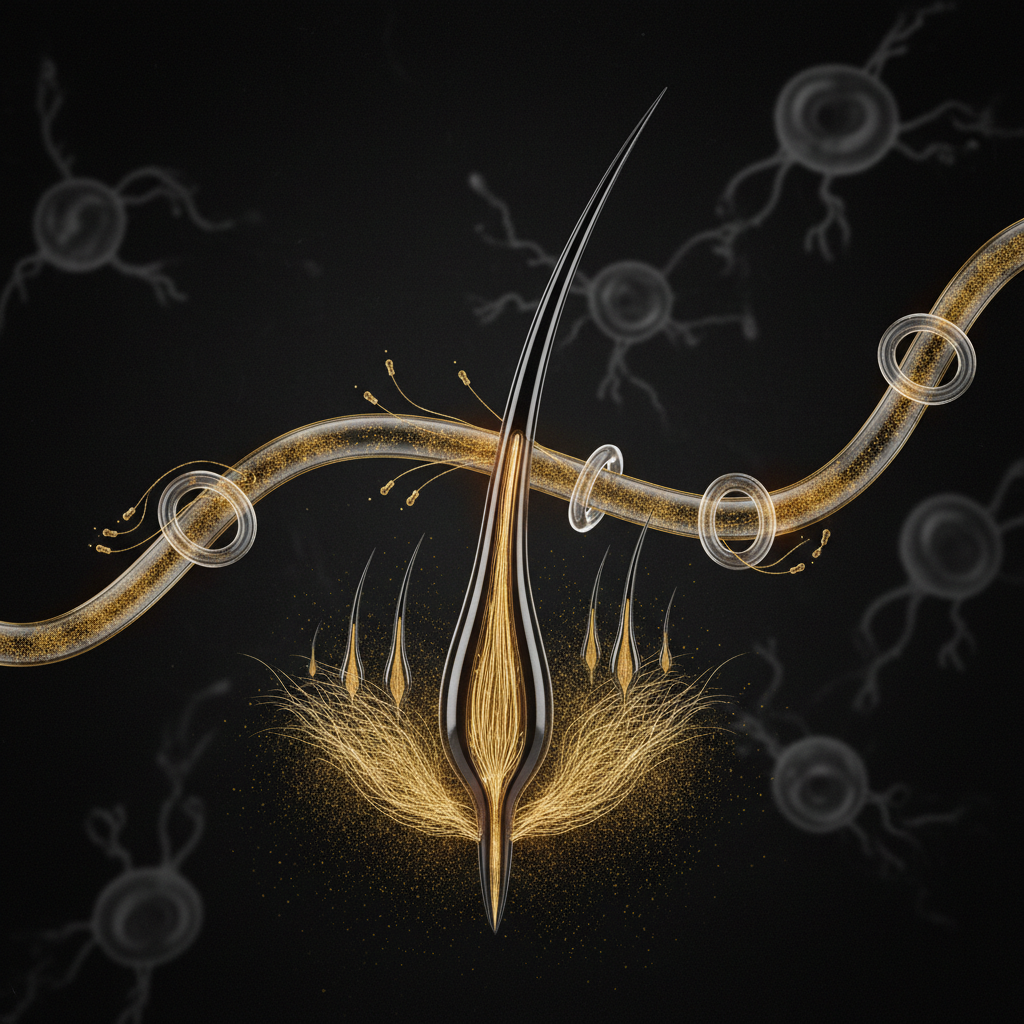
Quick answer: Follicular miniaturisation mechanics refer to the biological process where genetic sensitivity to androgens causes hair follicles to progressively shrink over successive growth cycles. Terminal hairs transform into fine, unpigmented vellus hairs as the anagen (growth) phase shortens and the dermal papilla decreases in volume. Understanding follicular miniaturisation mechanics helps differentiate pattern hair loss from temporary shedding, although topical cosmetic products cannot alter underlying genetics or permanently reverse advanced, fibrotic follicle atrophy.
Key takeaways
- Follicular miniaturisation is the foundational driver of androgenetic alopecia in both men and women.
- The hormone dihydrotestosterone (DHT) binds to androgen receptors in genetically susceptible dermal papilla cells, triggering inhibitory signalling cascades.
- With each successive hair cycle, the anagen (growth) phase contracts from several years to just months, while the telogen (resting) phase lengthens.
- The physical dermal papilla shrinks in cell volume, causing thick terminal fibres to degrade into thin, short, wispy vellus hairs.
- Miniaturisation is distinct from hair shedding (telogen effluvium) and mechanical breakage; early intervention is essential before the follicle undergoes irreversible perifollicular fibrosis.
Follicular Miniaturisation Mechanics: what the evidence shows
Follicular miniaturisation mechanics describe the progressive structural degradation of the hair follicle organ under hormonal and genetic influence. Clinical research confirms that this process does not destroy the follicle overnight. Instead, it alters the cell signalling networks within the follicular niche across multiple regular hair cycles.
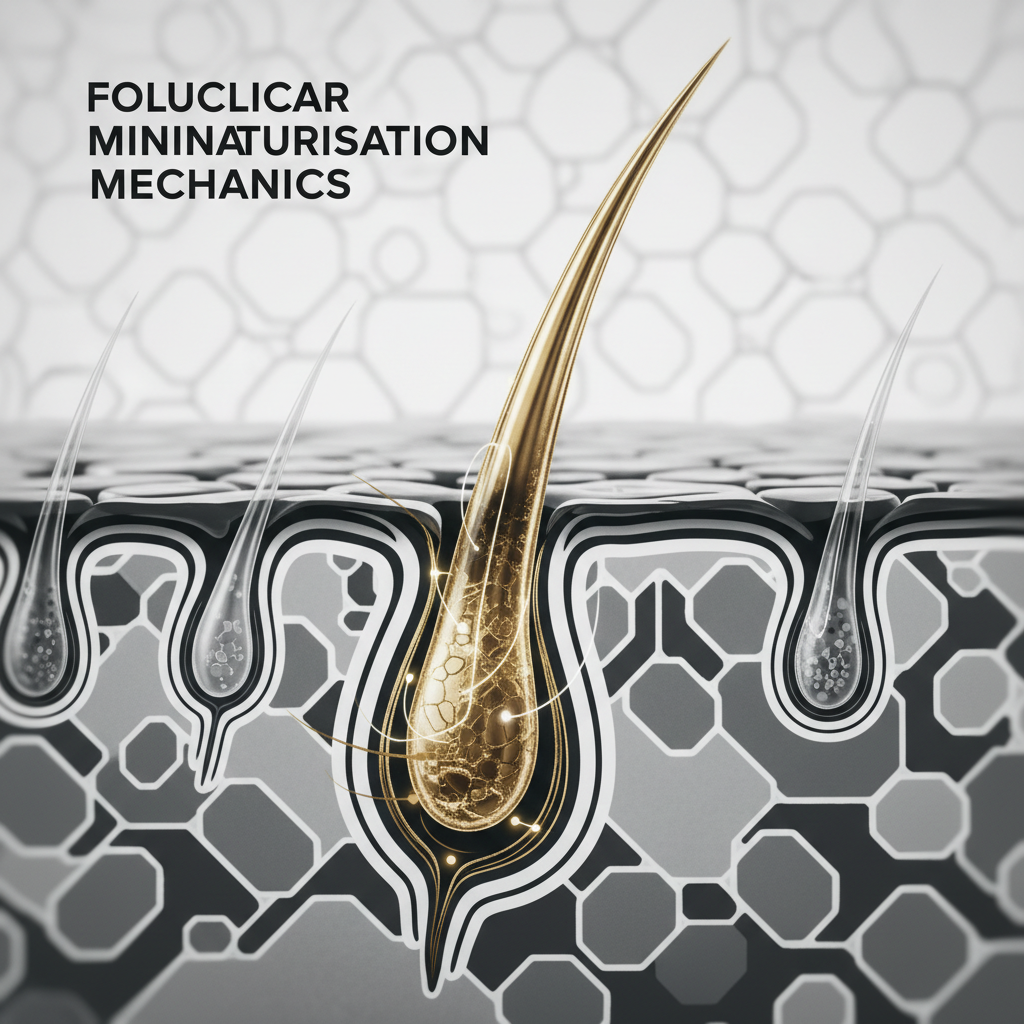
In normal scalp physiology, roughly 85 to 90 percent of hair follicles remain in the anagen phase at any given time, producing thick terminal hair shafts that measure roughly 0.06 to 0.08 millimetres in diameter. In follicles undergoing miniaturisation, this architecture unravels systematically:
- Androgen binding: Circulating testosterone is converted locally within the follicle by the intracellular enzyme 5-alpha reductase (primarily Type II) into dihydrotestosterone (DHT). DHT possesses an affinity for the androgen receptor that is roughly five times greater than testosterone.
- Paracrine signalling: Upon binding, the receptor complex translocates to the nucleus of dermal papilla cells. This stimulates the release of inhibitory cytokines, most notably transforming growth factor-beta (TGF-beta) and dickkopf-1 (DKK-1), which suppress keratinocyte proliferation.
- Anagen curtailment: The signalling cascade prematurely terminates the active anagen phase. A growth window that normally lasts between two and seven years is reduced incrementally to mere months or weeks.
- Volume depletion: As dermal papilla cell numbers decline, the physical matrix capable of building a hair shaft diminishes. The resulting hair fibre emerges thinner, shorter, and stripped of its natural pigment.
- The kenogen lag: The interval between the shedding of a telogen hair and the emergence of a new anagen hair (termed kenogen) lengthens, leaving the follicular pore visibly empty for extended periods.
[Testosterone] + [5-alpha Reductase]
 │
 ▼
 [DHT] ──► Binds to Androgen Receptors
 │
 ▼
 Inhibitory Factors (TGF-β, DKK-1)
 │
 ▼
 Shortened Anagen Phase + Papilla Shrinkage
 │
 ▼
 Terminal Hair ──► Vellus Hair Transition
What the evidence does not show
Follicular miniaturisation is widely misunderstood in popular culture, leading to misdiagnosed scalp concerns and ineffective routines. The clinical literature refutes several persistent myths:
- It is not poor circulation: Miniaturisation is not caused by a simple lack of blood flow to the scalp. While microvascular support is vital for optimal cellular function, reduced vascularisation around miniaturised follicles is a secondary consequence of the tissue shrinking, not the initiating trigger.
- It is not clogged pores: Sebum accumulation, styling product residue, and dead skin cells cannot enter the follicular bulb to alter genetic androgen expression. Scalp hygiene is critical for barrier health, but clarifying the scalp does not stop hormonal miniaturisation.
- Cosmetics cannot alter genetics: Shampoos, conditioners, and oils cannot genetically reprogram androgen receptors or permanently reverse advanced structural atrophy. Cosmetic formulas support scalp skin health and hair fibre resilience, but they do not alter systemic endocrinology.
Identifying the clinical signs of miniaturisation
Recognising miniaturised follicles requires distinguishing between diffuse thinning, sudden shedding, and patterned diameter changes.
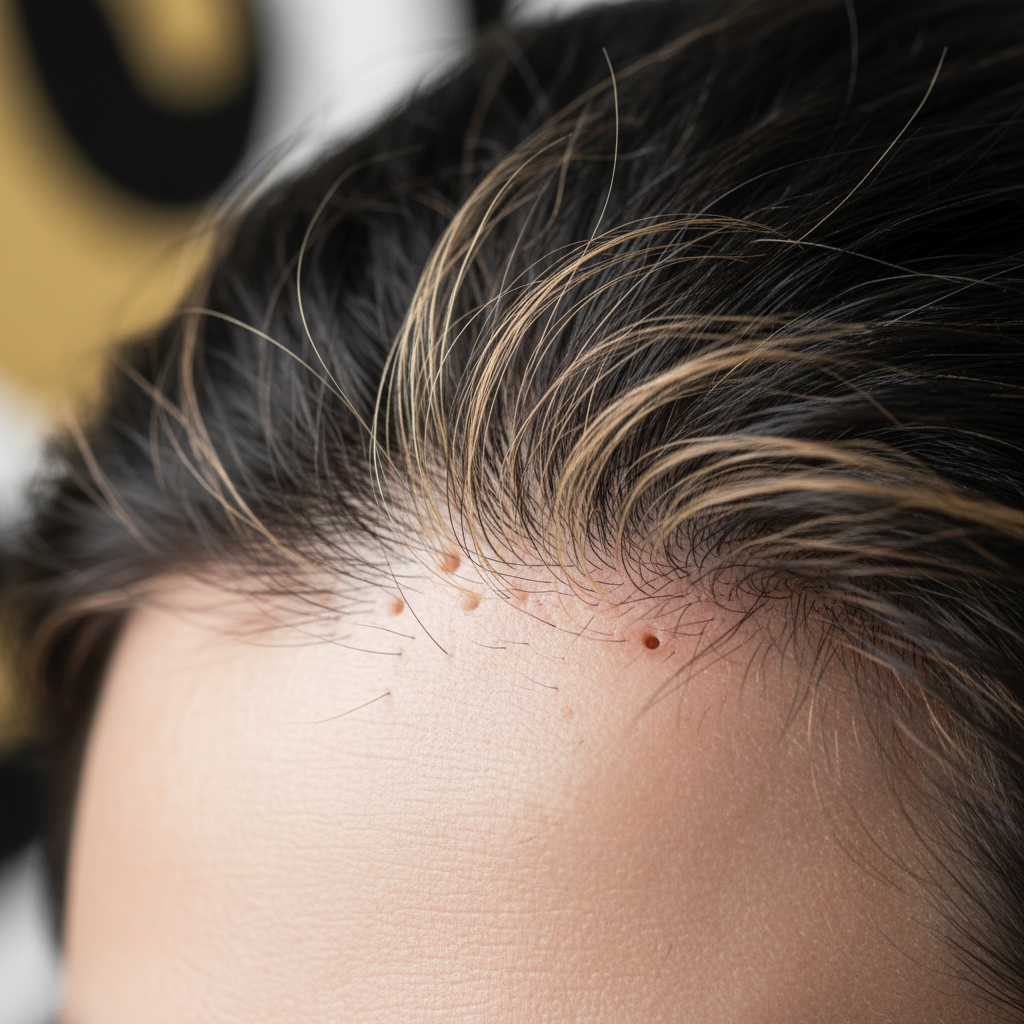
Trichoscopy (scalp dermoscopy under polarised light) is the gold standard for clinical assessment. Under magnification, a clinician evaluates follicular hair count and shaft diameter diversity (anisotrichia).
A healthy scalp typically displays less than 10 to 15 percent variability in shaft diameter across a given zone, with follicular units containing two to four terminal hairs. When follicular miniaturisation mechanics are active, shaft diameter variability climbs above 20 percent. You will observe single-hair follicular units, thin vellus-like hairs adjacent to thick terminal strands, yellow dots (sebum-filled empty ostia), and perifollicular hyperpigmentation (the peripilar sign), which marks early micro-inflammation.
| Characteristic | Healthy Scalp Follicle | Miniaturised Follicle | Telogen Effluvium Follicle |
|---|---|---|---|
| Average Fibre Diameter | 60 to 80 microns (terminal) | Under 30 microns (vellus-like) | Normal (uniform diameter) |
| Anagen Phase Duration | 2 to 7 years | Weeks to months | Prematurely halted (synchronised) |
| Diameter Variability | Low (under 15%) | High (over 20%) | Low (uniform) |
| Follicular Unit Density | 2 to 4 hairs per unit | Predominantly 1 hair per unit | Reduced temporary density |
| Reversibility Potential | Baseline | High in early stages; low once fibrotic | High once trigger resolves |
When hair loss is caused by something else
Not all thinning stems from follicular miniaturisation. It is crucial to separate miniaturisation from other distinct hair concerns:
- Telogen effluvium: A reactive shedding condition triggered by physiological shock, high fevers, severe nutritional deficits, or post-partum hormonal shifts. In this state, anagen hairs are pushed prematurely into the telogen phase across the entire scalp, but the follicles do not undergo progressive structural shrinkage.
- Hair breakage: Mechanical or chemical damage causes the hair shaft to fracture along its length. The follicle remains fully healthy and actively produces standard terminal fibres, but external stresses (heat styling, bleaching, friction) break the fibre before it achieves length.
- Cicatricial (scarring) alopecias: Inflammatory conditions such as lichen planopilaris or frontal fibrosing alopecia destroy the follicular stem cells in the bulge region, replacing the follicle with fibrous tissue. This is fundamentally different from the non-scarring, hormone-driven pathway of miniaturisation.
Practical strategies for supporting the scalp environment
Addressing miniaturisation requires a multi-layered approach that distinguishes between medical management and cosmetic care.
Clinical interventions
For individuals diagnosed with androgenetic alopecia, clinicians often recommend pharmaceutical pathways. These may include 5-alpha reductase inhibitors (such as finasteride or dutasteride) to suppress DHT conversion, or topical/oral vasodilators (such as minoxidil) to lengthen the anagen phase and encourage nutrient delivery to the dermal papilla. Low-level laser therapy (LLLT) and microneedling have also shown utility in clinical studies to stimulate cellular metabolism.
Cosmetic care and scalp hygiene
A sound cosmetic regimen creates the ideal foundation for any therapeutic strategy. Keeping the scalp microbiome balanced and the follicular ostia clear of oxidative lipids prevents secondary micro-inflammation from accelerating the miniaturisation process.
Look for topical formulations featuring caffeine, niacinamide, rosemary extract, and gentle botanical oils. Caffeine, for example, has been demonstrated in in-vitro studies to counteract some inhibitory signalling pathways induced by testosterone in the hair organ.
Cosmetic products from Watermans, including their revitalising shampoos and scalp elixirs, are developed specifically to nourish the scalp surface, reinforce the feeling of hair density, and protect delicate emerging fibres from premature mechanical breakage. While cosmetic preparations do not treat underlying medical conditions, they support an optimal scalp environment where fragile, emerging hair can thrive.
When to seek professional advice
Consult a dermatologist, trichologist, or GP if you notice:
- Widening of your central parting or recession at the temples that progresses over 6 to 12 months.
- A marked reduction in ponytail thickness without excessive daily shedding.
- Scalp pain, burning, redness, or scaling accompanying the hair thinning.
- Sudden, patchy hair loss appearing in circular formations.
Early clinical diagnosis is vital. Once a miniaturised follicle undergoes complete apoptosis and the dermal tract is replaced by fibrous scar tissue, the window to restore terminal hair production closes permanently.
Frequently asked questions about Follicular Miniaturisation Mechanics
Can follicular miniaturisation mechanics be permanently reversed?
Follicular miniaturisation can be partially reversed if intervention occurs during the early to mid stages of the process. Treatments that reduce DHT or prolong anagen can prompt miniaturised follicles to produce thicker, more pigmented terminal fibres. However, once the follicle has completely atrophied and undergone perifollicular fibrosis, structural reactivation is clinically impossible.
How does DHT trigger follicular miniaturisation?
Dihydrotestosterone binds to androgen receptors located in the dermal papilla of genetically predisposed follicles. This interaction stimulates the expression of inhibitory growth factors, such as TGF-beta and DKK-1. These biochemical messengers suppress cell division in the hair matrix, resulting in a contracted anagen phase and a progressively smaller dermal papilla.
Does washing hair frequently worsen follicle miniaturisation?
No, washing hair frequently does not worsen follicle miniaturisation. Miniaturisation is a biological, hormone-driven process taking place deep within the dermis. Regular cleansing with a gentle, balanced shampoo removes oxidised sebum, micro-pollutants, and styling buildup, supporting overall scalp barrier health without impacting follicle genetics.
Is hair miniaturisation identical in men and women?
While the fundamental follicular miniaturisation mechanics are biologically similar, their clinical presentation differs. Men typically experience recession at the temples and vertex due to higher androgen receptor densities in those areas. Women typically experience diffuse thinning across the central crown, usually retaining the frontal hairline, driven by complex hormonal balances involving androgens and local aromatase levels.
Maintaining scalp vitality against follicular change
Understanding the science behind follicular miniaturisation mechanics demystifies the biological reality of pattern hair thinning. Far from being a surface-level cosmetic issue or a consequence of simple shedding, miniaturisation represents a gradual, genetically driven restructuring of the hair follicle organ. By identifying shaft diameter changes early, consulting qualified healthcare professionals for medical management, and employing supportive, non-stripping cosmetic scalp care to reinforce emerging strands, you can maintain optimal scalp vitality and protect the integrity of your hair.
Sources and references
- British Association of Dermatologists. Androgenetic Alopecia Guidelines, 2018. Bad.org.uk
- National Institute for Health and Care Excellence (NICE). Alopecia, androgenetic - Clinical Knowledge Summaries, 2021. Cks.nice.org.uk
- Inui, S., & Itami, S. "Molecular basis of androgenetic alopecia: From androgen to phenotype." Journal of Dermatological Science, 2014. Doi:10.1016/j.jdermsci.2014.07.004
- Lolli, F., et al. "Androgenetic alopecia: a review." Endocrine, 2017. Doi:10.1007/s12020-017-1280-y
- Whiting, D. A. "Possible mechanisms of miniaturization during androgenetic alopecia or pattern hair loss." Journal of the American Academy of Dermatology, 2001. Doi:10.1067/mjd.2001.117428
Find these ingredients in Watermans products
- Niacinamide: you will find this ingredient in our Hair Mask.