Ferritin Levels and Hair Loss: Understanding the Clinical Link
9 min read ·
Discover the clinical connection between Ferritin Levels and Hair Loss, how iron stores affect the hair cycle, ideal target ranges, and how to address shedding.
Quick answer: The relationship between Ferritin Levels and Hair Loss centres on iron storage, as ferritin reflects your body's cellular iron reserves required for matrix cell division in the hair follicle. Depleted ferritin stores can trigger diffuse hair shedding known as telogen effluvium, or unmask underlying androgenetic alopecia. However, research remains mixed regarding universal target thresholds, and low ferritin is rarely the sole cause of chronic thinning, meaning supplementation should only occur under medical supervision following proper blood tests.
Key takeaways
- Ferritin is a cellular protein that stores iron, serving as the most accurate clinical marker for total body iron reserves.
- Hair follicle matrix cells are among the most metabolically active cells in the human body, making them exceptionally sensitive to iron depletion.
- Low ferritin primarily causes telogen effluvium (diffuse shedding) rather than permanent follicular scarring or breakage along the hair shaft.
- While standard medical laboratories often flag ferritin as "normal" above 15 micrograms per litre (ug/L), many dermatologists suggest optimal hair cycling requires levels between 40 and 70 ug/L.
- Iron overload carries genuine clinical risks, so you should never take high-dose iron supplements without confirmed blood tests and medical monitoring.
Ferritin Levels and Hair Loss: what the evidence shows
Research into Ferritin Levels and Hair Loss reveals that the hair follicle relies heavily on iron as an essential cofactor for ribonucleotide reductase, an enzyme responsible for DNA synthesis during the rapid cell proliferation of the anagen (growth) phase. When iron stores drop, the body redirects available iron away from non-essential tissues like hair follicles to preserve critical hemoglobin production for oxygen transport in vital organs.
Multiple clinical studies demonstrate an association between low serum ferritin and diffuse hair shedding in premenopausal women. A landmark study published in the Journal of the American Academy of Dermatology noted that significantly lower ferritin levels were observed in women experiencing telogen effluvium compared to healthy controls. When ferritin falls below critical levels, an abnormally high percentage of growing follicles prematurely transition into the catagen (regression) and telogen (resting) phases, resulting in excessive daily shedding two to four months later.
Beyond diffuse shedding, depleted iron stores can also exacerbate female pattern hair loss (androgenetic alopecia). While low ferritin does not directly produce the androgen-mediated follicular miniaturisation characteristic of genetic thinning, it lowers the threshold for follicle sensitivity, causing accelerated thinning across the crown and parting line.
What the evidence does not show
The clinical literature contains crucial nuances that are frequently misinterpreted. First, low ferritin does not cause structural hair breakage. Hair breakage occurs when the external protein matrix of the hair shaft fractures due to chemical processing, heat styling, or mechanical stress. Ferritin affects follicular anchorage and cycling inside the scalp, not the physical strength of the already-grown fibre.
Second, raising ferritin levels is not a guaranteed cure for every type of shedding. Controlled trials have produced mixed results; some patients with corrected ferritin values see substantial regrowth and shedding reduction, while others experience persistent shedding. This variation occurs because hair loss is frequently multifactorial, involving thyroid dysfunction, stress hormones, nutritional deficiencies, and genetic predisposition simultaneously.
Finally, high ferritin levels do not stimulate extra growth or speed up natural hair production beyond your genetic baseline. Flooding an iron-replete system with supplements provides no cosmetic benefit and carries substantial toxicity risks.
Cellular mechanisms: why follicles need stored iron
To understand the biological link between stored iron and hair growth, look at the hair bulb:
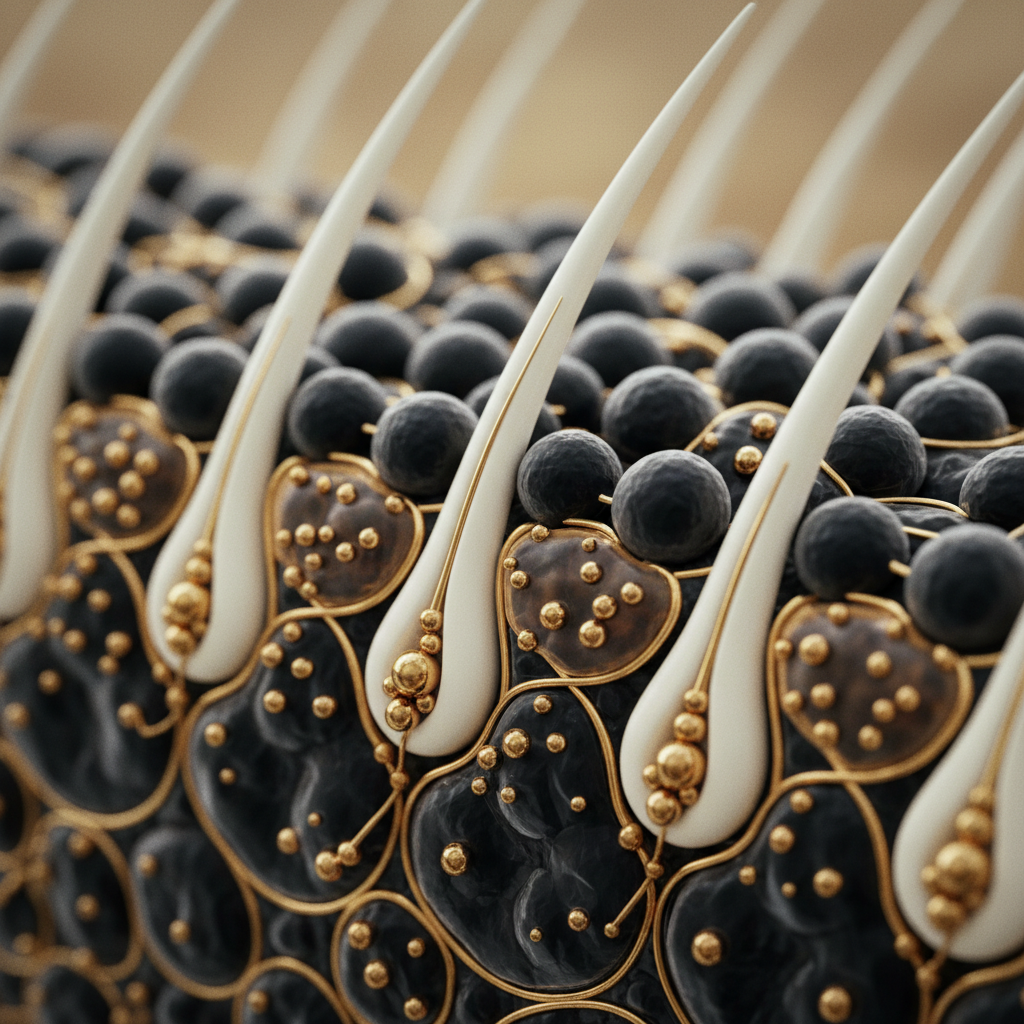
- Cell division and DNA synthesis: During active growth, follicle matrix cells divide faster than almost any other tissue in the body. Ferritin supplies the intracellular iron needed for ribonucleotide reductase, which synthesises the deoxyribonucleotides required for DNA replication.
- Mitochondrial energy production: Iron is a core component of cytochrome enzymes in the electron transport chain. Without adequate ferritin reserves, follicle cells struggle to generate the adenosine triphosphate (ATP) necessary to maintain prolonged anagen growth.
- Oxygenation of the follicular papilla: While hemoglobin carries systemic oxygen, cellular iron availability directly influences local tissue oxygenation and nutrient processing within the dermal papilla microvasculature.
| Ferritin Range (ug/L) | Clinical Classification | Typical Impact on Hair Follicle Cycling |
|---|---|---|
| Below 15 | Clinical iron deficiency | High likelihood of triggering acute or chronic telogen effluvium; follicular dormancy |
| 15 to 39 | Low-normal / Depleted stores | Common threshold where sensitive individuals experience prolonged shedding or slowed regrowth |
| 40 to 70 | Functionally adequate | Generally sufficient to support normal follicular turnover and sustain the full anagen growth phase |
| Above 70 | Optimal / Satiated stores | Fully supported hair matrix division; rule out other shedding drivers if thinning persists |
| Above 200 to 300 | Elevated (requires investigation) | Not associated with extra hair growth; may indicate systemic inflammation, liver issues, or hemochromatosis |
Signs to look for: shedding versus breakage
Identifying whether your shedding stems from systemic causes like low ferritin requires paying close attention to how hair sheds:
- White bulb on shed strands: Hairs shed due to low ferritin typically have a small, hard, white bulb at the root end. This confirms the hair completed the telogen cycle and detached naturally from the base of the follicle.
- Diffuse volume reduction: Rather than sudden round patches (alopecia areata) or frayed mid-lengths (breakage), low ferritin produces an overall reduction in ponytail thickness and diffuse thinning across the entire scalp.
- Increased shower and brush shedding: Normal shedding ranges between 50 and 100 hairs per day. Active telogen effluvium driven by iron depletion often pushes daily losses to 150 to 300 hairs.
- Systemic warning signs: Physical symptoms frequently accompany depleted ferritin, including persistent fatigue, brittle nails, cold hands and feet, dizziness, restless legs, and pale conjunctiva inside the lower eyelids.
What you can do to restore healthy iron balance
If you suspect iron depletion is driving your hair shedding, take a measured, medical approach:
- Request a full iron panel: Ask your general practitioner for serum ferritin alongside serum iron, total iron-binding capacity (TIBC), and transferrin saturation. A standard full blood count (FBC) checking hemoglobin alone will miss latent iron deficiency without anemia.
- Investigate the root cause of depletion: Iron does not disappear without reason. Heavy menstrual bleeding, gastrointestinal absorption issues (such as coeliac disease), frequent blood donation, or strictly plant-based diets with insufficient bioavailable iron must be assessed.
- Target dietary sources: Haem iron from meat, poultry, and fish offers significantly higher bioavailability (15 to 35 percent absorption) compared to non-haem iron from beans, lentils, spinach, and fortified cereals (2 to 20 percent absorption).
- Pair with vitamin C: When consuming non-haem plant iron, consume vitamin C (ascorbic acid) at the same time to convert ferric iron into the more absorbable ferrous state. Avoid drinking black tea, coffee, or calcium-rich milk within an hour of iron-rich meals, as polyphenols and calcium inhibit absorption.
- Supplement only with clinical guidance: Oral iron salts (such as ferrous fumarate, ferrous sulphate, or iron bisglycinate) should be dosed according to medical advice. It typically takes three to six months of consistent supplementation to rebuild bone marrow and cellular ferritin reserves.
When the cause may be something else
Hair shedding is notorious for masking alternative or compounding triggers. If your ferritin is normal or your shedding continues despite replenishing your iron stores, evaluate other potential drivers:
- Thyroid dysfunction: Both hypothyroidism and hyperthyroidism disrupt the metabolic rate of the dermal papilla, inducing widespread diffuse shedding that mimics iron deficiency.
- Vitamin D3 and zinc deficiencies: Both micronutrients regulate follicle cell differentiation and immune balance within the scalp environment.
- Recent physiological or emotional shock: Telogen effluvium manifests two to four months after a triggering event. High fevers, severe viral infections, surgery, rapid weight loss, or major psychological distress push follicles into premature resting phases.
- Androgenetic alopecia: Genetic sensitivity to dihydrotestosterone (DHT) causes progressive follicle miniaturisation along the crown and hairline. Correcting iron helps support existing hair, but it will not halt genetic sensitivity on its own.
Supporting the scalp and hair fibre externally
While internal nutritional deficiencies must be corrected from within, supporting the scalp surface and protecting the external hair fibre helps prevent compounding damage during recovery. When follicles are under metabolic strain, emerging fibres can be slightly finer and more vulnerable to physical degradation.
A clean, stimulated scalp microenvironment provides the best foundation for emerging growth. Watermans approaches external hair wellness by combining targeted scalp stimulation with gentle, sulphate-free botanical cleansers. Topical formulas containing caffeine, biotin, rosemary extract, and niacinamide help invigorate the surface of the scalp, creating favourable local conditions for active hair cycling while maintaining the protective moisture barrier of fragile hair strands.
Frequently asked questions about Ferritin Levels and Hair Loss
Can Ferritin Levels and Hair Loss cause permanent baldness?
No, low ferritin does not destroy or scar the hair follicle. The shedding triggered by iron depletion is a functional cycling interruption known as telogen effluvium. Because the stem cells within the follicular bulge remain alive and intact, follicles retain their capacity to produce normal, healthy hair fibres once cellular iron levels are replenished.
How long does it take for hair to regrow after correcting ferritin?
Hair regrowth requires patience. After reaching adequate ferritin levels (often requiring three to six months of targeted intervention), follicles need an additional two to four months to shift back into the anagen phase. Visible improvement in density and reduced shedding typically appears between six and twelve months after iron stores normalise.
What is the ideal ferritin level for stopping hair shedding?
While general medical labs often accept ferritin as low as 15 ug/L, dermatological consensus suggests that a minimum serum ferritin of 40 to 50 ug/L is required to arrest shedding, with 70 ug/L preferred to support robust anagen regrowth and optimal follicle cell division.
Can taking iron supplements without low ferritin cause hair loss?
Taking unneeded iron supplements will not improve hair growth and can cause serious harm. The body possesses no active physiological mechanism to excrete excess iron. Over-supplementation can lead to hemochromatosis, oxidative tissue damage, liver toxicity, and systemic inflammation, which can paradoxically worsen hair shedding.
Why do my blood tests say normal when my hair is still shedding?
Standard reference ranges reflect broad population averages designed to identify clinical anemia, not optimal cosmetic or follicular function. A ferritin level of 18 ug/L is technically within a normal laboratory reference range, but it represents severely depleted storage iron that may be entirely insufficient for highly metabolic hair follicles.
Making sense of your iron levels and hair health
Understanding the connection between Ferritin Levels and Hair Loss empowers you to address shedding methodically rather than relying on guesswork. Hair follicles are among your body's most sensitive metabolic sensors; when internal iron reserves dwindle, follicular longevity is sacrificed to protect vital organs.
If you are experiencing unexplained diffuse shedding, start by requesting a comprehensive iron panel from your healthcare practitioner. Focus on patience, pair medical iron restoration with a supportive scalp care routine, and allow your body the months it requires to cycle back into vibrant, active growth.
Sources and references
- Journal of the American Academy of Dermatology: "The role of iron in hair loss", 2006.
- British Association of Dermatologists: "Telogen Effluvium Guidelines and Patient Information", 2021.
- National Health Service (NHS): "Iron deficiency anaemia diagnosis and management", 2023.
- World Health Organization: "Serum ferritin concentrations for the assessment of iron status and iron deficiency in populations", 2020.
- Clinical and Experimental Dermatology: "Iron deficiency and diffuse hair loss in women: a clinical review", 2013.
Find these ingredients in Watermans products
- Biotin: you will find this ingredient in our Hair Growth Shampoo.
- Niacinamide: you will find this ingredient in our Hair Mask.