Essential Hair Nutrients: Your Guide to Hair Health from Within
10 min read ·
Essential Hair Nutrients are the vitamins, minerals, and other compounds your body needs to support healthy hair growth and structure.
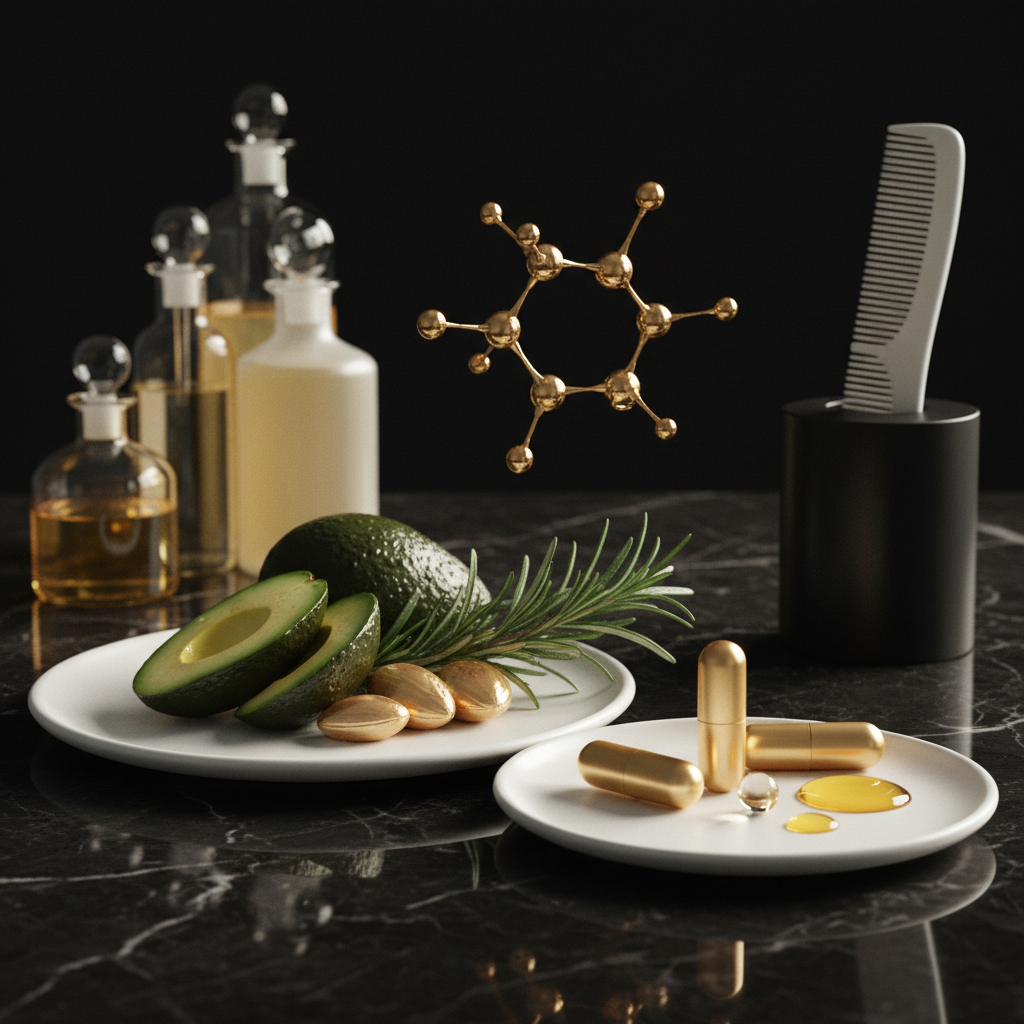
Quick answer: Essential Hair Nutrients are the specific vitamins, minerals, and other compounds your body requires to build and maintain healthy hair fibres, support scalp health, and sustain the hair growth cycle. While a balanced diet rich in these nutrients is crucial, deficiencies can impact hair health, potentially leading to issues like increased shedding or breakage. However, it's important to remember that dietary intake alone isn't the sole determinant of hair health, and other factors can also play a significant role.
Key takeaways
- Your hair, like the rest of your body, needs a consistent supply of specific vitamins and minerals to grow and remain strong.
- Essential Hair Nutrients include vitamins A, C, D, E, B-vitamins (especially biotin, niacin, and B12), iron, zinc, selenium, and copper.
- These nutrients support hair by contributing to keratin formation, antioxidant protection, collagen synthesis, cell division, and healthy blood circulation to the hair follicles.
- While deficiencies can impact hair health, supplementing without a diagnosed deficiency often doesn't provide additional benefits and in some cases, excessive intake can be harmful.
- Hair shedding, breakage, or changes in texture can sometimes signal nutritional imbalances, but these signs can also stem from other underlying health conditions.
- A balanced, varied diet is the most effective way to ensure you're getting adequate Essential Hair Nutrients, with professional medical advice recommended for suspected deficiencies.
Essential Hair Nutrients: what the evidence shows
Essential Hair Nutrients are the fundamental building blocks and catalysts that support every aspect of hair health, from the scalp to the tip of the hair shaft. Your hair follicles are highly active metabolic sites, requiring a steady supply of energy and raw materials to continuously produce new hair cells. These nutrients contribute to structural integrity, regulate the hair growth cycle, protect against environmental damage, and ensure proper blood flow to the scalp.
While the body can synthesise some compounds, many Essential Hair Nutrients must be obtained through your diet. A well-balanced intake supports optimal hair growth and maintenance, helping to prevent issues like increased hair shedding, fibre weakness, and dullness.
Key vitamins for hair health
Your hair relies on a range of vitamins to perform its functions and maintain its structure. Each vitamin plays a distinct, yet interconnected, role.
Vitamin A (Retinol)
Vitamin A is vital for cell growth, including the rapidly dividing cells found in hair follicles. It also contributes to the production of sebum, the natural oil that moisturises the scalp and hair, helping to keep it supple and healthy. Both a deficiency and an excess of vitamin A can negatively impact hair, sometimes contributing to hair shedding, underscoring the importance of balanced intake. Dietary sources include leafy green vegetables, carrots, sweet potatoes, and animal liver.
B Vitamins
The B-complex vitamins are a group of water-soluble vitamins crucial for metabolism and cellular function. Several are particularly relevant for hair health:
- Biotin (Vitamin B7): Often marketed for hair, biotin plays a role in the synthesis of keratin, the primary protein component of hair. While biotin deficiency can lead to hair shedding, controlled research has not found that supplementation beyond correcting a diagnosed deficiency significantly promotes hair growth in otherwise healthy individuals. Deficiencies are rare in those with a balanced diet.
- Niacin (Vitamin B3): Niacin contributes to healthy blood circulation, which helps deliver oxygen and nutrients to hair follicles. Some cosmetic formulations use niacin derivatives, like niacinamide, for their potential scalp conditioning benefits.
- Pantothenic Acid (Vitamin B5): Pantothenic acid is involved in energy production and supports overall cell function. In haircare products, its derivative panthenol (Provitamin B5) is a well-established humectant and moisturiser, known for its ability to penetrate the hair shaft and improve elasticity, making hair feel softer and more resilient.
- Pyridoxine (Vitamin B6): Vitamin B6 is a coenzyme involved in protein metabolism, which is essential for building hair structures.
- Folate (Vitamin B9): Folate is necessary for cell division and the production of red blood cells, both critical for sustaining the rapid growth of hair follicles.
- Cobalamin (Vitamin B12): Essential for red blood cell formation, vitamin B12 helps transport oxygen to hair follicles. A deficiency can lead to anaemia, which is sometimes associated with increased hair shedding.
Rich sources of B vitamins include whole grains, meat, fish, eggs, nuts, and leafy greens.
Vitamin C (Ascorbic Acid)
Vitamin C is a potent antioxidant that helps protect hair follicles from oxidative stress caused by free radicals. It is also essential for the synthesis of collagen, a structural protein that supports hair strength and elasticity. Additionally, vitamin C enhances the absorption of non-heme iron, a vital mineral for hair health. Citrus fruits, strawberries, bell peppers, and broccoli are excellent sources.
Vitamin D
Often associated with bone health, vitamin D also plays a role in the hair follicle cycle. Research suggests it may stimulate both existing and new hair follicles to promote growth. Low levels of vitamin D have been observed in individuals with some forms of alopecia, an autoimmune condition causing hair loss, though the exact causal relationship is still under investigation. Sunlight exposure is a primary source, along with fatty fish and fortified foods.
Vitamin E
Similar to vitamin C, vitamin E acts as an antioxidant, helping to reduce oxidative stress on the scalp and hair follicles. It may also help improve blood flow to the scalp, ensuring better nutrient delivery. Nuts, seeds, spinach, and avocados are good dietary sources.
Essential minerals for hair health
Beyond vitamins, several minerals are indispensable for maintaining strong, healthy hair and a balanced scalp environment.
Iron
Iron is crucial for producing haemoglobin, the protein in red blood cells that carries oxygen to the body's cells, including those in the hair follicles. Iron deficiency, which can lead to anaemia, is a recognised cause of increased hair shedding, particularly in pre-menopausal women. Red meat, poultry, fish, lentils, spinach, and fortified cereals are good sources. Iron supplementation should only be undertaken under medical supervision due to the risks of iron overload.
Zinc
Zinc plays a key role in hair tissue growth and repair, as well as in maintaining the proper function of the oil glands around the hair follicles. Zinc deficiency can lead to increased hair shedding and slower wound healing. Conversely, excessive zinc intake can also negatively impact hair. Good sources include meat, shellfish, legumes, nuts, and dairy.
Selenium
This trace element is involved in hair growth processes and helps protect the body from oxidative damage. However, too much selenium can paradoxically lead to hair shedding, nail brittleness, and other issues. Brazil nuts, fish, and whole grains are common sources. Intake should be carefully monitored.
Copper
Copper contributes to hair pigmentation and assists in the formation of collagen and elastin, proteins important for hair structure and elasticity. Shellfish, nuts, seeds, and organ meats contain copper.
Silica (Silicon)
While not classified as an "essential" nutrient in the same way as iron or zinc, dietary silicon (often referred to as silica in hair health contexts) is thought to contribute to hair strength and elasticity, potentially improving hair thickness and reducing brittleness. Oats, barley, and some vegetables are sources.
Understanding nutrient deficiencies and hair concerns
Recognising the signs of a potential nutrient deficiency is important, but it's crucial to distinguish between various hair concerns.
Hair shedding vs. hair breakage
- Hair shedding refers to hair leaving the follicle from the root. This is a natural part of the hair growth cycle, but excessive shedding (telogen effluvium) can sometimes be linked to significant nutritional deficiencies, stress, or hormonal changes.
- Hair breakage occurs when the hair fibre snaps along the shaft due to damage, often from chemical treatments, heat styling, or mechanical stress. While strong hair is less prone to breakage, and good nutrition supports stronger hair, breakage is not typically a direct sign of a nutrient deficiency in the same way shedding can be.
Signs that may suggest a deficiency
If your hair appears dull, brittle, or you notice increased hair shedding, these could potentially signal a nutritional imbalance. However, these symptoms are non-specific and can also be indicative of other health issues, including thyroid disorders, hormonal imbalances, stress, or certain medications. A comprehensive medical evaluation is necessary to determine the root cause.
When to seek professional advice
If you are experiencing persistent or significant hair shedding, thinning, or scalp issues, it is always best to consult a medical professional, such as your GP or a dermatologist. They can conduct tests to identify any underlying deficiencies or conditions and recommend appropriate treatments or dietary adjustments. Self-diagnosing and supplementing without professional guidance can be ineffective or even harmful, especially with fat-soluble vitamins or minerals like iron and selenium.
Supporting your hair with Watermans
Watermans haircare products are formulated with a blend of beneficial ingredients chosen to support scalp health and the appearance of hair. These formulations are designed to complement a nutrient-rich diet by providing external support to the hair and scalp. Ingredients like biotin, niacinamide, and panthenol are commonly found in our range, chosen for their known cosmetic benefits to hair fibre strength, condition, and overall hair appearance. Our goal is to help create an optimal environment for hair that looks and feels healthy.
Frequently asked questions about Essential Hair Nutrients
Can hair supplements replace a healthy diet?
No, hair supplements are not a substitute for a balanced, nutrient-rich diet. While supplements can help address specific, diagnosed deficiencies, the body typically absorbs nutrients more effectively from whole foods. A varied diet provides a complex array of Essential Hair Nutrients and beneficial compounds that work synergistically for overall health, including hair health.
How long does it take for Essential Hair Nutrients to affect hair?
Hair growth is a slow process, so seeing changes from dietary adjustments or supplementation takes time. Hair typically grows about 1 cm per month. You might start noticing improvements in new growth or overall hair condition after 3 to 6 months, as new, healthier hair replaces older strands. Consistency is key.
Is it possible to have too many Essential Hair Nutrients?
Yes, it is possible to consume too much of certain vitamins and minerals, especially through high-dose supplements. Fat-soluble vitamins (A, D, E, K) and some minerals (like iron, zinc, selenium) can accumulate in the body and lead to toxicity, which can sometimes paradoxically cause hair shedding or other adverse effects. Always follow recommended daily allowances and consult a doctor before taking high-dose supplements.
Do all types of hair need the same Essential Hair Nutrients?
While all hair types require the same fundamental Essential Hair Nutrients for growth and health, individual dietary needs can vary based on factors like age, gender, lifestyle, and underlying health conditions. For example, individuals with afro or curly hair often have specific needs related to moisture retention and breakage prevention, which can be supported by both diet and appropriate topical products. However, the basic nutritional requirements remain consistent.
Can nutrient deficiencies cause permanent hair loss?
Severe and prolonged nutrient deficiencies can contribute to conditions like telogen effluvium, which is typically a temporary increase in hair shedding. Once the deficiency is corrected, hair growth usually resumes. However, if a deficiency is left unaddressed for a very long time or is severe, it could potentially contribute to more persistent issues or exacerbate other forms of hair loss, though this is less common than temporary shedding. It is always best to consult a medical professional.
Conclusion
Understanding the role of Essential Hair Nutrients is fundamental to maintaining hair health. Your hair follicles are remarkably active, requiring a constant supply of vitamins and minerals to perform their complex functions, from building keratin structures to protecting against damage. A balanced diet provides the best foundation for healthy hair, ensuring your body has the necessary resources to support consistent hair growth and strength. For any concerns about significant hair changes or potential deficiencies, professional medical advice is always the most reliable course of action.
Sources and references
- National Institutes of Health (NIH), Office of Dietary Supplements. (Annual Fact Sheets for various vitamins and minerals).
- American Academy of Dermatology Association (AAD). (Various patient education materials).
- British Association of Dermatologists (BAD). (Patient information leaflets).
- PubMed Central. (Peer-reviewed scientific literature on nutrition and hair health).
- Mount Sinai Health System. (Information on vitamins, minerals, and their health effects).
- NHS (National Health Service) UK. (Diet and nutrition guidelines).
- Almohanna, H. M., Ahmed, A. A., Tsatalis, J. P., & Tosti, A. (2019). The Role of Vitamins and Minerals in Hair Loss: A Review. Dermatology and Therapy, 9(1), 51-70.
- Gerkowicz, R., Chyl-Surdacka, K., & Krasowska, D. (2019). The Role of Zinc and Copper in the Pathogenesis and Treatment of Hair Loss. Journal of Clinical and Aesthetic Dermatology, 12(10), 38-42.
- Trueb, R. M. (2016). Serum Biotin Levels in Women Complaining of Hair Loss. International Journal of Trichology, 8(3), 143-145.
Find these ingredients in Watermans products
- Biotin: you will find this ingredient in our Hair Growth Shampoo.
- Niacinamide: you will find this ingredient in our Hair Mask.
- Panthenol (Provitamin B5): you will find this ingredient in our Heat Protection Spray.