Early Signs of Hair Follicle Damage: The Complete Guide
8 min read ·
Spotting the early signs of hair follicle damage early helps protect against permanent thinning. Learn what tenderness, redness, and miniaturisation reveal.
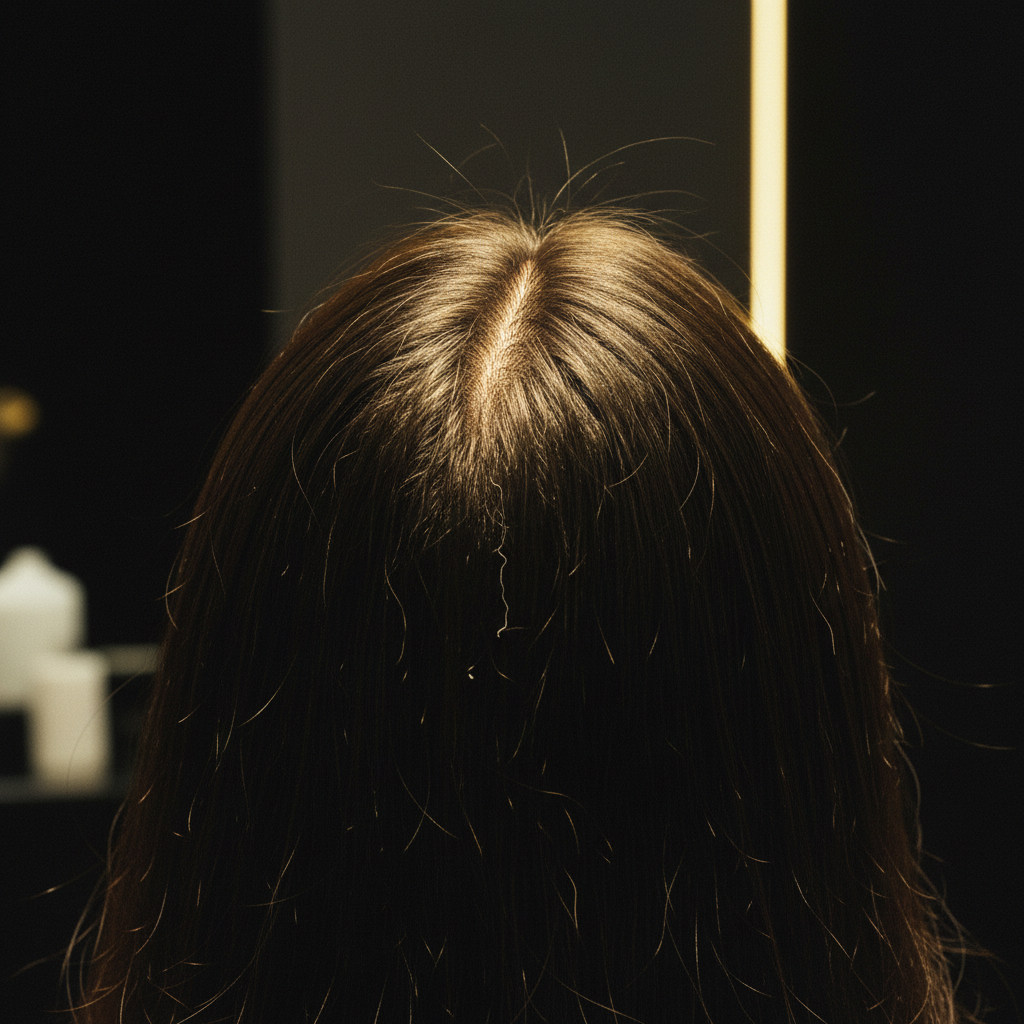
Quick answer: Recognising the early signs of hair follicle damage is vital for preserving long-term growth, as sustained follicular stress can eventually lead to irreversible scarring. Common indicators include persistent scalp tenderness, localised redness, perifollicular scaling, textural thinning known as miniaturisation, and increased daily shedding. Because early damage often mimics benign breakage or temporary telogen effluvium, clinical evaluation using dermoscopy is the most reliable method to assess follicular viability before permanent fibrosis occurs.
Key takeaways
- Follicle damage differs fundamentally from shaft breakage: damage at the root threatens future hair production, while breakage simply shortens existing fibres.
- Early warning signs include sensory cues such as scalp tenderness, itching, or burning alongside visible signs like redness and collar-like scales around hair exits.
- Follicular miniaturisation, where hairs emerge progressively finer and shorter, is a prime marker of androgenic or inflammatory stress.
- Mechanical tension, untreated scalp inflammation, harsh chemical processing, and autoimmune disorders are primary drivers of root stress.
- Catching these signs early offers the best prognosis, as fully fibrosed or scarred follicles cannot regenerate naturally.
Early Signs of Hair Follicle Damage: what the evidence shows
Identifying the early signs of hair follicle damage requires looking beneath the hair shaft to the dermal environment. The hair follicle is a complex, metabolically active mini-organ embedded within the dermis and subcutaneous fat. When subjected to physical traction, chemical injury, or internal inflammatory cascades, the follicle undergoes micro-trauma long before it ceases production entirely.
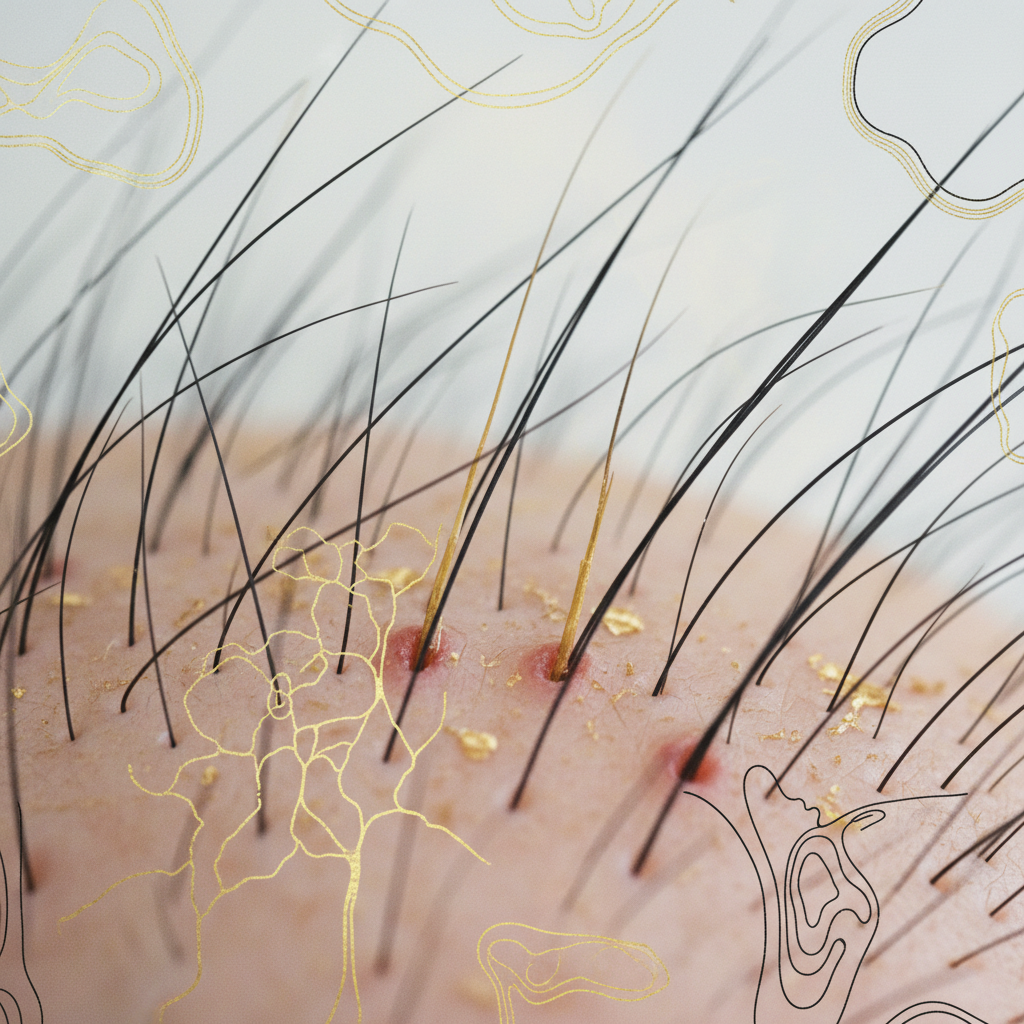
Dermatological research shows that early damage presents in two main ways: sensory symptoms and structural alterations. Sensory symptoms frequently precede physical thinning. Patients often report trichodynia (a painful, stinging, or aching sensation across the scalp) which correlates with neurogenic inflammation around the upper follicular infundibulum.
Structurally, early follicular injury alters the hair growth cycle. The follicle shortens its anagen (growth) phase and prematurely transitions into catagen (regression) and telogen (resting). At the surface, this manifests as perifollicular erythema (redness ringing the follicle base) and follicular keratosis (tiny keratin plugs or scale buildup). If the underlying cause remains unaddressed, the stem cell niche in the follicular bulge may become compromised, leading to permanent fibrous tract formation.
Visible and sensory signs to monitor
Follicles do not usually fail overnight. Instead, they signal distress through progressive physical markers:
1. Perifollicular erythema and scaling
Healthy scalp skin looks uniform in colour and texture. When follicles experience stress, inflammatory cells gather around the follicular opening. Under close inspection, this shows up as tiny rings of redness, mild swelling, or translucent "casts" clinging to the hair base.
2. Scalp tenderness, burning, or itch
A tender or burning scalp is not just skin irritation. It frequently points to neurogenic inflammation linked to traction, harsh topical products, or early cicatricial (scarring) alopecia. Persistent discomfort when moving your hair is a clear warning sign.
3. Progressive miniaturisation
When a follicle sustains micro-injury or hormonal stress from dihydrotestosterone (DHT), it produces a thinner, weaker fibre in each successive cycle. If you notice patches where hairs are markedly finer, lighter in pigment, or shorter than the surrounding strands, miniaturisation is active.
4. Loss of follicular groupings
Human scalp hair naturally emerges from the skin in follicular units containing 2 to 4 hairs each. An early indicator of follicular attrition is the reduction of these units to single-hair exits across the scalp surface.
5. Sudden shedding with intact bulbs
Shedding more than your typical 50 to 100 hairs daily can be a temporary telogen shift. However, if shedding is accompanied by scalp pain or noticeable thinning at the hairline and crown, it may point to acute follicular distress.
Differentiating follicle damage from shaft breakage
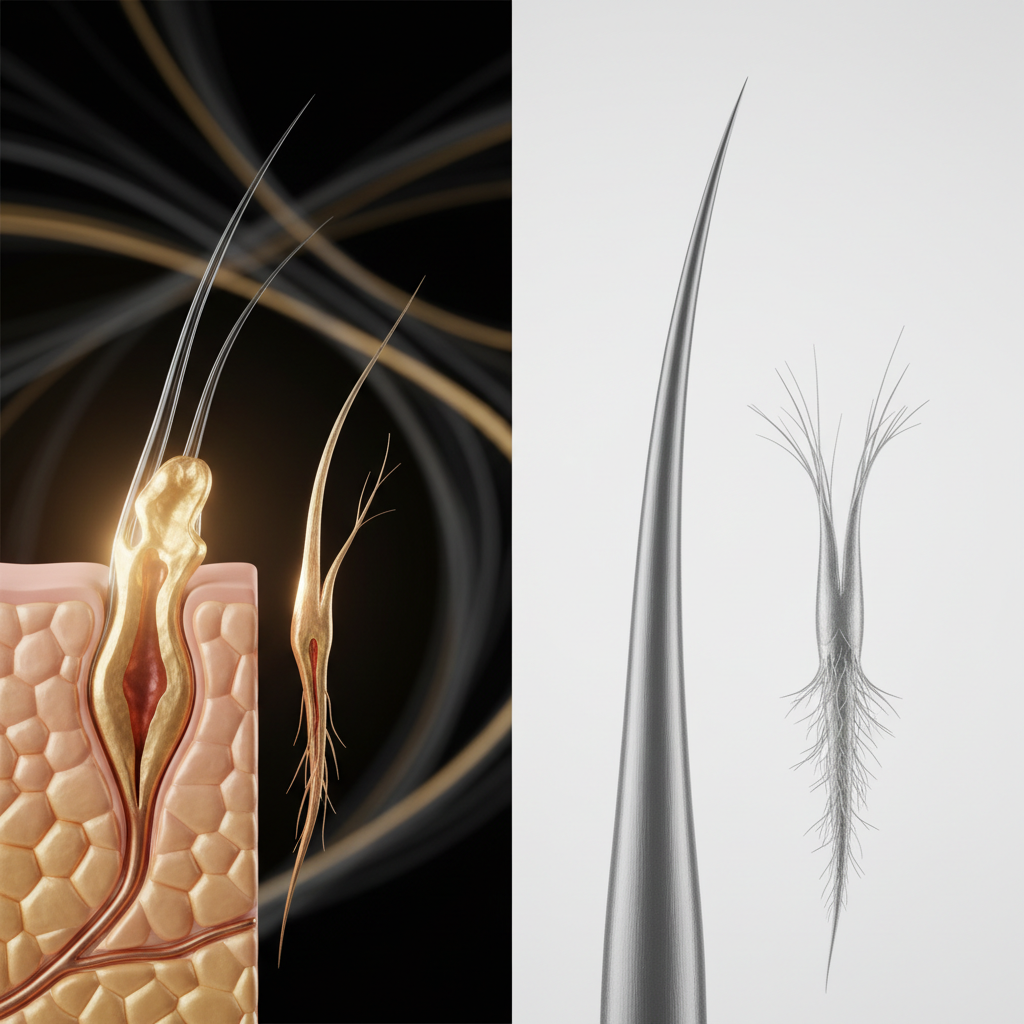
One of the most common errors in haircare is confusing snapped hair fibres with genuine follicular loss. The table below outlines how to tell these issues apart:
| Feature | Hair fibre breakage | Hair follicle damage |
|---|---|---|
| Origin point | Along the hair shaft | Within the dermis at the root |
| Shed root bulb | Absent (ends are blunt, split, or frayed) | Present (small white or clear bulb visible) |
| Scalp sensation | Normal, no tenderness | Frequent tenderness, itching, or burning |
| Hair thickness | Shaft diameter remains uniform until snapped | Shaft becomes progressively finer (miniaturised) |
| Regrowth potential | Immediate; follicle continues active growth | At risk; requires removal of the underlying stressor |
| Primary causes | Heat styling, bleach, friction, mechanical brush damage | Tight hairstyles, scalp disorders, chemicals, autoimmune shifts |
Primary mechanisms driving follicle distress
Understanding what compromises follicle health allows for targeted prevention. Three main physical mechanisms cause early damage:
Mechanical stress (Traction)
Sustained pulling from tight ponytails, braids, extensions, or heavy dreadlocks exerts continuous mechanical tension on the dermal papilla. This triggers micro-tears in the outer root sheath, leading to localized ischemia (reduced blood supply) and traction alopecia. Catching this early, when you see small "traction bumps" (folliculitis) along the hairline, prevents permanent loss.
Chemical burns and barrier disruption
Strong alkaline relaxers (often exceeding pH 12) or high-volume peroxide bleaches can breach the epidermal barrier if left on the scalp too long. Direct chemical contact inflames the upper follicle. Early signs include weeping, crusting, and sudden burning sensations during or after salon treatments.
Microbial and inflammatory imbalance
Conditions such as seborrhoeic dermatitis, scalp psoriasis, or folliculitis involve an overgrowth of yeast (such as Malassezia) or bacteria, paired with an exaggerated immune response. The resulting inflammation generates reactive oxygen species that stress the hair matrix cells.
What the evidence does not show
Popular haircare discussions often exaggerate or misinterpret the causes of follicle injury:
- Wearing hats does not suffocate follicles. Hair follicles receive their oxygen and nutrients from micro-capillaries within the bloodstream, not from the surrounding air. A clean, properly fitting hat does not damage follicles.
- Normal shampooing does not cause root damage. Cleansing with well-formulated, pH-balanced shampoos (pH 4.5 to 5.5) cleanses sebum and debris. The hairs that shed during washing were already detached in the telogen phase days prior.
- Cosmetic products cannot resurrect scarred follicles. Once a follicle has undergone complete fibrosis, topical oils, serums, or natural extracts cannot regenerate the lost stem cell population. Early intervention is the only viable window.
Practical steps to protect distressed follicles
If you notice early signs of follicular strain, adjust your routine immediately to relieve physical and environmental pressure:
- Eliminate mechanical tension: Loosen hairstyles immediately. Avoid tight clips, heavy extensions, or tight sleeping caps. Give your scalp regular rest periods free from tension.
- Review your washing routine: Wash your scalp regularly to prevent sebum oxidation and microbial proliferation. A clean, balanced scalp provides the optimal environment for follicular recovery.
- Avoid harsh in-salon processing: Pause chemical straightening, perms, and direct-to-scalp bleaching until the scalp has completely returned to normal health.
- Resist scalp picking or scratching: Aggressive scratching introduces bacteria into stressed follicles, turning mild inflammation into scarring folliculitis.
- Support the surface environment: Use gentle, soothing topicals that respect the natural acid mantle of the scalp without clogging follicular openings.
Supporting scalp vitality with Watermans
When addressing early, reversible follicle fatigue, maintaining a calm, nutrient-dense scalp environment is essential. Watermans designed the GrowMe system with this specific goal in mind. Formulated with dynamic ingredients such as biotin, caffeine, rosemary extract, niacinamide, and allantoin, GrowMe helps maintain scalp hygiene, improves the feel of hair density, and soothes the epidermal surface.
While cosmetic shampoos cannot reverse clinical, scarring alopecias or repair dead follicles, keeping the scalp clean, invigorated, and balanced gives viable, stressed follicles the best possible external conditions to thrive.
When to seek clinical evaluation
You should consult a board-certified dermatologist or qualified trichologist if you notice any of the following symptoms:
- Severe scalp pain, intense burning, or visible pustules around the hair bases.
- Patchy loss where the scalp skin looks shiny, smooth, or completely devoid of follicular pores.
- Rapid, unexplained shedding that lasts longer than 8 to 12 weeks.
- Persistent scaling or thick crusts that resist ordinary anti-dandruff shampoos.
A specialist can use a trichoscope (a specialized dermatoscope for hair) to examine your follicles at 20x to 70x magnification, accurately differentiating between reversible stress and conditions that require prescription intervention.
Frequently asked questions about Early Signs of Hair Follicle Damage
Can hair follicles recover after early signs of damage appear?
Yes, provided the damage has not progressed to complete scarring (fibrosis). If you address issues like mechanical traction, mild chemical irritation, or seborrhoeic inflammation promptly, the follicle retain its stem cell reserves and can resume normal hair production.
What do the early signs of hair follicle damage feel like?
Early signs typically feel like localized soreness, stinging, tenderness when brushing or moving the hair, or a persistent itchy sensation. This discomfort, known as trichodynia, reflects inflammation around the nerve endings of the upper follicle.
How can I tell if my hair follicle is dead or just dormant?
A dormant follicle remains visible under close inspection as a tiny indentation or pore on the scalp surface, even if the hair is missing. A damaged follicle that has progressed to scarring leaves the scalp surface smooth, shiny, and completely free of visible follicular openings.
Does scalp redness always mean follicle damage?
Not always. Mild redness can stem from temporary contact irritation, sunburn, or temperature changes. However, persistent redness concentrated specifically around the follicular openings (perifollicular erythema) is a recognized warning sign of active follicular stress.
Can tight hairstyles permanently harm follicles?
Yes. Chronic tension causes traction alopecia. It begins with reversible perifollicular inflammation and small bumps, but if the mechanical stress continues over months or years, it can destroy the follicle and replace it with fibrous scar tissue.
Protecting your follicles for the future
Recognising the early signs of hair follicle damage gives you the best opportunity to protect your hair before minor stress becomes permanent loss. By paying close attention to scalp sensations, monitoring changes in hair calibre, avoiding excessive mechanical tension, and maintaining a healthy scalp barrier, you can intervene while your follicles are fully capable of recovery. If you ever see signs of scarring, persistent redness, or severe tenderness, arrange a clinical evaluation promptly to safeguard your long-term follicular health.
Sources and references
- British Association of Dermatologists. Guidelines for the management of alopecia areata and scarring alopecias.
- NHS UK. Hair loss (alopecia) causes and treatments.
- Journal of the American Academy of Dermatology. Dermoscopic features of hair and scalp disorders.
- International Journal of Trichology. Trichoscopy in the diagnosis of hair and scalp diseases.
- World Health Organization. International Classification of Diseases, 11th Revision (ICD-11): Alopecia and follicular disorders.
Find these ingredients in Watermans products
- Biotin: you will find this ingredient in our Hair Growth Shampoo.
- Niacinamide: you will find this ingredient in our Hair Mask.