Difference Between Hair Breakage and Hair Shedding: An Evidence-Based Guide
9 min read ·
Understand the true difference between hair breakage and hair shedding, how to inspect your fallen strands, and how to address each issue effectively.
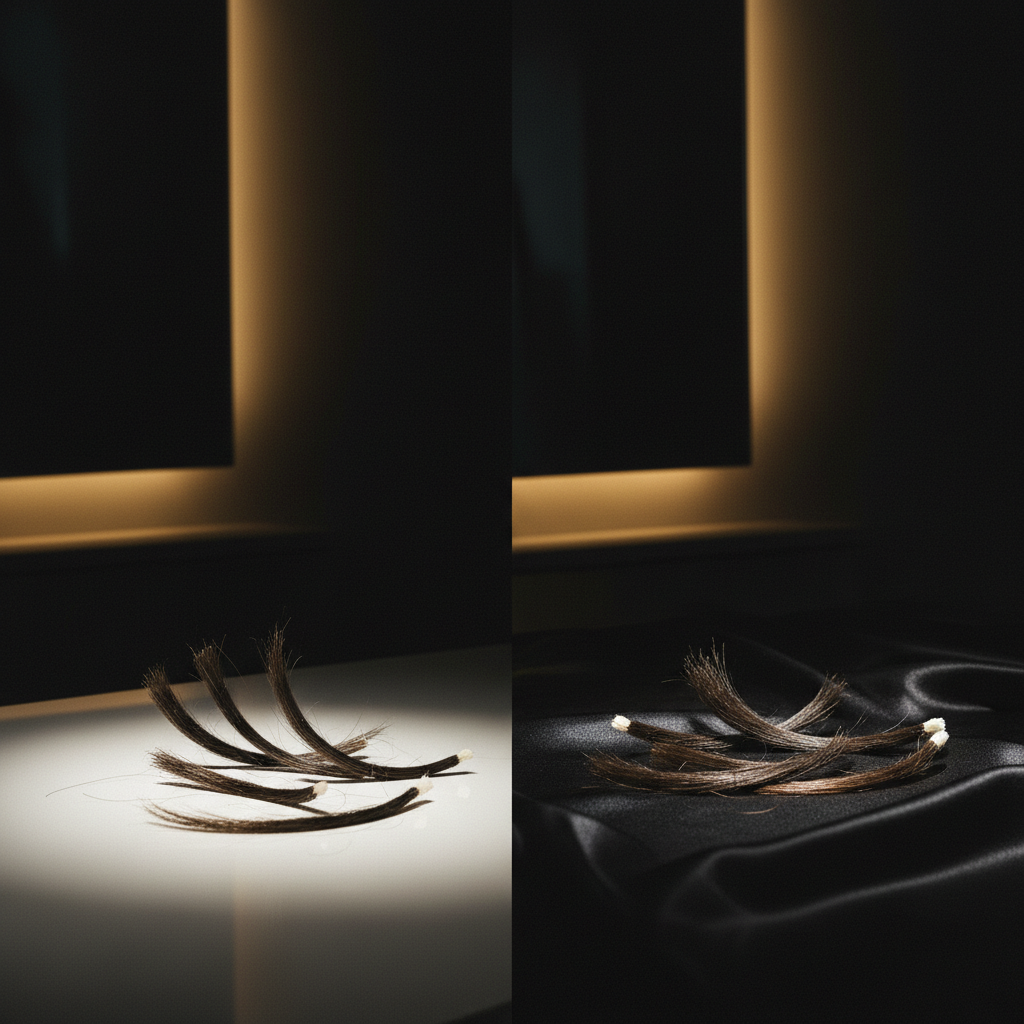
Quick answer: The Difference Between Hair Breakage and Hair Shedding comes down to where the hair separates. Shedding occurs at the scalp follicle, releasing a full-length strand complete with a tiny white bulb (the keratinised hair root) as part of the natural hair growth cycle. Breakage is structural failure along the hair shaft itself, producing uneven, shorter pieces without a bulb. However, both issues can happen at the same time, which often complicates identifying the true underlying cause without close inspection.
Key takeaways
- Shedding is a biological process where hair releases naturally from the follicle, typically averaging 50 to 100 strands per day.
- Breakage is physical or chemical fracture along the hair fibre, leaving jagged ends and shorter fragments without a follicular bulb.
- Shed hairs match your current hair length, whereas broken hairs are shorter, uneven, and often accompanied by split ends.
- Shedding cannot be fixed by cosmetic conditioning treatments alone, as it stems from internal biological or follicular triggers.
- Breakage responds well to mechanical adjustments, moisture balancing, and structural care that preserves the integrity of the hair cuticle.
Difference Between Hair Breakage and Hair Shedding: what the evidence shows
The distinction between shedding and breakage relies on biological cycles versus material science. Shedding is driven by the hair follicle cycling through anagen (growth), catagen (transition), and telogen (resting) phases. In healthy adults, roughly 85 to 90 percent of scalp follicles reside in anagen, while around 9 to 10 percent sit in telogen. At the end of telogen, the strand enters exogen and releases from the follicular canal.
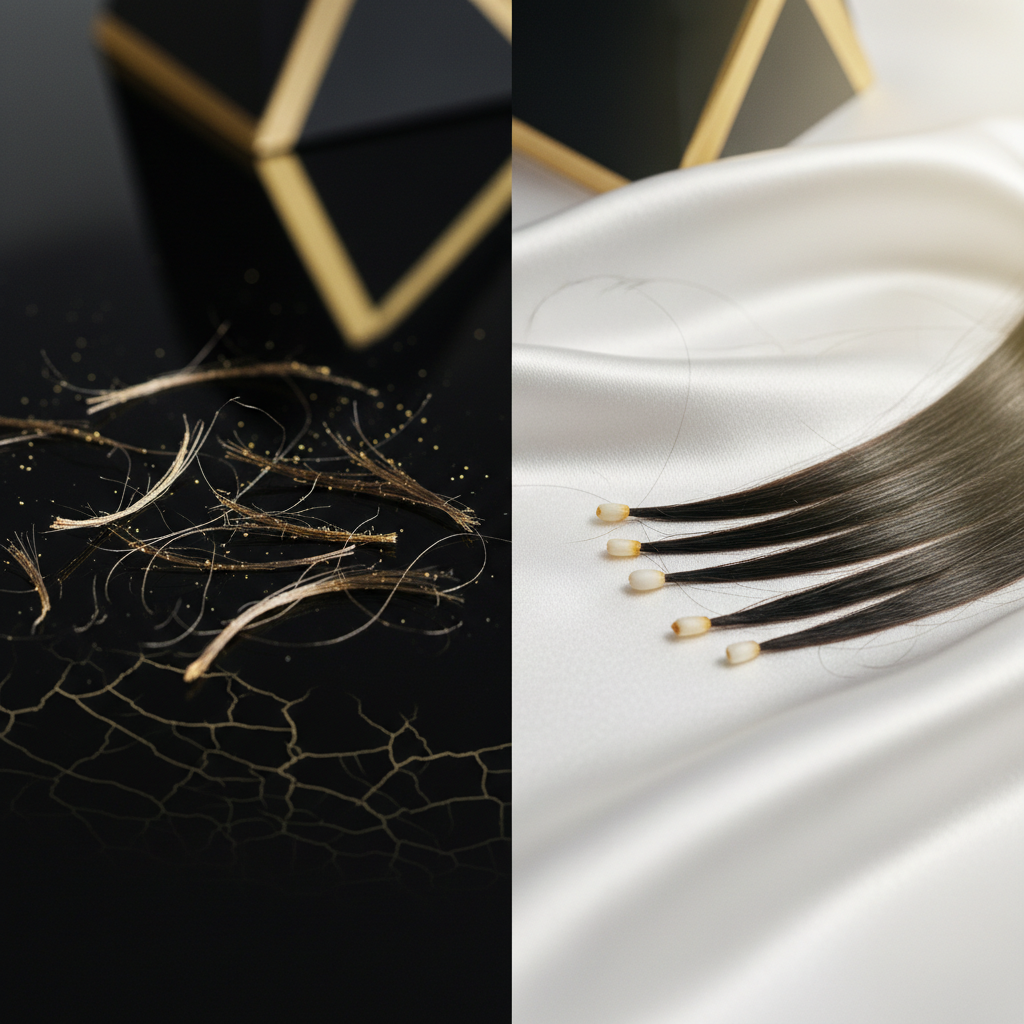
Breakage, by contrast, involves the failure of the hair fibre's mechanical structure. The outer layer of the hair, the cuticle, consists of overlapping, flattened cells rich in cross-linked cysteine bonds. When the cuticle suffers physical friction, chemical stripping from bleach or permanent dye, or thermal degradation from styling tools heated above 180 degrees Celsius, it chips away. Once the inner core, the cortex, is exposed, the tensile strength drops sharply. Everyday handling such as detangling, brushing, or friction against clothing then snaps the cortex.
 HAIR SHEDDING HAIR BREAKAGE
 (Follicular / Natural Cycle) (Structural Fibre Fracture)

 [ Tiny White Bulb ] [ No Bulb ]
 | |
 | (Full length | (Shorter piece
 | matches your | snapped along
 | growth) | the shaft)
 | |
 [ Natural Tip ] [ Jagged / Split End ]
Comparing Shedding and Breakage
| Feature | Hair Shedding | Hair Breakage |
|---|---|---|
| Origin point | Follicle opening at the scalp | Anywhere along the hair shaft |
| End appearance | Features a tiny white keratinised bulb | Jagged, frayed, or split ends; no bulb |
| Strand length | Full length of your current hair | Shorter, variable lengths |
| Normal baseline | 50 to 100 strands per day | Minimal to none with gentle handling |
| Primary causes | Hormonal shifts, stress, nutritional gaps, cycle completion | Heat tools, chemical processing, physical traction, mechanical friction |
| Response to topical care | Conditioners and serums do not stop biological cycle release | Improves with conditioning agents, lower heat, and friction reduction |
What the evidence does not show
Controlled research does not support the idea that cosmetic shampoos, scalp oils, or leave-in serums can physically "glue" broken hair back together permanently. Some cosmetic ingredients, like hydrolysed proteins and conditioning silicones, can temporarily fill microscopic cracks and smooth the cuticle to prevent future snaps. Yet, once a fibre suffers an irreversible transverse fracture, that specific strand cannot be repaired.
Similarly, evidence does not show that vigorous brushing stimulates the scalp enough to prevent biological shedding. In reality, aggressive brushing simply increases mechanical breakage across vulnerable strands while pulling out telogen hairs prematurely. There is also no published evidence that washing your hair causes shedding. Shampooing merely dislodges hairs that have already detached from the dermal papilla days or weeks earlier.
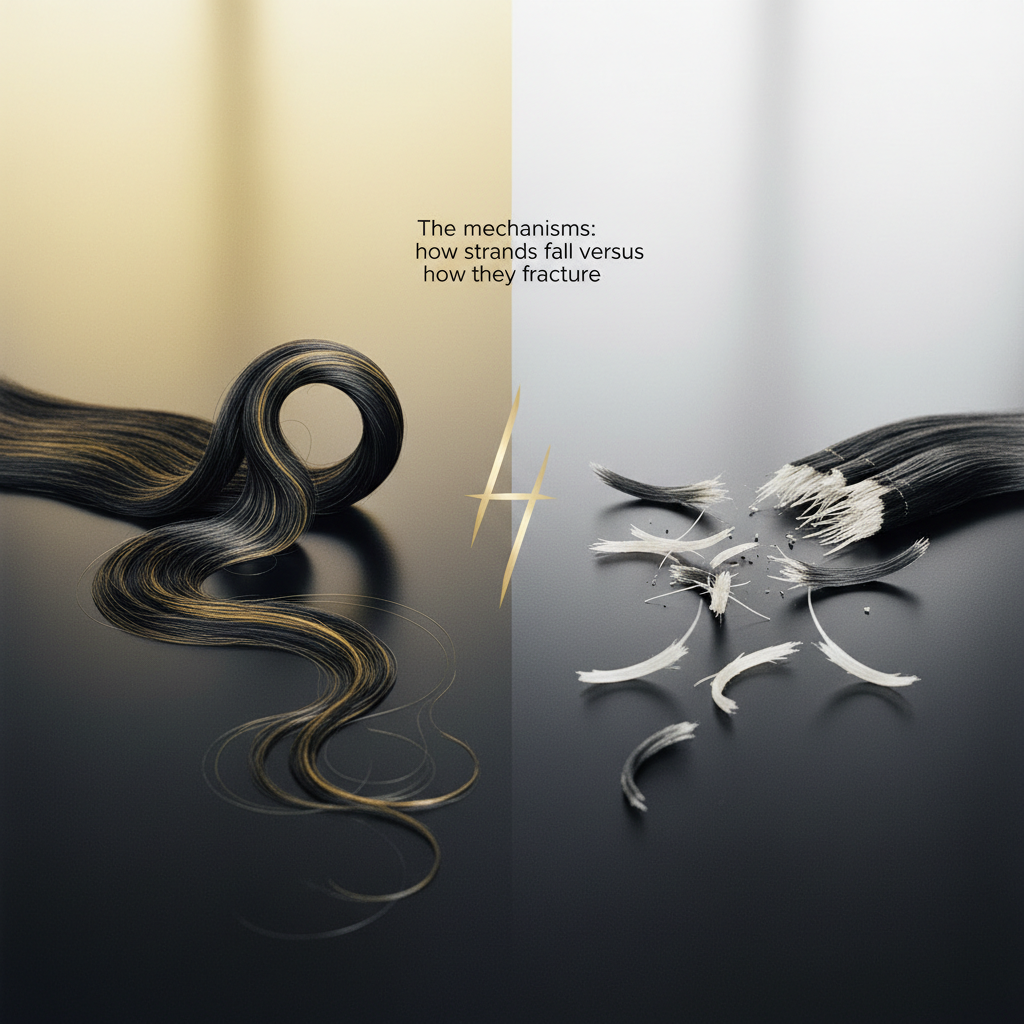
The mechanisms: how strands fall versus how they fracture
To understand why your hair ends up on the floor, you have to look closely at the physics and biology of the hair strand.
The biological shedding pathway
Every human follicle functions independently. Once the anagen phase ends (which can last anywhere from 2 to 7 years), the dermal papilla regresses. The hair enters the catagen phase for 2 to 3 weeks before settling into telogen for approximately 2 to 3 months.
During the late telogen or early exogen phase, the anchor holding the base of the hair loosens. The proximal end forms a tiny, hard club (the telogen bulb) composed of keratinised cells. When the hair separates, this club exits the scalp cleanly. Because this occurs at skin level, the strand reflects the true, full length of your hair.
The mechanical breakage pathway
A single healthy hair fibre can withstand significant mechanical pull, supporting roughly 50 to 100 grams of weight before snapping. However, that strength relies entirely on the structural integrity of the cortex and its alpha-keratin chains.
When you expose hair to high alkaline treatments (such as relaxers at pH 11 to 13 or permanent hair dyes), the protective cuticle scales swell open, dissolving natural lipids like 18-methyleicosanoic acid (18-MEA). When moisture leaves the cortex, the fibre becomes brittle. Combine that with mechanical tension, such as tight elastics or rough detangling, and the stress exceeds the fibre's elastic limit. The hair snaps across the shaft, leaving behind blunt, split, or frayed ends without a root bulb.
Signs to look for: how to self-check your strands
You can easily determine whether you are dealing with shedding, breakage, or both by running a simple physical test on the hairs you find.
- Collect a sample: Pick 5 to 10 shed or broken strands from your brush, shower drain, or pillowcase.
- Examine the ends: Look closely at both tips of each strand under bright light. A dark background helps.
- Check for the bulb: Look for a tiny, off-white or translucent speck on one tip. If it is present, that hair shed naturally from the follicle.
- Compare the length: Stretch the strand alongside your natural hair length. If it is significantly shorter than the surrounding hair and has no bulb, it is a broken fragment.
- Feel the texture: Run your fingers along the strand. Broken hair often feels rough, knobby, or thin near the ends, which indicates cuticle loss or split ends (trichoptilosis).
What you can do to address each issue
Because the mechanisms differ completely, your plan of action must target the specific issue you identify.
Managing hair breakage
- Minimise thermal stress: Keep hot tools below 180 degrees Celsius and always use a heat protectant. Water vapour expansion inside the cortex can cause bubble hair deformity if heated too rapidly.
- Support cuticle lubrication: Use rinse-out conditioners and leave-in products with fatty alcohols and cationic surfactants (such as cetrimonium chloride). These smooth the cuticle and cut down on wet-combing friction.
- Handle wet hair gently: Hair is weakest when wet, stretching up to 30 percent beyond its resting length before irreversible damage occurs. Use a wide-tooth comb or your fingers, starting at the tips and working upward.
- Protect against friction: Sleep on smooth materials like silk or satin pillowcases to prevent overnight fibre friction.
Managing hair shedding
- Review your timeline: If you notice sudden, diffuse shedding (telogen effluvium), look back 2 to 3 months. High fevers, rapid weight loss, severe psychological stress, and postpartum hormonal shifts commonly push hairs into telogen early.
- Check foundational nutrition: Ferritin (iron storage), vitamin D, and zinc play essential roles in follicular cell turnover. If levels are low, discuss supplementation with a GP.
- Keep scalp care gentle: Wash your scalp regularly to clear sebum, product build-up, and environmental debris without scrubbing aggressively.
When the cause may be something else
Sometimes shedding or breakage is a sign of an underlying medical condition rather than daily wear or typical biological turnover:
- Androgenetic alopecia: This causes progressive follicular miniaturisation. You will notice shorter, finer hairs falling out primarily around the temples, hairline, or crown, rather than an even, sudden shed.
- Alopecia areata: An autoimmune issue that leads to distinct, round, smooth patches of hair loss. It often presents with "exclamation point" hairs that taper near the scalp.
- Trichorrhexis nodosa: A condition where swollen nodes form along the hair shaft, making the strand snap under minimal tension. It can be inherited or brought on by severe chemical processing.
- Traction alopecia: Caused by prolonged mechanical tension from tight braids, ponytails, or extensions, which pulls hairs from the follicle while also causing breakage along the hairline.
When to get professional advice
Reach out to a GP, dermatologist, or qualified trichologist if you notice:
- Sudden, heavy shedding that persists for more than 6 to 8 weeks.
- Visible, patchy bald spots or an expanding, widening part line.
- Redness, scaling, burning, pain, or intense itching across the scalp.
- Unexplained fatigue, unexpected weight shifts, or heavy periods alongside your hair changes.
A professional can perform a dermoscopic evaluation (trichoscopy), review your blood markers, or carry out a standardised pull test to accurately pinpoint the issue.
Supporting hair resilience with Watermans
When managing daily strand resilience, supporting both the scalp environment and the hair fibre is key. The Watermans Grow Me range delivers targeted cosmetic support designed to keep hair looking healthy and strong. Formulated with hydrolysed lupin protein, biotin, caffeine, and rosemary extract, the blend cleanses the scalp gently without stripping away moisture.
For strands prone to mechanical snapping, the accompanying conditioner helps smooth the cuticle, reducing friction and everyday breakage during detangling. This routine helps maintain clean, fuller-looking hair and keeps the shaft protected against mechanical stress.
Frequently asked questions about Difference Between Hair Breakage and Hair Shedding
How can I quickly spot the Difference Between Hair Breakage and Hair Shedding?
Check the end of the strand under bright light. A shed hair has a tiny white or clear bulb on one tip and matches your full hair length. A broken hair is shorter than your normal length, lacks a root bulb, and usually has a blunt, split, or uneven end.
Is it normal to have both breakage and shedding simultaneously?
Yes. It is entirely common to experience everyday shedding (50 to 100 telogen hairs per day) alongside breakage caused by heat styling, colour treatments, or rough brushing. Identifying which problem is dominant helps you pick the right hair care approach.
Can a damaged hair cuticle increase biological shedding?
No. Cuticle damage occurs on the dead hair fibre outside the scalp, which leads directly to breakage. It does not alter the biological hair cycle inside the follicle. However, rough detangling of knotted, damaged hair can physically pull resting hairs out earlier than intended.
How long does it take to stop excessive hair shedding?
If shedding is triggered by a temporary shock like illness, fever, or acute stress (acute telogen effluvium), it usually settles on its own within 3 to 6 months once the trigger resolves. Breakage, on the other hand, stops as soon as you remove the physical or chemical stresses causing the structural snaps.
Does cutting your hair stop hair shedding?
Cutting your hair does not stop hair shedding because shedding originates below the scalp inside the follicle. A haircut does, however, remove split and weakened ends, which instantly reduces hair breakage and helps the hair look thicker and healthier overall.
Understanding your hair's needs
Evaluating the Difference Between Hair Breakage and Hair Shedding is the first step toward building an effective hair routine. By checking your fallen strands for the presence of a follicular bulb and assessing their length, you can easily tell biological shedding apart from mechanical breakage. Focus on internal balance, gentle handling, and targeted cosmetic care to keep your hair resilient from root to tip.
Sources and references
- British Association of Dermatologists. Telogen Effluvium: An Information Leaflet for Patients. 2021.
- Sinclair, R. Healthy hair: what is it? Journal of Investigative Dermatology Symposium Proceedings, 2007. DOI: 10.1038/sj.jidsymp.5650046.
- Robbins, C. R. Chemical and Physical Behavior of Human Hair. 5th edition. Springer-Verlag, 2012.
- Dawber, R. Hair and Scalp Disorders: Common Presenting Signs, Differential Diagnosis and Management. Martin Dunitz, 2001.
- National Institute for Health and Care Excellence (NICE). Alopecia: Clinical Knowledge Summary. 2022.
Find these ingredients in Watermans products
- Biotin: you will find this ingredient in our Hair Growth Shampoo.
- Zinc: you will find this ingredient in our Hair Vitamins.