The Role of DHT in Pattern Hair Loss: Mechanisms and Science
8 min read ·
Understand The Role of DHT in Pattern Hair Loss: explore the biology of follicular miniaturisation, genetics, and how to tell hair loss from breakage.

Quick answer: Understanding The Role of DHT in Pattern Hair Loss centres on genetics and hormonal sensitivity, not sheer hormone volume. Dihydrotestosterone (DHT) binds to androgen receptors in genetically susceptible scalp follicles, triggering progressive follicular miniaturisation that shortens the anagen growth cycle and produces finer fibres over time. However, DHT is not a universal poison; circulating levels are often entirely normal in individuals experiencing thinning, meaning genetic receptor sensitivity dictates the process rather than systemic hormone excess alone.
Key takeaways
- DHT is a potent androgen synthesised from testosterone by the intracellular enzyme 5-alpha reductase (primarily Type II in hair follicles).
- Follicular miniaturisation occurs when DHT binds to androgen receptors in genetically predisposed follicles, steadily shrinking the dermal papilla.
- Pattern hair loss (androgenetic alopecia) is driven by local receptor sensitivity and gene expression, not necessarily elevated blood testosterone or DHT levels.
- Follicular hair loss from DHT is clinically distinct from diffuse hair shedding (telogen effluvium) and structural fibre breakage along the shaft.
- Therapeutic interventions focus on inhibiting 5-alpha reductase or blocking androgen binding, whereas cosmetic haircare supports scalp condition and fibre resilience without altering systemic hormones.
The Role of DHT in Pattern Hair Loss: what the evidence shows
Peer-reviewed dermatological research confirms that androgenetic alopecia requires both circulating androgens and an inherited genetic predisposition. Dihydrotestosterone is roughly five times more potent than testosterone in its binding affinity for the androgen receptor. When DHT binds to susceptible follicular cells, it alters gene transcription, setting off a cascade that shortens the anagen (growth) phase of the hair cycle and prolongs the kenogen phase (the interval where the follicle remains empty between telogen shedding and new anagen emergence).
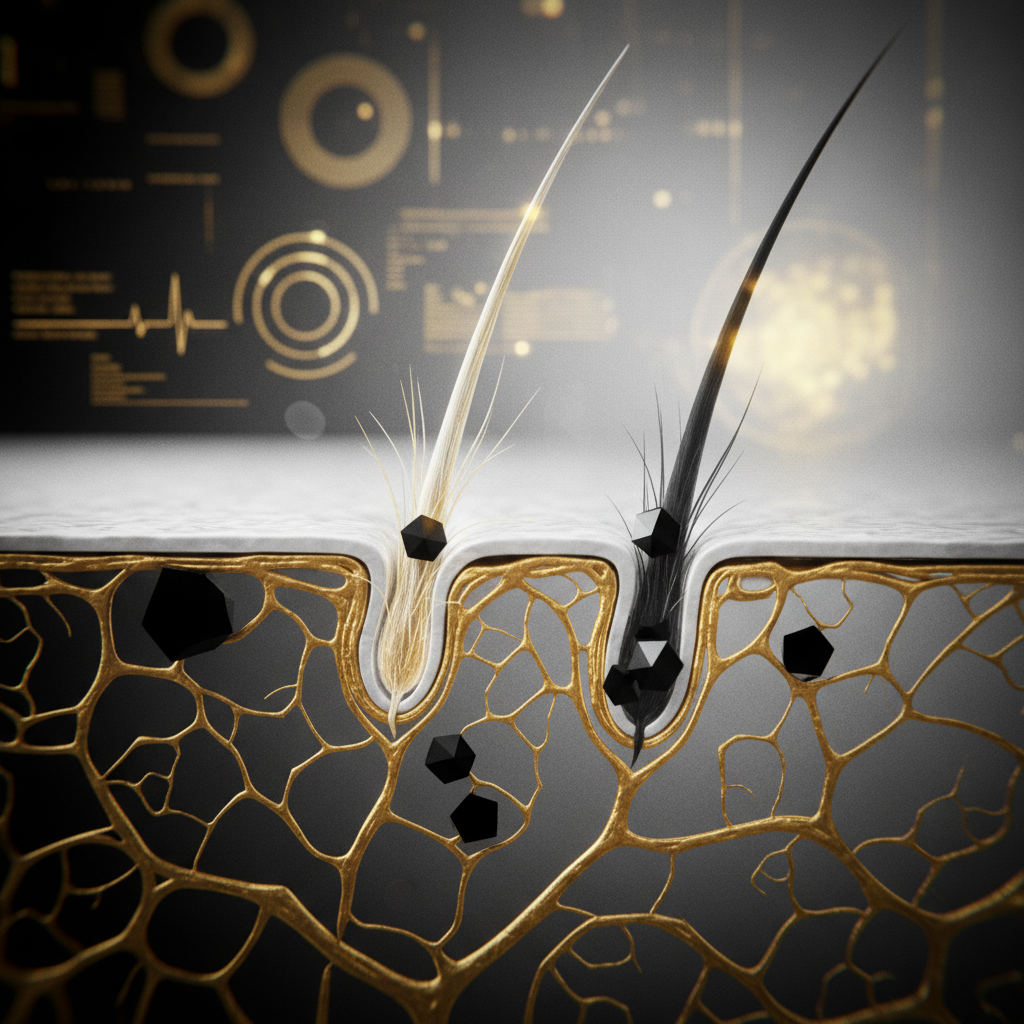
Over successive cycles, affected follicles produce shorter, finer terminal hairs. Eventually, these follicles regress into vellus-like structures that produce barely visible, non-pigmented fibres. This biological pathway represents the primary mechanism behind The Role of DHT in Pattern Hair Loss in both men and women, though phenotypic presentation differs by sex. In men, loss typically follows the Hamilton-Norwood scale, receding at the temples and vertex. In women, loss usually follows the Ludwig pattern, showing diffuse thinning across the mid-scalp while preserving the frontal hairline.
Testosterone + 5-Alpha Reductase (Type II)
 │
 ▼
 Dihydrotestosterone (DHT)
 │
 ▼
 Binds to Androgen Receptors
 (Genetically Susceptible Follicles)
 │
 ▼
 Shortened Anagen Phase & Follicular Miniaturisation
 │
 ▼
 Progressive Thinning (Vellus Hair Conversion)
What the evidence does not show
Public discussions around DHT frequently misinterpret endocrine science. Clinical evidence does not support the common assumptions below:
- DHT is not a toxic byproduct: DHT is an essential hormone responsible for male primary sexual differentiation in utero, as well as facial and body hair growth, prostate function, and sebaceous gland regulation during and after puberty.
- Higher circulating DHT does not guarantee hair loss: Men with baldness rarely present with abnormally high serum testosterone or DHT. Conversely, men with high circulating androgens often retain dense scalps if their follicles lack the genetic sensitivity.
- DHT does not cause hair breakage: DHT acts purely inside the living follicle beneath the skin. It does not weaken the external, dead keratin fibre that has already emerged from the scalp. Physical snapping is breakage, not androgenic thinning.
- External dirt or sebum does not cause follicular miniaturisation: While sebum contains trace amounts of DHT, washing your hair does not rinse away genetic follicular sensitivity. Sebum buildup can aggravate conditions like seborrhoeic dermatitis, but it does not drive genetic miniaturisation.
The biological mechanism of miniaturisation
To understand how miniaturisation happens, you have to look at the dermal papilla at the base of the hair follicle. Testosterone diffuses into the dermal papilla cells from surrounding capillary beds. Inside the cell cytoplasm, the enzyme 5-alpha reductase converts it into DHT.
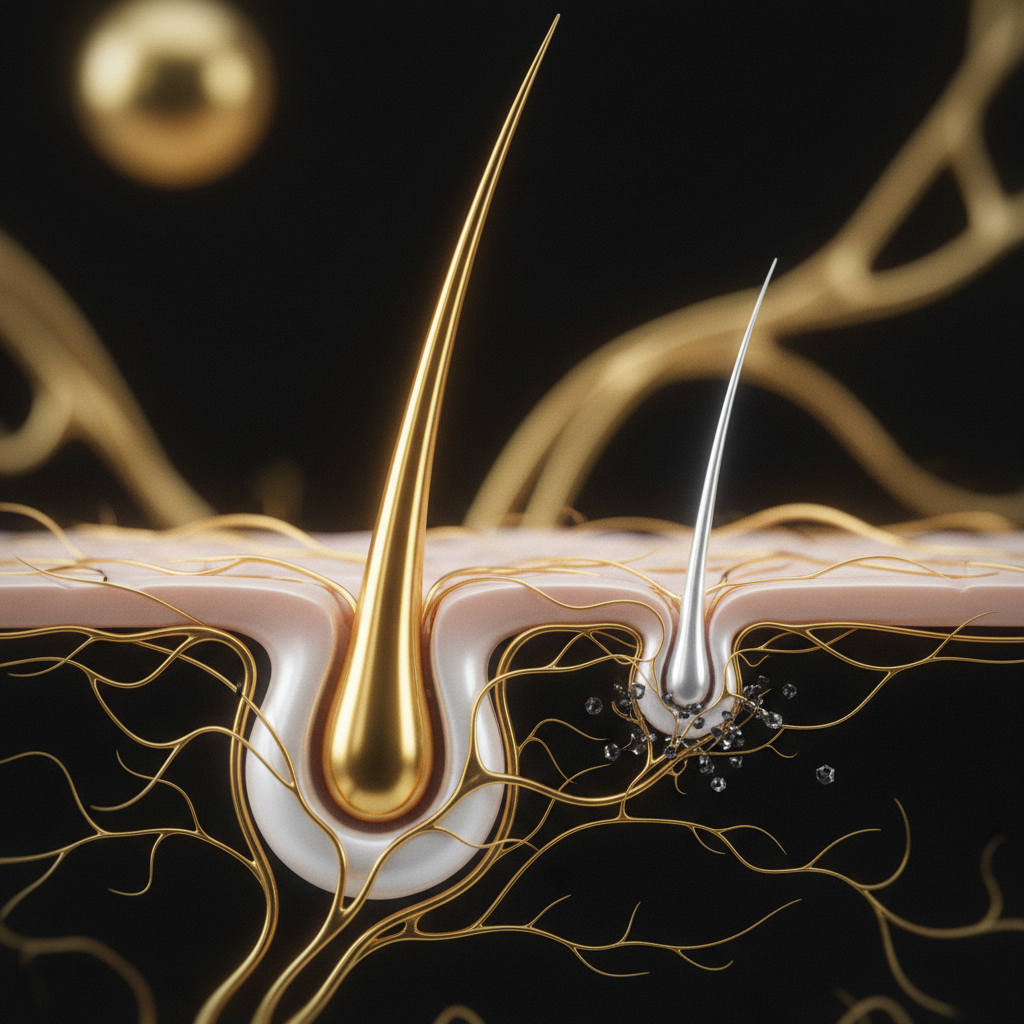
Once formed, DHT binds directly to the intracellular androgen receptor. This hormone-receptor complex then translocates to the cell nucleus, where it binds to DNA and regulates the transcription of specific growth factors. In sensitive follicles, DHT upregulates inhibitory cytokines, notably transforming growth factor-beta 1 and beta 2 (TGF-β1 and TGF-β2), while downregulating positive signals like vascular endothelial growth factor (VEGF).
These signalling shifts disrupt the microvasculature feeding the hair bulb. With each subsequent growth cycle, the duration of anagen drops from its normal three to seven years down to mere months or weeks. Concurrently, the dermal papilla cell count declines, shrinking the physical diameter of the hair fibre until it no longer penetrates the skin surface effectively.
Differentiating hair loss, shedding, and breakage
Managing hair changes requires correctly identifying the underlying issue. Many individuals confuse everyday breakage or stress-induced shedding with androgen-driven loss.
| Feature | Androgenetic Alopecia (DHT-Driven) | Telogen Effluvium (Diffuse Shedding) | Hair Breakage (Fibre Fracture) |
|---|---|---|---|
| Primary cause | Genetic sensitivity to DHT | Systemic shock, illness, stress, diet | Mechanical, chemical, or heat trauma |
| Site of issue | Follicle / dermal papilla | Follicular cycling timing | External hair shaft (cuticle/cortex) |
| Visual pattern | Receding temples, crown, or widening part | Diffuse loss across the entire scalp | Uneven lengths, split ends, fraying |
| Bulb present? | Shed hairs have standard club bulbs; replacements are finer | White keratin bulb present on shed hairs | No bulb attached; blunt or snapped ends |
| Onset speed | Slow, progressive over years | Sudden, noticeable 2 to 3 months post-trigger | Gradual or immediate post-treatment |
| Reversibility | Requires ongoing intervention | Usually self-corrects once trigger resolves | Preventable; requires trimming and conditioning |
The role of cosmetic haircare and Watermans
Cosmetic products cannot alter your systemic endocrine profile, nor should they claim to cure genetic conditions. However, maintaining an optimal scalp environment and strengthening existing hair fibres is essential for anyone experiencing visible thinning.
Watermans focuses on the cosmetic interface of hair management. Shampoos and scalp serums formulated with botanical extracts, caffeine, rosemary, and biotin support scalp hygiene, help clear excess surface sebum, and improve the physical feel of thinning hair. Caffeine, for example, has been studied in topical cosmetic models for its ability to penetrate the follicular infundibulum and support cosmetic vitality. While these products do not replace medical 5-alpha reductase inhibitors prescribed by a doctor, they deliver tangible cosmetic benefits: reinforcing the external hair shaft against breakage, improving combability, and promoting a fuller, denser appearance.
When the cause may be something else
Not all thinning relates to androgens. Assuming every case of hair thinning stems from DHT can lead to delayed care for other medical conditions. You should consider alternative investigations if you observe:
- Patchy, circular bald spots: Discrete, smooth circles often indicate alopecia areata, an autoimmune condition where T-cells target the hair bulb.
- Rapid, high-volume shedding: Losing hundreds of hairs daily in the shower or on your pillow typically points to telogen effluvium, triggered by high fever, thyroid dysfunction, severe nutritional deficiencies (such as ferritin or vitamin D), or medications.
- Scalp inflammation, burning, or scarring: Redness, pustules, intense scaling, or loss of follicular openings suggest cicatricial (scarring) alopecias such as lichen planopilaris or frontal fibrosing alopecia, which require urgent dermatological management to prevent permanent loss.
When to seek medical advice
You should consult a GP, registered trichologist, or dermatologist as soon as you notice changes in your hair density. Early intervention yields substantially better outcomes in genetic thinning because restoring an already atrophied follicle is far more difficult than preserving an active one. A professional can examine your scalp with a dermatoscope to look for follicular diameter diversity (anisotrichosis), the hallmark clinical sign that confirms androgenetic miniaturisation.
Frequently asked questions about The Role of DHT in Pattern Hair Loss
Does washing your hair less frequently stop DHT loss?
No, washing frequency does not influence how DHT interacts with hair follicles. Washing merely dislodges hairs that have already entered the exogen shedding phase. Avoiding washing can lead to sebum accumulation and malassezia yeast overgrowth, worsening scalp irritation without doing anything to curb genetic miniaturisation.
Can women experience hair thinning due to DHT?
Yes, female pattern hair loss involves follicular sensitivity to androgens, including DHT. While women have lower absolute androgen levels than men, hormonal fluctuations during menopause, polycystic ovary syndrome (PCOS), or genetic variations in androgen receptor sensitivity can trigger the identical miniaturisation process across the mid-scalp.
Why does DHT cause scalp hair loss but body hair growth?
The paradoxical role of DHT comes down to site-specific gene programming. In beard, chest, and pubic follicles, DHT activates gene pathways that enlarge follicles and stimulate robust terminal hair growth. In genetically predisposed scalp follicles, DHT triggers inhibitory signals like TGF-β, driving miniaturisation instead.
Can natural oils block DHT completely?
There is no reliable clinical evidence that topical oils, such as rosemary or pumpkin seed oil, can completely block DHT in the scalp the way oral pharmaceutical 5-alpha reductase inhibitors do. While some plant compounds show mild inhibitory activity in laboratory assays, their real-world impact is largely cosmetic, supporting scalp condition and reducing breakage.
What is the most reliable sign of The Role of DHT in Pattern Hair Loss?
The most reliable sign is hair diameter diversity across the affected areas. When examined under magnification, a scalp affected by DHT shows a mixture of thick, intermediate, and very fine vellus hairs in the same zone, rather than a uniform thinning across the entire head.
Summary of DHT and hair health
Understanding The Role of DHT in Pattern Hair Loss demystifies why hair thins with age and genetics. The process is not caused by poor hygiene, reduced blood flow alone, or an excess of circulating hormones, but rather by the targeted genetic sensitivity of hair follicles to normal androgen signals. Managing the condition effectively requires separating systemic follicular changes from surface fibre breakage, using proven medical pathways for genetic progression, and leaning on well-designed cosmetic solutions to keep the scalp healthy and the visible hair strong.
Sources and references
- British Association of Dermatologists. Guidelines for the management of alopecia areata and androgenetic alopecia. British Journal of Dermatology, 2012.
- National Institute for Health and Care Excellence (NICE). Alopecia androgenetica: Clinical Knowledge Summaries. 2021.
- Kaufman, K. D. Androgens and alopecia. Molecular and Cellular Endocrinology, 2002. DOI: 10.1016/s0303-7207(02)00372-6.
- Randall, V. A. Androgens and hair growth. Dermatologic Therapy, 2008. DOI: 10.1111/j.1529-8019.2008.00214.x.
- Inui, S., & Itami, S. Molecular basis of androgenetic alopecia: From androgen to phenotype. Journal of Dermatological Science, 2013. DOI: 10.1016/j.jdermsci.2013.01.003.
Find these ingredients in Watermans products
- Biotin: you will find this ingredient in our Hair Growth Shampoo.
- Vitamin D: you will find this ingredient in our Hair Vitamins.