How to Detangle Afro Hair Without Breakage: An Evidence-Based Guide
12 min read ·
Learning how to detangle afro hair without breakage involves understanding hair structure, using appropriate tools, and employing gentle techniques.
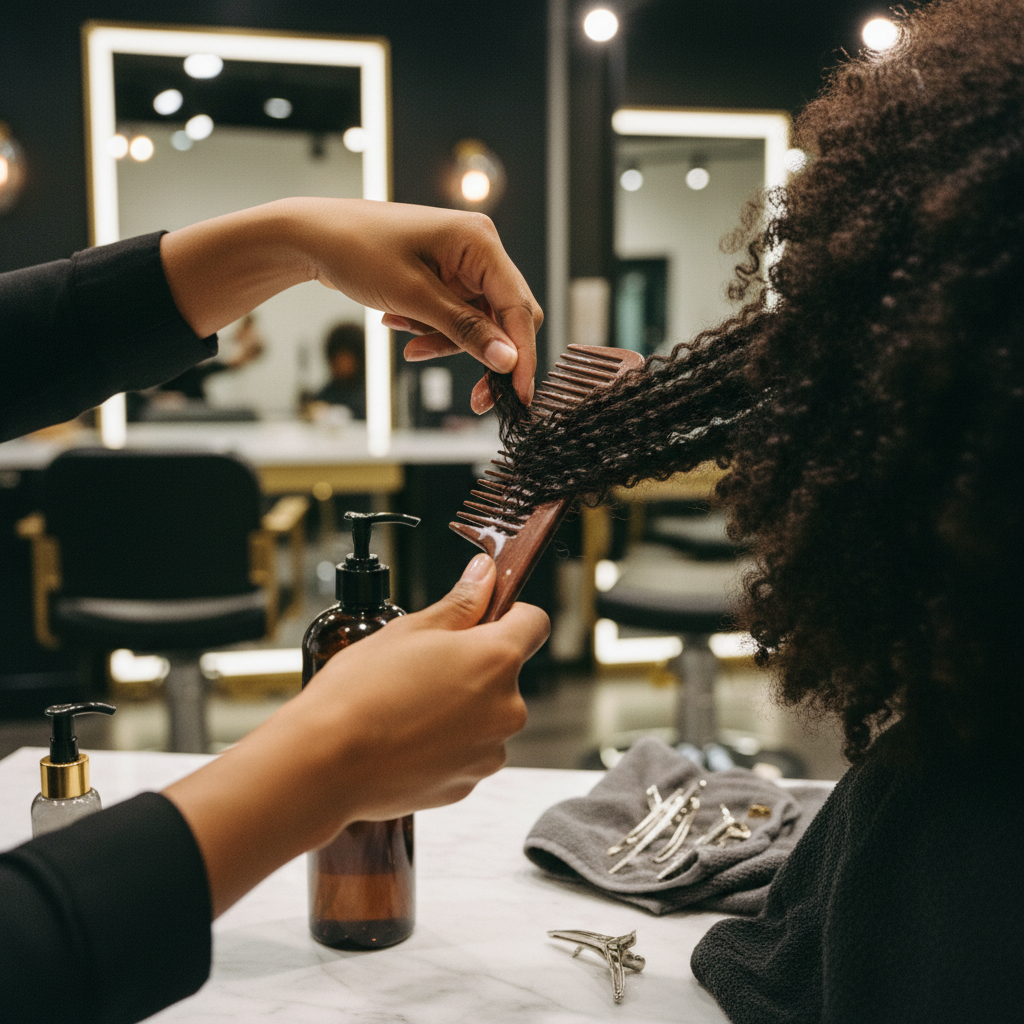
Quick answer: Learning How to detangle afro hair without breakage is crucial for maintaining the health and length of highly textured hair. This process involves moisturising the hair, working in small sections, using suitable detangling tools like wide-tooth combs or fingers, and always starting from the ends and moving upwards to the roots. Its effectiveness largely depends on consistent gentle handling and a routine tailored to individual hair needs, which can significantly reduce mechanical damage to the hair fibre.
Key takeaways
- Moisture is key: Always detangle afro hair when it's damp or wet, as water acts as a natural lubricant, reducing friction and breakage.
- Sectioning is essential: Divide hair into small, manageable sections to prevent tangles from spreading and ensure thorough, gentle detangling.
- Start from the ends: Begin detangling at the very tips of your hair, gradually working your way up to the roots to carefully undo knots without creating new ones.
- Use the right tools: Wide-tooth combs, fingers, or specialised detangling brushes are recommended over fine-tooth combs to minimise snagging and pulling.
- Prioritise slip: Apply a conditioner, detangling spray, or oil to provide lubrication, allowing tools to glide through the hair more easily and protect the hair shaft.
- Patience prevents breakage: Rushing the detangling process increases the risk of damage. Take your time, especially when encountering knots.
How to detangle afro hair without breakage: what the evidence shows
Afro-textured hair, characterised by its tight curls, coils, and zig-zags, is inherently more fragile and prone to mechanical damage than straighter hair types. Its unique structure means the cuticle layers, which protect the hair's inner cortex, are more exposed at the bends and twists of the hair shaft. This makes it particularly susceptible to breakage during styling processes, especially detangling. Understanding How to detangle afro hair without breakage begins with recognising these structural differences and adopting techniques that respect the hair's delicate nature.
Evidence suggests that detangling dry afro hair significantly increases the risk of fibre breakage. Water, conditioners, and oils provide crucial lubrication, reducing the friction between hair strands and between hair and styling tools. This lubrication allows knots and tangles to be separated with less force, thereby minimising stress on the cuticle and cortex. Studies on hair mechanics show that wet hair can be stretched more before breaking, though it is also more vulnerable to damage if handled roughly. Therefore, the optimal state for detangling afro hair is damp or wet, combined with a product that adds slip.
The process of detangling itself should always move from the ends of the hair upwards to the roots. This method ensures that knots are not simply pushed further down the hair shaft, which can compact them and make them harder to remove, leading to increased force and subsequent breakage. Gentle finger detangling before using a wide-tooth comb or a specialised detangling brush can also help to pre-separate strands and identify larger knots, further reducing the mechanical stress on the hair.
Regular, gentle detangling helps prevent the formation of larger, more stubborn knots that are harder and more damaging to remove. It also distributes natural oils and conditioning products evenly along the hair shaft, contributing to overall hair health and manageability.
Why afro-textured hair is prone to tangles and breakage
Afro-textured hair strands have an elliptical or flat cross-section and grow in a helical, or coiled, pattern. These tight coils create numerous points where adjacent strands can interlock, forming knots and tangles. The hair's natural tendency to coil makes it more difficult for shed hairs to fall free, trapping them within the hair mass and contributing to matting. The bends in the hair shaft are also areas of structural weakness. The cuticle layers, which act as protective scales, are often raised or lifted at these curves, making the cortex more exposed to friction and environmental aggressors. This increased vulnerability means that even slight mechanical stress, such as from combing or brushing, can lead to lifting, chipping, or removal of the cuticle, weakening the strand and leading to breakage. Understanding this unique anatomy is fundamental to developing effective strategies for How to detangle afro hair without breakage.
The role of moisture and lubrication in preventing breakage
Moisture is paramount when detangling afro-textured hair. Water penetrates the hair shaft, temporarily softening the keratin protein structure and increasing the hair's elasticity. This makes the hair more pliable and less prone to snapping under tension. When hair is dry, its frictional resistance is much higher, meaning more force is required to separate tangled strands, leading to significant breakage. Applying water or a water-based product before detangling dramatically reduces this friction.
Conditioners and detangling sprays contain ingredients that provide 'slip', which is essential for reducing mechanical stress. These ingredients, often cationic surfactants or silicones, deposit a thin film on the hair shaft. This film smooths the cuticle, reduces the coefficient of friction, and allows the comb or fingers to glide through the hair with minimal resistance. This protective barrier is critical for preserving the integrity of the hair fibre during detangling. For a deeper understanding, explore "The Science of Conditioners: How Hair Care Formulations Work" and "Hair Hydration: The Science Behind Keeping Hair Moist".
Effective tools and techniques for gentle detangling
Selecting the right tools and employing proper technique are non-negotiable for How to detangle afro hair without breakage. Fingers are often the gentlest tools for initial detangling, as they can feel for knots and carefully separate them without blindly pulling. After finger detangling, a wide-tooth comb or a brush specifically designed for curly or afro hair is recommended. These tools have widely spaced, smooth teeth or bristles that are less likely to snag and tear through tangles. Fine-tooth combs should be avoided, as they can cause significant damage.
The technique involves working in small, manageable sections, which prevents overwhelming the hair and allows for focused attention on each tangle. Always start at the ends of the hair, where tangles are often concentrated, and work upwards towards the roots. This progressive method ensures that any knots encountered are gently worked out rather than pushed down the strand, which would tighten them and increase the likelihood of breakage. For a visual representation, consider the following comparison:
| Feature | Effective Detangling Tools & Techniques | Ineffective/Damaging Approaches |
|---|---|---|
| Hair State | Damp or wet with lubricant | Dry and unconditioned |
| Tools | Fingers, wide-tooth comb, detangling brush | Fine-tooth comb, stiff bristle brush |
| Starting Point | Ends, working up to roots | Roots, working down to ends |
| Sectioning | Small, manageable sections | Large, unsectioned hair |
| Force Applied | Gentle, patient separation | Forceful pulling, yanking |
| Product Use | Conditioners, detangling sprays, oils for slip and moisture | None, or insufficient product |
What you can do to prevent breakage
Implementing a consistent and mindful detangling routine is the most effective way to prevent breakage in afro-textured hair. Here's a practical guide:
- Pre-poo Treatment (Optional): Before washing, apply a conditioner or a lightweight oil to dry hair, let it sit for 15 to 30 minutes. This pre-treatment adds a protective layer and initial slip, making the washing and subsequent detangling process gentler. Some prefer oils like coconut or olive oil for this step.
- Wash and Condition in Sections: When washing, keep your hair in sections if possible. After shampooing, apply a generous amount of a rich conditioner. The conditioner is vital for adding slip and softening the hair. Let it sit for a few minutes to allow the hair to absorb the moisture.
- Detangle While Wet or Damp: The ideal time to detangle is while the conditioner is still in your hair, or immediately after rinsing, when the hair is thoroughly damp. Use a spray bottle to re-dampen sections as needed.
- Section Your Hair: Divide your hair into 4 to 8 manageable sections, depending on its density and length. Secure each section with a clip or hair tie. Work on one section at a time, keeping the others secured to prevent re-tangling.
- Apply Detangling Product: For each section, apply a leave-in conditioner, detangling spray, or a small amount of hair oil. Ensure even distribution from roots to ends. This enhances slip and makes the process smoother.
- Finger Detangle First: Gently use your fingers to separate larger knots and shed hairs. This allows you to feel for tangles and address them with minimal tension.
- Use a Wide-Tooth Comb or Detangling Brush: Starting at the ends of the section, gently comb downwards. Once the ends are free of tangles, move a few inches up the strand and repeat. Continue this process until you reach the roots. If you encounter a stubborn knot, apply a little more detangling product and carefully work it out with your fingers before reintroducing the comb.
- Twist or Braid Each Section: As each section is fully detangled, loosely twist or braid it to keep it from tangling again while you work on the remaining sections. This also prepares your hair for styling.
- Regular Maintenance: Incorporate regular deep conditioning treatments to maintain hair health and elasticity. Consider protective styling to reduce daily manipulation and tangling. For more on this, see "Protective Styling: A Comprehensive Guide" and "Caring for Afro Hair".
When the cause may be something else
While improper detangling is a common cause of breakage in afro-textured hair, other factors can contribute to hair fibre damage. If you are consistently experiencing excessive breakage despite following careful detangling practices, consider these potential underlying issues:
- Chemical Treatments: Relaxers, perms, or hair dyes can significantly weaken the hair structure, making it more brittle and prone to breakage. The chemicals alter the disulphide bonds within the hair, reducing its strength. See "Chemical Hair Treatments: What They Are and How They Affect Hair" and "Hair Coloring Techniques: Understanding the Science Behind Hair Colour".
- Heat Styling: Frequent use of high heat from blow dryers, flat irons, or curling wands without adequate heat protection can dry out and damage the hair cuticle, leading to breakage. Learn more in "Heat Styling Safety Best Practices" and "Heat Styling: Understanding Its Effects and How to Protect Your Hair".
- Poor Diet and Nutrition: A deficiency in essential vitamins and minerals (like iron, zinc, or biotin) or protein can impact hair health, leading to weaker strands that are more susceptible to breakage. Hair is primarily protein, so adequate dietary protein is crucial.
- Product Build-up: Accumulation of styling products, oils, or even hard water minerals can coat the hair, making it stiff and prone to tangles and breakage. Regular clarifying washes can help. Refer to "How to Do a Clarifying Wash: A Guide to Deep Hair Cleansing" and "Hard Water and Hair Damage: Understanding the Impact on Your Hair".
- Environmental Factors: Exposure to harsh weather, UV radiation, or chlorinated water can also contribute to hair dryness and damage.
When to get professional advice
If you've implemented best practices for How to detangle afro hair without breakage and are still experiencing significant or unusual hair breakage, it may be time to consult a professional. A trichologist or dermatologist specialising in hair and scalp conditions can assess your hair and scalp to identify any underlying medical causes. Conditions such as certain nutrient deficiencies, hormonal imbalances, or scalp issues could be contributing to hair fragility. They can provide an accurate diagnosis and recommend targeted treatments or dietary adjustments that are beyond the scope of cosmetic care.
Frequently asked questions about How to detangle afro hair without breakage
Can I detangle afro hair when it's dry?
Detangling afro hair when it's completely dry is strongly discouraged. Dry hair has significantly less elasticity and much higher friction, making it highly susceptible to breakage. Water and conditioning products provide essential lubrication and pliability, allowing strands to separate with less tension. Always dampen your hair and apply a detangling product before attempting to comb or brush.
What are the best products for detangling afro hair?
The best products for detangling afro hair are those that provide significant slip and moisture. Look for leave-in conditioners, detangling sprays, and creamy rinse-out conditioners that contain ingredients like fatty alcohols, natural oils (e.g., coconut, jojoba), humectants (e.g., glycerine), and hydrolysed proteins. Watermans products, such as their Hair Growth Conditioner, are formulated to provide deep hydration and slip, assisting in gentle detangling.
How often should I detangle afro hair?
The frequency of detangling afro hair depends on individual hair type, styling habits, and lifestyle. Generally, detangling once a week or every two weeks during your wash day routine is sufficient for many. If you wear protective styles, detangle thoroughly before and after installing them. Over-manipulation through daily detangling can lead to unnecessary stress and breakage.
Is finger detangling better than using a comb?
Finger detangling is often considered gentler than using a comb, especially for initial separation of highly coiled hair. Your fingers can feel for knots and carefully unravel them without applying excessive tension that a comb might. However, a wide-tooth comb or a specialised detangling brush can be effective after initial finger detangling to ensure all strands are separated and smoothed, assisting How to detangle afro hair without breakage more efficiently.
Why does my hair still break even with gentle detangling?
If you're meticulously following gentle detangling practices and still experiencing breakage, other factors might be at play. This could include chemical damage from relaxers or dyes, excessive heat styling, nutritional deficiencies, or underlying health conditions. Consider a clarifying wash to remove product build-up or consult a trichologist if the issue persists, as hair breakage is not always due to improper detangling.
Embracing a gentle approach to detangling
Mastering How to detangle afro hair without breakage is a cornerstone of maintaining healthy, thriving afro-textured hair. By understanding the unique structural characteristics of this hair type, prioritising moisture and lubrication, and employing patient, sectioned, and end-to-root techniques, you can significantly reduce mechanical damage. Integrating high-quality, slip-enhancing products into your routine is also vital. This mindful approach not only preserves hair length and strength but also contributes to overall hair health and manageability, making your hair journey more rewarding.
Watermans Hair Growth Conditioner, for instance, is formulated with ingredients designed to provide excellent slip and hydration, making the detangling process smoother and helping to reduce breakage. When paired with the [Hair Growth Shampoo](https://watermanshair.com/products/best-hair-growth-shampoo-fast-hair-growth), it offers a nourishing foundation for a gentle haircare routine, supporting the strength and resilience of afro-textured hair.
Sources and references
- American Academy of Dermatology Association. Hair loss: Diagnosis and treatment. Accessed from aad.org
- Gavazzoni Dias, M. F. (2015). Hair Cosmetics: An Overview. International Journal of Trichology, 7(1), 2 to 15. Accessed from PubMed Central, doi:10.4103/0974-7753.153954
- National Institutes of Health (NIH). Hair Anatomy and Hair Growth Cycle. Accessed from nih.gov
- Pulok, S. (2018). The Science of Hair: A Comprehensive Guide to its Structure, Function, and Care. Nova Science Publishers.
- Robbins, C. R. (2012). Chemical and Physical Behavior of Human Hair (5th ed.). Springer Science & Business Media.
- Sperling, L. C. (2001). Hair Anatomy and Physiology. Dermatologic Clinics, 19(4), 543-551.
- The Trichological Society. Hair Breakage. Accessed from trichological.co.uk
Find these ingredients in Watermans products
- Zinc: you will find this ingredient in our Hair Vitamins.