Deep Conditioning: A Guide to Intensive Hair Hydration and Repair
11 min read ·
Deep Conditioning is a concentrated hair treatment designed to provide intensive hydration and repair, improving hair's strength, elasticity, and overall condition.
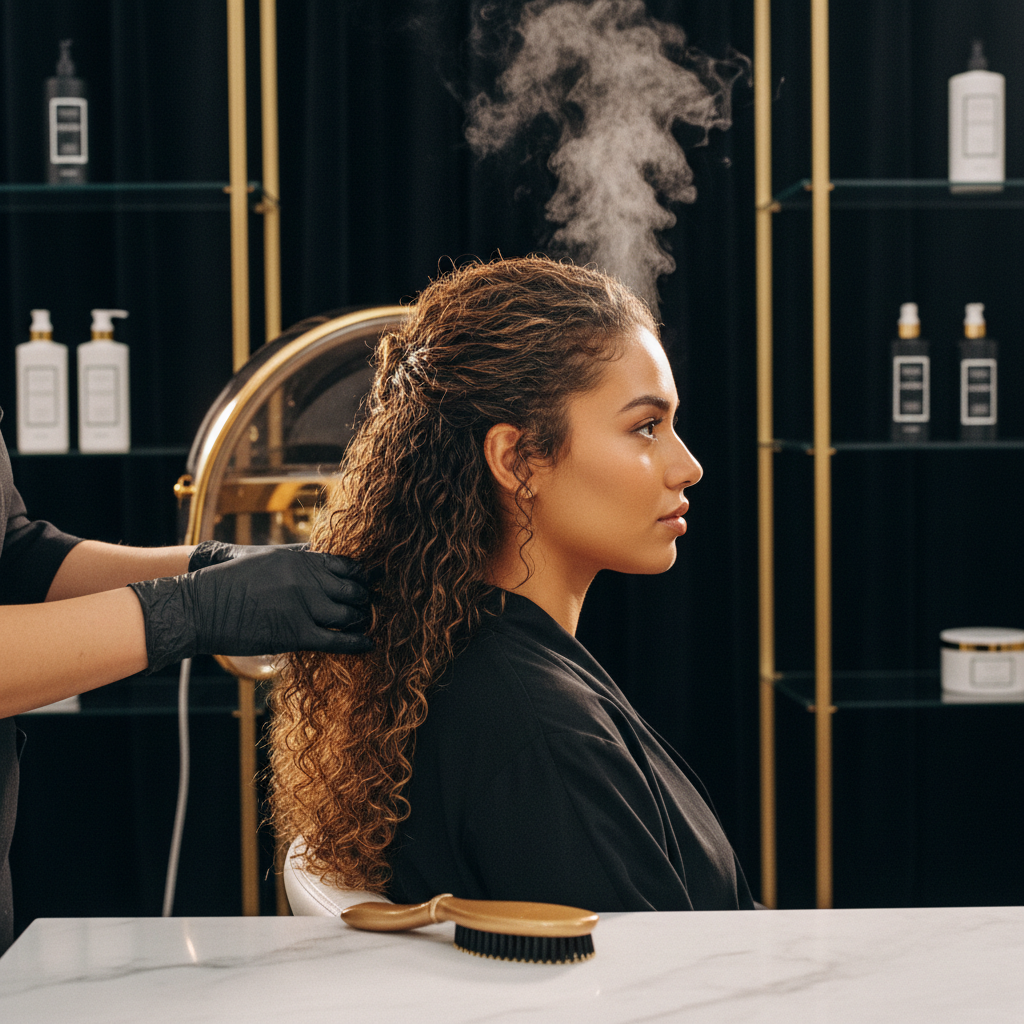
Quick answer: Deep Conditioning is a hair treatment designed to provide intensive hydration and nourishment, often by delivering highly concentrated ingredients deeper into the hair shaft than regular conditioners. It aims to improve hair strength, elasticity, and overall condition, particularly for hair that is dry, damaged, or chemically treated. However, its effectiveness relies on selecting the right product for your hair's specific needs and using it correctly and consistently; it does not address biological hair loss.
Key takeaways
- Deep Conditioning treatments use concentrated formulas to deliver key ingredients like emollients, humectants, and proteins that penetrate beyond the hair's surface to improve condition.
- They are primarily designed to address hair dryness, improve elasticity, reduce breakage, and enhance shine by supporting the hair's external cuticle and internal protein structure.
- The effectiveness of Deep Conditioning is influenced by factors such as hair porosity, condition, product ingredients, and application technique.
- Hair type, damage level, and chemical treatments dictate the recommended frequency, typically ranging from weekly to bi-weekly.
- While highly beneficial for hair condition and reducing hair breakage, Deep Conditioning does not treat hair loss conditions like alopecia or stimulate hair growth from the follicle.
Deep Conditioning: What the Evidence Shows for Hair Health
Deep Conditioning refers to the use of hair treatments formulated to deliver concentrated active ingredients more deeply into the hair fibre compared to standard rinse-out conditioners. These treatments are typically left on the hair for an extended period, allowing ingredients to better interact with and penetrate the hair's cuticle and cortex. The primary goal is to improve hair's mechanical properties, such as strength and elasticity, and enhance its cosmetic appearance by boosting hydration, smoothness, and shine.
Research consistently supports the benefits of intensive conditioning treatments for improving hair fibre integrity, especially for hair compromised by environmental factors, chemical processing, or mechanical stress. By focusing on specific ingredient types and extended application times, Deep Conditioning helps to mitigate damage and restore a healthier look and feel to the hair.
The Mechanism of Deep Conditioning: How Treatments Work
Hair fibres are primarily composed of keratin proteins, arranged in a complex structure of an outer cuticle, a central cortex, and sometimes an innermost medulla. The cuticle, made of overlapping cells, acts as the hair's protective barrier. Damage from heat, chemical treatments, or mechanical stress can lift, crack, or remove these cuticle cells, making the cortex vulnerable to moisture loss and structural degradation. This is where Deep Conditioning plays a role.
Deep conditioners contain a higher concentration of specific ingredient types than daily conditioners, targeting different aspects of hair health. When applied, particularly with the addition of gentle heat (e.g., from a warm towel or hair steamer), the hair cuticle can slightly swell and lift. This allows the concentrated ingredients to penetrate more effectively into the cortex. The extended processing time, typically 10 to 30 minutes, further facilitates this absorption, leading to more profound and lasting conditioning effects than a brief application of a regular conditioner.
Key ingredient categories found in effective deep conditioners include:
- Emollients: These ingredients, such as fatty alcohols (e.g., cetearyl alcohol, stearyl alcohol), natural oils (e.g., argan oil, shea butter), and silicones, form a protective film on the hair surface. This film smooths the cuticle, reduces friction, enhances shine, and helps to minimise moisture loss, improving the hair's soft feel. For instance, research published in the International Journal of Cosmetic Science has highlighted how certain emollients can significantly reduce inter-fibre friction and improve the sensory feel of hair (Robbins & Kelly, 2015).
- Humectants: Substances like glycerin, panthenol (Provitamin B5), and hyaluronic acid attract and hold water from the environment into the hair shaft. This process increases the hair's water content, making it more pliable, elastic, and less prone to breakage. Panthenol, in particular, is well-researched for its ability to penetrate the hair cuticle and bind to water, contributing to improved elasticity and manageability (Campos et al., 2011). You can learn more about these in "Understanding Humectants: How They Hydrate and Protect Your Hair".
- Hydrolysed Proteins and Amino Acids: Proteins like wheat protein, silk protein, or keratin, broken down into smaller molecules, can temporarily penetrate the damaged areas of the hair's cortex. They fill gaps and reinforce the hair's internal structure, leading to increased tensile strength and reduced breakage, especially for chemically treated or weakened hair. A study in the Journal of Cosmetic Science demonstrated how hydrolysed wheat protein could penetrate the hair shaft and strengthen it, reducing damage from chemical treatments (Schueller & Romanowski, 2008).
- Bond-Builders: Newer formulations include ingredients like maleic acid or bis-aminopropyl diglycol dimaleate, which work to repair disulfide bonds within the hair's cortex. These bonds are crucial for hair strength and are often broken during chemical processes like bleaching or perming. Unlike proteins that fill gaps, bond-builders aim to reconstruct the hair's internal architecture, providing a more robust internal repair.
- Acidic pH: Many effective deep conditioners are formulated with an acidic pH (typically between 3.5 and 5.5). This acidity helps to flatten and seal the hair cuticle, which is often raised by alkaline shampoos or chemical treatments. A closed cuticle reflects light better, leading to enhanced shine, and helps to lock in moisture and other conditioning agents, reducing frizz and improving smoothness. You can learn more about this in "The pH Scale and Hair".
What Deep Conditioning Doesn't Do
It's important to clarify that Deep Conditioning, while excellent for improving the hair fibre's condition, does not directly impact the hair follicle or biological hair growth. It does not treat hair loss conditions such as androgenetic alopecia or telogen effluvium, nor does it stimulate new hair growth. Its benefits are primarily cosmetic and structural to the existing hair strand, helping to reduce breakage, which can sometimes be mistaken for hair loss. For concerns about genuine hair shedding or thinning, it's best to consult a medical professional or refer to resources like "Anagen Effluvium".
Signs Your Hair Needs Deep Conditioning
Recognising the signs that your hair could benefit from a Deep Conditioning treatment is key to maintaining its health. Look for these indicators:
- Dryness and brittleness: Hair feels rough, stiff, or tangles easily. This is often a primary sign that the hair's moisture content is low, leading to a loss of natural pliability.
- Lack of shine: Healthy hair has a smooth, intact cuticle that reflects light. If your hair appears dull or lacks lustre, its cuticle may be damaged or raised, preventing light reflection. Regular Deep Conditioning can help smooth the cuticle.
- Increased breakage: Hair snapping easily, especially when wet or combed, suggests a loss of elasticity and strength. This is distinct from hair shedding, where the entire hair strand falls from the scalp. Deep Conditioning can reinforce weakened areas.
- Frizziness: Unruly, frizzy hair often indicates a raised cuticle that allows too much moisture to enter the hair shaft from the environment, leading to swelling and an unkempt appearance. Treatments can help smooth the cuticle and reduce this effect.
- Chemical damage: Hair that has undergone colouring, bleaching, perms, or relaxers is structurally compromised. These processes disrupt the hair's natural bonds and can lift the cuticle, making intensive conditioning crucial for repair and maintaining its integrity. See "Chemical Hair Treatments: What They Are and How They Affect Hair".
- Heat damage: Regular use of heat styling tools without protection can dehydrate and damage the hair's protein structure, leading to weakness and breakage. Deep Conditioning helps to restore moisture and reinforce protein structures. Refer to "Heat Styling Safety Best Practices".
- High porosity: Hair with high porosity has a more open cuticle, making it absorb moisture quickly but also lose it just as fast. Deep Conditioning helps to seal the cuticle, improving moisture retention and overall fibre health. For more information, consult "Understanding Hair Porosity: How Your Hair Absorbs and Retains Moisture".
Types of Deep Conditioning Treatments and How to Choose
Deep conditioners are typically formulated to address specific hair concerns. Understanding the different types helps you choose the most effective treatment for your hair's unique needs. Many products combine elements of these categories.
| Type of Deep Conditioner | Primary Benefit | Key Ingredients (Examples) | Best For |
|---|---|---|---|
| Moisturising | Intense hydration, softness, increased pliability | Glycerin, hyaluronic acid, shea butter, argan oil, panthenol, fatty alcohols | Dry, brittle, coarse, colour-treated hair, or hair prone to frizz. Excellent for most hair types needing a moisture boost. |
| Protein | Strengthening, temporary damage repair, elasticity | Hydrolysed wheat protein, keratin, silk amino acids, amino acid blends | Weak, breaking, chemically treated, or high porosity hair. Helps rebuild and reinforce hair structure. |
| Bond-Building | Repair of internal hair bonds (disulfide bonds) | Maleic acid, bis-aminopropyl diglycol dimaleate | Severely damaged hair from bleaching, perming, or chemical straightening. Aims to reconstruct hair's deepest structure. |
| Clarifying | Removes product build-up, prepares hair for treatment | Chelating agents (e.g., EDTA), gentle surfactants (e.g., coco-betaine) | Hair with heavy product residue, or before a colour service. Note: This is often a pre-treatment step, not a conditioner itself. See "How to Do a Clarifying Wash: A Guide to Deep Hair Cleansing". |
Watermans Deep Conditioning Range
Watermans offers targeted solutions that incorporate key principles of Deep Conditioning to support hair health. The Watermans Masque Me Luxurious Hair Mask is formulated with ingredients known for their conditioning benefits. It aims to provide intensive hydration and improve the overall feel and appearance of the hair fibre, leaving it feeling softer, smoother, and more manageable. For individuals seeking to address common concerns like dryness and lack of shine, this mask can be integrated into a regular hair care routine to supplement the effects of daily conditioning. Always follow the product's specific application instructions for best results.
Frequently Asked Questions About Deep Conditioning
How often should I Deep Condition my hair?
This depends on your hair type and condition. For dry, damaged, or chemically treated hair, weekly Deep Conditioning might be beneficial. Hair that is healthier or oily may only need it every two to four weeks. Over-conditioning, especially with protein treatments, can sometimes lead to stiffness, so observe how your hair responds and adjust the frequency accordingly.
Can Deep Conditioning help with frizz?
Yes, Deep Conditioning can significantly help reduce frizz. Frizz often occurs when the hair's outer cuticle layer is raised, allowing moisture from the air to enter and swell the hair shaft. Deep conditioners, especially those rich in emollients and humectants, work to smooth down the cuticle, seal in moisture, and create a protective barrier, resulting in smoother, less frizzy hair. See "Dealing with Frizzy Hair" and "How to Reduce Frizz in Hair".
Is Deep Conditioning different from a regular conditioner?
Yes, there are key differences. Regular conditioners are typically lighter in formula and designed for daily use to detangle and smooth the hair's surface after shampooing. Deep Conditioning treatments, on the other hand, are more concentrated, contain higher levels of active ingredients, and are designed to penetrate more deeply into the hair shaft over a longer application time, providing intensive repair and hydration.
What's the best way to apply a Deep Conditioner?
After shampooing, gently towel-dry your hair to remove excess water. Apply the Deep Conditioning treatment evenly from mid-lengths to ends, focusing on areas that feel most dry or damaged. For better penetration, you can cover your hair with a shower cap or warm towel for the recommended processing time (typically 10 to 30 minutes). Rinse thoroughly with cool water to help seal the cuticle.
Can Deep Conditioning cause hair loss?
No, Deep Conditioning itself does not cause hair loss. Its effects are on the hair fibre, not the follicle. However, if a product is too heavy for your hair type and isn't rinsed out properly, it can lead to product build-up on the scalp, which could potentially irritate the scalp if left unaddressed. Always rinse thoroughly to avoid residue. If you are experiencing genuine hair loss, consult a healthcare professional.
Can Deep Conditioning improve hair growth?
Deep Conditioning improves the health and strength of the existing hair strand, helping to reduce breakage. By minimising breakage, it can allow hair to grow longer without snapping off. However, it does not directly stimulate new hair growth from the scalp or increase the rate at which hair grows from the follicle. For issues with hair growth, other treatments targeting the scalp and follicles would be more appropriate.
Conclusion
Deep Conditioning is a fundamental practice for maintaining and restoring the health and appearance of hair, especially when it is dry, damaged, or chemically treated. By delivering concentrated, beneficial ingredients deep into the hair fibre, these treatments effectively improve hydration, strength, elasticity, and shine. While it does not address biological hair loss or stimulate new growth, regular Deep Conditioning can dramatically reduce hair breakage, enhance manageability, and contribute to healthier-looking hair. Understanding your hair's specific needs and choosing the right type of treatment are key to unlocking the full benefits of this intensive hair care step.
Sources and references
- Campos, P. M. B. G., Ruivo, P. B., & Leonardi, G. R. (2011). Effect of different compositions on the protective activity of conditioning formulations against damages caused by chemical treatment. Journal of Cosmetic Science, 62(5), 453-461.
- Robbins, C. R., & Kelly, E. P. (2015). Hair conditioning. In Chemical and Physical Behavior of Human Hair (5th ed., pp. 293-334). Springer. DOI: 10.1007/978-3-540-30514-9_7
- Schueller, R., & Romanowski, P. (2008). Hair Conditioners. In Conditioning Agents for Hair and Skin (pp. 57-112). CRC Press.
- International Journal of Cosmetic Science. (General journal, various years).
Find these ingredients in Watermans products
- Argan Oil — you will find this ingredient in our Hair Growth Shampoo.
- Panthenol (Provitamin B5) — you will find this ingredient in our Heat Protection Spray.
- Shea Butter — you will find this ingredient in our Curly Hair Conditioner.