Dandruff vs Dry Scalp Explained: Mechanisms, Symptoms, and Treatments
10 min read ·
Dandruff vs Dry Scalp Explained: understand the key differences in causes, flake types, and treatments to balance your scalp and stop visible flaking.
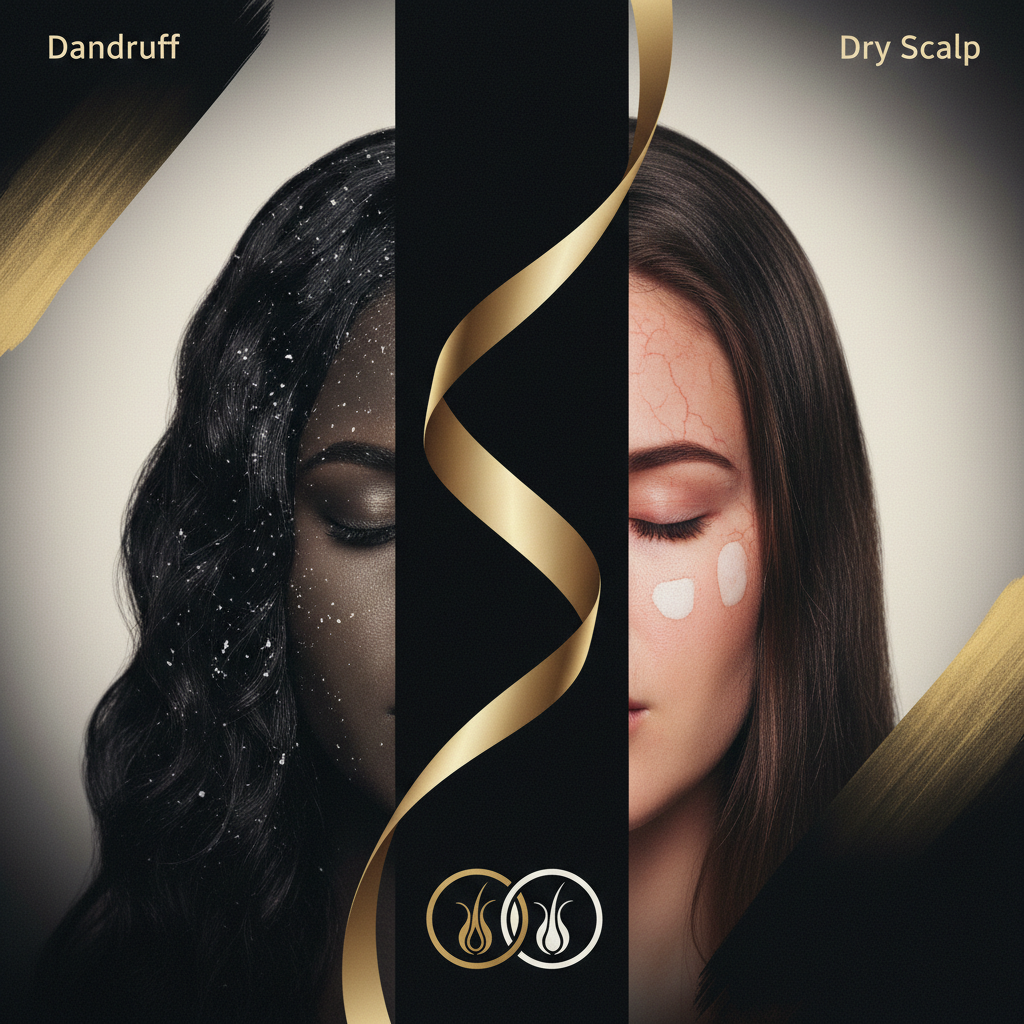
Quick answer: With Dandruff vs Dry Scalp Explained, the distinction comes down to sebum and microbial activity. Dandruff is typically an oily, inflammatory condition driven by an overgrowth of Malassezia yeast feeding on excess sebum, causing large, sticky, yellowish flakes. Dry scalp is simply a lack of moisture in the stratum corneum, producing tiny, white, powdery flakes and tight skin. Mistaking one for the other leads to the wrong wash frequency and topical ingredients, worsening irritation.
Key takeaways
- Dandruff involves excess sebum, inflammatory reactions, and the proliferation of the lipophilic yeast Malassezia restricta and Malassezia globosa.
- Dry scalp is a barrier issue where the skin lacks water, natural moisturising factors (NMFs), or protective lipids, leading to dehydration.
- Flake appearance differs sharply: dandruff produces larger, oily, clumped, off-white or yellowish scales, whereas dry scalp sheds tiny, loose, white flakes.
- Treating dandruff requires active antimicrobials or keratolytics (such as zinc pyrithione, piroctone olamine, or salicylic acid) and regular cleansing.
- Treating dry scalp requires mild, sulphate-free cleansing, reduced washing frequency, and hydrating humectants such as glycerin or panthenol.
- Flaking that resists basic management may indicate seborrhoeic dermatitis, scalp psoriasis, or contact dermatitis, all of which require clinical assessment.
Dandruff vs Dry Scalp Explained: what the evidence shows
When having Dandruff vs Dry Scalp Explained, clinical dermatology distinguishes clearly between a dehydrated epidermal barrier and an inflammatory microbial response. Research shows that both conditions disrupt the stratum corneum, the outermost layer of the scalp skin, but they do so via opposing physiological states.
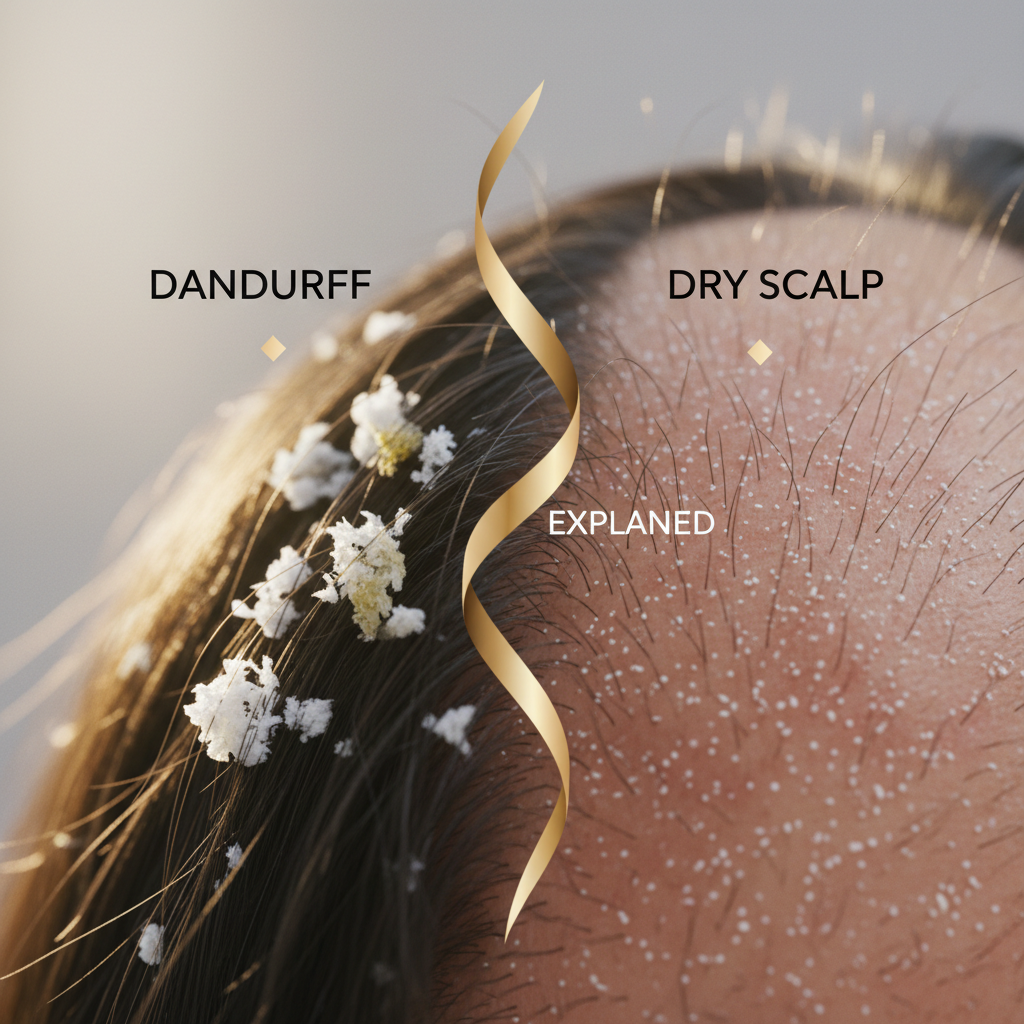
A healthy scalp sheds invisible, microscopic corneocytes every 28 to 30 days as part of natural skin renewal. When flaking becomes visible to the naked eye, the cell turnover rate has accelerated, shedding clusters of hundreds of incompletely matured cells stuck together.
In dry scalp, environmental triggers such as low ambient humidity, central heating, harsh surfactant shampoos, or very hot water strip away superficial intercellular lipids (ceramides, cholesterol, and free fatty acids). Without these lipids, water rapidly evaporates from the epidermis, a process known as elevated transepidermal water loss (TEWL). The dehydrated corneocytes shrink, lose cohesion, and detach as fine, dry flakes.
In dandruff, the driver is fundamentally oily rather than dry. Sebaceous glands secrete sebum, rich in triglycerides and squalene. Yeasts of the genus Malassezia, primarily M. Globosa and M. Restricta, thrive on this lipid supply. These organisms produce lipase enzymes that break down triglycerides into free fatty acids, specifically oleic acid. In susceptible individuals, oleic acid penetrates the stratum corneum, triggering irritation, non-specific inflammation, and an accelerated turnover cycle that forces cells to shed in just 7 to 10 days.
| Feature | Dandruff (Pityriasis Capitis) | Dry Scalp (Epidermal Dehydration) |
|---|---|---|
| Primary Cause | Malassezia yeast metabolising excess sebum | Lack of water and protective lipids in skin barrier |
| Flake Characteristics | Large, clumped, greasy, off-white to yellow | Small, dry, powdery, fine white specks |
| Scalp Sensation | Persistent itching, oily or tender feeling | Tightness, mild prickling, dryness |
| Scalp Surface | Red, greasy, inflamed patches beneath flakes | Matt, dry, dull, occasionally taut skin |
| Wash Response | Improves with more frequent, targeted washing | Worsens with frequent washing or harsh cleansers |
| Typical Triggers | Infrequent cleansing, hormonal oil shifts, stress | Dry weather, hard water, hot showers, harsh sulphates |
What the evidence does not show
There are persistent myths surrounding both conditions that complicate home care:
- Evidence does not show dandruff is caused by poor hygiene. While infrequent shampooing allows sebum and yeast by-products to accumulate, dandruff is rooted in individual immune reactivity to oleic acid and natural sebum production rates. Over-washing with plain water alone does not solve it.
- Evidence does not show oiling cures dandruff. Applying plant oils (such as olive oil or coconut oil) to active dandruff frequently feeds lipophilic Malassezia species, worsening fungal proliferation and driving further inflammation.
- Evidence does not show dry scalp is an infectious disease. Dry scalp is entirely non-microbial and non-contagious. It cannot spread from person to person or across different hair brushes.
- Cosmetics do not cure underlying autoimmune disorders. Neither hydrating cleansers nor anti-dandruff formulations cure conditions like scalp psoriasis. They manage cosmetic flaking and provide barrier support.
The biological mechanisms behind each condition
Understanding the cellular mechanisms clarifies why identical symptoms (visible flakes) require fundamentally opposite care.
The microbial cascade of dandruff
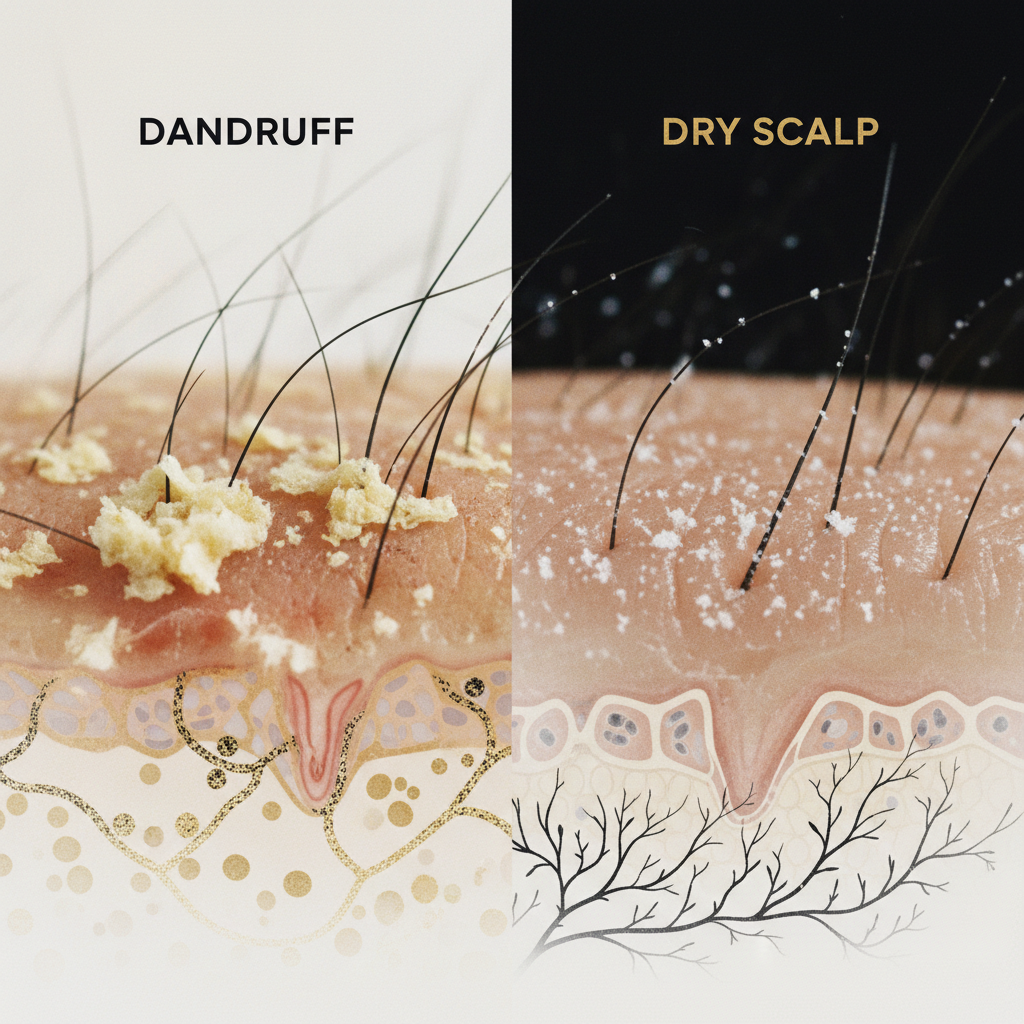
Dandruff sits on a spectrum with seborrhoeic dermatitis, representing its milder, uninflamed to moderately inflamed form. The human scalp harbours roughly 10 million microorganisms per square centimetre. Malassezia species represent up to 75 to 90 percent of the scalp fungal flora in affected individuals.
When Malassezia hydrolyses sebum, the resulting unsaturated fatty acids breach the scalp barrier. This breach alters keratinisation: instead of cleanly nucleated cells degrading smoothly, the cells retain parakeratotic nuclei and clump into visible, oily aggregates. Histological studies show structural disorganisation within the lamellar lipid architecture of the stratum corneum in dandruff sufferers.
The barrier disruption of dry scalp
Dry scalp reflects impaired barrier integrity without significant microbial dysbiosis. The skin maintains hydration through Natural Moisturising Factors (NMFs), an array of amino acids, pyrrolidone carboxylic acid, and salts that attract water inside corneocytes.
When aggressive surfactants (such as sodium lauryl sulphate) or repeated contact with high-pH tap water strip the lipid envelope, NMFs wash out easily. The enzyme activity responsible for desquamation (shedding of individual cells) fails because these enzymes need adequate water to function. Instead of detaching invisibly one by one, rigid sheets of dry corneocytes crack and peel away.
Signs to look for: how to tell them apart
A quick visual and tactile self-assessment helps pinpoint the underlying issue:
- Examine the flakes against dark fabric. If they scatter like dust or fine ground salt when you ruffle your hair, it is almost certainly a dry scalp. If they stick to the hair shafts or feel greasy when pinched between two fingers, it is dandruff.
- Assess the rest of your skin. People experiencing a dry scalp often have dry skin on their shins, hands, or face. Those with dandruff often have normal or oily facial skin, notably around the T-zone, eyebrows, and sides of the nose.
- Note the feeling directly after washing. If your scalp feels tight, taut, or itchy immediately after towel-drying, barrier dehydration is the primary problem. If itching subsides briefly post-wash but returns alongside greasiness within 24 to 48 hours, Malassezia activity is likely.
What you can do: evidence-based routines
Targeting the correct mechanism delivers the fastest visible improvement.
Managing a dry scalp
- Lower your water temperature. Wash your hair in lukewarm water rather than steaming hot water, which dissolves protective surface lipids.
- Choose gentle, non-stripping surfactants. Look for mild amphoteric or non-ionic cleansers (such as cocamidopropyl betaine, decyl glucoside, or sodium cocoyl isethionate).
- Introduce humectants and barrier lipids. Scalp serums containing hyaluronic acid, panthenol (provitamin B5), glycerin, and niacinamide help attract water and reinforce the barrier without suffocating follicles.
- Space out cleansing. If you wash daily, try moving to every two or three days, monitoring whether flake counts drop.
Managing dandruff
- Increase wash frequency. Regular shampooing removes excess sebum, depriving Malassezia of its primary nutrient source.
- Use proven topical actives. Look for ingredients backed by dermatological literature:
- Piroctone olamine: A gentle, highly effective antifungal that controls Malassezia without stripping the hair shaft.
- Zinc pyrithione: An established antimicrobial agent that normalises epithelial keratinisation.
- Salicylic acid (1 to 3 percent): A keratolytic agent that loosens and dissolves clumped, sticky flakes so they rinse away easily.
- Ketoconazole (1 to 2 percent): A broad-spectrum imidazole antifungal used for persistent flaking.
- Leave actives on the scalp. Anti-dandruff cleansers require contact time. Allow the lather to sit directly on the scalp for 3 to 5 minutes before thoroughly rinsing.
When the cause may be something else
Flaking does not always fit neatly into simple dehydration or uncomplicated dandruff. Several dermatological conditions share these features:
- Seborrhoeic dermatitis: A more severe progression of dandruff, marked by pronounced erythema (redness), burning, and thick, greasy crusts that can extend to the hairline, ears, and eyebrows.
- Scalp psoriasis: An autoimmune condition causing hyperproliferation of skin cells. It presents as well-demarcated, thick, silvery-white plaques on an inflamed base, frequently bleeding when picked (Auspitz sign).
- Contact dermatitis: An allergic or irritant reaction to hair dyes, fragrances (such as linalool or limonene), or preservatives like methylisothiazolinone. Symptoms include sudden intense itching, redness, and localised weeping or scaling.
- Tinea capitis: A contagious fungal dermatophyte infection, more common in children, which causes circular patches of scaling accompanied by hair breakage right at the scalp line.
When to get professional advice
Consult a GP, dermatologist, or qualified trichologist if:
- Flaking fails to improve after 3 to 4 weeks of dedicated over-the-counter anti-dandruff or hydrating care.
- The scalp develops open sores, intense crusting, bleeding, or fluid exudate.
- Itching disrupts your sleep or daily tasks.
- You notice patchy hair loss or thinning alongside the scalp flaking.
Supporting scalp balance with Watermans
When managing daily scalp comfort, selecting a formula that respects the scalp microbiome while cleansing away excess debris is vital. Watermans incorporates hair-supporting botanicals, caffeine, and gentle conditioning agents into formulations that cleanse effectively without severely stripping the natural moisture barrier. Using products that support scalp circulation and provide balanced cleansing helps maintain an optimal environment for hair follicles, avoiding both excessive dryness and heavy product accumulation.
Frequently asked questions about Dandruff vs Dry Scalp Explained
How does having Dandruff vs Dry Scalp Explained change the products I buy?
Understanding whether you have dandruff or a dry scalp stops you using harsh clarifying or anti-fungal agents on dehydrated skin. If you have a dry scalp, anti-dandruff shampoos can strip remaining lipids and worsen flaking. Conversely, applying rich oils to dandruff feeds Malassezia yeast, intensifying inflammation and oily scaling.
Can a dry scalp turn into dandruff?
A dry scalp does not directly turn into dandruff because the two have distinct causes. However, a chronically damaged, dehydrated skin barrier has compromised antimicrobial defences. If sebum production subsequently rises, Malassezia can colonise the irritated surface more easily, triggering dandruff.
Does dandruff cause permanent hair loss?
Dandruff does not directly damage the hair follicle or cause permanent hair loss. However, intense mechanical scratching can cause hair breakage and temporary shedding (telogen effluvium) through scalp micro-trauma. Controlling inflammation and itching protects follicle stability.
Should I exfoliate my scalp if it is dry?
Physical scalp scrubs should be avoided on a genuinely dry, cracked scalp, as abrasive particles further tear the delicate barrier. If dead skin accumulates, choose a very mild chemical exfoliant such as low-concentration lactic acid (an alpha hydroxy acid that also acts as a humectant) or wash with a soft scalp-cleansing brush.
Clarifying scalp care
Understanding Dandruff vs Dry Scalp Explained empowers you to treat the root mechanism rather than guessing in the shampoo aisle. By examining flake size, lipid content, and your scalp's response to water and washing frequency, you can determine whether your stratum corneum is crying out for hydration or requiring targeted antimicrobial balance. Maintaining clean, calm, and balanced scalp skin remains the primary foundation for healthy hair growth.
Sources and references
- British Association of Dermatologists. (2020). Seborrhoeic Dermatitis Patient Information Leaflet. BAD Guidelines.
- Dawson, T. L. (2007). Malassezia globosa and restricta: Breakthrough Understanding of the Etiology of Dandruff. Journal of Investigative Dermatology Symposium Proceedings, 12(2), 15-19.
- Borda, L. J., & Wikramanayake, T. C. (2015). Seborrheic Dermatitis and Dandruff: A Comprehensive Review. Journal of Clinical and Investigative Dermatology, 3(2), 10.
- Harding, C. R., et al. (2002). Dandruff: a condition characterized by decreased levels of intercellular lipids in scalp stratum corneum and impaired barrier function. Archives of Dermatological Research, 294(5), 221-230.
- National Health Service (NHS). (2023). Dandruff Overview and Treatments. NHS UK.
Find these ingredients in Watermans products
- Zinc: you will find this ingredient in our Hair Vitamins.
- Oleic Acid: you will find this ingredient in our Camellia & Black Castor Hair & Body Oil.
- Niacinamide: you will find this ingredient in our Hair Mask.
- Panthenol (Provitamin B5): you will find this ingredient in our Heat Protection Spray.