Cuticle Health and Friction: The Definitive Guide to Hair Surface Care
10 min read ·
Understand how cuticle health and friction affect hair breakage, split ends, and shine, plus evidence-based steps to protect the outer hair shaft.
Quick answer: Maintaining cuticle health and friction control is vital for preventing cosmetic hair breakage and split ends. The cuticle consists of overlapping, tile-like keratin scales that protect the inner cortex. When everyday mechanical forces like aggressive brushing, towel-rubbing, and fabric abrasion lift or chip these scales, friction increases exponentially. While topical conditioning agents smooth the shaft and reduce surface resistance, they cannot biologically regenerate dead keratin cells once the cuticle layer has completely worn away.
Key takeaways
- The hair cuticle is composed of 5 to 10 overlapping cellular layers coated in a hydrophobic lipid layer called 18-methyleicosanoic acid (18-MEA).
- Friction between hair fibres (fibre-to-fibre) and between hair and external surfaces (fibre-to-tool) generates shear stress that flakes, cracks, and strips cuticle cells.
- Wet hair has a significantly higher coefficient of friction than dry hair, making it far more vulnerable to mechanical stretching and snapping.
- Conditioning agents, cationic surfactants, and plant oils lower surface friction by depositing a lubricating film that mimics lost natural lipids.
- Cuticle erosion is physical breakage of the hair fibre, not biological hair loss from the scalp follicle.
Cuticle Health and Friction: what the evidence shows
The relationship between cuticle health and friction dictates how hair looks, feels, and behaves under mechanical stress. The cuticle is the outermost protective barrier of the human hair shaft. Under an electron microscope, a healthy cuticle resembles a continuous roof of slate tiles pointing toward the tip. When intact, these cells lie flat, reflecting light for natural shine and sliding past neighbouring fibres with minimal drag.
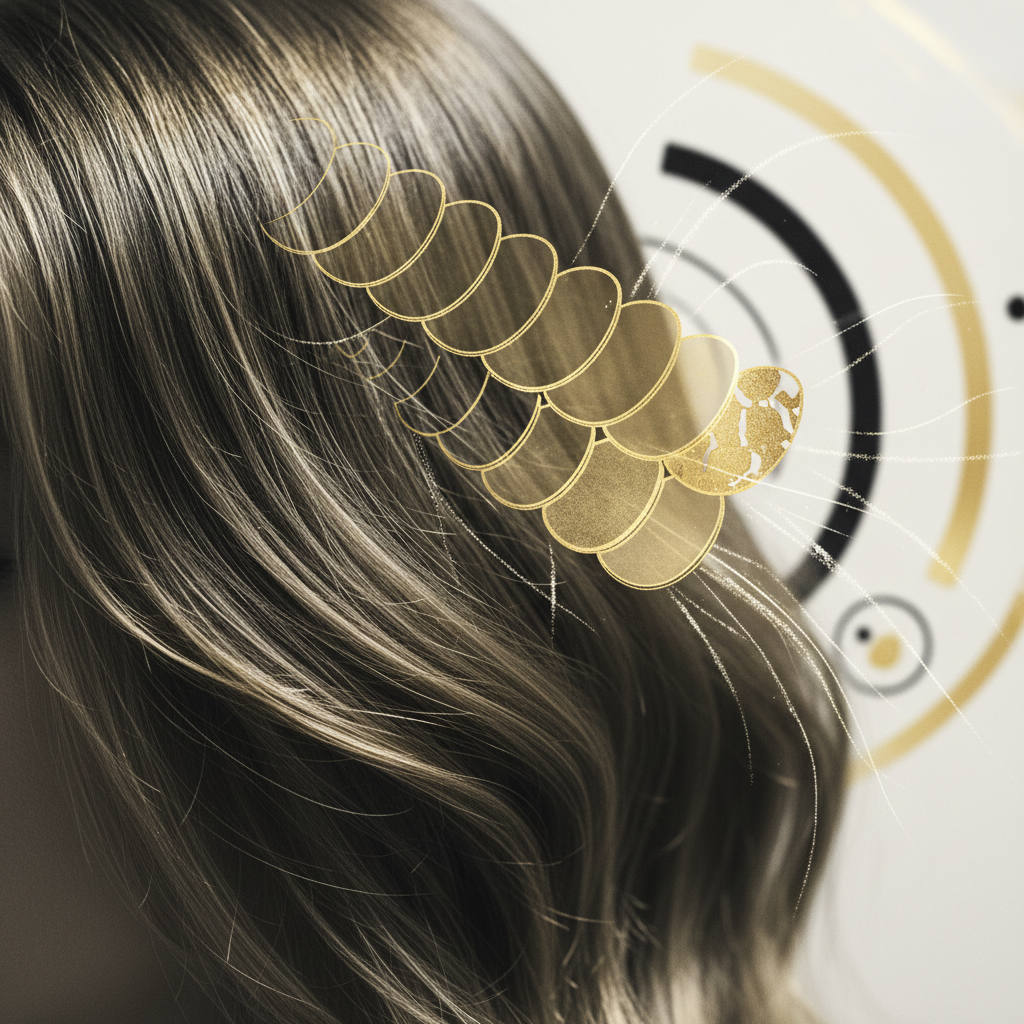
Biophysical studies published in the International Journal of Cosmetic Science show that the healthy virgin cuticle is naturally shielded by a bound mono-layer of fatty acids, predominantly 18-MEA. This lipid layer gives the fibre a low coefficient of friction and repels water (hydrophobic). When mechanical friction from rigorous styling or rough fabrics erodes 18-MEA, the underlying protein matrix becomes exposed and hydrophilic.
Once the lipid barrier vanishes, surface friction rises sharply. High friction means that individual hair fibres catch against each other rather than gliding smoothly. This creates tangles, static charge, and knots. When you pull a comb through tangled hair, the comb acts as an amplifier of mechanical force, placing tremendous tensile strain on the cortex until the shaft fractures.
Intact 18-MEA Layer --> Low Surface Friction --> Smooth Fibre Glide & Minimal Snagging
Stripped Cuticle --> High Surface Friction --> Tangles, Shear Stress & Fibre Breakage
The biomechanics of friction and hair damage
To protect hair, you need to understand the precise physical forces acting upon the cuticle every day.
Fibre-to-tool friction
Combing and brushing apply direct shear stress to the cuticle edges. Brushing root-to-tip moves along the natural grain of the scales, which is relatively gentle. However, backcombing or using fine-toothed combs against stubborn knots forces cuticle scales upward, bending them until they snap off at the endocuticle.
Fibre-to-fibre friction
When individual hair strands rub together, rough cuticles catch like interlocking hooks. Dry, untreated hair typically has a dynamic friction coefficient between 0.15 and 0.25. If the hair is chemically bleached or thermally altered, that coefficient can double or triple. Increased inter-fibre friction leads directly to matting, bird-nesting, and localized mechanical fatigue.
Fibre-to-substrate friction
External materials constantly abrade your hair. Cotton pillowcases, wool scarves, coarse bath towels, and vehicle headrests all present textured surfaces that pull at vulnerable cuticles. Vigorously rubbing wet hair with a standard terrycloth towel creates violent multi-directional shear forces that lift cuticle margins instantly.
The wet hair paradox
Water acts as a plasticiser for human hair keratin, increasing elasticity but dropping tensile strength by roughly one-third. Crucially, water increases surface friction between hair fibres. When wet, capillary adhesion and the disruption of surface charges cause hairs to cling tightly to one another. Brushing wet hair without slip or lubrication exposes weak, swollen fibres to maximum frictional stress, resulting in severe breakage.
| Hair State | Friction Level | Elasticity | Structural Resilience | Primary Risk Factor |
|---|---|---|---|---|
| Virgin, Dry | Low (0.15 to 0.25) | Moderate | High | Static electricity, rough handling |
| Wet (No Slip) | Very High | High (stretches easily) | Low | Excessive elongation, snap breakage |
| Bleached / Chemically Altered | High (0.35 to 0.55+) | Low (brittle) | Very Low | Scale chipping, cortex exposure |
| Conditioned / Lubricated | Minimal (below 0.15) | Normal | High | Product build-up if unwashed |
What the evidence does not show
Controlled cosmetic science has debunked several popular ideas regarding cuticle health and friction:
- Cuticle cells do not "open and close" like pores. The cuticle is dead biological tissue. Scales do not possess muscles or biological triggers to open and close at will. Alkaline environments (pH above 7.0) cause the entire fibre to swell with water, which mechanically lifts the edges, while acidic environments (pH 4.0 to 5.5) minimise swelling.
- Topical products cannot permanently "heal" missing cuticles. Once a cuticle cell breaks off, the body cannot regenerate it along that shaft. Conditioners, silicones, and oils only act as temporary sealants and lubricants. They wash off and must be reapplied.
- Natural oils do not replace 18-MEA identically. While plant oils (such as argan, jojoba, or coconut) deposit fatty acids that coat the shaft and lower friction, they do not covalently bind to the fibre protein in the way endogenous 18-MEA does.
Visible signs of elevated cuticle friction
Recognising mechanical friction damage early helps prevent catastrophic breakage further down the shaft. Watch for these physical signs:
- Loss of natural lustre: A rough, chipped cuticle scatters light in all directions, making the hair look matte, dull, or chalky.
- Persistent knotting and tangling: If clean hair snags immediately after detangling, the cuticle scales are likely raised and grabbing adjacent strands.
- The "squeak" test: Wet hair that squeaks excessively under light finger pressure has had its protective lubricating film stripped bare.
- Trichorrhexis nodosa and split ends: Microscopic knots or visible splits (trichoptilosis) at the tips indicate where chronic friction has stripped the cuticle, causing cortex fibres to fray like an unravelling rope.
- Frizz that resists humidity changes: True mechanical frizz happens when raised cuticles prevent neighbouring fibres from sitting uniformly within a hair group.
Practical steps to lower cuticle friction
Managing friction requires a mix of smart mechanical techniques and cosmetic lubrication.
1. Minimise wet mechanical stress
Never pull a fine comb or standard bristle brush through soaked, unconditioned hair. If you need to detangle in the shower, apply a conditioner or mask with high slip first, then use a wide-tooth comb or a brush designed specifically for wet hair with flexible bristles.
2. Blot, never rub
Swap rough cotton bath towels for smooth microfibre towels or soft cotton T-shirts. Instead of scrubbing your hair back and forth, gently squeeze and press the fabric against your hair to wick moisture away without generating shear stress.
3. Maintain an optimal pH balance
Use cleansing and conditioning products formulated within the hair's natural isoelectric range (pH 4.5 to 5.5). Mildly acidic formulations prevent excessive shaft swelling, helping cuticle scales remain compact and flat.
4. Reintroduce surface slip
Apply leave-in conditioners, lightweight silicones, or stable plant oils to damp hair before styling. Cationic conditioning agents adhere to the negatively charged damaged areas of the hair fibre, directly counteracting elevated friction.
5. Reduce overnight abrasion
Swap traditional cotton pillowcases for silk or high-grade satin alternatives. The smooth weave lowers fibre-to-fabric drag while you sleep, reducing morning tangles and mid-shaft friction damage.
When the cause may be something else
If your hair snaps rapidly despite gentle handling and generous conditioning, friction may not be the primary culprit.
- Systemic nutritional deficiencies: Inadequate intake of dietary protein, iron (ferritin), zinc, or essential fatty acids can impair follicular keratinisation, producing naturally weak hair fibres that break under minimal friction.
- Excessive chemical processing: Over-bleaching, high-volume peroxide developers, and chemical relaxers break internal disulphide bonds within the cortex. A weak cortex will snap even under light comb tension.
- Heat denaturation: Styling tools operating above 185 to 200 degrees Celsius denature alpha-keratin into amorphous protein, causing micro-voids inside the fibre that mimic mechanical damage.
- True follicular shedding: If you are finding intact hairs with small white bulbs attached to the root end on your pillow or in the drain, you are experiencing hair shedding (such as telogen effluvium), not friction-induced breakage.
When to seek professional advice
Consult a qualified trichologist or dermatologist if:
- Hair breakage is sudden, widespread, and accompanied by thinning patches across the scalp.
- You notice localized round bald patches (which may suggest alopecia areata).
- The scalp shows signs of inflammation, erythema, scaling, burning, or itchiness.
- Structural hair shaft anomalies (such as pili torti or monilethrix) are suspected, where hair breaks from congenital structural weakness rather than simple friction.
Supporting cuticle resilience with Watermans
Cosmetic care plays an important role in maintaining a healthy environment for hair to grow and thrive. Watermans approaches hair maintenance by pairing scalp vitality with fibre protection. Products like Watermans GrowMe shampoo and ConditionMe conditioner incorporate natural plant extracts, hydrolysed proteins, and gentle conditioning agents designed to nourish the scalp environment while coating fragile strands. By improving combability and smoothing the hair surface, these formulations help minimise daily brushing drag and physical friction, keeping vulnerable hair feeling resilient and looking fuller.
Frequently asked questions about Cuticle Health and Friction
How does friction damage the hair cuticle over time?
Friction exerts continuous shear stress across the edges of overlapping cuticle cells. Repetitive forces from brushing, coarse fabrics, and towel-drying lift the scale margins. Over time, these delicate protein layers fracture, chip, and peel away, exposing the sensitive internal cortex to irreversible environmental wear and breakage.
What is the direct connection between cuticle health and friction?
The relationship is reciprocal: a smooth, lipid-rich cuticle keeps friction low by allowing fibres to glide freely past one another. Conversely, elevated friction strips protective lipids, abrading the cuticle and raising surface roughness. This self-reinforcing cycle leads to increased knotting, snags, and cosmetic breakage unless managed with lubricating topical products.
Why is wet hair more susceptible to friction damage?
Water swells the hair fibre and temporarily disrupts internal hydrogen bonds, reducing overall tensile strength. Additionally, water increases inter-fibre friction due to capillary forces. Dragging a standard brush through wet strands subjects the weakened, high-friction hair to extreme stretching, easily stripping cuticle scales and snapping the cortex.
Can split ends be repaired by reducing cuticle friction?
No. Once friction and structural wear cause the cuticle to strip and the cortex to split, the damage cannot be biologically healed. While silicone serums and smoothing conditioners can temporarily glue the split ends together to mask their appearance, the only true remedy for split ends is trimming them away.
Does sleeping on a silk pillowcase genuinely protect cuticle health?
Yes. Silk and quality satin have a much smoother surface texture and lower coefficient of friction than standard cotton weave. As you move during the night, silk creates significantly less mechanical drag against the hair cuticle, reducing morning tangles, surface frizz, and long-term friction-induced fibre breakage.
Preserving your hair's protective barrier
Safeguarding cuticle health and friction resistance is one of the most effective ways to maintain strong, lustrous hair. Because the hair shaft is biologically non-living tissue, it cannot heal itself once worn away. Protecting the cuticle requires conscious handling: avoid aggressive towel-drying, choose detangling tools with care, use pH-balanced hair products, and supply regular surface lubrication. By reducing everyday mechanical drag, you protect the delicate cortex beneath, preventing unnecessary breakage and keeping your hair feeling smooth, soft, and resilient.
Sources and references
- International Journal of Cosmetic Science, "Hair surface characteristics and friction properties", 2008.
- Journal of Cosmetic Dermatology, "The physical and chemical properties of hair and their relationship to hair cosmetic performance", 2015.
- Dermatology and Therapy, "A review of the role of 18-methyleicosanoic acid in hair health and cosmetic formulations", 2019.
- Journal of the Society of Cosmetic Chemists, "Measurement of the coefficient of friction of hair fibres", 2004.
- Robbins, C. R., Chemical and Physical Behavior of Human Hair, 5th edition, Springer, 2012.
Find these ingredients in Watermans products
- Zinc: you will find this ingredient in our Hair Vitamins.