The Curly Girl Method: A Comprehensive Guide
5 min read ·
The Curly Girl Method is a hair care approach designed to enhance and maintain the natural curl patterns of wavy, curly, and coily hair by avoiding harsh ingredients and styling practices.
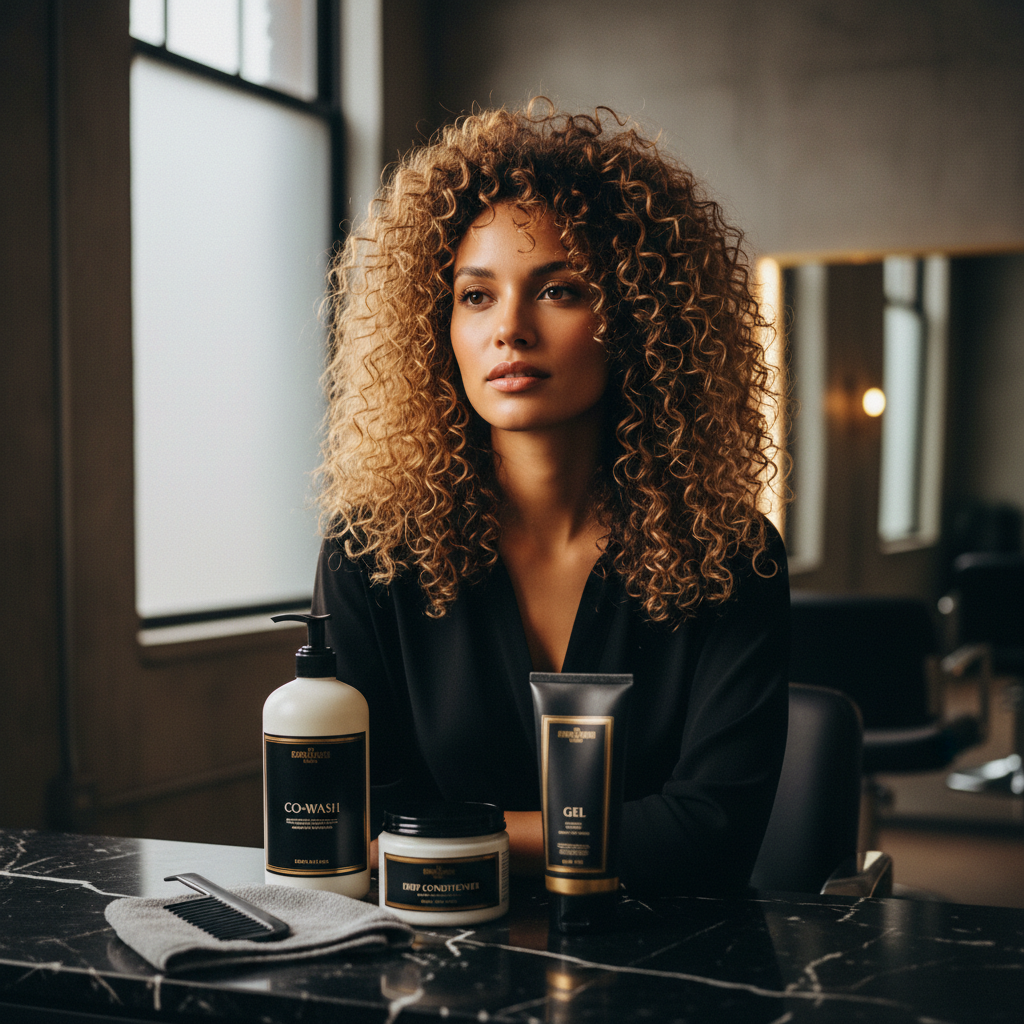
Understanding the Curly Girl Method
The Curly Girl Method (CGM) is a popular hair care regimen developed by Lorraine Massey, founder of many curl-focused hair brands. It emphasizes a gentle approach to cleansing, conditioning, and styling hair to promote healthy, defined, and frizz-free curls. The core principle revolves around avoiding ingredients and practices that can strip hair of its natural moisture or disrupt its curl pattern.
Hair Types and the CGM
The CGM is primarily beneficial for individuals with wavy (Type 2), curly (Type 3), and coily (Type 4) hair types, which are prone to dryness and frizz. Straight hair (Type 1) does not typically benefit from this method as its structure does not possess a natural curl pattern to enhance. The effectiveness of the CGM can vary depending on individual hair porosity, density, and thickness.
Key Principles of the CGM
A central tenet of the CGM is the avoidance of specific ingredients and tools. These include:
- Sulfates: These strong detergents can strip the hair and scalp of natural oils, leading to dryness and frizz. Common sulfates include sodium lauryl sulfate and ammonium lauryl sulfate.
- Silicones: While some silicones are water-soluble and can be rinsed out easily, many are not. Non-water-soluble silicones can build up on the hair, creating a barrier that prevents moisture from penetrating the hair shaft. This can lead to dry, dull, and weighed-down curls. Examples of problematic silicones include dimethicone, amodimethicone, and cyclomethicone.
- Waxes and Mineral Oils: These ingredients can also cause build-up and prevent proper hydration.
- Drying Alcohols: Short-chain alcohols like ethanol, isopropyl alcohol, and alcohol denat can evaporate quickly, taking moisture from the hair. Fatty alcohols, such as cetearyl alcohol or stearyl alcohol, are beneficial and are not avoided.
- Heat Styling: Excessive heat from tools like curling irons, flat irons, and hair dryers with high heat settings can damage the hair's protein structure, leading to frizz and loss of curl definition.
- Combs and Brushes (on dry hair): Brushing or combing dry curls can disrupt the curl pattern, leading to frizz. Detangling is typically performed when the hair is wet and saturated with conditioner.
The CGM Routine: Step-by-Step
The Curly Girl Method consists of a multi-step routine designed to maintain moisture and define curls.
1. Final Wash
The first step in adopting the CGM is often a "final wash." This involves using a sulfate-containing shampoo one last time to remove any lingering non-water-soluble silicones or product buildup from the hair. After this wash, sulfate-containing shampoos are typically avoided.
2. Co-Washing or Low-Poo Cleansing
Instead of traditional shampoo, the CGM advocates for either:
- Co-washing: Using a conditioning cleanser (a "co-wash") to gently clean the hair and scalp without stripping natural oils. Co-washes typically contain mild cleansing agents combined with a high proportion of conditioning ingredients.
- Low-Poo Cleansing: Using a sulfate-free shampoo with very mild cleansing agents. These shampoos still lather slightly but are much gentler than traditional shampoos.
The choice between co-washing and low-poo depends on individual hair type and scalp condition. Those with very dry hair or scalp may prefer co-washing, while those with an oily scalp or finer hair might opt for a low-poo.
3. Conditioning
After cleansing, a generous amount of silicone-free conditioner is applied. This step is crucial for detangling, providing moisture, and smoothing the hair cuticle. Conditioner is typically applied to dripping wet hair, allowing for easy distribution and slip for detangling with fingers or a wide-tooth comb.
4. Styling
Styling products are applied to very wet hair to lock in moisture and define curls. Common styling products include:
- Leave-in Conditioner: A lightweight conditioner that remains in the hair to provide continuous moisture and help with frizz control.
- Curl Cream: A thicker cream designed to enhance curl definition and provide moisture.
- Gel or Mousse: Applied to provide hold and lock in the curl pattern. Gels often create a "cast" around the curls, which can be "scrunched out" once the hair is dry to reveal soft, defined curls.
Products are typically applied using methods like "praying hands" (smoothing product over sections of hair) or "scrunching" (gently squeezing hair upwards towards the scalp).
5. Drying
Air drying is the preferred method to minimise frizz and heat damage. If using a hair dryer, a diffuser attachment is essential. A diffuser disperses the airflow, reducing direct heat and helping to maintain the curl pattern rather than disturbing it. Drying should be done on a low heat and low speed setting.
Benefits and Considerations
Benefits of the CGM
- Improved Curl Definition: By avoiding harsh ingredients and heat, curls often become more defined and less frizzy.
- Increased Moisture: Products without sulfates and drying alcohols help retain the hair's natural moisture, leading to softer, more supple curls.
- Reduced Damage: Decreased reliance on heat styling and chemical processing can significantly improve hair health over time.
Potential Considerations
- Greasy Scalp/Build-up: Some individuals, especially those with finer hair or an oily scalp, may experience a greasy feeling or product build-up due to the emphasis on conditioning and lack of strong cleansing. Regular clarifying washes with a mild, sulfate-free shampoo can help.
- Transition Period: Hair may go through a "transition period" for several weeks or even months as it adjusts to the new routine and sheds accumulated silicones. During this time, curls may appear limp, frizzy, or dull.
- Product Experimentation: Finding the right combination of CGM-approved products can require experimentation, as different hair types respond to ingredients differently.
Adapting the CGM
While the original CGM is strict, many individuals adapt it to suit their needs, creating a "modified Curly Girl Method." This might involve:
| Aspect | Strict CGM | Modified CGM |
|---|---|---|
| Cleansing Frequency | Co-wash every wash | Co-wash or low-poo, occasional sulfate-free shampoo |
| Sulfate Use | Only for final wash | Occasional clarifying with sulfate-free shampoo |
| Silicone Use | Avoid all | May use water-soluble silicones |
| Heat Drying | Air dry or diffuse on cool/low | Diffuse on low/medium heat, occasional air dry |
| Brushing Dry Hair | Never | Gently detangle with fingers on dry, damp hair |
The Curly Girl Method provides a foundational framework for caring for wavy, curly, and coily hair, promoting a focus on hydration and gentle treatment to enhance natural curl patterns.