Curl Patterns: Understanding Your Hair's Natural Shape
10 min read ·
Curl Patterns describe the natural shape and structure of hair strands, guiding tailored haircare practices, though individual hair often presents multiple patterns across the scalp.
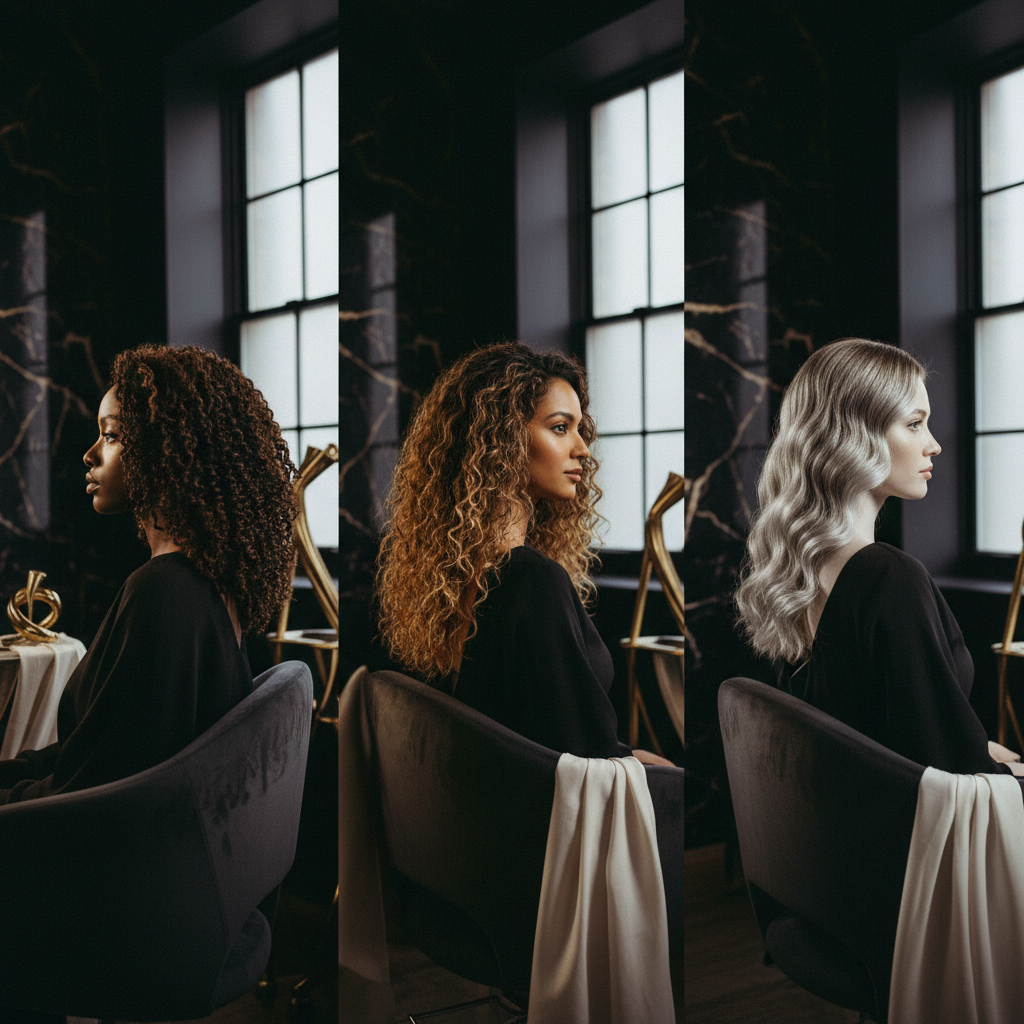
Quick answer: Curl Patterns are a system used to classify the natural shape of hair strands, ranging from straight to wavy, curly, and coily. This classification helps in understanding hair's unique needs regarding moisture, product selection, and styling, though it's important to recognise that most individuals have a mix of Curl Patterns on their head rather than a single, uniform type, and patterns can change over time. Hair characteristics like porosity and density are also crucial for effective care, often being more influential than the curl pattern alone.
Key takeaways
- Hair classification helps. Systems like the Andre Walker Type identify broad categories of hair texture, from straight to coily.
- Individual variation is normal. Most people have more than one curl pattern on their head, and hair characteristics can evolve due to age, hormones, or chemical treatments.
- Pattern affects care. Different curl patterns have distinct needs for hydration, detangling, and styling, influencing product choice and application.
- Porosity and density matter equally. Understanding your hair's ability to absorb and retain moisture (porosity) and its thickness (density) is as important, if not more, than just its curl pattern.
- Focus on hair health. Regardless of pattern, gentle handling, adequate moisture, and protection from damage are universal principles for healthy hair.
Curl Patterns: what the evidence shows
Curl patterns are a way to describe the natural shape of hair strands, typically categorised into types that range from straight to extremely coily. This categorisation provides a general guide for understanding how hair behaves, its structural characteristics, and its potential needs. While often simplified, these systems help individuals and stylists select appropriate hair care products and techniques. However, it is important to remember that these are descriptive models, not rigid biological classifications, and individual hair can vary significantly.
The most widely referenced system is the Andre Walker Hair Typing System, developed by stylist Andre Walker. This system divides hair into four main types (1 for straight, 2 for wavy, 3 for curly, and 4 for coily), with further subdivisions (A, B, C) based on the tightness or looseness of the pattern. While popular, it has been noted by various dermatological and hair science experts to be an oversimplification, particularly for very coily textures, and some argue it does not fully capture the diversity of hair types, especially within populations of African descent. Nonetheless, it remains a useful framework for broad discussions about hair texture.
Hair Type 1: Straight Hair
Type 1 hair is naturally straight and does not exhibit a visible curl pattern. The hair shaft is typically round or slightly oval in cross-section. This structure allows the natural oils (sebum) produced by the scalp to travel down the hair shaft relatively easily, which can make this hair type prone to appearing oily or weighed down if not cleansed regularly. Hair in this category may be fine, medium, or coarse.
- 1A: Very fine, soft, and often shiny. It can be challenging to hold styles that require volume or curl.
- 1B: Medium texture with more body than 1A. It can hold a curl somewhat more effectively.
- 1C: Coarse, thick, and typically resistant to curling. It often has more volume and can be prone to frizz in humid conditions.
Hair Type 2: Wavy Hair
Type 2 hair features a distinctive S-shape wave pattern. It sits between straight and curly hair, often prone to frizz and can be easily weighed down by heavy products. The waves can vary from loose and subtle to more defined and pronounced.
- 2A: Fine, easily straightened, with a loose, stretched-out 'S' wave. It generally lacks volume at the roots.
- 2B: Medium texture with a more defined 'S' shape, often starting closer to the scalp. It can be prone to frizz, especially in damp environments.
- 2C: Coarse, thick waves that are more defined and can start closer to the root. This hair type can be more difficult to style due to its density and is often very prone to frizz.
Hair Type 3: Curly Hair
Type 3 hair is characterised by well-defined curls that range from loose, springy loops to tight, springy corkscrews. Due to the helical structure, the cuticle layers of curly hair do not lie as flat as those on straight hair, making it more challenging for natural oils to coat the entire strand. This often makes Type 3 hair more prone to dryness and potential breakage if not adequately moisturised and handled gently. See also: Caring for Curly Hair.
- 3A: Large, loose curls that are typically well-defined and shiny, often with a circumference similar to a large marker pen.
- 3B: Springy, tighter curls with a circumference similar to a Sharpie marker. This hair type tends to have significant volume and can be prone to frizz.
- 3C: Tightly packed corkscrew curls, often the size of a pencil. This type has considerable volume but is also very prone to dryness, tangling, and requires careful detangling.
Hair Type 4: Coily Hair
Type 4 hair is characterised by very tight, small, zigzag patterns or coils. Despite often being dense, it is considered the most fragile hair type due to its many twists and turns, which create points of weakness along the hair shaft. Type 4 hair experiences significant shrinkage, meaning its apparent length is much shorter than its actual length when wet or unstretched. It is highly susceptible to dryness and requires diligent moisturising and gentle handling. See also: How to Care for Afro Hair.
- 4A: Densely packed, S-shaped coils that are clearly defined and have a small circumference.
- 4B: Z-shaped kinks and bends with sharp angles, rather than a distinct circular curl pattern. It often has less definition than 4A and can be very delicate.
- 4C: Densely packed, very tight Z-shaped pattern with often an almost imperceptible defined curl. It experiences the most shrinkage and is considered the most delicate hair type, demanding maximum moisture retention and extremely gentle handling to prevent breakage.
Why Curl Pattern matters for hair health
Understanding your hair's curl pattern offers a starting point for tailoring your haircare routine. The shape of the hair strand directly influences how moisture travels along it, how it reacts to humidity, and its susceptibility to breakage. For instance, coily hair (Type 4) typically needs richer, heavier moisturisers and oils to combat dryness, as natural scalp oils struggle to travel down the intricate coils. In contrast, straight hair (Type 1) might become easily greasy and weighed down by such products.
However, it's crucial to recognise that curl pattern is just one factor. Hair porosity (its ability to absorb and retain moisture) and density (the number of individual hair strands on the scalp) are equally, if not more, important. For example, fine, low porosity curly hair will have different needs than coarse, high porosity curly hair. Therefore, a holistic approach that considers all these characteristics leads to more effective hair care. See also: Understanding Hair Porosity.
The mechanism of curl formation
The curl of hair is primarily determined by the shape of the hair follicle from which it grows and the distribution of keratin within the hair shaft. Oval-shaped follicles produce curlier hair, while round follicles produce straighter hair. The angle at which the follicle emerges from the scalp also plays a role. Internally, the asymmetric distribution of cortical cells (orthocortex and paracortex) within the hair shaft creates differential growth, causing the strand to bend or coil. Genetic factors largely determine these characteristics, though hormonal changes, ageing, and chemical treatments can sometimes alter the hair's natural curl pattern over time.
Table: General Characteristics by Hair Type
| Hair Type | Characteristics | Key Challenges | Care Considerations |
|---|---|---|---|
| Type 1 (Straight) | Smooth, shiny, no curl. Sebum travels easily. | Can become oily quickly; difficult to hold curl/volume. | Regular cleansing, lighter products, avoid heavy oils. |
| Type 2 (Wavy) | S-shape pattern, between straight and curly. | Prone to frizz, can be weighed down by heavy products. | Volumising products, light gels/mousses, anti-frizz. |
| Type 3 (Curly) | Defined loops or corkscrews. | Prone to dryness, frizz, tangling, and breakage. | Hydrating shampoos/conditioners, leave-ins, gentle detangling. |
| Type 4 (Coily) | Tight, small coils or zigzags; high shrinkage. | Very prone to dryness, extreme fragility, tangling. | Deep conditioning, rich moisturisers, protective styles, minimal manipulation. |
What you can do: tailoring your routine
Tailoring your haircare routine to your specific Curl Patterns, porosity, and density can significantly improve hair health and manageability. The general principle is to ensure adequate moisture for curlier textures and focus on gentle care to prevent breakage, while straighter types may focus more on cleansing and volume.
- Cleansing: Use gentle, sulfate-free shampoos, especially for wavy, curly, and coily hair, to avoid stripping natural oils. Straight or oily hair may benefit from more frequent washing or clarifying washes. See also: Choosing the Right Shampoo, How to Do a Clarifying Wash.
- Conditioning: All hair types benefit from conditioner. Curled hair, particularly Type 3 and 4, will benefit from rich, moisturising conditioners and regular deep conditioning treatments to combat dryness. Straight hair can use lighter conditioners to prevent being weighed down. See also: The Science of Conditioners, Choosing the Right Hair Conditioner.
- Moisture: Curly and coily hair types require consistent moisture. This can be achieved through leave-in conditioners, hair creams, and oils. The "LOC" (Liquid, Oil, Cream) method or "LCO" (Liquid, Cream, Oil) method can be effective for Type 3 and 4 hair. See also: Hair Hydration: The Science Behind Keeping Hair Moist, How to Moisturise Afro Hair.
- Styling: Air drying or diffusing on a low heat setting is generally preferred for curly and coily hair to preserve the curl pattern and minimise frizz. Use protective styles for Type 4 hair to reduce manipulation and breakage. See also: Hair Drying Techniques, Protective Styling.
- Detangling: Always detangle hair gently, ideally when wet and saturated with conditioner, using a wide-tooth comb or your fingers. Start from the ends and work your way up to minimise breakage, particularly for Type 3 and 4 hair. See also: How to Detangle Afro Hair Without Breakage.
When to get professional advice
While understanding Curl Patterns provides a good foundation, sometimes professional advice is beneficial. If you experience persistent hair issues such as unexplained shedding, breakage not resolved by adjusting your routine, scalp irritation, or sudden changes in your hair texture, it may be advisable to consult a trichologist or dermatologist. They can assess underlying health conditions, nutritional deficiencies, or hormonal imbalances that might be affecting your hair's health and growth.
Frequently asked questions about Curl Patterns
Can Curl Patterns change over time?
Yes, Curl Patterns can change due to several factors. Hormonal shifts, such as those during puberty, pregnancy, or menopause, can alter hair texture. Ageing often leads to hair becoming finer or less curly. Chemical treatments like perms, relaxers, or even frequent colouring can permanently or temporarily change the hair's structure. Significant stress, diet, and certain medications can also influence hair characteristics, sometimes leading to a change in curl definition.
Is one Curl Pattern healthier than another?
No, no single Curl Pattern is inherently healthier than another. All hair types are healthy when properly cared for. The perception of health often relates to the challenges certain hair types face; for example, coily hair is often perceived as "unhealthy" due to its propensity for dryness and fragility, but this is a structural characteristic requiring specific care, not an indication of ill-health. With the right routine, any curl pattern can be healthy and vibrant.
Do people always have one Curl Pattern?
It is common for individuals to have multiple Curl Patterns on different parts of their head. For example, hair at the nape of the neck might be wavier, while the crown is curlier. This variability is entirely normal. It means that you might need to adapt your product application or styling techniques to different sections of your hair to address their specific needs. Focusing on the overall health of your hair, rather than strict adherence to one type, is often more effective.
How does Curl Pattern relate to hair porosity?
Curl Pattern and hair porosity are distinct but interconnected characteristics. While curlier hair (Type 3 and 4) often has higher porosity due to the raised cuticles at the bends and turns, this isn't always the case. Hair porosity refers to how easily your hair absorbs and retains moisture, regardless of its curl. You can have low porosity curly hair or high porosity straight hair. Both Curl Patterns and porosity dictate product choice and routine, so understanding both is key for optimal hair care. See also: Understanding Hair Porosity.
Conclusion: Navigating Your Curl Patterns
Understanding your hair's natural Curl Patterns is a valuable step towards developing an effective and nurturing haircare routine. While systems like the Andre Walker Type provide a helpful framework, remember that they are guides, not rigid rules. Your hair's unique blend of curl pattern, porosity, and density creates its specific needs. By observing how your hair responds to different products and techniques, and by prioritising gentle care and consistent moisture, you can foster healthy, strong, and beautiful hair, regardless of its natural shape.
Sources and references
- American Academy of Dermatology Association, "Hair loss: Diagnosis and treatment", (n.d.), aad.org
- British Association of Dermatologists, "Hair and Scalp Conditions", (n.d.), bad.org.uk
- Journal of Cosmetic Science, "The Structure of Hair", various articles.
- National Institutes of Health, PubMed, various research on hair morphology and composition.
- The Trichological Society, "Hair Structure and Characteristics", (n.d.), trichologists.org.uk