Cradle Cap: Understanding Infantile Seborrheic Dermatitis
9 min read ·
Cradle Cap is a common, harmless skin condition in infants, characterised by greasy, scaly patches on the scalp.
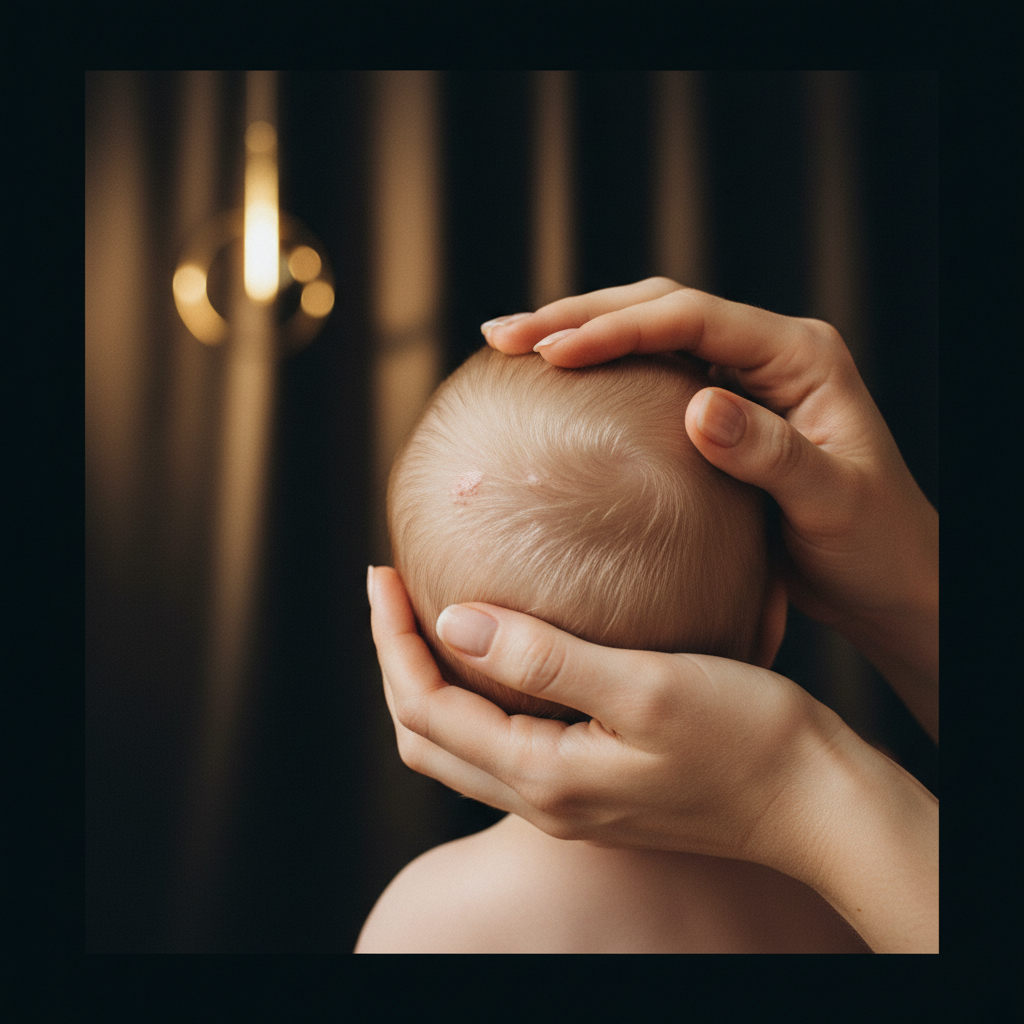
Quick answer: Cradle Cap, or infantile seborrheic dermatitis, is a very common and harmless skin condition affecting infants, typically appearing as greasy, yellowish or brownish scaly patches on the scalp. It is not usually itchy or painful for the baby and typically resolves on its own within a few months, often by the age of one. While its exact cause isn't fully understood, it's believed to involve maternal hormones and a yeast called Malassezia. The main limitation is that its appearance can sometimes be confused with other infant skin conditions.
Key takeaways
- Cradle Cap is the common name for infantile seborrheic dermatitis, a harmless skin condition in infants.
- It typically appears as greasy, yellowish or brownish scales on the scalp but can occur elsewhere.
- The exact cause is unknown, but it's thought to relate to maternal hormones stimulating sebaceous glands and the presence of Malassezia yeast.
- It's not contagious, painful, or a sign of poor hygiene, and usually resolves without treatment.
- Gentle washing, moisturising, and soft brushing can help manage the scales.
- Consult a doctor if the condition is severe, persistent, widespread, or inflamed, or if you're unsure of the diagnosis.
Cradle Cap: what the evidence shows
Cradle Cap, medically known as infantile seborrheic dermatitis, is a benign and common skin condition that affects infants, typically appearing within the first few weeks or months of life. It is characterised by greasy, yellow, or brown scaly patches, most frequently on the baby's scalp. Less commonly, these scales can appear on the face, behind the ears, in skin folds, or even in the nappy area.
Despite its appearance, Cradle Cap is not usually itchy or painful for the infant. It does not indicate poor hygiene and is not contagious. In most cases, the condition is self-limiting, meaning it resolves on its own without specific medical intervention, often within 6 to 12 months. Studies estimate that Cradle Cap affects up to 70% of infants, making it one of the most common skin conditions in this age group (American Academy of Pediatrics).
The mechanism behind Cradle Cap
The precise cause of Cradle Cap is not fully understood, but current evidence points to a combination of factors, rather than a single trigger.
One significant theory involves the transfer of maternal hormones to the baby during pregnancy and breastfeeding. These hormones are thought to temporarily overstimulate the baby's sebaceous glands. Sebaceous glands are microscopic glands in the skin that produce sebum, a natural oily, waxy substance that lubricates and waterproofs the skin and hair. This increased sebum production, particularly on the scalp, leads to an accumulation of oil and dead skin cells, forming the characteristic scales. For more on how these glands function, see 'Sebum Regulation: Understanding and Managing Scalp Oiliness'.
Another contributing factor is the presence of Malassezia yeast, a type of fungus that naturally lives on human skin. While not typically harmful, an overgrowth of Malassezia can occur in areas rich in sebum. This yeast metabolises the lipids in sebum, producing irritating by-products that can contribute to inflammation and scaling in susceptible individuals. This is not considered an infection in the same way as, for example, athlete's foot, but rather an inflammatory reaction to a naturally occurring organism. Controlled research has not found a direct causal link between Malassezia and Cradle Cap, but its presence is frequently observed.
What the evidence does not show is that Cradle Cap is caused by allergies, poor hygiene, or bacterial infection. It is also not typically associated with nutritional deficiencies, although some older theories explored this possibility, which has not been supported by modern research.
Identifying the signs of Cradle Cap
The primary sign of Cradle Cap is the presence of thick, greasy, yellowish or brownish scales on the scalp. These scales can be small and flaky or large and tenacious. The skin underneath may appear slightly red, but it is typically not inflamed, hot, or significantly irritated. While most commonly found on the scalp, particularly the crown and fontanelles, Cradle Cap can also manifest in other areas rich in sebaceous glands:
- Face: Especially around the eyebrows, nose, and occasionally the eyelids.
- Ears: In the folds behind the ears and sometimes within the ear canal opening.
- Body folds: In the neck creases, armpits, and occasionally the nappy area, where it can sometimes be confused with nappy rash, though Cradle Cap presents as greasier, more defined scales.
In some instances, very mild hair shedding might occur in the affected patches due to the scales adhering to hair shafts. However, this is temporary, and hair regrows normally once the condition resolves.
What you can do to manage Cradle Cap
Although Cradle Cap usually clears on its own, gentle home care can help to soften and remove the scales, improving the scalp's appearance. Consistency is key.
- Gentle Washing: Regularly wash your baby's hair and scalp, typically once a day or every other day. Use a mild, fragrance-free baby shampoo. Gentle cleansing helps to prevent the build-up of oils and dead skin cells. Ensure the scalp is rinsed thoroughly, as leaving shampoo residue can sometimes lead to irritation. For more information on gentle cleansing, consider 'Choosing the Right Shampoo for Your Hair Type'.
- Softening the Scales: Before shampooing, gently massage a small amount of a suitable emollient, such as mineral oil, petroleum jelly, or a baby-specific moisturiser, onto the affected areas. Leave it to soak for about 15 to 30 minutes. This helps to soften the scales, making them easier to remove. Natural oils like olive oil or coconut oil are sometimes used, but some sources suggest these might potentially feed Malassezia yeast, so mineral oil or petroleum jelly might be preferred (American Academy of Dermatology). For severe cases, leaving the emollient on overnight, then washing in the morning, can be effective.
- Gentle Removal: After softening, use a soft baby brush, a soft toothbrush, or a fine-toothed comb to gently loosen and lift the softened flakes from the scalp. Brush or comb very gently to avoid irritating the delicate skin. Never pick or scratch the scales, as this can cause discomfort, break the skin, and potentially introduce infection.
Always ensure the baby's scalp is thoroughly rinsed after treatment to remove all product and loosened scales.
When the cause may be something else
While Cradle Cap is distinct, its appearance can sometimes be similar to other infant skin conditions. It's important to consult a healthcare professional if you are unsure of the diagnosis or if the condition does not respond to gentle home care.
- Infantile Eczema (Atopic Dermatitis): This condition often presents as dry, red, intensely itchy patches, which can sometimes weep or crust. While it can affect the scalp, it commonly appears on the face, and in the creases of elbows and knees. Itchiness is a key differentiator from Cradle Cap.
- Nappy Rash: In the nappy area, Cradle Cap can resemble nappy rash, but typical nappy rash tends to be brighter red and often without the greasy, yellowish scales. Fungal nappy rash (candida) also has a distinct appearance with satellite lesions.
- Psoriasis: Although rare in infants, psoriasis can sometimes occur, presenting as sharply defined, red plaques with silvery scales. It is typically more persistent and often itchy.
- Ringworm (Tinea Capitis): This is a fungal infection that causes scaly, sometimes itchy, bald patches on the scalp. Unlike Cradle Cap, ringworm often involves hair breakage and can spread.
When to seek professional medical advice
Most cases of Cradle Cap do not require medical intervention and resolve with gentle home care. However, it's advisable to contact your general practitioner or health visitor if:
- The Cradle Cap spreads beyond the scalp to a significant extent, for example, affecting large areas of the face or body.
- The skin under the scales becomes very red, inflamed, swollen, or develops weeping or pus, suggesting a possible secondary infection.
- The condition appears to be causing your baby discomfort, such as itchiness or irritability.
- The Cradle Cap does not improve after several weeks of consistent home care.
- You are unsure if the condition is indeed Cradle Cap and suspect it might be another skin condition. Accurate diagnosis is crucial for appropriate treatment.
Cradle Cap and Watermans Haircare
Watermans Haircare products are not designed or formulated to treat Cradle Cap in infants. Our product range focuses on supporting hair health and growth for adults, addressing concerns such as hair shedding, breakage, and overall hair condition. For infants with Cradle Cap, the recommended approach is always gentle care using mild, fragrance-free baby products and emollients, as advised by healthcare professionals.
For adults experiencing scalp conditions like general flakiness, dryness, or excess oiliness that might resemble adult seborrheic dermatitis, our 'Understanding Scalp Health' article provides further information. However, for specific medical conditions in infants, always consult a doctor.
Frequently asked questions about Cradle Cap
What is the difference between Cradle Cap and baby acne?
Cradle Cap presents as greasy, yellowish scales, primarily on the scalp. Baby acne, also common in infants, typically appears as small red bumps or pustules on the face, especially the cheeks, forehead, and nose. Baby acne is thought to be related to maternal hormones and usually resolves by 3 to 4 months of age, without the scaling seen in Cradle Cap.
Does Cradle Cap cause hair loss?
Cradle Cap does not typically cause permanent hair loss. In some cases, hair shafts may become temporarily trapped within the thick scales and shed along with the flakes. However, this hair loss is usually minor and temporary, and the hair will regrow normally once the Cradle Cap clears. It's important not to forcefully pull off scales, as this can exacerbate temporary hair shedding.
Can I use olive oil to treat Cradle Cap?
While some parents use olive oil to soften Cradle Cap scales, there is mixed evidence regarding its suitability. Olive oil is high in oleic acid, which some studies suggest can potentially irritate delicate infant skin or promote the growth of Malassezia yeast in some individuals. Mineral oil, petroleum jelly, or specially formulated baby emollients are often recommended by dermatologists as safer alternatives for softening scales.
Is Cradle Cap a sign of an allergy?
No, Cradle Cap is not an allergic reaction. Its development is linked to hormone-driven sebaceous gland activity and the presence of naturally occurring yeast, not an immune response to an allergen. While infants can develop allergies, Cradle Cap itself is not a manifestation of one. If an infant has eczema, which can be linked to allergies, it is a separate condition, although they can sometimes coexist.
How long does Cradle Cap last?
Cradle Cap is usually a temporary condition. Most cases resolve naturally within the first 6 to 12 months of a baby's life, often clearing up by the time the child is a toddler. In some rare instances, it can persist longer, but this is less common. Consistent, gentle home care can help to manage the condition and shorten its duration.
Understanding Cradle Cap
Cradle Cap is a very common and harmless infant skin condition that, while sometimes looking concerning, rarely causes any discomfort to the baby. Understanding its nature, what triggers it, and how to gently manage the scales can provide reassurance to parents. While it typically resolves on its own, knowing when to seek professional advice ensures that any persistent or atypical symptoms are appropriately addressed. Gentle care and patience are usually all that is needed to help your baby's scalp become clear again.
Sources and references
- American Academy of Pediatrics, HealthyChildren.org: 'Cradle Cap'. Available via their official website.
- American Academy of Dermatology Association: 'Cradle Cap: How to treat'. Available via aad.org.
- National Health Service (NHS), UK: 'Cradle cap'. Available via nhs.uk.
- Eichenfield, L.F., et al. (2014). 'Guidelines of Care for the Management of Atopic Dermatitis'. Journal of the American Academy of Dermatology, 71(1), 116-132. (Although primarily on atopic dermatitis, this journal is a key dermatology source for infant skin conditions).
- DermNet New Zealand: 'Seborrhoeic dermatitis'. Available via dermnetnz.org.
Find these ingredients in Watermans products
- Oleic Acid: you will find this ingredient in our Camellia & Black Castor Hair & Body Oil.