Clarifying Shampoos and Mineral Build-Up: The Science and Solutions
9 min read ·
Learn how clarifying shampoos and chelating agents combat mineral build-up from hard water. Understand the chemistry, prevent breakage, and protect your hair.
Quick answer: When evaluating Clarifying Shampoos and Mineral Build-Up, standard clarifying shampoos are formulated to remove surface styling products, sebum, and environmental grime, but they often fail to remove hard water deposits. True mineral build-up consists of calcium, magnesium, copper, and iron chemically bound to the hair fibre. While clarifying shampoos rely on strong surfactants, dislodging oxidised or precipitated minerals requires specific chelating agents like tetrasodium EDTA or citric acid. Overusing harsh clarifiers without chelators risks surface dryness without solving the underlying mineral problem.
Key takeaways
- Standard clarifying shampoos target organic residues like silicones, waxes, and sebum rather than inorganic mineral deposits.
- Mineral build-up occurs when calcium, magnesium, iron, or copper in domestic water supplies adhere to the keratin matrix of the hair shaft.
- To remove minerals effectively, a formula must contain chelating agents that bond with metal ions and render them water-soluble.
- Hard water deposits increase fibre friction, making hair feel coarse, stiff, and prone to mechanical breakage during brushing.
- Clarifying shampoos with chelating agents should typically be used every one to three weeks to avoid depleting the hair of natural protective lipids.
Clarifying Shampoos and Mineral Build-Up: what the evidence shows
Research into hair care chemistry demonstrates a clear distinction between standard clarifying action and mineral removal. The relationship between Clarifying Shampoos and Mineral Build-Up centres on the chemical difference between non-polar organic residues and polar, charged metal ions.
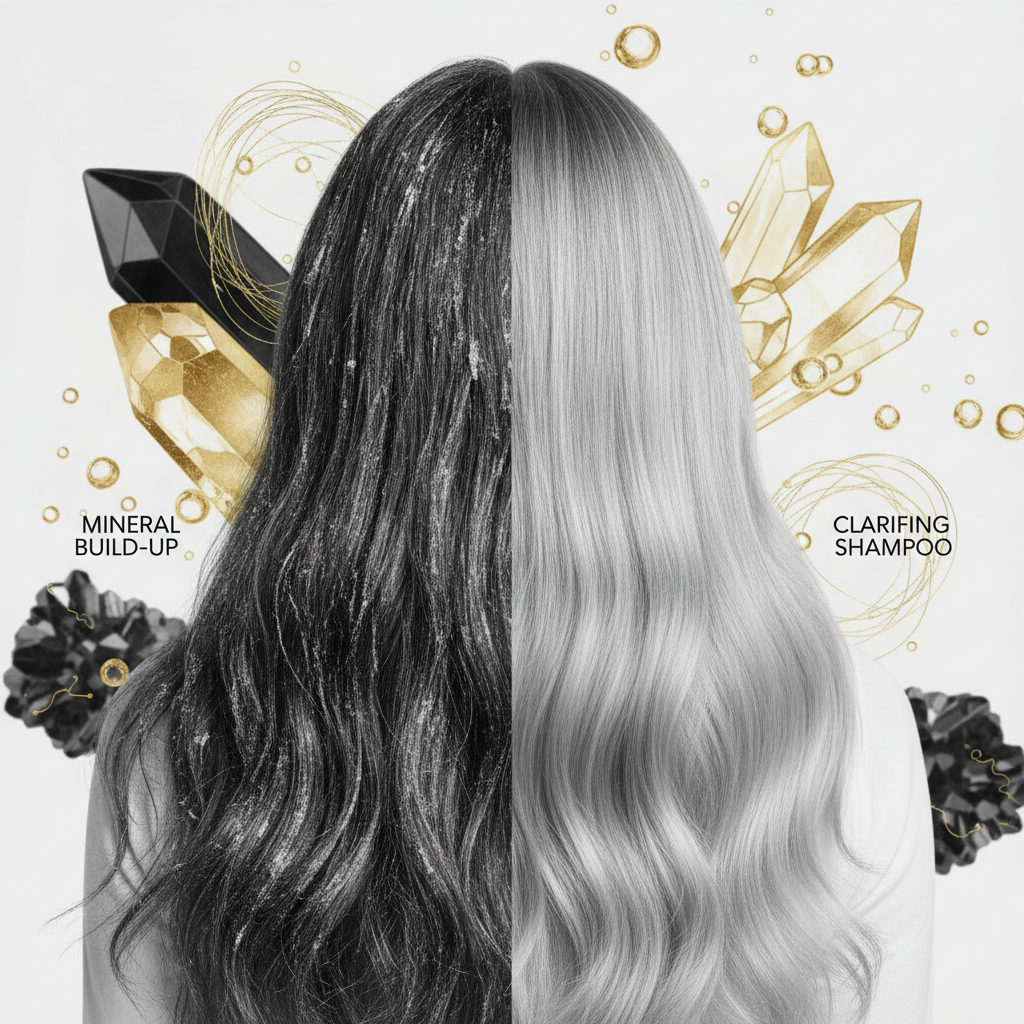
Washing hair in hard water exposes the hair shaft to high concentrations of dissolved minerals, predominantly calcium carbonate and magnesium carbonate. Hardness is commonly measured in milligrams per litre (mg/L) of calcium carbonate equivalents. Water above 120 mg/L is classified as hard, and levels exceeding 180 mg/L are considered very hard. When water evaporates from the hair surface, these minerals precipitate out of solution and crystallise on the cuticle scale edges.
Furthermore, hair that has undergone oxidative chemical processing, such as bleaching or permanent colouring, develops a negative electrostatic charge due to the formation of cysteic acid groups. Positively charged multivalent metal ions (especially calcium $Ca^{2+}$, magnesium $Mg^{2+}$, and copper $Cu^{2+}$) bind tenaciously to these sites. Studies published in the International Journal of Cosmetic Science show that standard anionic surfactants (such as sodium laureth sulphate) cannot break these ionic bonds efficiently on their own. They cleanse the exterior sebum layer, but leave the mineral matrix largely intact.
To dissolve and rinse away these deposits, the formula requires chelating agents (or sequestering agents). Common cosmetic chelators include tetrasodium EDTA, disodium EDTA, sodium phytate, and citric acid. These molecules possess multiple bonding sites that physically wrap around the metal ion, neutralising its charge and pulling it into the rinse water.
What the evidence does not show
It is vital to separate cosmetic fibre behaviour from follicular conditions:
- Mineral deposits do not cause follicular hair loss: Hard water and mineral encrustation do not induce androgenetic alopecia, alopecia areata, or telogen effluvium. The hair follicle sits 3 to 5 millimetres below the scalp surface, receiving its blood supply and nutrients internally.
- Hard water does not permanently destroy internal tensile strength: Research published in the Journal of Cosmetic Dermatology evaluating hair exposed to hard water found that while surface roughness and mineral absorption increased, the fundamental tensile strength of virgin hair was not significantly compromised compared to deionised water controls. However, the resulting friction and tangling dramatically increase breakage during detangling.
- Clarifying shampoos are not daily washes: There is no evidence supporting the daily use of clarifying shampoos. Doing so disrupts the lipid layer of the scalp, stripping 18-methyleicosanoic acid (18-MEA) from the cuticle surface and triggering barrier disruption.
The mechanism of mineral accumulation
Mineral accumulation is a progressive, cumulative process dictated by water chemistry, cuticle porosity, and wash frequency.
Domestic Hard Water (Ca²⁺, Mg²⁺, Cu²⁺)
 │
 ▼
Hair Shaft Exposure during Washing
 │
 ▼
Binding to Cysteic Acid Groups on Damaged Cuticles
 │
 ▼
Water Evaporates ──> Salt Precipitation on Cuticle Edges
 │
 ▼
Increased Cuticle Roughness & Fibre-on-Fibre Friction
 │
 ▼
Styling Damage & Snapping (Fibre Breakage)
- Cuticle Binding: Porous or lightened hair absorbs water readily. As water enters the cortex and swells the cuticle, divalent cations bind to anionic protein sites.
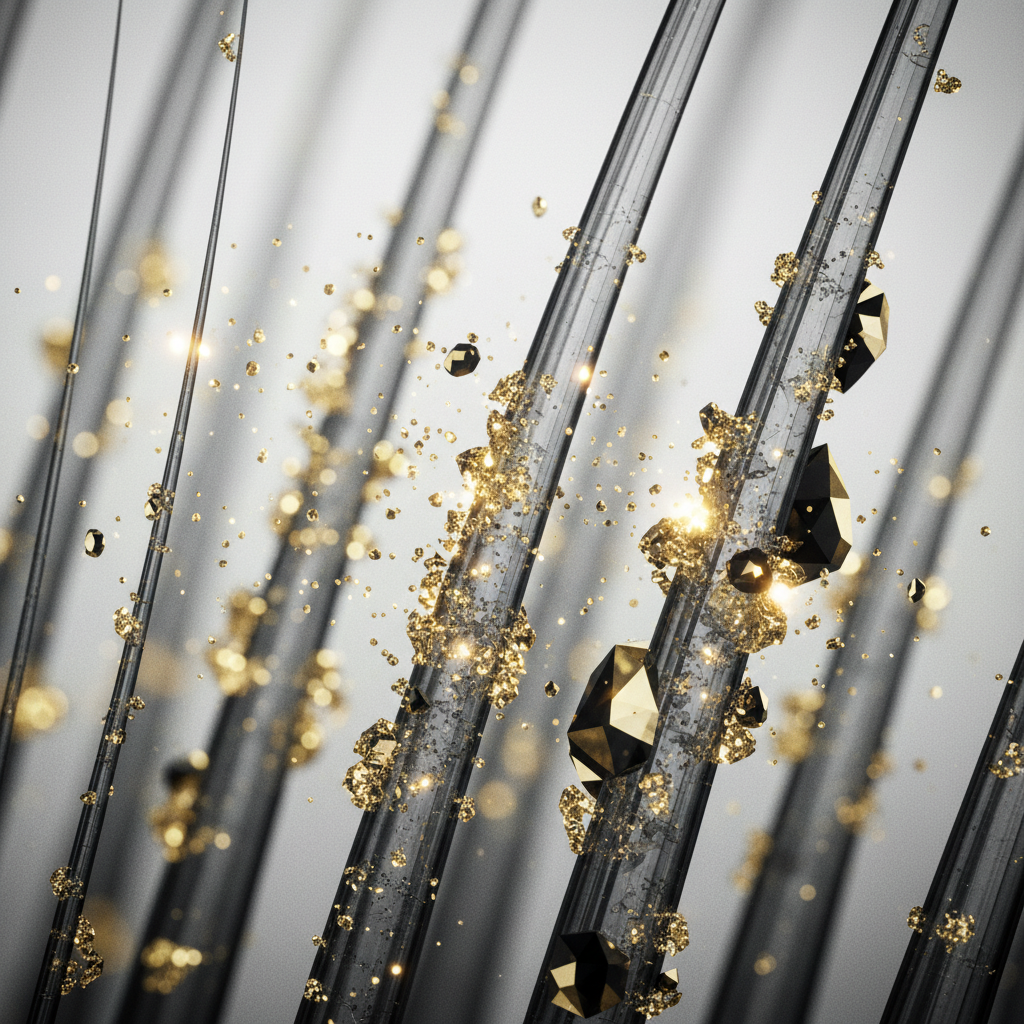
- Crystal Formation: As the hair dries, unevaporated minerals form microscopic, insoluble crystals under and along the edges of the cuticle scales.
- Cuticle Propping: These crystals prevent the cuticle scales from lying flat against the cortex. This mimics structural cuticle damage, making the hair feel permanently coarse and straw-like.
- Oxidation Reactions: Heavy metals, particularly copper and iron, act as catalysts for free radical generation. In the presence of sunlight (UV radiation) or hydrogen peroxide from salon colouring, copper accelerates protein degradation and causes greenish or brassy discolouration.
Signs of mineral build-up vs product build-up
Recognising whether your hair is suffering from product build-up or mineral build-up ensures you select the correct washing protocol.
| Characteristic | Product Build-Up | Mineral Build-Up |
|---|---|---|
| Primary Culprits | Heavy silicones, polyquats, natural butters, styling polymers | Calcium, magnesium, iron, copper, chlorine complexes |
| Hair Feel | Slippery, greasy, limp, coated, or waxy | Stiff, dry, rough, straw-like, tangles easily |
| Visual Appearance | Dull, weighed down, white flakes when scraped with a fingernail | Matte, brassy, discoloured (greenish tint on blonde hair from copper) |
| Response to Moisture | Hair resists water initially, then feels saturated | Hair feels instantly stiff as soon as wet; conditioners fail to soften |
| Foaming of Shampoos | Shampoos lather poorly on the first wash, then lather well | Standard shampoos fail to lather properly even on repeated washes |
| Corrective Agent | High-detergency clarifying shampoo (strong surfactants) | Chelating shampoo containing EDTA, citric acid, or sodium phytate |
What you can do to manage mineral build-up
Managing mineral deposits involves mechanical removal, chemical chelation, and preventative steps.
1. Select the right formulation
Look for products specifically designated as "chelating" or clarifying shampoos that list active chelators high on the ingredient list. Ingredients such as tetrasodium EDTA, disodium EDTA, or citric acid buffered at an acidic pH (between 4.5 and 5.5) are essential for breaking metal-protein complexes.
2. Establish a tailored washing frequency
- Soft water areas (0 to 60 mg/L): A chelating or clarifying wash is rarely needed for minerals, though a standard clarifying wash once a month handles cosmetic product residue.
- Moderately hard water (61 to 120 mg/L): Clarify every two to three weeks.
- Hard to very hard water (121 to 180+ mg/L): Use a chelating clarifying wash once every 7 to 14 days.
3. Mind your contact time
Chelation is a chemical reaction that requires contact time. Apply the clarifying shampoo, massage it into the lengths where deposits accumulate, and let it sit for two to three minutes before thoroughly rinsing with warm water.
4. Restore the lipid barrier immediately
Clarifying and chelating shampoos intentionally strip the surface of the hair clean. Follow immediately with an intensive [deep conditioner](https://watermanshair.com/products/masque-me-luxurious-hair-mask) or protein-moisture treatment to restore suppleness, replenish fatty acids, and smooth down the cuticle scales.
When the cause may be something else
If your hair remains brittle, unmanageable, or dull despite using targeted treatments, the underlying cause may not be mineral accumulation:
- Structural Protein Loss: Over-bleached or chemically relaxed hair has suffered irreversible disulfide bond cleavage. This causes perpetual snapping and coarseness that mimicking mineral roughness.
- Protein Overload or Hygral Fatigue: Excessive use of high-molecular-weight protein treatments can leave hair feeling stiff and brittle, whereas chronic swelling and contracting from prolonged dampness (hygral fatigue) weakens cuticle resilience.
- Underlying Scalp Conditions: Flaking and irritation attributed to hard water drying out the scalp is often mild seborrhoeic dermatitis, which requires antifungal actives (such as ketoconazole or piroctone olamine) rather than simple clarifying shampoos.
When to seek professional advice
Consult a qualified trichologist or an experienced salon colourist under the following conditions:
- You plan to undergo a major oxidative chemical service (such as high-lift bleaching or a perm) after prolonged exposure to well water or very hard water. High copper levels can cause rapid exothermic reactions, causing bleach to boil, smoke, and chemically melt the hair fibre.
- You experience diffuse hair shedding (telogen effluvium) or patchy hair loss. Mineral deposits snap hair fibres along the shaft, but they do not cause hair to shed from the follicle root. A trichologist or dermatologist can run blood tests to check for systemic causes, such as ferritin deficiencies or thyroid imbalances.
Supporting hair health from the roots
While addressing surface deposits with the correct washing technique is vital for cosmetic shine and mechanical preservation, overall hair quality begins at the follicle. Watermans focuses on providing nutrient-rich, scalp-supportive products that maintain an optimal environment for hair growth. While a chelating wash removes the environmental burdens of mineral-laden tap water from the fibre shaft, ensuring the scalp is clean, nourished, and invigorated with premium topical botanical extracts supports natural hair resilience from day one.
Frequently asked questions about Clarifying Shampoos and Mineral Build-Up
Can regular clarifying shampoos remove hard water mineral build-up?
Most basic clarifying shampoos only lift organic materials like oils, silicones, and waxes. When dealing with Clarifying Shampoos and Mineral Build-Up, standard surfactants lack the molecular capacity to dissolve mineral salts. You must verify that the formula includes strong chelating agents, such as tetrasodium EDTA or citric acid, which physically bind to and extract metal ions from the hair.
How often should you use a clarifying shampoo for hard water?
In areas with hard or very hard water, use a chelating clarifying shampoo once every 7 to 14 days. Using it more frequently can deplete the hair cuticle of protective fatty acids, causing dryness and surface roughness. If your water is moderately hard, once every three weeks is usually sufficient.
Will mineral build-up cause my hair to fall out from the roots?
No. Mineral build-up affects the non-living hair shaft outside the scalp. It coats the cuticle, raises friction between fibres, and leads to tangling and breakage. It does not cause follicular hair loss or alopecia. If you notice hairs shedding with the white bulb attached, the cause is internal rather than hard water.
Why does hair turn green or orange in certain water supplies?
Discolouration is typically caused by oxidised metals rather than general hardness. Copper ions in domestic piping or swimming pools bind to the keratin matrix and oxidise, imparting a pale green tinge to fair hair. Iron deposits, conversely, oxidise into iron oxide (rust), creating stubborn brassy, orange, or reddish tones that require chelation to shift.
Can apple cider vinegar substitute for a chelating shampoo?
Apple cider vinegar has mild chelating properties due to its acetic acid content, and its low pH helps smooth the cuticle layer. However, its binding capacity for heavy metals like calcium, magnesium, and copper is significantly weaker than laboratory-grade chelating agents like EDTA. For substantial mineral encrustation, an engineered chelating shampoo is far more effective.
The bottom line on Clarifying Shampoos and Mineral Build-Up
Maintaining vibrant, manageable hair in the presence of hard water requires understanding the precise mechanisms behind Clarifying Shampoos and Mineral Build-Up. Standard high-foaming cleansers may wash away everyday styling grime, but only formulas fortified with active chelating agents can dislodge the ionic bonds formed by calcium, magnesium, copper, and iron. By incorporating a targeted chelating wash into your routine on a measured, weekly or fortnightly schedule, and pairing it with restorative conditioning agents, you can prevent mineral-induced breakage and keep your hair fibre smooth, clean, and mechanically sound.
Sources and references
- International Journal of Cosmetic Science, "Investigation of the penetration and distribution of metals in human hair fibres", 2014.
- Journal of Cosmetic Dermatology, "Effects of hard water on hair", 2016.
- Society of Cosmetic Chemists, "The chemistry of hair care products and metal chelation", Monograph Series.
- Drinking Water Inspectorate (DWI), "Water hardness and mineral content reporting", UK Gov, 2021.
- American Academy of Dermatology, "Managing dry, brittle hair and styling damage", AAD Public Resources.
Find these ingredients in Watermans products
- Copper: you will find this ingredient in our Hair Vitamins.