Chlorine Damage Hair: Mechanisms, Identification, and Care
9 min read ·
Chlorine damage hair problems occur when pool oxidisers strip protective lipids and weaken keratin. Discover how it happens and how to protect your strands.
Quick answer: Swimming pools sanitised with hypochlorous acid can cause distinct structural issues known as chlorine damage. Chlorine damage hair problems occur when this strong oxidiser strips away protective sebum and the 18-methyleicosanoic acid (18-MEA) lipid layer, oxidises keratin proteins, and leaves the hair shaft porous, brittle, and prone to mechanical snapping. While chlorine damages the external hair fibre severely, it does not penetrate the follicle beneath your scalp or directly cause genetic or medical hair loss conditions.
Key takeaways
- Chlorine strips the protective external lipid barrier (18-MEA) from the cuticle, causing accelerated moisture loss and extreme porosity.
- Chemical oxidation weakens the keratin protein matrix, turning flexible strands brittle and prone to structural breakage.
- Green discolouration from swimming pools is caused by oxidised copper ions bonding to damaged keratin, not chlorine itself.
- Chlorine causes hair breakage along the fibre, not follicular hair loss or shedding at the root.
- Simple pre-swim barriers (such as soaking hair in tap water) and chelating post-swim washes prevent the vast majority of pool-related chemical trauma.
Chlorine damage hair: what the evidence shows
Research into recreational water exposure demonstrates that chlorine interacts rapidly with the physical and chemical components of human hair. When sodium hypochlorite or chlorine gas dissolves in pool water, it forms hypochlorous acid (HOCl) and hypochlorite ions (OCl-). These compounds act as potent oxidising agents designed to neutralise bacteria and organic matter. Unfortunately, human hair consists largely of keratinised protein and natural lipids, which are equally susceptible to oxidation.
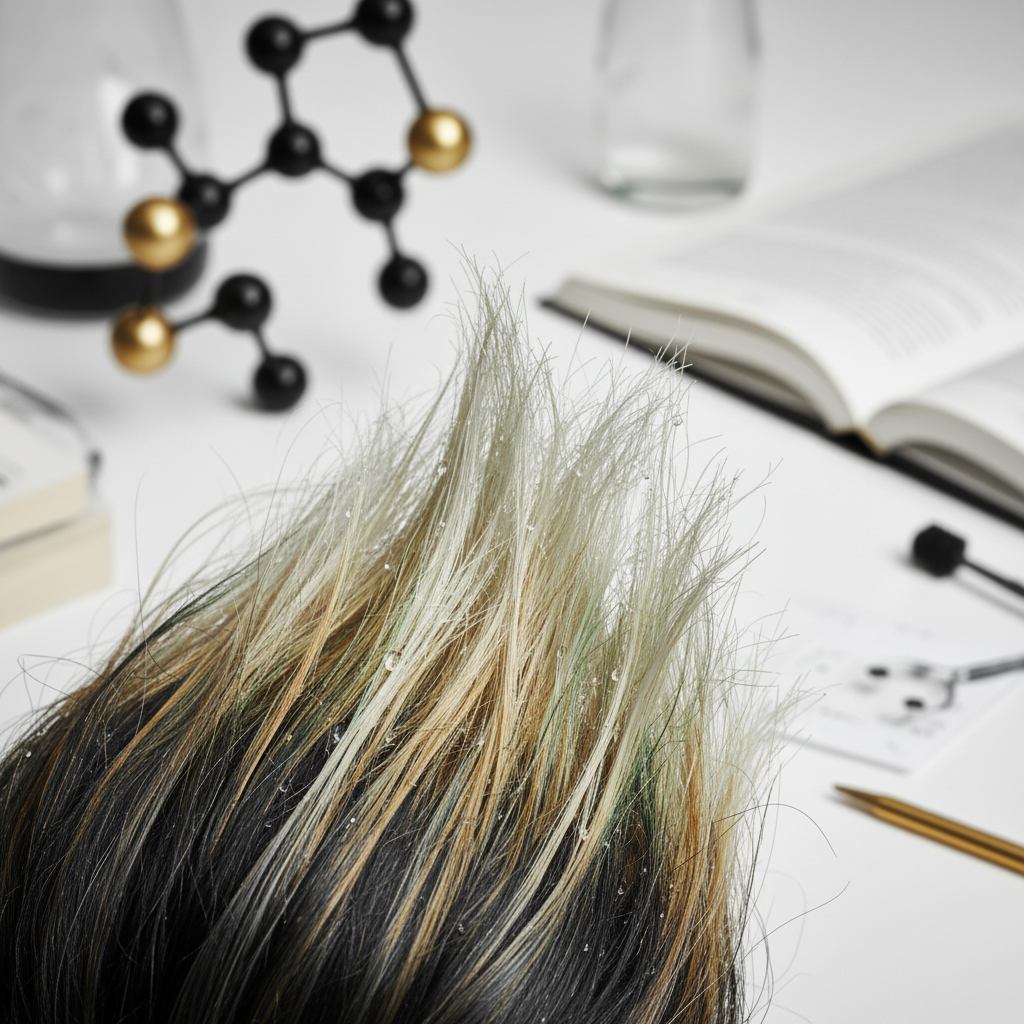
Studies examining hair exposed to chlorinated water at typical public pool concentrations (usually maintained between 1.0 and 3.0 mg/L free chlorine, with a pH between 7.2 and 7.8) reveal significant surface degradation. Under scanning electron microscopy, unchlorinated cuticles lie flat and smooth. After repeated chlorine exposure, cuticle scales lift, crack, and erode.
This surface disruption directly compromises tensile strength. As the oxidising agent penetrates past the damaged cuticle into the cortex, it cleaves disulfide bonds (cystine cross-links) that give hair its elasticity. The result is a fragile fibre that snaps under everyday brushing tensions that healthy hair withstands effortlessly.
+----------------------------+-------------------------------------+-------------------------------------+
| Hair Characteristic | Healthy Hair | Chlorine-Damaged Hair |
+----------------------------+-------------------------------------+-------------------------------------+
| Surface Lipid Layer | Intact 18-MEA layer; hydrophobic | Stripped lipids; hydrophilic |
| Cuticle Condition | Flat, smooth, overlapping scales | Lifted, cracked, or eroded scales |
| Tensile Strength | Elastic; stretches up to 30% wet | Brittle; snaps easily under tension |
| Moisture Absorption | Controlled; resists swelling | High porosity; absorbs water fast |
| Surface Feel | Smooth, soft, light-reflective | Rough, straw-like, matte, tangly |
| Colour Appearance | Rich, stable colour tone | Faded, bleached, or copper-green |
+----------------------------+-------------------------------------+-------------------------------------+
The biological mechanism of pool water damage
To understand how swimming pools affect your hair, it helps to examine the three distinct layers of the hair shaft: the epicuticle, the cuticle, and the cortex.
The epicuticle is coated with a naturally occurring fatty acid called 18-methyleicosanoic acid (18-MEA). This thin lipid veneer makes your hair naturally water-repellent (hydrophobic). When you enter a chlorinated pool, hypochlorous acid dissolves this fatty shield. Without 18-MEA, hair becomes hydrophilic, meaning it thirstily drinks up water and any chemicals dissolved within it.
Once the protective shield is gone, water enters the inner cuticle layers, causing the entire shaft to swell. The raised cuticle scales expose the cortex, the structural core of the hair made of keratin microfibrils bound together by disulfide bridges. Chlorine oxidises these sulfur-containing amino acids (primarily cystine), converting them into cysteic acid. This chemical breakdown permanently weakens the internal scaffolding of the strand.
Furthermore, chlorine bleaches the melanin pigments that give your hair its natural colour. Melanin granules oxidise in the presence of hypochlorous acid, leading to the lightened, brassy, or bleached appearance familiar to frequent swimmers.
What causes "swimmer's green hair"?
A persistent myth suggests that high chlorine levels turn blonde or lightened hair green. Chemical analyses of hair fibres show this is not accurate.
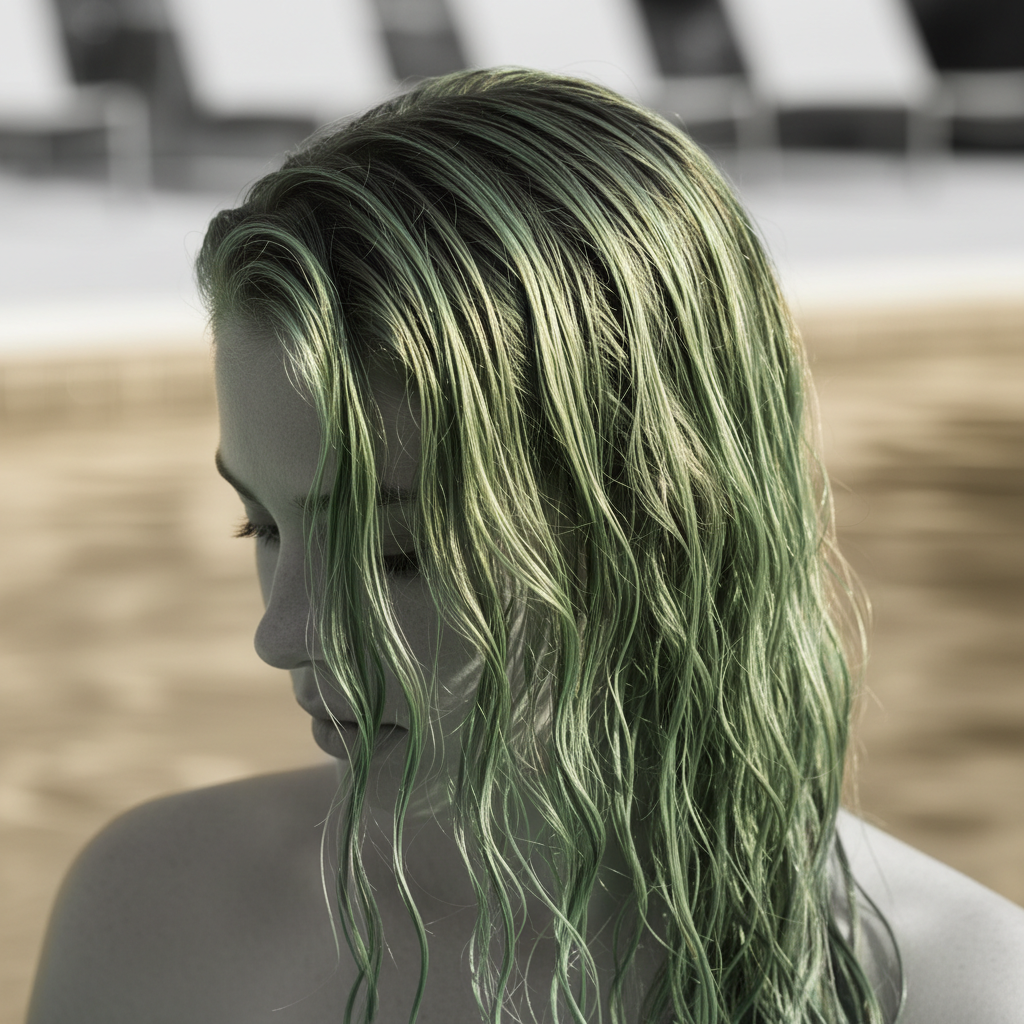
The green tinge is actually caused by copper. Copper compounds find their way into pool water either through copper-based algaecides or through the corrosion of copper pipes and heat exchangers when pool water pH drops too low.
Because chlorine strips the hair cuticle and creates porous, negatively charged sites along the keratin fibres, the hair acts like an ion-exchange resin. It binds to positively charged, oxidised copper ions (Cu2+) floating in the water. The characteristic teal-green hue is copper bound directly to damaged keratin, not chlorine. However, because chlorine creates the porosity that allows copper uptake, the two problems are deeply interlinked.
Signs to look for: how to identify chlorine damage
Spotting chlorine damage early allows you to alter your routine before structural damage leads to severe breakage. Typical signs include:
- Straw-like texture: Hair feels rough, squeaky, and dry when wet, and coarse and stiff when dry.
- Excessive tangling: Because the cuticle scales are raised and jagged, neighbouring strands catch on each other, forming stubborn knots.
- Colour shift: Natural colour appears bleached or dull; salon colour fades rapidly, and light shades develop a greenish cast.
- Loss of elasticity: When you gently pull a single wet strand, it snaps immediately without any natural stretch.
- Split ends and mid-shaft snapping: Hair breaks off inches from the root during normal washing or combing.
What the evidence does not show: breakage versus hair loss
It is critical to distinguish between hair breakage and follicular hair loss.
Chlorine damage hair issues involve the dead protein shaft outside the scalp. Hypochlorous acid in pool water does not reach or damage the living hair bulb located approximately 4 millimetres beneath the skin surface. Chlorine does not cause androgenetic alopecia (pattern baldness), telogen effluvium (diffuse shedding), or alopecia areata.
If you notice more hair coming out after swimming, check the strands. Broken hairs lack the tiny white keratin bulb at the root; they are jagged fragments snapped off along the shaft. If you are shedding full-length hairs with intact bulbs, the underlying cause is follicular and unrelated to pool chemicals.
Practical steps to prevent and manage chlorine damage
You do not need to give up swimming to protect your hair. Applying smart physical and chemical barriers dramatically reduces pool water absorption.
1. The freshwater saturation technique
Hair behaves like a sponge: it has a finite capacity to absorb liquid. If you thoroughly rinse your hair with fresh tap water before entering the pool, the hair shaft becomes fully saturated. When you jump into the pool, the rate of chlorinated water absorption drops significantly.
2. Apply a natural oil barrier
Placing a light layer of plant oil (such as coconut or argan oil) onto damp hair before putting on a swim cap adds an extra hydrophobic barrier. Coconut oil is particularly effective because its low molecular weight and linear structure allow it to penetrate the hair shaft, reducing swelling during prolonged water exposure.
3. Wear a silicone swim cap
Latex caps tear easily and snag strands, but a snug silicone cap creates a strong physical barrier against pool water. While no cap keeps hair completely bone-dry during intense laps, it limits the total volume of chlorinated water that contacts your strands.
4. Rinse immediately post-swim
Never let chlorinated pool water dry naturally on your hair. As the water evaporates, the concentration of chlorine left on the surface rises dramatically, compounding the oxidative damage. Rinse thoroughly with fresh water the moment you step out of the pool.
5. Use chelating and clarifying cleansers
Standard shampoos struggle to remove mineral deposits and oxidised chemicals. Swimmers should use a chelating shampoo containing ingredients like tetrasodium EDTA once a week. These agents bind to copper and chemical residues, lifting them safely off the hair shaft without excessive scrubbing.
When the cause might be something else
If your hair feels brittle, straw-like, or displays uneven breakage, chlorine might only be part of the problem. Consider these alternative culprits:
- Hard water minerals: Domestic shower water high in calcium and magnesium carbonate can coat the hair shaft, mimicking the stiffness and rough texture of chemical damage.
- Excessive heat styling: Frequent use of straighteners or blow-dryers over 185°C creates identical structural damage, breaking disulfide bonds and blistering the cuticle.
- Chemical processing: Bleach, permanent dyes, and chemical relaxers attack the cortex in the same way as oxidising pool water. Combining regular pool swims with salon bleaching creates compounding damage.
Supporting hair health with Watermans
When your hair fibre is compromised by regular swimming, gentle care is essential. While topical products cannot rebuild dead split ends, supporting the scalp environment and strengthening existing lengths makes hair far more resilient against daily friction.
Watermans Grow Me Shampoo offers a gentle, sulfate-free cleansing option that removes daily impurities without stripping away whatever natural sebum remains. Formulated with biotin, rosemary, caffeine, and argan oil, it leaves the scalp feeling refreshed and helps keep fragile, swimming-stressed lengths feeling fuller, softer, and more manageable. Pairing it with a deeply nourishing conditioner restores slip and reduces the mechanical snapping often caused by comb friction on lifted cuticles.
When to seek professional advice
If your hair is snapping off in large amounts, consult an experienced hairdresser. They can assess whether your hair has reached a point of irreversible structural degradation where a trim is necessary to stop splits from travelling up the shaft.
If you notice widespread thinning across the scalp, bald patches, or excessive shedding where hairs show intact white bulbs, consult a trichologist or GP. These symptoms indicate a systemic or follicular issue rather than superficial chemical damage from swimming.
Frequently asked questions about Chlorine Damage Hair
How quickly does chlorine damage hair?
Chlorine damage can begin during a single swim if your hair is dry and unprotected. Hypochlorous acid immediately strips surface lipids, leaving hair feeling coarse within 20 to 30 minutes. Noticeable structural breakage, severe dryness, and colour shifts typically develop after repeated, unprotected swims over several weeks.
Can chlorine damage hair permanently?
Chlorine cannot permanently damage the living hair follicle beneath the scalp, so new growth will always emerge healthy and unaffected. However, the damage inflicted on the existing hair shaft is permanent. Because hair is non-living tissue, oxidised keratin bonds and stripped cuticles cannot heal; they can only be conditioned, protected, or trimmed off.
Does washing hair with tap water before swimming really help?
Yes. Hair is porous and absorbs liquid rapidly. Saturating your hair with clean tap water before swimming fills the open spaces within the hair shaft, substantially reducing the amount of chlorinated pool water that can penetrate your strands during your swim.
Why does chlorine turn blonde hair green?
Chlorine itself does not turn blonde hair green; copper does. Pool water often contains trace amounts of copper from pipes or algaecides. Chlorine lifts the hair cuticle and oxidises the copper, allowing the copper ions to bind to exposed keratin proteins, producing a noticeable green or teal stain.
What is the best way to wash hair after swimming?
Rinse hair with fresh water immediately after exiting the pool. Wash with a gentle, sulfate-free shampoo to remove residual chemicals, or use a specialised chelating shampoo once a week if you swim regularly. Always finish with a rich, moisturising conditioner to restore flexibility and slip to the cuticles.
Summary
Swimming is great for physical health, but regular pool water exposure demands proactive hair care. The hypochlorous acid used to sanitise public pools acts as an indiscriminate oxidising agent that quickly strips protective lipids and degrades keratin proteins. By understanding the real mechanisms behind chlorine damage hair issues, you can implement simple, effective defences: pre-wetting your hair, wearing a silicone cap, rinsing immediately, and using gentle, nourishing haircare to keep your strands robust and protected.
Sources and references
- American Academy of Dermatology (AAD). "How to Prevent Swimmer's Hair." Dermatologist guidelines on pool haircare.
- Draelos, Z. D. (2005). Hair Cosmetics. Dermatologic Clinics, 23(4), 605-617.
- Robbins, C. R. (2012). Chemical and Physical Behavior of Human Hair (5th ed.). Springer-Verlag.
- Ruetsch, S. B., Kamath, Y. K., Rele, A. S., & Mohile, R. B. (2001). "Secondary ion mass spectrometric investigation of penetration of coconut and mineral oils into human hair fibres." Journal of Cosmetic Science, 52(3), 169-184.
- World Health Organization (WHO). "Guidelines for safe recreational water environments: Volume 2, Swimming pools and similar environments." WHO Guidelines Approved by the Guidelines Review Committee, 2006.
Find these ingredients in Watermans products
- Copper: you will find this ingredient in our Hair Vitamins.