Chemical Burn First Aid for Hair: Scalp and Fibre Safety Guide
9 min read ·
Learn essential Chemical Burn First Aid for Hair, covering rapid water irrigation steps, follicle protection, signs of deep injury, and safe scalp recovery techniques.
Quick answer: Immediate action is critical when managing chemical injuries to the scalp and fibre. Chemical Burn First Aid for Hair involves immediately flushing the exposed skin and hair with steady, lukewarm water for at least 20 to 30 minutes to dilute and remove the offending agent. Never attempt to neutralise acids or alkalis with kitchen remedies like vinegar or baking soda. The main limitation of first aid is that severe deep-tissue chemical injuries require urgent medical evaluation, as topical flushing cannot reverse necrosis once full-thickness tissue damage occurs.
Key takeaways
- Immediately irrigate the area with continuous, lukewarm tap water for a minimum of 20 minutes; speed is the single most important factor.
- Do not apply homemade neutralising agents such as lemon juice, vinegar, or baking soda, as the resulting chemical reaction generates heat that worsens tissue destruction.
- Distinguish between severe hair fibre breakage (melting or snapping of keratin) and full-thickness cutaneous burns affecting the scalp and hair follicles.
- Remove contaminated clothing, gloves, towels, and jewellery immediately while avoiding spreading the chemical to unaffected skin or eyes.
- Seek emergency medical care if you experience blistering, open ulceration, severe pain, white or blackened skin, or chemical contact near the eyes.
Chemical Burn First Aid for Hair: what the evidence shows
Chemical Burn First Aid for Hair focuses on halting progressive tissue damage and preserving the epidermal layer where hair follicles reside. Chemical burns in salon or home environments typically arise from strong alkaline agents (such as sodium hydroxide relaxers, calcium hydroxide, or high-volume ammonium hydroxide lighteners) or strong oxidising acids (such as hydrogen peroxide concentrations exceeding 12%, or concentrated glyceryl monothioglycolate perms).
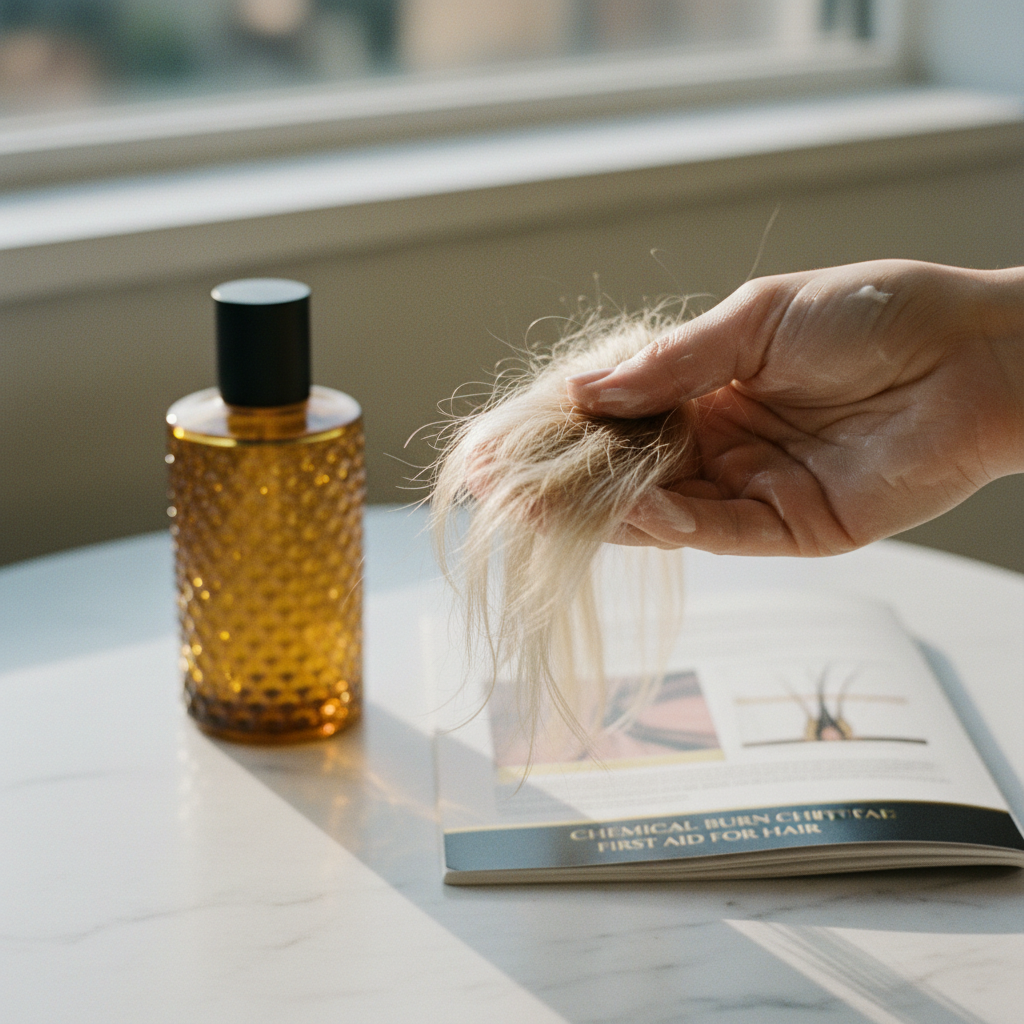
Clinical literature from burn care authorities, including the British Burn Association and NHS trauma guidelines, consistently shows that copious water lavage is the primary intervention. Water mechanically washes away unreacted chemical molecules, dilutes the concentration on the skin surface, restores normal physiologic pH, and cools local metabolic reactions.
The depth of a chemical burn depends on chemical concentration, pH, volume, contact time, and skin barrier integrity. Alkalis cause liquefaction necrosis, denaturing keratin and saponifying subcutaneous fats, which allows the alkaline substance to penetrate deeply into the dermis. Acids generally cause coagulation necrosis, precipitating tissue proteins to form an eschar (a thick, dry scab) that can limit deeper penetration, though concentrated acids still inflict severe, full-thickness destruction.
What the evidence does not show
The clinical evidence does not show that hair products marketed as "neutralising shampoos" can instantly heal tissue once deep cutaneous contact has occurred. While formulated neutralising shampoos effectively bring the surface pH of hair fibres back to their normal isoelectric point (around pH 4.5 to 5.5) after an alkaline treatment, they do not reverse a chemical burn on the scalp.
Furthermore, research does not support the common salon myth that burning sensations signify that a chemical service is "working" or merely causing minor irritation. Stinging, tingling, or burning indicates that chemical molecules have penetrated the protective stratum corneum and are irritating cutaneous nerve endings. Applying oils, butters, or petroleum jelly over an active chemical burn traps the caustic agent against the tissue, accelerating the depth of the burn.
Mechanisms of chemical damage to hair and scalp
To administer Chemical Burn First Aid for Hair effectively, you need to understand how common salon chemicals interact with both living tissue and dead protein fibres.
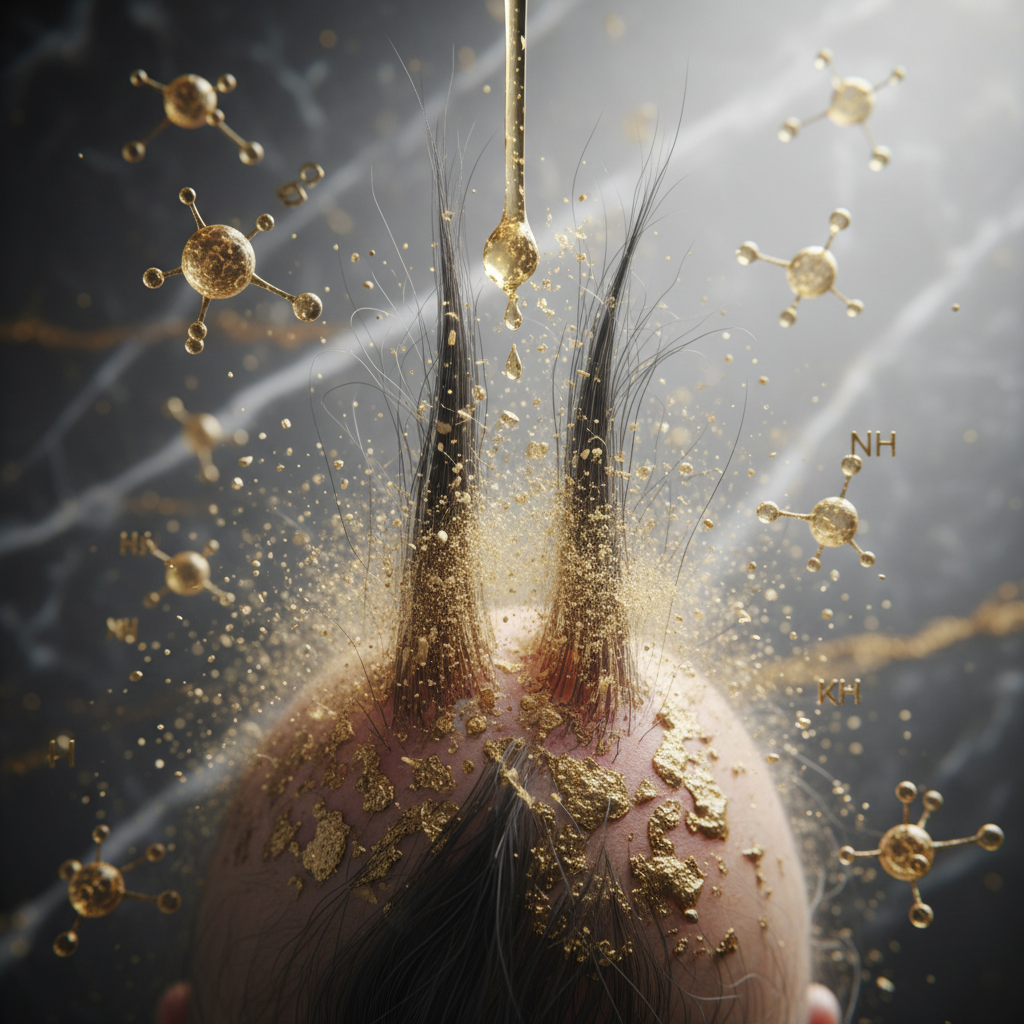
Hair fibres consist of alpha-keratin proteins reinforced by cross-linked cystine disulphide bonds. The scalp is living cutaneous tissue protected by a hydrolipid barrier and a stratum corneum with a slightly acidic pH (4.5 to 5.5).
- Alkaline relaxers and lighteners (pH 10 to 14): Hydroxide and ammonium ions disrupt the lipid barrier of the scalp, hydrolysing protein peptide bonds. On the hair fibre, high pH swells the cuticle and cleaves disulphide cross-links, rendering the strand elastic, gummy, and prone to severe breakage. On the scalp, it causes liquefaction necrosis, penetrating through the epidermis into the hair follicles.
- Oxidising agents (Hydrogen peroxide, persulphates): High concentrations (such as 30 or 40 volume peroxides paired with bleaching powders) strip the protective 18-methyleicosanoic acid (18-MEA) lipid layer, oxidise disulphide bonds into cysteic acid, and generate reactive oxygen species that cause rapid contact dermatitis or chemical erythema.
- Acidic perms and peels (pH 1 to 3): Low pH solutions cause protein coagulation, denaturing cellular structures and producing immediate stinging, peeling, or superficial blistering.
Signs of a chemical burn versus normal sensitivity
A mild, temporary tingling can sometimes occur during bleach or dye processing due to mild peripheral vasodilation, but true burns exhibit distinct clinical signs:
| Clinical sign | Mild cosmetic irritation | Superficial chemical burn | Deep partial or full-thickness burn |
|---|---|---|---|
| Sensation | Slight itchiness or warm tingle | Sharp stinging, burning pain | Intense, throbbing pain or sudden numbness |
| Skin appearance | Mild redness (erythema), no swelling | Bright red, inflamed, mild edema | Blistered, raw weeping dermis, white or charred patches |
| Hair condition | Dry, slight friction increase | Porous, fragile at the root | Melted, gelatinous fibre, immediate root breakage |
| Follicular impact | None | Temporary shedding (telogen effluvium) | Permanent follicle destruction (cicatricial alopecia) |
| Action required | Rinse thoroughly, use gentle shampoo | Flush 20 mins, monitor closely | Flush 30 mins, seek urgent medical emergency care |
Step-by-step first aid protocol
If a chemical burn occurs during a salon service or home application, follow these priority steps immediately:
- Stop the exposure instantly: Do not wait for a timer to finish or attempt to complete the application. Remove all mixing bowls, foils, and applicators.
- Irrigate with lukewarm water: Place the person's head under a steady, low-pressure stream of lukewarm tap water. Direct the water flow so that contaminated runoff does not run into the eyes, face, or ears.
- Flush for at least 20 to 30 minutes: Time this with a clock. Most people stop flushing after two or three minutes, which is insufficient to clear deep-seated chemical residues.
- Remove contaminated items: Carefully cut away or remove plastic caps, clips, towels, and clothing while the water is running. Wear protective nitrile gloves to avoid transferring the substance to your own hands.
- Cleanse gently: If you are flushing an alkaline relaxer, gently work a mild, fragrance-free acidic balancing cleanser or physiological saline through the hair only after thorough water irrigation has already reduced the bulk chemical load. Do not scrub or scrape the scalp skin.
- Protect and assess: Gently pat the hair dry with a clean, sterile lint-free towel. Do not rub. Leave the scalp open to air or cover it loosely with a clean, non-adherent dressing if blisters are weeping.
When the cause may be an allergic reaction
Not all adverse scalp reactions to hair products are chemical burns. Allergic contact dermatitis is mediated by an immunological response (Type IV delayed hypersensitivity) rather than direct caustic destruction.
The most common culprit is paraphenylenediamine (PPD) and related aromatic amines in permanent hair dyes. An allergic reaction typically develops 24 to 72 hours after exposure, featuring widespread itching, hives, facial swelling, and scalp weeping. In contrast, a chemical burn produces immediate or rapid pain, burning sensations, and direct tissue damage at the exact site of chemical contact. First aid for an allergic reaction focuses on oral antihistamines and medical evaluation, whereas chemical burns mandate immediate, prolonged physical dilution with water.
When to seek emergency medical advice
Minor, superficial redness may resolve with careful home management, but you must consult an urgent care clinic or emergency department (A&E) if you observe any of the following:
- Blisters, broken skin, or weeping yellow/clear fluid on the scalp.
- Skin that looks stark white, grey, or leathery, which indicates a full-thickness burn requiring specialist burn management.
- Numbness in the affected area, suggesting cutaneous nerve damage.
- Chemical splashes that entered the eyes or affected large surface areas beyond the scalp.
- Signs of secondary infection over the following days, such as increasing heat, expanding redness, foul-smelling discharge, or fever.
- Extensive hair snapping at the scalp level accompanied by open lesions, which poses a risk for cicatricial (scarring) alopecia if the stem cells in the hair follicle bulge are destroyed.
Post-burn scalp and hair recovery care
Once medical clearance is established and the acute inflammatory phase subsides, the recovery phase begins. The skin barrier requires time to rebuild its lipid layers, and healing hair follicles must be protected from physical and mechanical tension.
Avoid all heat styling tools, blow dryers, tight ponytails, and further chemical processing (bleach, tint, perms, relaxers) for at least 8 to 12 weeks. Wash the scalp with hypoallergenic, sulphate-free, neutral-pH cleansers.
In supportive hair wellness routines, gentle formulations such as Watermans Grow Me Shampoo and Condition Me Conditioner can be introduced once the skin has completely re-epithelialised and closed. Watermans products are formulated to support an optimal scalp environment and strengthen fragile, recovering hair fibres with clean, revitalising botanicals like biotin, rosemary, and niacinamide, without relying on harsh, aggressive active chemicals that might irritate healing tissue.
Frequently asked questions about Chemical Burn First Aid for Hair
What is the very first step in Chemical Burn First Aid for Hair?
The very first step is continuous, immediate water irrigation. Direct a gentle stream of lukewarm water across the scalp and hair for a minimum of 20 to 30 minutes. Ensure the runoff water flows safely away from the eyes, face, and neck, and do not attempt to scrub the affected skin.
Can you put vinegar on an alkaline bleach burn?
No, you should never put vinegar on a chemical burn. While vinegar is acidic, pouring an acid directly onto concentrated alkaline skin creates an exothermic reaction (heat-releasing chemical process). This additional thermal heat will scorch the already damaged dermis, compounding the chemical burn with a thermal burn. Use plain, lukewarm water instead.
Will hair grow back after a chemical burn on the scalp?
Hair regrowth depends on the depth of the burn. If the burn is superficial or partial-thickness, the follicle stem cells located in the lower dermal bulge usually survive, allowing hair to regrow over several months. However, if a severe, full-thickness burn destroys the follicle architecture, it results in scarring (cicatricial) alopecia, leading to permanent hair loss in that area.
Can damaged hair fibre heal after a chemical burn?
No, hair fibre cannot biologically heal. Hair shafts are non-living biological structures composed of keratin proteins. Once chemical burns break the structural disulphide bonds and destroy the cuticular layer, the fibre becomes permanently weakened or snaps. Deep conditioning and protein treatments can temporarily coat and manage the fibre cosmetically, but the damaged portion will eventually need to be trimmed away.
Maintaining safety and hair resilience
Safely managing chemical injuries demands swift recognition and calm, methodical action. Practising proper Chemical Burn First Aid for Hair by prioritising prolonged water irrigation, ditching unverified domestic remedies, and seeking immediate emergency medical treatment for blistering or raw dermis protects both scalp health and future follicular growth. Chemical services must always be carried out with strict adherence to timing, barrier creams, and skin sensitivity considerations to prevent acute injuries before they occur.
Sources and references
- British Burn Association (BBA). First Aid Clinical Practice Guidelines for Chemical Burns, 2020.
- National Health Service (NHS). Chemical Burns: Treatment and Prevention, 2023.
- Dermatologic Surgery. Chemical Peels and Complications: Managing Adverse Events, 2018.
- International Journal of Trichology. Chemical-Induced Hair and Scalp Injuries: Clinical Evaluation and Management, 2019.
- World Health Organization (WHO). Burns: Fact Sheets and First Aid Guidelines, 2022.
Find these ingredients in Watermans products
- Niacinamide: you will find this ingredient in our Hair Mask.