Bleach Damage: Causes, Fibre Science, and Evidence-Based Care
9 min read ·
Understand the science behind bleach damage. Learn how chemical lightening impacts the hair cortex, key signs of fibre breakdown, and evidence-based care methods.
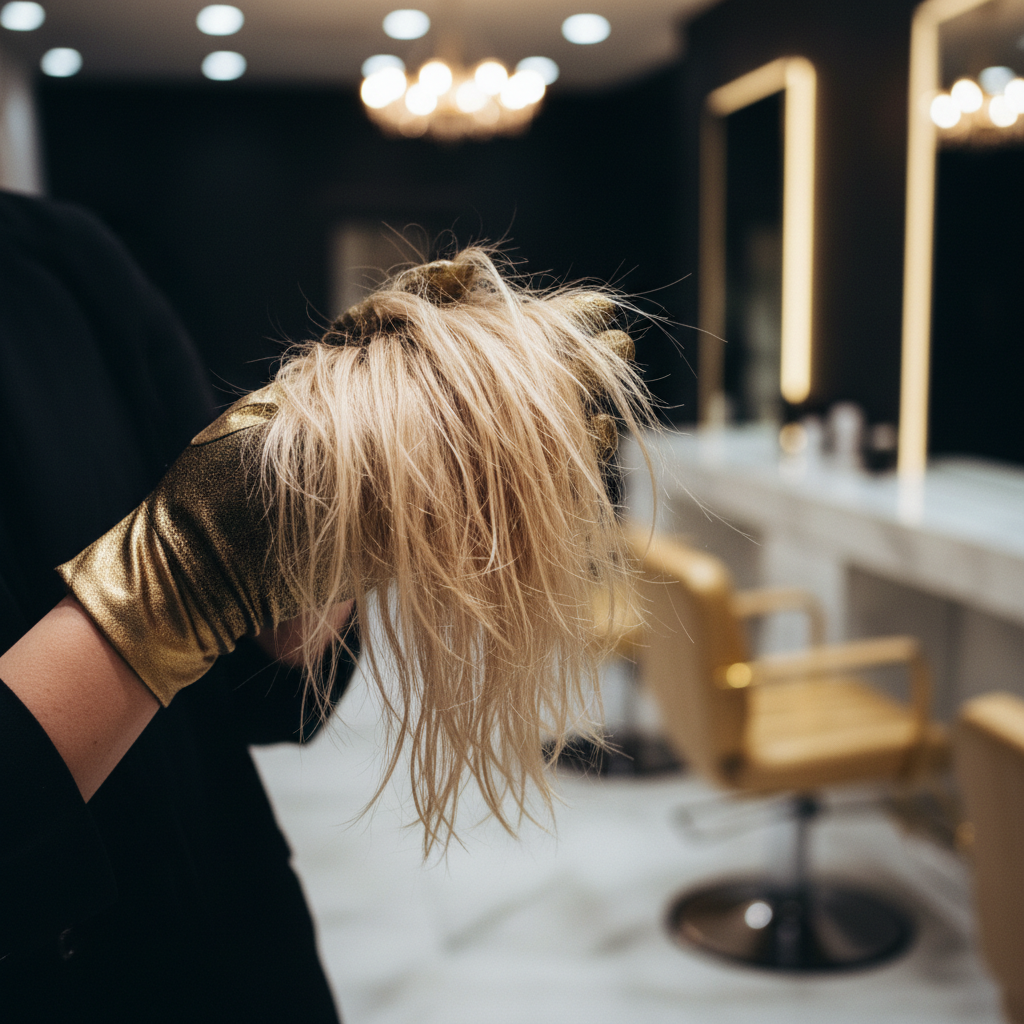
Quick answer: Bleach damage refers to the structural breakdown of hair fibres caused by alkaline oxidising chemicals that strip natural melanin. The process dissolves protective cuticle lipids (specifically 18-methyl eicosanoic acid) and oxidises structural cystine bonds into cysteic acid, leaving strands porous, brittle, and prone to mechanical snapping. While deep conditioning and bond-building treatments can temporarily improve tensile strength and reduce friction, true bleach damage cannot be biologically reversed, as hair fibre is non-living keratin tissue.
Key takeaways
- Bleaching works via an alkaline chemical reaction (typically pH 9 to 11) that swells the cuticle and dissolves internal melanin through oxidation.
- The oxidative process breaks disulfide bonds within the keratin cortex, permanently reducing the fibre's tensile strength and elasticity.
- Bleach strips the hair shaft of 18-MEA, its natural hydrophobic lipid layer, causing severe moisture loss and extreme porosity.
- Bleach damage results strictly in hair breakage (fibre snapping) rather than follicular hair loss, unless severe chemical burns irritate the scalp.
- Professional management focuses on restoring hydrophobic lubrication, balancing protein and moisture, and minimising physical friction until damaged lengths grow out.
Bleach damage: what the evidence shows
Scientific evaluation of chemically lightened hair demonstrates that bleach alters both the chemical architecture and physical properties of the fibre. When hydrogen peroxide combines with an alkaline agent such as ammonium hydroxide or persulfate salts, the pH rises to roughly 9 to 11. This drastic shift forces the protective, overlapping cuticle scales to lift and swell, granting the oxidising mixture access to the inner cortex.
Within the cortex, the mixture oxidises melanin pigments to lighten the hair colour. Simultaneously, it attacks the protein matrix. Human hair relies heavily on the amino acid cystine, which forms covalent disulfide bonds that give the shaft its structural rigidity. The oxidative process cleaves these disulfide bonds, converting cystine into cysteic acid. Research published in cosmetic and dermatological literature shows that heavily bleached hair can lose over 50 percent of its native disulfide bonds, directly reducing its dry and wet tensile strength.
Furthermore, bleaching completely strips the outermost protective lipid monolayer, composed primarily of 18-methyl eicosanoic acid (18-MEA). Under normal conditions, 18-MEA makes virgin hair hydrophobic, meaning it naturally repels water. Once this fatty acid layer is destroyed, the fibre becomes hydrophilic. It absorbs excessive environmental water, swells uncontrollably when wet, and loses moisture rapidly when dry, creating chronic frizz, rough texture, and extreme fragility.
The mechanical and chemical breakdown of the hair fibre
Understanding the physical progression of bleach damage helps explain why chemically lightened hair behaves unpredictably.
Virgin Fibre (Hydrophobic) --> Alkaline Swelling (Cuticle Lifts)
 |
Severe Breakage / Snapping <-- Disulfide Bond Cleavage (Cysteic Acid Forms)
Loss of the lipid barrier
The removal of 18-MEA transforms the hair from a low-friction, smooth surface into an abrasive one. Without this natural lubricant, individual strands rub against each other with heightened friction. Everyday grooming, such as brushing or towel drying, generates excessive shear stress that abrades remaining cuticle scales.
Cortical porosity and void formation
As keratin proteins dissolve and leach out during bleaching, microscopic voids develop within the cortex. These hollow spaces weaken the internal framework. When wet, bleached hair exhibits low elastic recovery. You can stretch it easily, but instead of springing back, it remains deformed or snaps clean off under minimal tension.
How to identify bleach damage: physical signs
Stylists and consumers often mistake general dryness for structural degradation. The following signs indicate actual chemical breakdown:
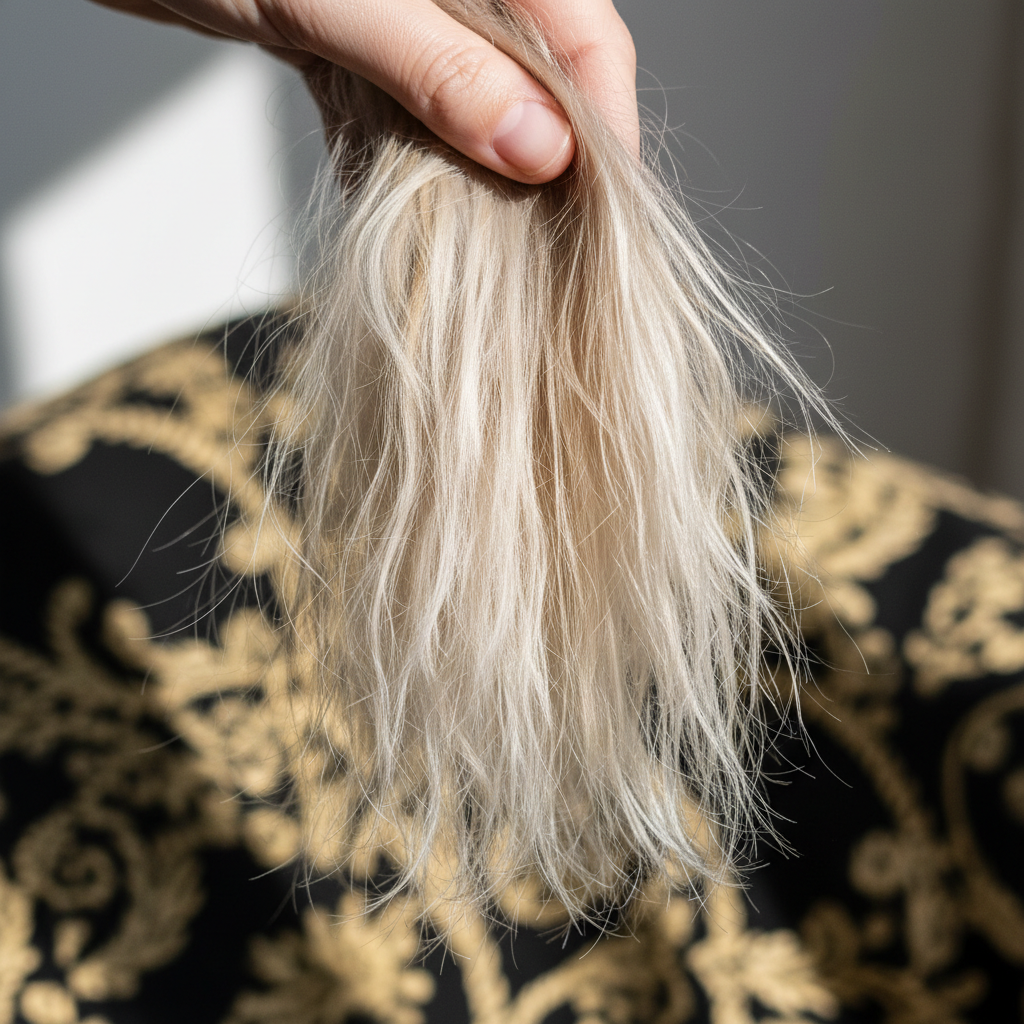
- Loss of wet elasticity: When saturated with water, the hair feels mushy, gummy, or stringy. Individual strands stretch unnaturally before breaking with zero snap-back.
- High porosity: The hair absorbs water almost instantaneously in the shower but takes an exceptionally long time to dry naturally because the open cortex retains water mechanically.
- Mid-shaft snapping: Unlike natural hair shedding, where a white keratin bulb is visible at the root end, broken pieces feature blunt or splintered ends and fall in short, irregular fragments.
- Tricorrhexis nodosa and split ends: Microscopic inspections reveal microscopic nodes along the shaft where the cuticle has vanished, allowing cortical fibres to splay outward like paintbrushes.
- Persistent matte dullness: Because the flat cuticle surface is eroded, light scatters randomly rather than reflecting smoothly, leaving hair visibly lacklustre regardless of styling oils.
| Characteristic | Healthy Virgin Hair | Mildly Lightened Hair | Severe Bleach Damage |
|---|---|---|---|
| Surface Nature | Hydrophobic (repels water) | Moderately hydrophobic | Completely hydrophilic |
| Cuticle Integrity | Flat, tightly closed scales | Slightly lifted edges | Fractured, missing, or shredded |
| Wet Elasticity | Stretches 20 to 30%, returns | Stretches with decent return | Stretches like elastic, stays limp, or snaps |
| Porosity | Low to medium | Medium to high | Extreme (sponge-like absorption) |
| Disulfide Retention | 100% baseline | 70 to 85% baseline | Below 50% baseline |
| Primary Risk | None | Minor dryness | Severe breakage and splintering |
What you can do to manage damaged lengths
Because hair fibre is non-viable tissue with no living cells, it possesses no biological healing capacity. You cannot truly repair split ends or regrow a destroyed cuticle. However, evidence-based cosmetic interventions can protect remaining bonds, coat the fibre to replace lost lipids, and dramatically reduce mechanical breakage.
Restore external lubrication and film formers
To substitute for lost 18-MEA, incorporate conditioning agents that deposit a protective hydrophobic film over the shaft. Cetyl alcohol, stearyl alcohol, behentrimonium chloride, and functionalised silicones (such as amodimethicone) adhere selectively to damaged, negatively charged sites. These agents lower surface friction, smooth lifted cuticles, and prevent comb-induced snapping.
Utilise bond-building chemistry
Formulations utilising dicarboxylic acids (like maleic acid or succinic acid) work by creating temporary ionic or covalent cross-links across broken keratin chains. While they cannot reconstruct the original biological disulfide architecture in full, they reinforce cortical stability, allowing the fibre to withstand normal daily handling.
Balance protein and moisture
Bleached hair benefits from hydrolysed wheat, soy, or keratin proteins with low molecular weights (under 1,500 Daltons). These small peptide fragments can penetrate cortical micro-voids to provide temporary internal support. Always follow protein treatments with rich humectants (glycerin, panthenol) and emollients to prevent the hair from becoming overly stiff and brittle.
Eliminate mechanical and thermal stress
- Cease all high-heat styling above 150 degrees Celsius. Bleached hair contains weakened keratin that degrades rapidly at normal styling temperatures (185 to 230 degrees Celsius).
- Detangle only when saturated with a high-slip conditioner, starting from the ends and moving upward with a wide-tooth comb.
- Switch to microfiber wraps or cotton t-shirts instead of rough terrycloth towels to minimise friction drying.
When breakage is mistaken for hair loss
A critical distinction must be made between breakage and follicular shedding:
- Hair breakage is purely mechanical. Bleach destroys the fibre, causing it to snap along the shaft. The follicle remains healthy, resting safely under the scalp.
- Hair shedding (telogen effluvium) occurs when internal triggers (such as nutritional deficiencies, systemic illness, hormonal shifts, or severe stress) cause follicles to drop prematurely from the root.
- Chemical alopecia is rare but occurs if high-volume bleach touches the scalp for extended periods, causing severe chemical burns, follicular necrosis, and blistering.
If you notice excessive short hairs on your bathroom floor or clothing without a tiny white bulb on the tip, you are observing chemical breakage from bleach damage, not systemic hair loss.
Supporting hair health from the roots with Watermans
When managing hair that has suffered chemical compromise, styling routines should protect both the existing fibre and newly emerging growth. Watermans focuses on providing targeted scalp care and surface conditioning without harsh additives.
The Watermans Grow Me range delivers scalp-invigorating botanicals, biotin, rosemary, and niacinamide directly to the hair follicles, cultivating an optimal environment for emerging strands. Concurrently, the Watermans Condition Me formula acts as a rich, strengthening rinse that coats depleted shafts with hydrolysed proteins, cholesterol, and natural oils. This combination helps smooth rough cuticle scales and protects fragile lengths from everyday grooming stress while fresh, untreated hair grows in from the scalp.
When to get professional advice
If you experience scalp tenderness, open weeping sores, severe burning, or visible patches of hair shedding directly from the root after a bleaching service, consult a dermatologist or medical doctor immediately to rule out chemical burns or contact dermatitis.
For cosmetic breakage, consult an experienced professional colourist. A certified colour specialist can perform an in-salon elasticity test, apply professional-grade bond builders, adjust your toner formulas to deposit-only options, and create a strategic trimming schedule to gradually eliminate compromised lengths without sacrificing your desired shape.
Frequently asked questions about Bleach Damage
Can bleach damage be permanently reversed?
No, bleach damage cannot be permanently reversed. Hair strands consist of dead keratin cells that lack cellular repair mechanisms. While bond builders, hydrolysed proteins, and deep conditioning masks can temporarily bridge structural gaps and coat the cuticle to prevent further snapping, the chemical loss of disulfide bonds and 18-MEA lipids is permanent. The only permanent solution is trimming the damaged sections as fresh hair emerges.
Why does bleached hair feel gummy or stretchy when wet?
Bleached hair feels gummy because alkaline oxidation breaks the disulfide bonds that give keratin its natural tensile strength and elasticity. Combined with the loss of the protective cuticle layer, water rushes deep into the cortex, uncoiling the protein matrix. Without structural bonds to pull the fibre back into place, it stretches out like rubber or dissolves into mush.
How often should I use protein treatments on bleached hair?
Use hydrolysed protein treatments once every one to two weeks, depending on the severity of your hair's porosity. Protein fills microscopic voids in damaged fibres, but overusing it without adequate moisturising agents can cause hair to become rigid and brittle. Always follow a protein application with an emollient-rich, hydrating deep conditioner to maintain physical flexibility.
Will bleach damage stop my hair from growing?
Bleach damage does not stop hair follicles under the scalp from growing, provided the bleach did not cause severe chemical scalp burns. However, it often seems like your hair has stopped growing because the ends are snapping off at the exact same rate that new hair emerges from the roots.
How long does it take for bleached hair to recover?
The hair fibre itself never biological recovers, meaning you must wait for healthy virgin hair to grow out from the scalp. On average, human hair grows roughly 1 to 1.25 centimetres per month (around 12 to 15 centimetres per year). Depending on the length of your hair, growing out and cutting away compromised, lightened ends usually takes between one and three years.
Conclusion
Managing bleach damage requires accepting the biological reality of chemical processing: hair is a non-living fibre that cannot biologically heal once its internal protein matrix and external lipid barrier have been compromised. While the broken bonds and stripped cuticle layers cannot be permanently reassembled, understanding the science of chemical lightening allows you to take control.
By substituting lost natural oils with targeted film formers, reinforcing weakened cortical structures with bond builders, and avoiding aggressive thermal or mechanical stress, you can protect compromised lengths and prevent catastrophic breakage. Patience, gentle handling, and diligent care will safeguard your hair while healthy, untreated fibres grow in from the roots.
Sources and references
- Chemical and Physical Behavior of Human Hair (Clarence R. Robbins, 5th Edition, Springer, 2012)
- Journal of Cosmetic Dermatology: "Morphological and structural changes of human hair after chemical treatments"
- International Journal of Cosmetic Science: "The impact of oxidative hair lightening on cuticle integrity and surface hydrophobicity"
- British Association of Dermatologists: "Hair breakage, weathering, and cosmetic hair damage guidance"
Find these ingredients in Watermans products
- Biotin: you will find this ingredient in our Hair Growth Shampoo.
- Panthenol (Provitamin B5): you will find this ingredient in our Heat Protection Spray.