A Complete Guide to Carrier Oils for Hair
9 min read ·
Discover how Carrier Oils for Hair lubricate the cuticle, seal moisture, and prevent breakage, alongside evidence on what plant lipids can and cannot achieve.
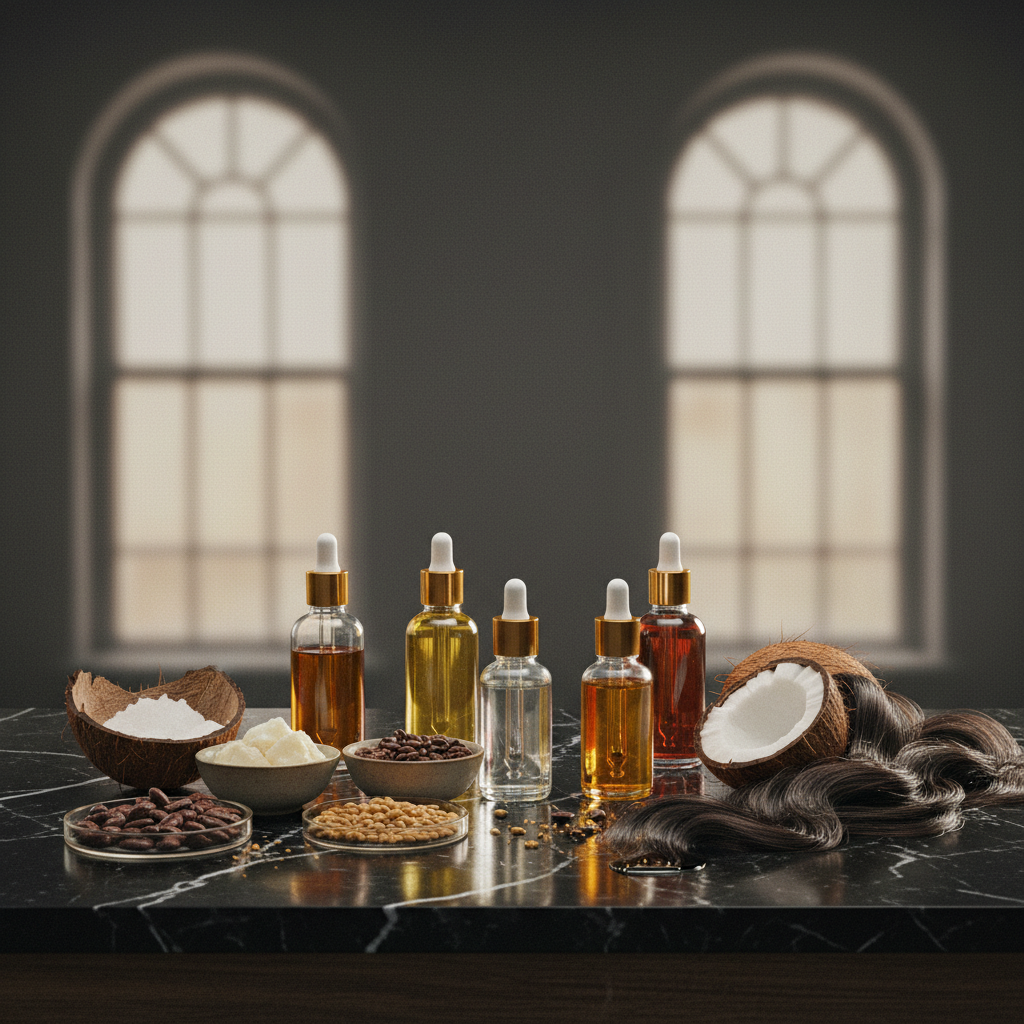
Quick answer: Carrier Oils for Hair are plant-derived, lipid-rich base oils used to dilute potent essential oils, lubricate the cuticle, seal moisture into the fibre, and reduce mechanical friction. Common examples include jojoba, argan, coconut, and sweet almond oil. While Carrier Oils for Hair excel at preventing cuticle abrasion, softening coarse textures, and reducing hygral fatigue, they cannot cure medical hair loss conditions like androgenetic alopecia or directly accelerate the cellular growth rate within the follicle.
Key takeaways
- Carrier oils act as lipid replenishers for the epicuticle, sealing in water and reducing surface friction between strands.
- Coconut oil penetrates deeply into the cortex due to its low molecular weight and linear lauric acid structure, whereas oils like jojoba and mineral oil sit largely on the surface.
- Carrier oils do not treat medical hair loss or stimulate follicle activity on their own; their primary cosmetic role is preventing breakage and softening hair.
- Applying heavy carrier oils directly to an inflamed or seborrhoeic scalp can feed opportunistic yeasts like Malassezia, exacerbating flaking and irritation.
- Proper matching of an oil's fatty acid profile to your hair's porosity determines whether it absorbs, coats, or leaves greasy buildup.
Carrier Oils for Hair: what the evidence shows
Using Carrier Oils for Hair is backed by cosmetic science primarily through their interaction with hair shaft lipids and cuticle health. Virgin hair contains an outermost hydrophobic lipid layer called the 18-methyleicosanoic acid (18-MEA) layer. Chemical treatments, bleaching, UV exposure, and frequent shampooing strip this protective fatty layer away, leaving hair hydrophilic, porous, and vulnerable to moisture loss and mechanical damage.

Peer-reviewed studies, notably published in the Journal of Cosmetic Science, demonstrate that certain carrier oils can partially replace these lost surface lipids. The effectiveness of an oil depends entirely on its molecular weight and chemical structure. Triglycerides with straight hydrocarbon chains, such as lauric acid found abundantly in coconut oil, possess a low molecular weight and high affinity for hair proteins. This chemical makeup allows them to pass beneath the cuticle scales and enter the inner cortex.
Heavier or bulkier oils, such as argan oil, sweet almond oil, and jojoba wax esters, remain predominantly on the surface of the fibre. There, they form a protective occlusive or semi-occlusive film. This film smooths down raised cuticle edges, reduces combing force by up to 50 percent, and protects the inner cortex from rapid water absorption and subsequent swelling, a cycle known as hygral fatigue.
Penetrating oils versus sealing oils
Understanding how different plant oils interact with the hair shaft is essential for choosing the right formulation. Not all plant lipids behave the same way on keratin fibres.
| Carrier oil | Primary fatty acid profile | Penetration depth | Best suited hair type | Primary benefit |
|---|---|---|---|---|
| Coconut oil | Lauric acid (approx. 45 to 50%) | Deep (reaches cortex) | Medium to high porosity; damaged hair | Reduces protein loss during washing |
| Jojoba oil | Gadoleic and erucic acid esters | Surface (liquid wax) | All hair types, fine hair, oily scalps | Mimics human sebum; adds shine without heavy weight |
| Argan oil | Oleic (approx. 43%) & linoleic (approx. 37%) | Surface to outer cuticle | Dry, dull, coarse, or chemically treated | Lubricates cuticle, reduces styling friction |
| Sweet almond oil | Oleic acid (approx. 65 to 70%) | Shallow cuticle penetration | Medium to thick, dry hair | Softens rigid fibres and improves elasticity |
| Castor oil | Ricinoleic acid (approx. 85 to 90%) | Surface (very occlusive) | Very coarse, afro, or high porosity hair | Intense barrier protection and moisture sealing |
Penetrating oils
Oils rich in short-chain or medium-chain saturated fatty acids can slip past the hydrophobic barriers of the cuticle. Coconut oil is the benchmark penetrating oil. Pre-wash treatments using penetrating oils reduce the amount of water the hair cortex absorbs when wet. Because wet keratin swells and weakens the internal hydrogen bonds, controlling this swelling protects the shaft from structural fatigue over repeated wash cycles.
Sealing oils
Oils dominated by long-chain monounsaturated and polyunsaturated fats, or liquid wax esters, have molecules too large to slip between intact cuticle tiles. Jojoba, argan, and sweet almond oils stay on the perimeter of the hair shaft. They are ideal for locking existing moisture inside the fibre, imparting reflective shine, and acting as a sacrificial lubricant against detangling brushes, hot tools, and pillow friction.
What the evidence does not show
There is a widespread misconception across social media and beauty forums that carrier oils can cure genetic hair loss, awaken dormant follicles, or dramatically boost hair growth speed. Controlled dermatological research has not found that applying carrier oils to the scalp alters the biological cycle of androgenetic alopecia, alopecia areata, or telogen effluvium.

Hair growth occurs deep within the dermal papilla, supplied by systemic blood vessels. Topical lipids cannot alter genetic sensitivity to dihydrotestosterone (DHT) or reverse autoimmune attacks on the hair bulb. Furthermore, claims that castor oil thickens thinning hair stems largely from its thick, viscous texture temporarily coating the visible hair shaft, making individual strands look denser, rather than any proven follicular stimulation.
Scalp risks: when carrier oils cause harm
Applying plant lipids directly to the scalp is not universally safe or beneficial. The scalp has its own delicate microbiome, dominated by Malassezia yeasts. These microorganisms depend on external lipids for survival because they cannot synthesise their own fatty acids.
When you apply carrier oils rich in specific saturated or unsaturated fatty acids to a scalp prone to dandruff or seborrhoeic dermatitis, you risk feeding these microbes. The yeasts consume the triglycerides and leave behind irritating free fatty acids, such as oleic acid. This process can trigger:
- Inflammatory flaking and persistent redness
- Pruritus (intense itching)
- Follicular occlusion (clogged pores around the infundibulum)
- Secondary shedding triggered by chronic scalp inflammation
If you experience an itchy, flaky, or sensitive scalp, avoid rubbing heavy carrier oils directly into the skin. Keep your oil applications concentrated on the mid-lengths and ends where the hair fibre is biologically dead and genuinely requires external lipid replenishment.
How to use carrier oils safely and effectively
To achieve maximum cosmetic benefits from carrier oils without leaving buildup or triggering scalp irritation, use these evidence-based techniques:
- Pre-shampoo cortex protection: If using coconut oil, apply a small amount (roughly 5 to 10 ml depending on hair length) to dry lengths 30 to 60 minutes before washing. This allows the low molecular weight lipids to enter the fibre and protect it against water-induced swelling.
- Post-wash cuticle sealing: After washing and applying a leave-in water-based hydrator, rub two to three drops of argan or jojoba oil between your palms and smooth over damp ends. This seals moisture into the cuticle layer without weighing down the style.
- Dilution for essential oils: If you use active essential oils like rosemary or peppermint, carrier oils are mandatory to prevent contact dermatitis. A safe cosmetic dilution ratio is 1 to 2 percent: roughly 3 to 6 drops of essential oil per 15 ml (one tablespoon) of carrier oil.
- Clarifying buildup: Plant oils, especially heavier varieties like castor or olive oil, accumulate on the hair over time. Use an effective clarifying shampoo every three to four weeks to remove lipid residues and allow conditioners to function properly.
Supporting the scalp environment: The Watermans approach
While carrier oils work well as cosmetic lubricants for the external hair fibre, long-term hair density and root health require targeted scalp care. Watermans focuses on the health of the scalp and follicle environment rather than heavy surface greasing.
Products like Watermans GrowMe Shampoo deliver functional cosmetic ingredients, including biotin, rosemary, caffeine, niacinamide, and argan oil, directly to the scalp in a thoroughly balanced, rinse-off formulation. This delivers the nourishing advantages of lightweight lipids and botanicals without coating the scalp in occlusive fats that disrupt the epidermal barrier or aggravate flaking.
When to seek professional advice
If you notice excessive shedding (strands coming out from the root with a white bulb attached) rather than snapped fragments along the shaft, carrier oils will not solve the issue. You should consult a registered trichologist, general practitioner, or dermatologist if you encounter:
- Sudden, diffuse thinning across the scalp over a short timeframe
- Patchy, circular bald spots (potential alopecia areata)
- Burning, pain, or thick yellowish scales on the scalp surface
- Thinning concentrated along the parting line or temples that worsens over six months
Medical hair loss requires a clinical diagnosis, blood work to check for nutritional deficiencies or hormonal shifts, and evidence-based pharmaceutical or clinical management.
Frequently asked questions about Carrier Oils for Hair
What are the best Carrier Oils for Hair that is fine and easily weighed down?
Jojoba oil and squalane are the best carrier oils for fine hair. Jojoba is technically a liquid wax ester that closely matches human sebum. It provides slip, shine, and cuticle alignment without forming a heavy, greasy barrier on the hair shaft. Use only one to two drops on damp ends.
Can Carrier Oils for Hair stimulate new follicle growth?
No, carrier oils do not stimulate new hair follicle growth. While they reduce hair breakage along the shaft by lubricating cuticles, there is no clinical evidence that carrier oils activate dormant follicles or accelerate biological growth rates. They improve hair retention by preventing structural snaps.
Should I apply carrier oils to wet or dry hair?
It depends on the oil type. Penetrating oils like coconut oil absorb best on dry hair before washing, as water inside the fibre prevents oil absorption. Sealing oils like argan or jojoba should be applied to damp hair after moisturising to lock in existing hydration.
Can carrier oils cause dandruff?
Yes, applying carrier oils to your scalp can worsen dandruff. Dandruff is driven by Malassezia yeast, which metabolises the fatty acids in vegetable oils. Applying oils like olive or sweet almond to an oily or sensitive scalp provides fuel for this yeast, leading to more flakes and inflammation.
How often should I use carrier oils on my hair?
For most hair types, using a carrier oil once or twice a week on the mid-lengths and ends is sufficient. Coarse or highly porous hair may benefit from daily micro-dosing (one drop smoothed over dry ends), while fine hair may only tolerate pre-shampoo treatments every two weeks.
Choosing the right approach for hair health
Incorporating Carrier Oils for Hair into your weekly routine provides reliable mechanical protection, gloss, and cuticle lubrication. By matching the right fatty acid profile to your hair's unique porosity, you can guard against daily styling damage and hygral fatigue. Keep these lipid-rich oils focused where they shine most, along the delicate lengths of your strands, while keeping your scalp clean, balanced, and free from heavy occlusive buildup.
Sources and references
- Journal of Cosmetic Science, "Effect of mineral oil, sunflower oil, and coconut oil on prevention of hair damage", 2003.
- International Journal of Trichology, "Hair Cosmetics: An Overview", 2015.
- British Journal of Dermatology, "Scalp condition impacts hair growth through oxidative stress", 2018.
- Journal of the American Academy of Dermatology, "The role of sebaceous lipids and Malassezia in seborrheic dermatitis", 2011.
- Indian Journal of Dermatology, "Cosmetics for the hair and scalp", 2017.
Find these ingredients in Watermans products
- Castor Oil: you will find this ingredient in our Camellia & Black Castor Hair & Body Oil.
- Niacinamide: you will find this ingredient in our Hair Mask.
- Sunflower Seed Oil: you will find this ingredient in our Heat Protection Spray.