Blow Drying Techniques: The Science of Safe, Effective Styling
10 min read ·
Master evidence-based blow drying techniques to style hair with maximum volume and shine while preventing structural heat damage and mechanical breakage.
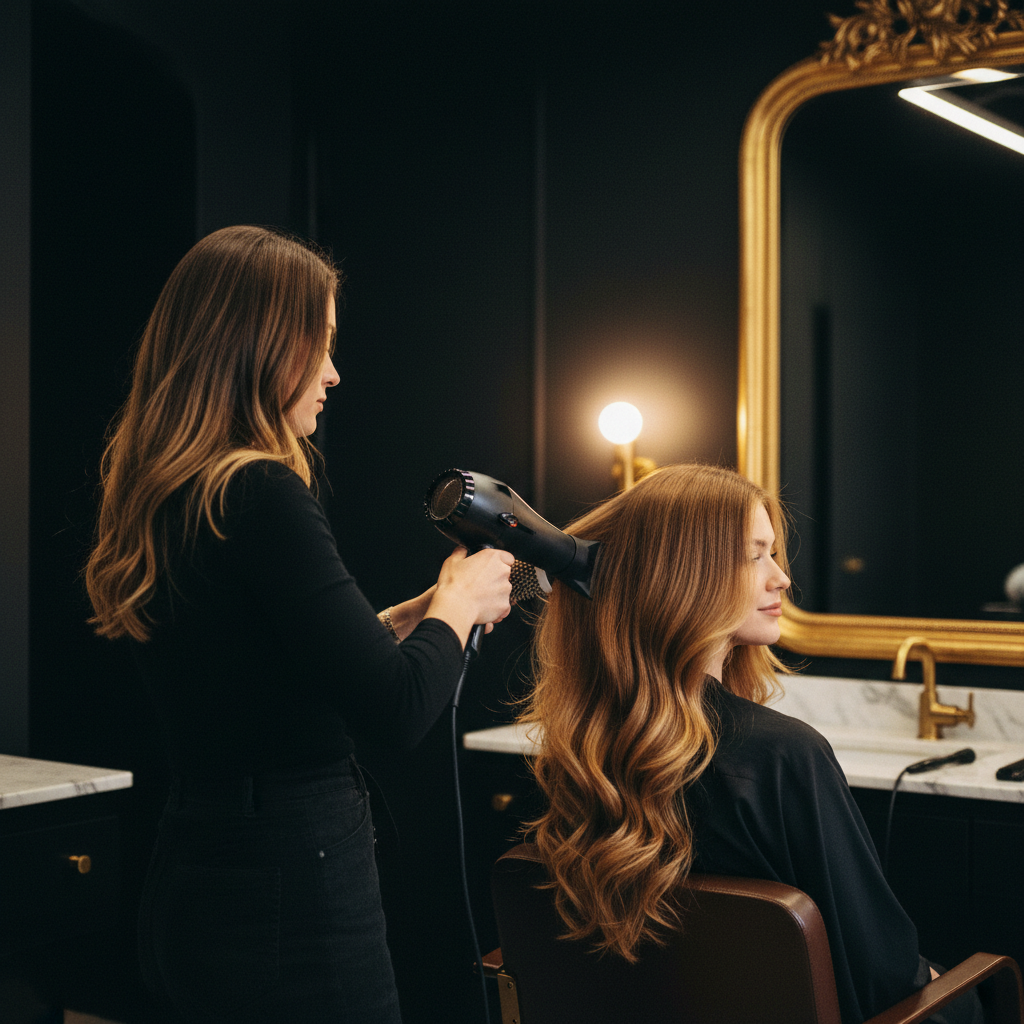
Quick answer: Mastered blow drying techniques allow you to smooth the cuticle, build root lift, and set hair into shape while preventing thermal fatigue and mechanical breakage. Research shows that blow drying from a distance of 15 cm with continuous motion actually causes less damage to the internal cell membrane complex than prolonged air drying. However, improper blow drying techniques, such as resting a hot nozzle directly against wet hair, degrade structural keratin and cause irreversible moisture loss and split ends.
Key takeaways
- Holding a blow dryer 15 cm away from the hair fibre while keeping the airflow moving reduces structural damage compared to prolonged air drying.
- Wet hair exists in a weakened, plasticised state where hydrogen bonds are broken, making it particularly vulnerable to mechanical stretching from round brushes.
- Rough drying hair until it is roughly 70 to 80 percent dry before introducing tension tools preserves the integrity of the hair shaft.
- Using a directional nozzle pointed down the hair shaft seals the cuticle scales, improving light reflection and reducing frizz.
- Finishing each section with the cool shot button resets temporary hydrogen bonds, locking the mechanical shape firmly into place.
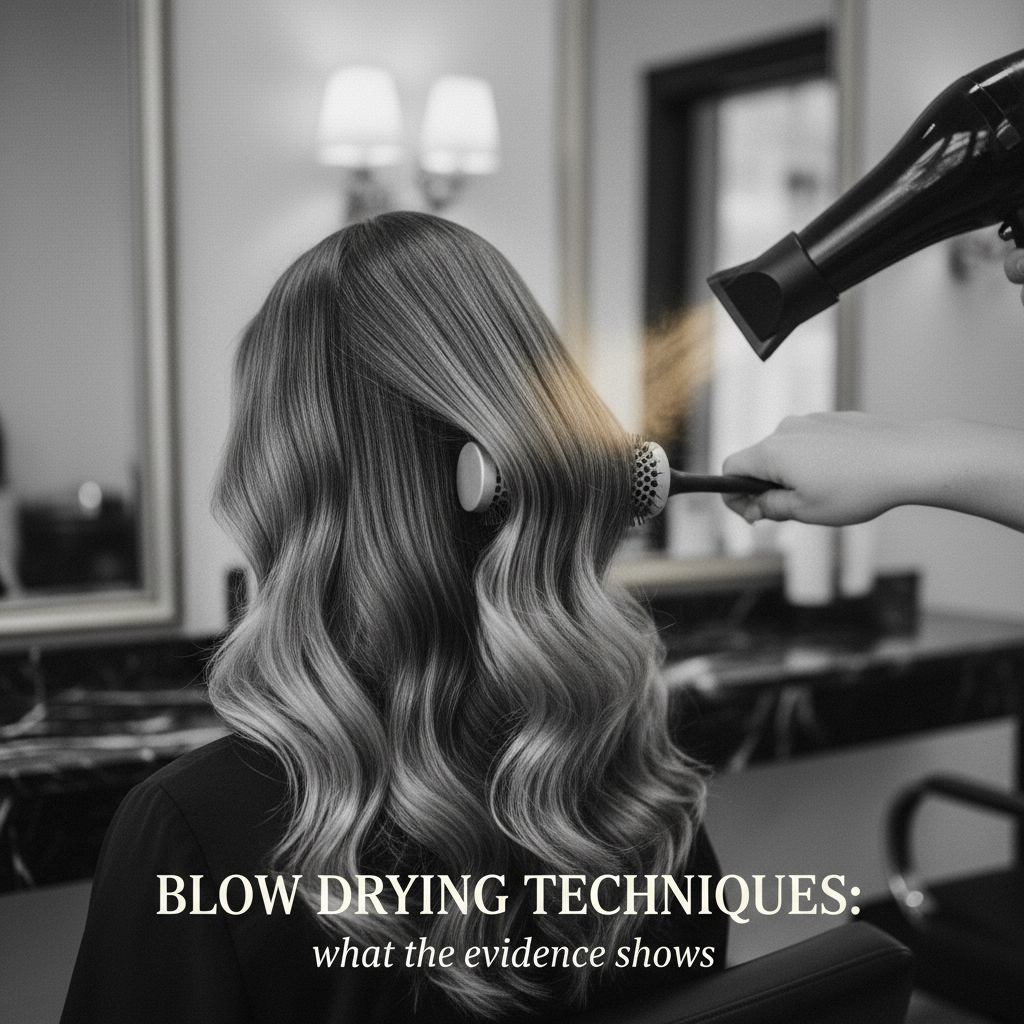
Blow Drying Techniques: what the evidence shows
Scientific evaluation of blow drying techniques reveals a balance between mechanical stress, moisture retention, and thermal exposure. A landmark study published in the Annals of Dermatology (Lee et al., 2011) examined hair damage caused by air drying versus blow drying at various distances and temperatures. The researchers found that while blow drying at high temperatures damages the outer cuticle layer, natural air drying damages the internal cell membrane complex (CMC). Air drying leaves the hair swollen with water for extended periods, placing persistent hydraulic pressure on the CMC. The safest method identified was using a blow dryer at a distance of 15 cm with continuous movement on a medium temperature setting.
Thermal styling operates by temporarily manipulating the hair's physical bonds. Hair keratin contains disulphide bonds, salt linkages, and hydrogen bonds. Water easily breaks hydrogen bonds, making wet hair malleable and prone to deformation. Correct blow drying techniques apply controlled heat to evaporate water while tension is applied with a brush, re-forming hydrogen bonds into the desired configuration.
When you apply heat without controlling the distance and air movement, you risk causing bubble hair. This phenomenon occurs when water trapped inside the hair cortex reaches boiling point (100°C), vaporising into steam and forming microscopic gas cavities that snap the fibre. Proper blow drying techniques distribute airflow evenly, ensuring water evaporates gradually from the surface rather than boiling within the cortex.
The mechanical and thermal mechanisms of drying
Understanding the structural science of the hair shaft explains why specific mechanical motions matter during a blowout.
Cuticle orientation and airflow direction
The human hair cuticle consists of 5 to 10 overlapping layers of flat, keratinised cells resembling roof shingles. These scales point downwards, away from the scalp toward the tips. When airflow travels against this grain (from ends to roots), it forces the cuticle edges open. Raised cuticles increase surface friction, scatter light (causing dullness), and expose the delicate cortex beneath. Directing the airflow down the shaft from root to tip flattens the cuticle scales, locking in hydration and providing a smooth, reflective surface.
The glass transition phase
Hair keratin undergoes a physical transition when exposed to heat and moisture, known in polymer physics as the glass transition temperature (Tg). In dry hair, the Tg is high, often above 140°C. In damp hair, water acts as a plasticiser, dropping the Tg significantly down to between 40°C and 60°C. This means wet hair softens and stretches under very low levels of heat and force. Pulling a round brush through soaking wet hair stretches the fibre beyond its elastic recovery limit (roughly 30 percent elongation), resulting in permanent deformation and snapping.
| Technique Factor | Correct Method | Incorrect Method | Biological Impact |
|---|---|---|---|
| Nozzle Distance | 15 cm minimum distance | Pressed onto the hair fibre | Prevents focal heat above 100°C; avoids boiling trapped moisture inside the cortex. |
| Airflow Direction | Downward from root to tip | Upward or buffeting randomly | Flattens the cuticle layer; prevents micro-chipping of outer scale margins. |
| Pre-drying Stage | Rough dry to 70 to 80% moisture | Styling with tension from 100% wet | Protects the plasticised hair shaft from excessive mechanical stretching. |
| Brush Material | Boar bristle or ceramic vented | Bare metal core under high heat | Moderates surface conduction; reduces heat transfer spikes to fragile strands. |
| Section Size | No wider than the brush barrel | Overly thick, dense clusters | Ensures uniform heat distribution; eliminates repeated heat passes on dry outer layers. |
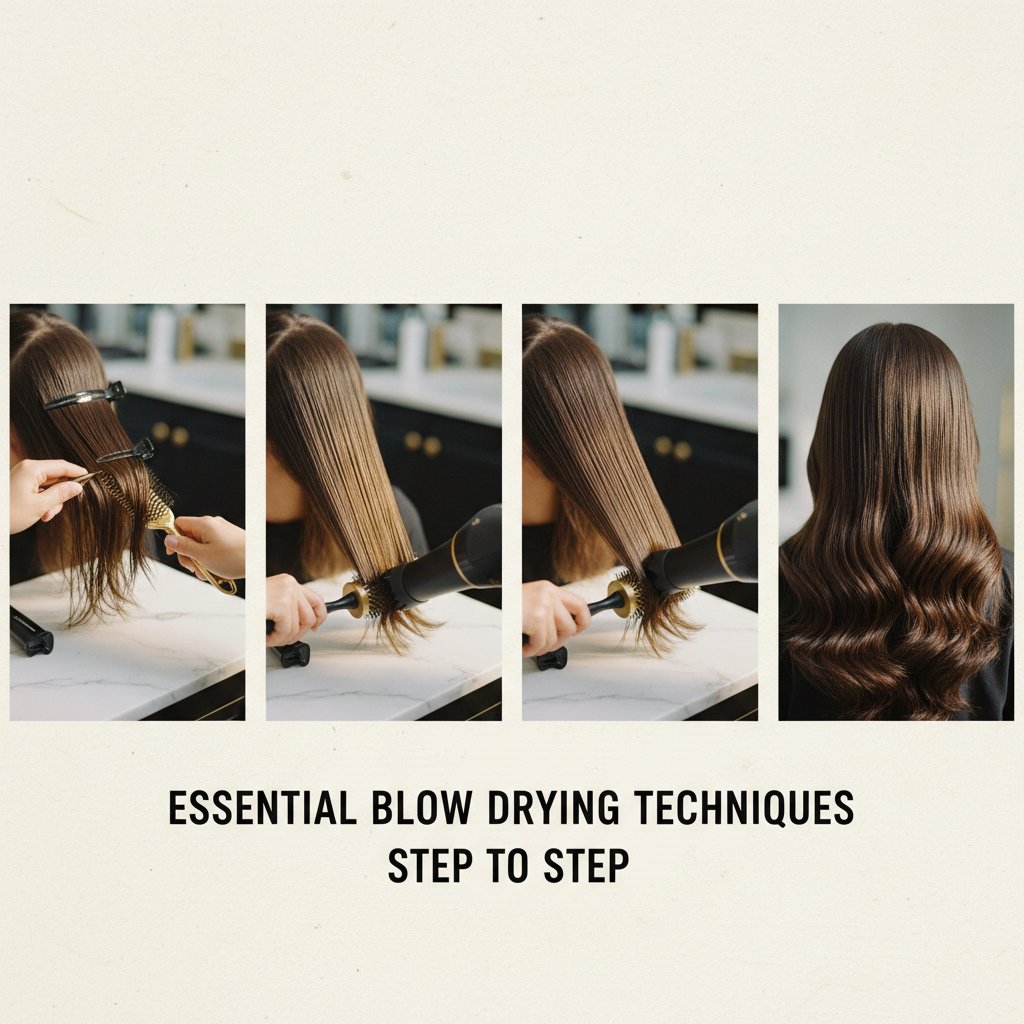
Essential blow drying techniques step by step
Achieving a salon-quality finish without inducing breakage requires a structured, multi-phase routine.
1. Water extraction without friction
Begin by removing excess water before introducing any electrical heat. Never rub wet hair vigorously with a traditional cotton towel, as the raised loops of terrycloth snag the swollen cuticle scales and cause mechanical breakage. Instead, gently press and squeeze the hair using a smooth microfibre towel or cotton wrap. Squeeze until the hair no longer drips.
2. Rough drying (The 80 percent rule)
Attach the concentrator nozzle to your dryer. Set the device to medium heat and medium-to-high airflow. Direct the air downwards while gently raking your fingers through your hair to separate the strands. Continue this process until the hair is approximately 70 to 80 percent dry. At this stage, the excess water has evaporated, restoring enough structural rigidity to the cortex that the hair can safely tolerate brush tension.
3. Systematic sectioning
Divide the hair into clean, manageable sections using non-snagging section clips. A standard blowout uses four primary quadrants: two in the back (split vertically down the central occipital bone) and two on the sides. Work on sub-sections that are no thicker than the diameter of your styling brush. Attempting to blow dry sections that are too thick results in overheating the exterior hair while the centre remains damp.
4. Controlled tension and movement
Position your brush beneath the section at the roots. Keep the dryer nozzle parallel to the brush, maintaining a steady distance of at least 15 cm. Move the brush and the dryer down the hair shaft in unison toward the ends. Maintain moderate tension; do not pull aggressively. Keep the dryer constantly moving to prevent heat hotspots on the surface of the hair shaft.
5. The cool shot setting
Once a section is completely dry and shaped, depress the cool shot button on your dryer and direct the cool airflow over the section for 5 to 10 seconds. The sudden drop in temperature rapidly cools the keratin past its glass transition point, locking the re-formed hydrogen bonds into their new shape. This provides lasting hold and prevents the hair from reverting to its natural texture in ambient humidity.
Signs of thermal and mechanical drying damage
Thermal fatigue accumulates over time. Watch for these diagnostic signs that your technique requires adjustment:
- Trichorrhexis nodosa: Tiny white specks visible along the hair shaft where the cortex has fragmented due to heat, leading directly to breakage.
- Split ends (Trichoptilosis): Longitudinal splitting of the fibre ends caused by mechanical wear and cuticle erosion from round brushes.
- Surface frizz and roughness: A rough, sandpaper-like texture when running fingers from ends to roots, indicating lifted or chipped cuticle edges.
- Loss of elasticity: Strands that snap immediately when pulled gently rather than stretching and returning to their original length.
- Rapid colour fade: Heat stripping cosmetic pigments out of the hair shaft through a porous, damaged cuticle.
What to do if you experience heat damage
Hair is non-living tissue; once the internal protein matrix is fractured, it cannot biologically heal. However, you can manage the structural decline:
- Trim damaged ends: Remove split ends immediately before the fissures travel further up the hair shaft.
- Lower styling temperatures: Restrict your dryer to its warm or medium setting, never exceeding what is comfortable on the skin of your forearm.
- Incorporate film-forming leave-in conditioners: Products containing hydrolysed wheat proteins, panthenol, and silicone polymers coat the shaft, lowering friction coefficients and creating a protective buffer against moisture loss.
- Reduce frequency: Limit high-tension, high-heat blow drying to once or twice a week, allowing natural air drying or diffused drying on cool settings on alternate days.
Supporting hair health from the roots with Watermans
While adjusting your mechanical blow drying techniques preserves the hair shaft, healthy styling always starts at the follicle. The condition of newly emerged hair fibres dictates how well they withstand future thermal styling. Watermans GrowMe Shampoo delivers a nutrient-rich, sulphate-free cleanse specifically formulated to foster an optimal scalp environment.
Featuring natural ingredients such as biotin, rosemary extract, caffeine, niacinamide, and argan oil, GrowMe strengthens the feel of the hair right from the roots. Pairing it with Watermans ConditionMe Conditioner infuses the cuticle with lightweight hydration, softening strands and reducing the mechanical friction created by styling brushes. This gives your hair a robust, glossy foundation that stands up better to regular drying and styling routines.
When to seek professional guidance
If you notice excessive shedding (large clumps of hair falling from the root, often visible by the presence of a white bulb) rather than short, snapped fibres from breakage, the issue is not your blow drying technique. Diffuse thinning, sudden scalp exposure, or patchy loss warrants a visit to a trichologist, dermatologist, or your GP. Conditions like telogen effluvium, androgenetic alopecia, and alopecia areata originate within the hair follicle beneath the scalp surface and require formal medical diagnosis rather than styling adjustments.
Frequently asked questions about Blow Drying Techniques
Is air drying always healthier than using blow drying techniques?
No. Research shows that air drying keeps the hair swollen with water for a prolonged period, placing prolonged pressure on the cell membrane complex inside the shaft. Using blow drying techniques that maintain a 15 cm distance and continuous motion dries the hair efficiently without causing internal swelling damage or overheating the cuticle layer.
What is the purpose of the concentrator nozzle?
The concentrator nozzle flattens and directs the airflow into a narrow, controlled stream. This prevents the air from scattering the hair in multiple directions, which ruffles the cuticle scales. Using the nozzle allows you to direct heat smoothly down the hair shaft from root to tip, which flattens the cuticle and enhances shine.
How wet should hair be before blow drying with a round brush?
Hair should be roughly 70 to 80 percent dry before you apply tension with a round brush. Wet hair is in an elastic, weakened state where its hydrogen bonds are completely disrupted. Pulling a brush through wet hair stretches it beyond its natural recovery point, causing micro-tears in the cortex and severe breakage.
Can blow drying techniques cause permanent hair loss?
Standard blow drying does not cause follicular hair loss (alopecia), as the heat does not penetrate deep enough to destroy healthy follicles under the scalp. However, improper blow drying techniques can cause severe hair breakage along the shaft. If you pull excessively with round brushes, you can also trigger traction stress on the follicles over time.
Does the cool shot button actually do anything?
Yes. Hair is shaped when heat makes its keratin pliable. As hair cools, its temporary hydrogen bonds lock into place. The cool shot button provides a blast of cool air that rapidly sets the hair into the shape created by your brush, ensuring longer-lasting volume, curl, or smoothness while sealing the outer cuticle.
Conclusion
Mastering evidence-based blow drying techniques protects the integrity of your hair fibres while delivering volume, smoothness, and polish. By respecting hair physics, rough drying to 80 percent, maintaining a 15 cm distance, and directing airflow down the cuticle, you prevent both thermal fatigue and mechanical breakage. Combine these conscious drying habits with a nourishing scalp care routine to ensure your hair remains strong, resilient, and vibrant over the long term.
Sources and references
- Lee, Y. Et al. (2011) 'Hair Shaft Damage from Heat and Drying Time of Hair Dryer', Annals of Dermatology, 23(4), pp. 455-462.
- Robbins, C.R. (2012) Chemical and Physical Behavior of Human Hair. 5th edn. Berlin: Springer-Verlag.
- Swift, J.A. (1999) 'Human hair cuticle: biologically conspired to the owner's benefit, chemically tailored to the sufferer's detriment', International Journal of Cosmetic Science, 21(4), pp. 227-239.
- British Association of Dermatologists (2022) Hair Shaft Disorders Overview. Available at: bad.org.uk.
- Dawber, R. (1996) 'Hair: Its structure and response to cosmetic preparations', Clinics in Dermatology, 14(1), pp. 105-112.
Find these ingredients in Watermans products
- Niacinamide: you will find this ingredient in our Hair Mask.
- Panthenol (Provitamin B5): you will find this ingredient in our Heat Protection Spray.