Bleach Hair Damage and Repair: An Evidence-Based Guide
9 min read ·
Learn the science of Bleach Hair Damage and Repair: how alkaline oxidation affects keratin, and evidence-based ways to reinforce compromised hair fibres.
Quick answer: Understanding Bleach Hair Damage and Repair begins with one biological fact: hair fibre is dead keratin, meaning bleached strands cannot biologically heal or regenerate. Bleach dissolves melanin through an alkaline oxidation process (pH 9.0 to 11.0) that breaks crucial disulphide bonds and strips the protective lipid layer. While cosmetic repair cannot reverse molecular oxidation permanently, targeted bond-builders, hydrolysed proteins, and emollient lipids can reinforce structural integrity, minimise breakage, and restore surface smoothness.
Key takeaways
- Bleaching lifts the hair cuticle via alkaline agents (often ammonium hydroxide) and oxidises melanin granules using hydrogen peroxide.
- Oxidative bleaching permanently destroys cystine (disulphide) cross-links and oxidises 18-methyleicosanoic acid (18-MEA), the hair's primary hydrophobic barrier.
- Cosmetic repair cannot regenerate dead keratin; it deposits temporary synthetic bonds, proteins, and conditioning agents to reduce friction and breakage.
- Breakage from chemical degradation is distinct from follicle-driven hair loss; bleach snaps fibres along the shaft rather than causing shedding from the root.
- Severe bleach over-processing leads to extreme porosity, high elasticity when wet, gummy texture, and mechanical failure under light tension.
Bleach Hair Damage and Repair: what the evidence shows
Scientific evaluation of Bleach Hair Damage and Repair shows that hair bleaching is an aggressive, irreversible chemical degradation of the hair cortex and cuticle. The human hair shaft is composed of roughly 85% to 90% keratin proteins, held together by peptide bonds, hydrogen bonds, salt bridges, and covalent disulphide bonds. Disulphide bonds, formed between two cysteine amino acid residues to create cystine, provide the mechanical strength and elasticity of the hair fibre.
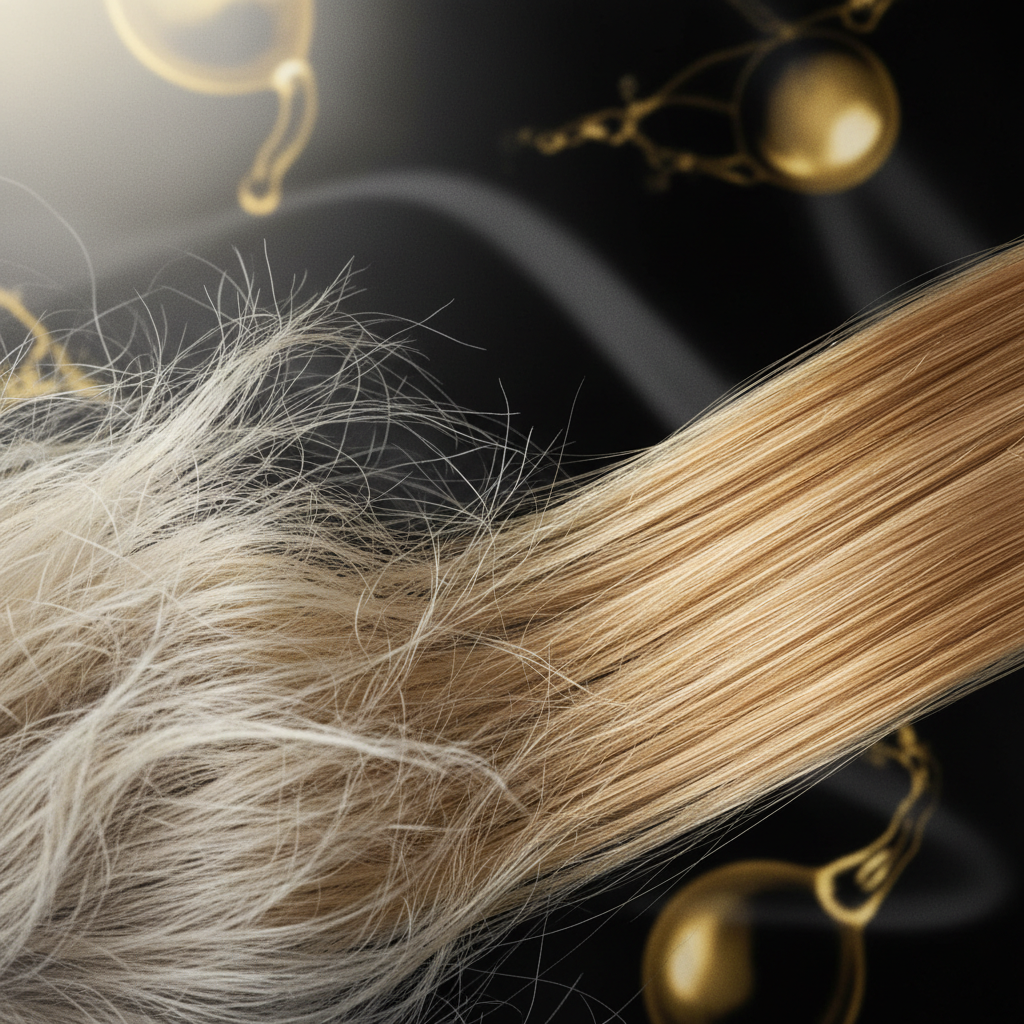
During bleaching, persulphates and hydrogen peroxide operate at an alkaline pH of 9.0 to 11.0. This alkalinity swells the hair shaft and forces open the overlapping shingles of the cuticle. Once inside the cortex, the oxidative mixture attacks melanin pigment to lighten the strand.
Concurrently, it oxidises cysteine into cystic acid. Research published in the Journal of Cosmetic Science demonstrates that a single bleaching process can reduce hair's cystine content by 15% to 25%, while repeated processes can destroy up to 50% or more. This loss of internal cross-linking diminishes the tensile strength of the fibre, making it prone to fracture under normal combing force.
Furthermore, cosmetic chemistry demonstrates that "repair" in hair care refers to functional restoration rather than biological renewal. Once disulphide bonds fracture into cystic acid, they do not naturally reform. Modern bond-multiplying technologies, hydrolysed vegetable proteins, and biomimetic lipids form artificial cross-links, patch gaps in the cuticle, and lubricate the fibre surface to halt breakage.
The mechanism: what happens to the hair shaft during bleaching
The structural decline of bleached hair occurs across three distinct anatomical regions of the fibre.
1. Stripping the F-layer (18-MEA)
The outermost surface of a virgin hair cuticle is coated with an ultra-thin lipid monolayer consisting primarily of 18-methyleicosanoic acid (18-MEA). This F-layer confers natural hydrophobicity, allowing water to roll off while reducing surface friction between adjacent strands. A single bleaching session removes virtually all of this lipid barrier. As a result, the hair becomes highly hydrophilic, absorbing environmental humidity rapidly, swelling unevenly, and tangling under high friction.
2. Cuticle lifting and erosion
Under high pH conditions, the cuticle layers swell and lift. Repeated or prolonged exposure to alkaline oxidisers dissolves the proteinaceous endocuticle and cell membrane complex (CMC) that glues the scales together. Cuticles break off, exposing the underlying cortex directly to mechanical friction, ultraviolet radiation, and heat styling.
3. Cortical oxidation and protein loss
Within the cortex, bleach oxidises structural keratin proteins alongside melanin. The conversion of neutral disulphide bonds into negatively charged cystic acid groups increases internal electrostatic repulsion. When wet, heavily bleached hair swells excessively and behaves like an overstretched elastic band. When dry, it becomes brittle, stiff, and prone to transverse snapping.
Virgin hair: Intact Cuticle + Hydrophobic 18-MEA + High Disulphide Density
 │
 [ Alkaline Oxidation (pH 9.0 - 11.0) ]
 ▼
Bleached hair: Eroded Cuticle + Hydrophilic Surface + Cystic Acid Formation (Breakage)
Signs of bleach damage: diagnosing the severity
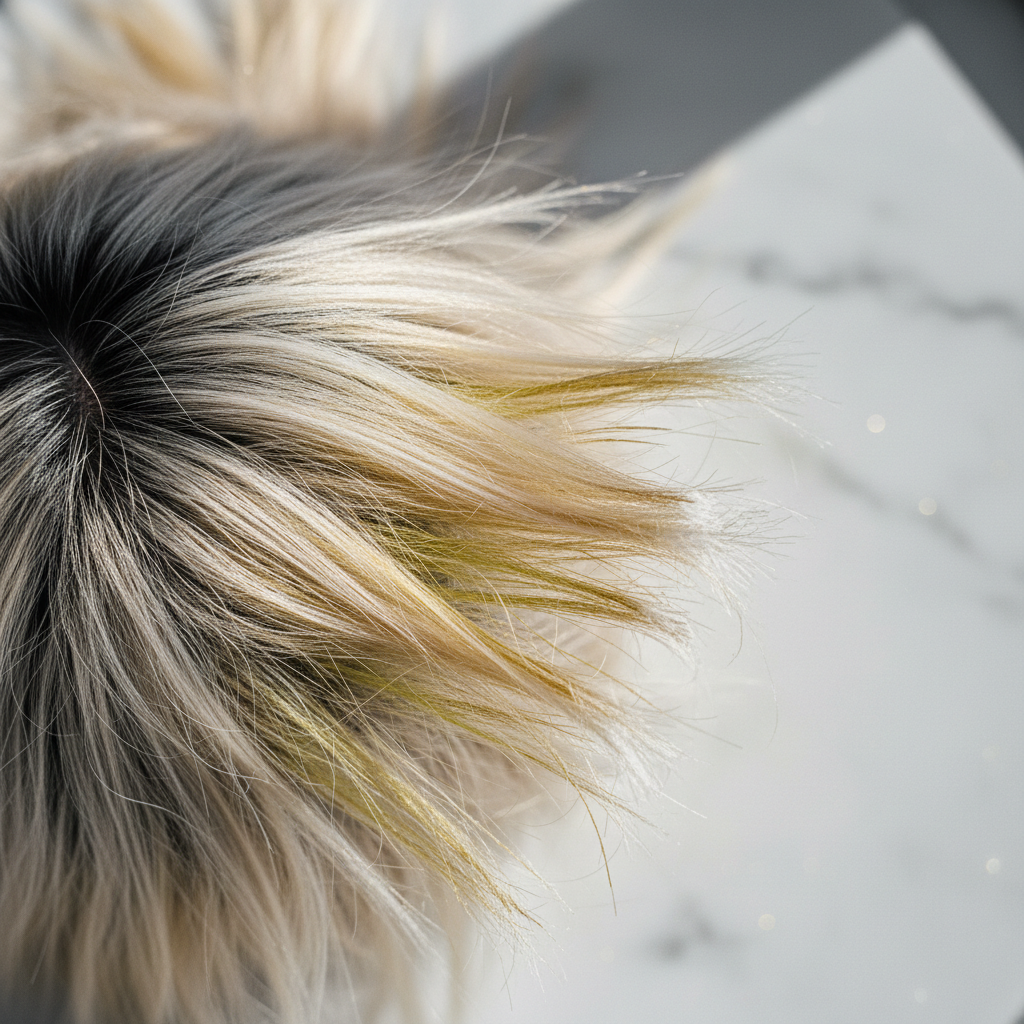
Assessing the level of damage dictates the appropriate cosmetic intervention. Bleach damage is not uniform; it varies from mild cuticle disruption to complete structural failure.
| Damage Stage | Structural Characteristics | Physical Symptoms | Primary Treatment Strategy |
|---|---|---|---|
| Stage 1: Mild | Slight cuticle lifting, minor 18-MEA loss, 10% to 15% cystine reduction | Dryness, minor flyaways, slight loss of shine, normal elasticity | Acidic conditioners (pH 3.5 to 4.5), lightweight leave-in lipids |
| Stage 2: Moderate | Cuticle fraying, total 18-MEA loss, increased porosity | Chronic tangling, rough texture, increased swelling when wet | Hydrolysed proteins, weekly bond-building complexes, lipid masks |
| Stage 3: Severe | Extensive cortical exposure, high cystic acid, fractured CMC | Gummy or mushy feel when wet, extreme stretch without snap-back | Low-molecular-weight amino acids, strict avoidance of heat, restorative bond treatments |
| Stage 4: Extreme | Complete cortical fracture, longitudinal splitting | Fibre snaps under minimal tension, extensive split ends | Physical trim of non-viable ends, structural fortification of remaining shaft |
What you can do: evidence-based cosmetic repair
Cosmetic intervention cannot regenerate keratin, but it can artificially reinforce tensile strength, seal the cuticle, and lower the friction coefficient to prevent future fractures.
Re-establishing cross-links with bond builders
Formulations containing dicarboxylic acids (such as maleic acid or bis-aminopropyl diglycol dimaleate) interact with exposed amine groups or remaining sulphur molecules. They build temporary ionic or covalent bridges across fractured protein chains, partially recovering wet tensile strength.
Patching the cortex with hydrolysed proteins
Standard whole proteins cannot penetrate the hair shaft because their molecular weight exceeds 1,000 Daltons. Hydrolysed keratin, wheat, and silk peptides (ranging from 150 to 800 Daltons) are small enough to enter the porous cortex of bleached hair. Once inside, they anchor to negatively charged sites via electrostatic attraction, temporarily reinforcing the internal matrix.
Restoring hydrophobicity and slip
Because bleach strips the 18-MEA lipid layer, replacing it with biomimetic fatty acids and conditioning agents is essential. Cetyl alcohol, stearyl alcohol, behentrimonium methosulfate, and plant-derived triglycerides coat the lifted cuticle scales. This layer mimics natural hydrophobicity, preventing waterlogging and reducing the combing force that causes wet hair breakage.
Acidic pH balancing
Bleach leaves hair swollen at an elevated pH. Rinses, shampoos, and conditioners formulated at an acidic pH (3.5 to 5.0) contract the keratin structure, encouraging cuticle scales to lie flat against the cortex. This locks in moisture, improves light reflectivity, and reduces friction.
What the evidence does not show: common myths
A prevalent misconception in modern beauty marketing is that deep conditioning masks can permanently reverse chemical damage. While conditioning agents smooth the surface, they wash out over several cleansing cycles. No topical cosmetic formulation can physically transform cystic acid back into unoxidised cystine.
Another frequent myth is that hot oil treatments repair internal bonds. Pure vegetable oils (like coconut or argan oil) provide valuable lubrication and reduce protein swelling during washing, but they contain no bond-building chemistry and cannot repair cross-link structural deficits within the cortex.
Bleach damage versus hair loss: distinguishing root from fibre
It is vital to distinguish between hair breakage and follicular hair loss. Bleach affects the non-living fibre protruding from the scalp. If hair breaks midway down the shaft, or if you see short, fractured hairs on your collar without a white bulb at the end, you are experiencing chemical hair breakage.
Conversely, true hair loss occurs inside the hair follicle. Unless bleach was left directly on the scalp long enough to cause chemical burns, inflammation, or scarring, bleaching does not trigger telogen effluvium or androgenetic alopecia. If hair sheds from the root with its white bulb intact, the underlying cause is systemic, hormonal, or stress-related, rather than structural bleach damage.
When to seek professional advice
Consult a qualified trichologist or senior colourist if:
- The hair feels gummy, stretches excessively, and dissolves or disintegrates when wet.
- You experience persistent scalp itching, burning, crusting, or oozing following a bleach application, which signals an acute chemical burn or contact dermatitis.
- Breakage is so severe that large sections of hair are snapping off within two centimetres of the scalp.
- You cannot determine whether shedding is originating from the follicle or resulting from shaft fracture.
Supporting compromised hair with Watermans
When managing hair compromised by chemical processing, reducing mechanical friction and providing gentle, nourishing scalp and hair support is essential. Watermans formulations are engineered without harsh sulphates that can aggressively strip already vulnerable, bleached fibres. Using an exceptionally gentle, pH-balanced cleansing system alongside nutrient-rich botanicals helps maintain a calm, hydrated scalp environment while supporting overall fibre resilience against daily handling and breakage.
Frequently asked questions about Bleach Hair Damage and Repair
Can damaged bleached hair ever truly heal on its own?
No, hair cannot heal because the hair shaft is biologically non-living tissue made of dead keratinised cells. While skin repairs itself through cellular division, bleached hair has no active cells to regenerate broken bonds. All methods of repair rely on topical cosmetic treatments, such as proteins and bond-builders, that temporarily reinforce the fibre until new, virgin hair grows in from the root.
How often should I use protein treatments after bleaching?
Moderation is essential. Porous, bleached hair benefits from hydrolysed protein treatments every one to two weeks. However, excessive application of high-molecular-weight proteins without balanced conditioning lipids can cause the hair shaft to become overly stiff, brittle, and prone to snapping. Alternate protein treatments with deep-hydrating, emollient-rich conditioning masks to maintain proper tensile elasticity.
Does Olaplex or bond-building technology completely fix bleach damage?
Bond-building technologies temporarily bridge broken chemical pathways, significantly improving wet elasticity and reducing breakage during and after processing. However, they do not completely restore virgin hair quality. The oxidative damage, loss of the 18-MEA lipid layer, and internal protein voiding remain. Bond builders must be used continually as part of an ongoing maintenance routine to preserve their protective effects.
What is the most effective approach to Bleach Hair Damage and Repair at home?
The most reliable routine for Bleach Hair Damage and Repair focuses on mechanical protection and layered cosmetic conditioning. Use bond-repair treatments weekly, wash with low-pH, sulphate-free cleansers, apply leave-in conditioners containing hydrolysed peptides, and seal the cuticle with light emollients. Critically, eliminate high-heat styling tools and avoid brushing bleached hair when it is sopping wet and most structurally vulnerable.
Conclusion: restoring strength and preventing breakage
Navigating Bleach Hair Damage and Repair requires understanding the permanent chemical changes brought on by alkaline oxidation. While you cannot biologically rebuild the destroyed cystine bonds and natural lipid F-layer, an evidence-based regimen of pH balancing, bond fortification, hydrolysed proteins, and lipid replenishment dramatically mitigates the physical fallout. By handling bleached fibres with care and minimising further mechanical and thermal stress, you can retain length, restore surface shine, and preserve hair integrity.
Sources and references
- Journal of Cosmetic Science: Chemical and Physical Changes in Hair Caused by Bleaching (Robbins, C. R., 2012)
- International Journal of Trichology: Hair Cosmetics: An Overview (Gavazzoni Dias, M. F., 2015, DOI: 10.4103/0974-7753.153450)
- Journal of the Society of Cosmetic Chemists: The effect of chemical treatments on the hair cuticle (Swift, J. A., 1999)
- British Association of Dermatologists: Hair breakage and chemical trauma guidelines (2018)
- International Journal of Cosmetic Science: Surface and structural characterisation of chemically treated hair (Cureton, L. Et al., 2021)
Find these ingredients in Watermans products
- Argan Oil: you will find this ingredient in our Hair Growth Shampoo.