Best Practices for Washing Colour Treated Hair
9 min read ·
Master the Best Practices for Washing Colour Treated Hair to prevent fading, stop breakage, and keep salon colour vibrant with evidence-based techniques.
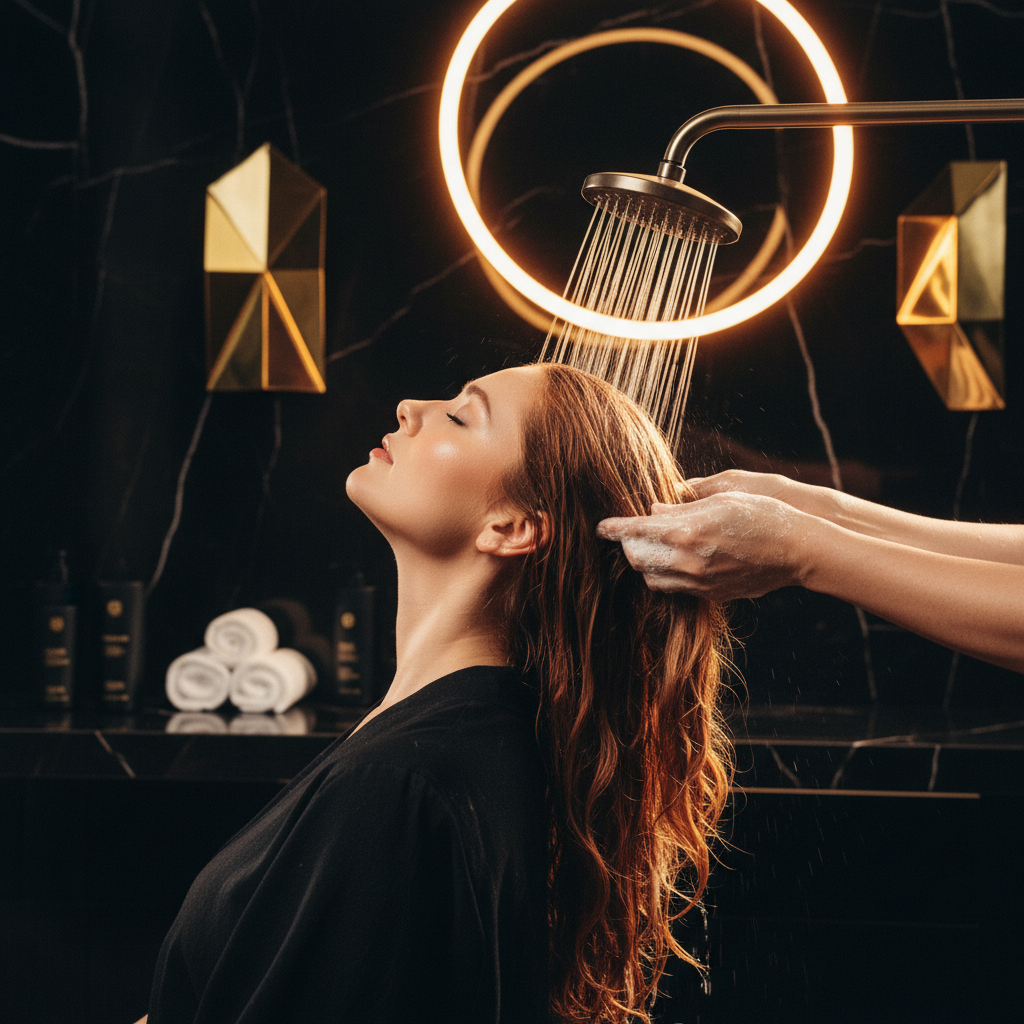
Quick answer: Establishing the Best Practices for Washing Colour Treated Hair requires washing less frequently with lukewarm water, using gentle, sulphate-free cleansers formulated near hair's natural pH (4.5 to 5.5), and sealing the cuticle with acidic conditioning agents. Water exposure causes the hair shaft to swell and dye molecules to leach out, while harsh surfactants strip the protective lipid layer. The main limitation is that oxidative dye molecules inevitably degrade over time from environmental ultraviolet light and mechanical wear, regardless of washing technique.
Key takeaways
- Water is the primary driver of colour washout because it swells the hair shaft and permits trapped artificial pigments to diffuse outwards.
- The chemical colouring process removes the f-layer (18-methyleicosanoic acid), leaving hair hydrophilic and vulnerable to rapid moisture loss and mechanical breakage.
- Maintaining a low wash temperature (lukewarm to cool) reduces cuticle flare and significantly slows the rate of artificial pigment leaching.
- Acidic haircare products (pH 4.5 to 5.5) help contract the cuticle scales, improving light reflection and trapping colour pigments inside the cortex.
- Spacing wash days out to two or three times weekly preserves cosmetic longevity while protecting the delicate fibre from unnecessary friction.
Best Practices for Washing Colour Treated Hair: what the evidence shows
Permanent and demi-permanent hair colouring relies on chemical manipulation of the hair shaft. To deposit synthetic colour molecules into the inner cortex, alkaline chemicals such as ammonia or ethanolamine lift the overlapping scales of the protective outer cuticle. Hydrogen peroxide then lightens natural melanin through oxidation and triggers colour precursors to polymerise into larger, visible pigment molecules inside the cortex.
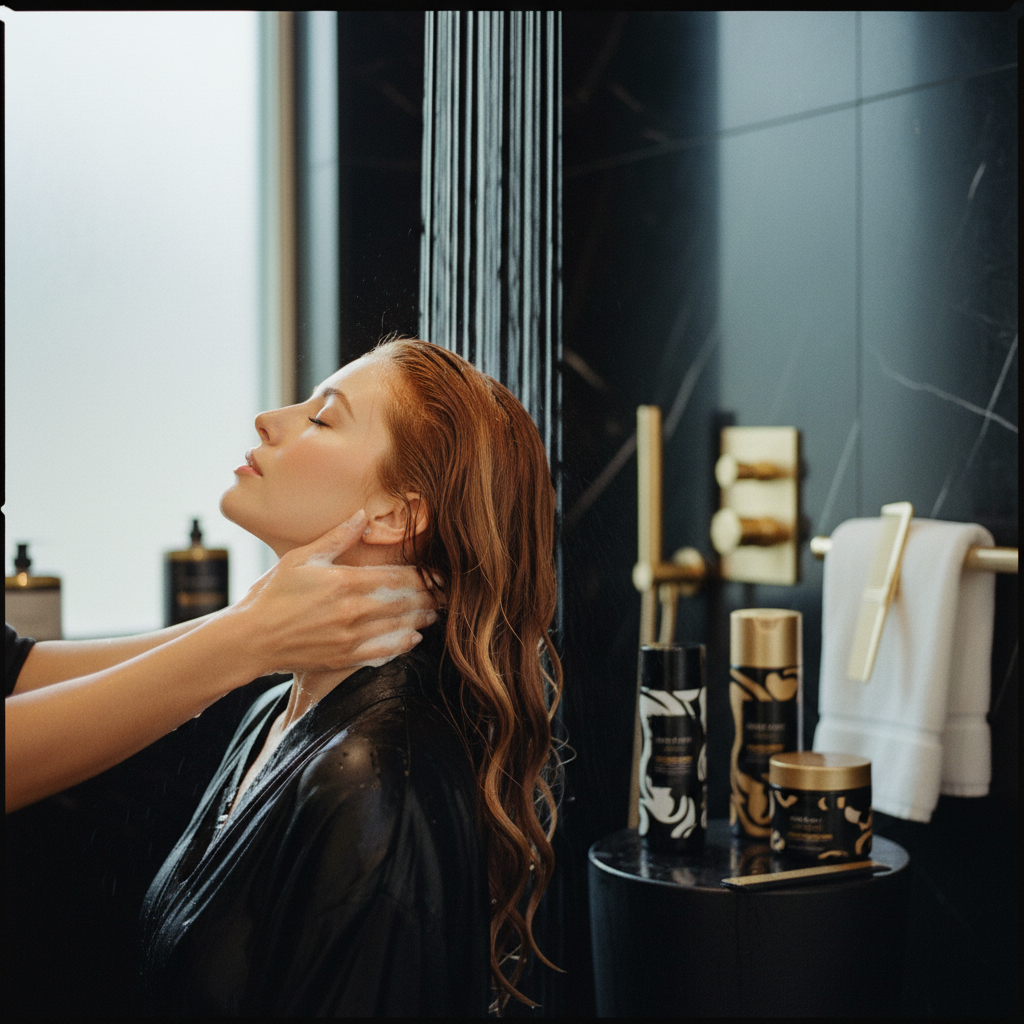
This necessary chemical process permanently alters the structural integrity of the fibre. Studies published in cosmetic science literature show that alkaline processing strips away the 18-methyleicosanoic acid (18-MEA) lipid barrier, known as the f-layer. Without this hydrophobic shield, the hair fibre becomes porous and hydrophilic (water-loving).
When you wash colour-treated hair, water penetrates the porous cortex quickly. The hair shaft swells by up to 15 to 20 percent of its diameter. This swelling forces the lifted cuticle scales further apart, creating clear pathways for small artificial dye molecules to dissolve and escape into the rinse water. Implementing the Best Practices for Washing Colour Treated Hair minimises this swelling, preserves lipid coatings, and maintains cuticle alignment.
Why water temperature matters
Hot water accelerates colour loss through two distinct mechanisms: thermal expansion and increased solubility. Heat softens the hair's keratin matrix and causes the cuticle scales to flare dramatically. At the same time, higher water temperatures increase the kinetic energy and solubility of synthetic dye molecules trapped within the cortex.
Rinsing with lukewarm water (around 30°C to 35°C) or finishing with cool water keeps the cuticle layer flatter. This physical barrier contains the pigment molecules and ensures the outer surface remains smooth enough to reflect light evenly, providing high shine.
The science of surfactant choice
Standard cleansing agents, particularly strong anionic surfactants like sodium lauryl sulphate (SLS), exhibit high detergency and an alkaline to neutral pH. While effective at removing sebum, their high ionic charge and deep degreasing power strip natural protective oils and disrupt colour retention.
Gentle, colour-safe cleansers rely instead on milder secondary surfactants such as sodium cocoyl isethionate, cocamidopropyl betaine, or alkyl polyglucosides. These surfactants cleanse the scalp adequately without lifting the cuticle or aggressively removing the secondary conditioning films that lock in cosmetic tones.
| Washing factor | Standard approach | Best practice for colour-treated hair | Functional benefit |
|---|---|---|---|
| Water temperature | Hot (38°C to 42°C) | Lukewarm to cool (28°C to 34°C) | Prevents cuticle flaring and reduces pigment leaching |
| Cleanser type | High-detergency anionic sulphates | Mild, sulphate-free amphoteric or non-ionic surfactants | Preserves cosmetic lipids and limits dye extraction |
| Product pH | Alkaline to neutral (pH 6.0 to 7.5) | Acid-balanced (pH 4.5 to 5.5) | Keeps the cuticle contracted and compact |
| Washing frequency | Daily | 2 to 3 times per week | Limits cycle of fibre swelling and deswelling (hygral fatigue) |
| Conditioning focus | Surface detangling | Cationic polymers, lipids, and acidic conditioners | Restores hydrophobicity and seals lifted cuticle edges |
What the evidence does not show
There is no scientific evidence that skipping washing entirely prevents all colour fading. While water is a leading culprit in cosmetic wash-out, artificial pigments also undergo photo-oxidation from ambient ultraviolet (UV) radiation and degradation from oxygen in the air.
Furthermore, myths persist that washing hair in ice-cold water permanently seals the cuticle closed. The hair cuticle is a biological, non-living structure governed by chemical charges and hydration levels, not a muscular pore that contracts on demand. Cool water prevents heat-induced flaring, but extreme cold provides no added clinical benefit over comfortable lukewarm water.
Finally, gentle washing cannot reverse underlying chemical damage. Once 18-MEA is cleaved from the hair surface during oxidation, cosmetics can temporarily deposit lipid-like conditioning layers over the shaft, but they cannot regenerate virgin hair chemistry.
Mechanisms of colour leaching and fibre breakage
Understanding how hair behaves during washing helps clarify why technique matters:
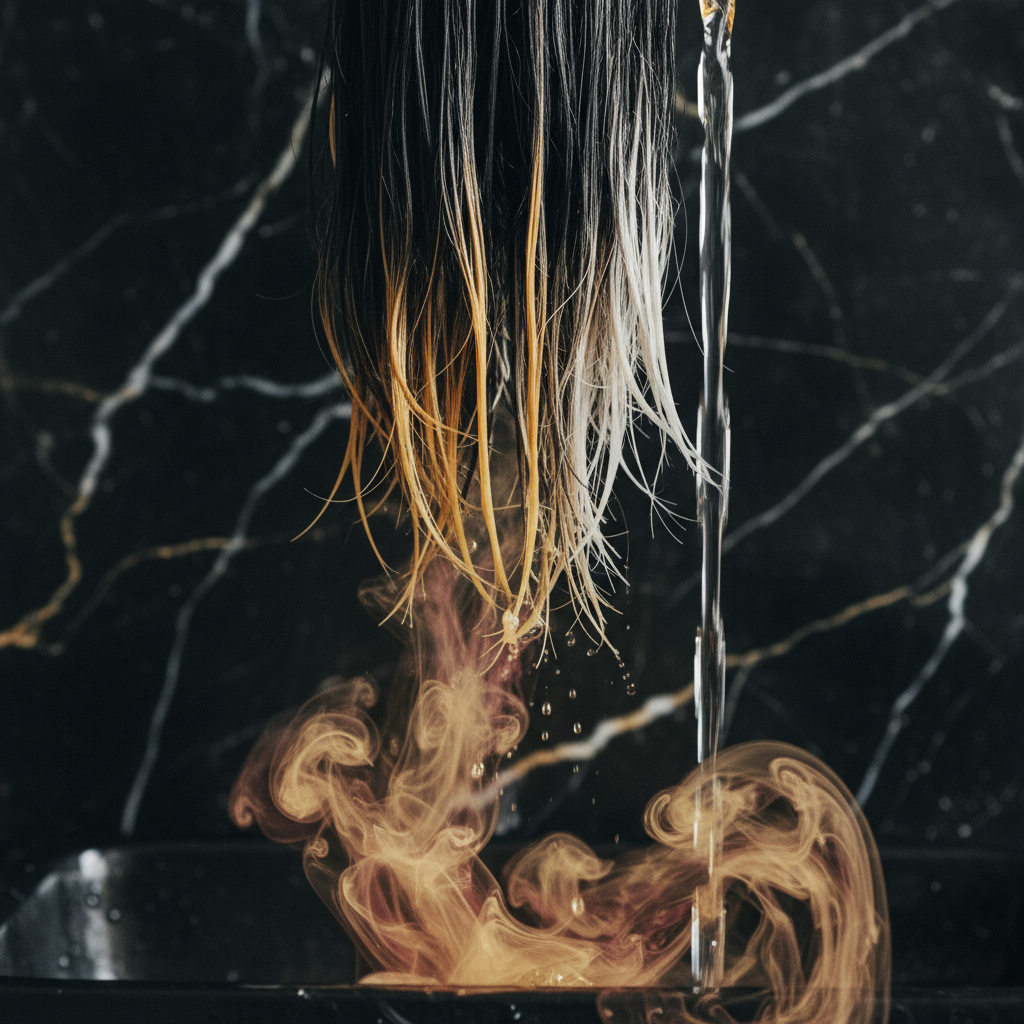
- Hygral fatigue: When colour-damaged, porous hair repeatedly absorbs water, swells, and dries, the constant expansion and contraction puts enormous strain on the cell membrane complex. Over time, this leads to structural micro-cracks and eventual hair breakage along the mid-lengths and ends. Breakage must not be confused with follicular hair loss or shedding.
- Loss of ionic balance: Virgin hair has an isoelectric point of roughly pH 3.67, carrying a net negative charge that keeps the cuticle compact. Chemical dyeing increases the negative surface charge while stripping structural lipids. Using cleansers outside the pH range of 4.5 to 5.5 increases static, roughs up the surface, and accelerates colour run-off.
- Surfactant displacement: Surfactants act at the interface of oil and water. In porous hair, harsh micellar action reaches deep into the exposed cortex, solubilising not just oils, but dye complexes that have not bonded permanently to keratin fibrils.
What you can do: practical step-by-step routine
Following proven washing protocols prolongs the vibrancy of salon shades and protects compromised fibres from mechanical snapping.
1. Wait before the first wash
Allow at least 48 to 72 hours after an oxidative colour service before shampooing. While the primary dye oxidation finishes in the salon, the hair's outer cuticle requires time to re-settle and normalise its chemical equilibrium.
2. Focus shampoo on the scalp only
Direct mechanical friction damages swollen, wet fibres. Apply your sulphate-free cleanser directly to the scalp, working it into a lather using your fingertips rather than your fingernails. Let the suds rinse down the lengths of your hair passively. Avoid bunching or scrubbing your ends, which abrades the cuticle.
3. Always apply an acidic conditioner
Every wash must conclude with a rich conditioner formulated at an acidic pH (4.0 to 5.0). Cationic ingredients like cetrimonium chloride or behentrimonium methosulfate bind to the negatively charged, damaged spots on the hair shaft, restoring smooth slip and preventing post-wash snagging.
4. Minimise towel friction
Wet, dyed hair has low tensile strength and high elasticity, making it prone to snapping under stress. Blot excess moisture gently with a smooth microfibre towel or soft cotton wrap. Never rub hair back and forth vigorously.
Supporting colour-treated hair with Watermans
When managing colour-treated hair, the objective is to maintain a clean, stimulated scalp without jeopardising delicate, chemically processed strands.
Watermans Grow Me Shampoo is designed with mild, modern cleansing agents that respect the scalp's natural ecosystem without using harsh sulphates. It contains premium ingredients including biotin, rosemary extract, niacinamide, argan oil, and allantoin, making it ideal for individuals who want to support a healthy scalp environment while keeping their hair feeling resilient and fresh.
Pairing this with a rich, moisturising treatment helps replenish the cosmetic softness and shine that chemical treatments strip away, creating smooth, manageable strands that resist mechanical breakage during styling.
When the cause of dullness may be something else
If your colour looks flat, brassy, or faded despite careful washing, the wash routine might not be the sole cause:
- Hard water buildup: High concentrations of calcium and magnesium salts create mineral scale on the hair shaft, masking pigment clarity and turning blonde shades brassy.
- Chlorine exposure: Swimming in chlorinated pools oxidises synthetic dyes and causes chemical discolouration.
- Heat styling damage: Straighteners, curling wands, and blow dryers operating above 185°C degrade pigment molecules directly and melt remaining natural waxes in the hair.
- Excessive sun exposure: Unprotected UV exposure bleaches artificial pigments within hours of direct sunlight.
When to seek professional advice
Consult your salon colourist or a qualified trichologist if:
- Your hair is exhibiting extreme breakage, gummy elasticity, or snapping off when wet, which indicates over-processing rather than a washing issue.
- Your scalp develops persistent burning, redness, flaking, or itchiness after washing, which could signify contact dermatitis or an allergic reaction to paraphenylenediamine (PPD) or related dyes.
- You notice diffuse thinning or an increased daily drop count of shed hairs with white bulbs attached. This represents follicular shedding (telogen effluvium) or alopecia, which requires clinical evaluation separate from cosmetic hair care.
Frequently asked questions about Best Practices for Washing Colour Treated Hair
How often should you wash colour-treated hair?
Most colourists advise washing colour-treated hair two to three times per week. Washing daily accelerates pigment leaching through constant water exposure and cuticle swelling. If your scalp becomes oily between washes, use a light dry shampoo to absorb sebum without wetting the mid-lengths and ends.
Does cold water really preserve hair colour?
Yes, using cool to lukewarm water is one of the recognized Best Practices for Washing Colour Treated Hair. Cool water limits cuticle flaring and reduces the kinetic rate at which water-soluble dye molecules escape the cortex. You do not need freezing water; comfortably cool water works effectively.
Can I use clarifying shampoo on coloured hair?
You should avoid traditional clarifying shampoos on colour-treated hair unless you intentionally want to strip away pigment. Clarifying shampoos feature strong surfactants and an elevated pH designed to remove deep deposits, which opens the cuticle and leaches synthetic pigments rapidly.
Why do vibrant and red hair colours fade faster than brunette shades?
Red dye formulations rely on smaller chemical molecules that do not penetrate as deeply or link into large pigment complexes as effectively as brown or black pigments. Because they are smaller, red molecules rinse out through porous cuticles far more quickly during routine washing.
Should I apply conditioner before shampooing colour-treated hair?
Pre-treating mid-lengths and ends with a lightweight conditioner or cosmetic oil before shampooing (sometimes called pre-pooing) creates a protective hydrophobic layer. This reduces water absorption and friction on fragile ends while allowing you to cleanse your scalp normally.
The roadmap to vibrant, resilient hair
Mastering the Best Practices for Washing Colour Treated Hair comes down to controlling mechanical friction, managing water temperature, and maintaining the hair's acidic pH balance. While chemical dye services inevitably leave the hair fibre more porous, a mindful washing routine prevents unnecessary colour loss and defends the fragile shaft against hygral fatigue and breakage. Treat your coloured hair as a delicate textile: wash gently, cleanse sparingly, and replenish lost lipids regularly.
Sources and references
- International Journal of Cosmetic Science, "Chemical and physical changes in hair caused by bleaching and dyeing", 2018.
- Journal of the Society of Cosmetic Chemists, "The effects of water temperature and shampoo surfactants on hair colour retention", 2015.
- Dermatology and Therapy, "Hair shaft damage from cosmetic procedures and preventative strategies", 2020.
- National Center for Biotechnology Information (NCBI), "Evaluation of hair surface hydrophobicity and 18-MEA degradation in chemical treatments", 2017.
Find these ingredients in Watermans products
- Niacinamide: you will find this ingredient in our Hair Mask.