Understanding Androgenetic Alopecia
4 min read ·
Androgenetic alopecia is a common form of hair loss influenced by genetics and hormones, affecting both men and women.
What is Androgenetic Alopecia?
Androgenetic alopecia (AGA) is the most common cause of hair loss, affecting a significant portion of the global population. It is characterized by progressive thinning of the hair on the scalp. Though often referred to as male-pattern baldness or female-pattern hair loss, the underlying mechanisms are similar in both sexes, involving a combination of genetic predisposition and hormonal influences.
The Role of Androgens
Androgens are a group of hormones that play a crucial role in the development and maintenance of male characteristics, but they are also present in women. The primary androgen involved in AGA is dihydrotestosterone (DHT), a potent derivative of testosterone.
How DHT Affects Hair Follicles
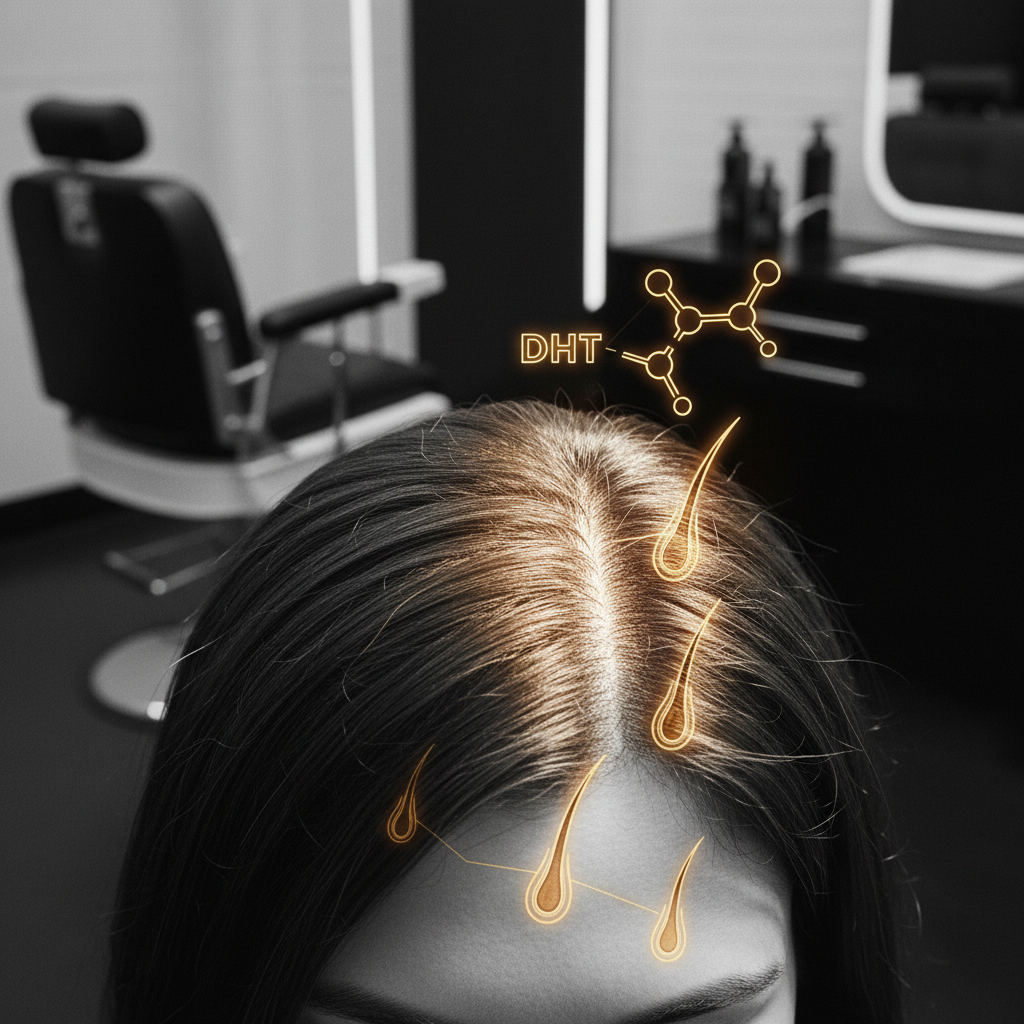
Hair follicles, the tiny organs in the skin that produce hair, have receptors for androgens. In individuals genetically predisposed to AGA, these hair follicles are sensitive to DHT. When DHT binds to these receptors, it triggers a process called follicular miniaturization.
- Miniaturization: This process causes the hair follicles to shrink over time, producing progressively shorter, finer, and lighter hairs; eventually, the follicles may cease to produce hair altogether.
- Hair Cycle Disruption: DHT also shortens the anagen (growth) phase of the hair cycle and extends the telogen (resting) phase, leading to more hairs shedding and fewer growing back.
The density of androgen receptors on the scalp varies, which explains why hair loss typically follows specific patterns, such as the receding hairline and crown thinning seen in men, and diffuse thinning or widening of the part in women.
Genetic Predisposition
Genetics play a significant role in determining who will develop AGA and how severe their hair loss will be. While the exact inheritance pattern is complex, it is widely understood to involve multiple genes rather than a single gene.
- Polygenic Trait: AGA is considered a polygenic trait, meaning several genes contribute to its expression. This complexity explains why hair loss patterns and severity can vary even within families.
- Family History: If close relatives have experienced hair loss, an individual is more likely to also develop AGA. However, the absence of a family history does not rule it out, as genetic expression can be unpredictable.
Patterns of Hair Loss
Androgenetic alopecia manifests differently in men and women, though the underlying cause is the same.
Male Pattern Hair Loss
In men, AGA typically follows a characteristic pattern, often classified using the Norwood-Hamilton scale.
- Receding Hairline: Hair loss often begins with a receding hairline at the temples.
- Thinning Crown: Concurrently or subsequently, thinning may occur on the crown (vertex) of the scalp.
- Progression: Over time, these areas may expand and merge, leading to partial or complete baldness on the top of the scalp, often leaving hair on the sides and back.
Female Pattern Hair Loss
In women, AGA typically presents as diffuse thinning, often classified using the Ludwig scale.
- Diffuse Thinning: Hair loss is generally more spread out across the top of the scalp, rather than distinct bald patches.
- Widening Part: A common sign is a widening of the hair part.
- Crown Thinning: While the hairline usually remains intact, thinning can be more pronounced on the crown.
- Less Common Complete Baldness: Complete baldness is rare in women with AGA; instead, overall hair density is reduced.
Diagnosis
Diagnosing androgenetic alopecia often involves a physical examination of the scalp, a detailed medical history, and sometimes additional tests. These tests may include a pull test to assess shedding, dermoscopy (examination of the scalp with a magnifying device), or a biopsy in rare cases to rule out other conditions.
Management and Treatment Options
Addressing androgenetic alopecia involves various approaches aimed at slowing progression, stimulating growth, or concealing hair loss. Early intervention is often more effective.
| Approach | Mechanism | Common Examples |
|---|---|---|
| Topical Treatments | Directly applied to the scalp to stimulate hair growth and reduce miniaturization. | Ingredients that promote blood flow and nutrient delivery, and those known to directly interact with hair follicles. |
| Oral Medications | Systemic action to block DHT production or reduce its effects on follicles. Primarily used in men, with specific considerations for women. | Medications that inhibit the enzyme 5-alpha-reductase, which converts testosterone to DHT. |
| Lifestyle Factors | While not a direct cure, managing stress, ensuring adequate nutrition, and gentle hair care practices can support overall hair health. | A balanced diet rich in vitamins and minerals, minimizing harsh styling, and using products designed to support a healthy scalp environment, such as a hair growth shampoo. |
Impact on Quality of Life
Hair loss, regardless of its cause, can have a significant psychological impact, affecting self-esteem and body image. Understanding the condition and exploring management options can help individuals cope with these challenges.
In summary, androgenetic alopecia is a progressive condition influenced by genetics and hormones, leading to characteristic patterns of hair thinning. While it cannot be cured, various interventions can effectively manage its progression and improve hair density.