Afro Hair Porosity and Care: An Evidence-Based Guide
10 min read ·
Discover the science of Afro Hair Porosity and Care. Learn how cuticle structure influences moisture retention, how to test porosity, and how to build an effective routine.
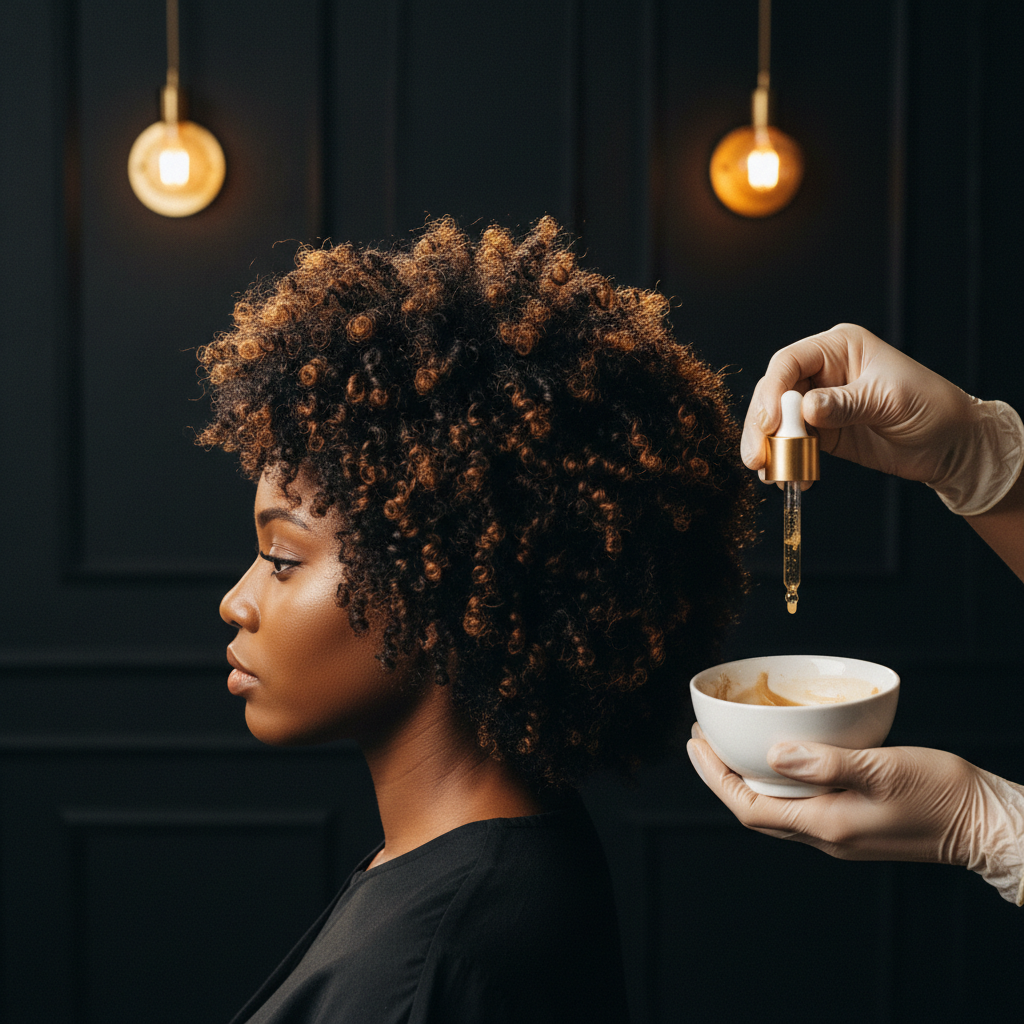
Quick answer: Understanding Afro Hair Porosity and Care begins with knowing how easily your hair fibre absorbs and retains water. Hair porosity depends on the condition and alignment of the protective outer cuticle layer. Afro-textured hair possesses unique structural features, such as elliptical cross-sections and frequent twists along the shaft, making it naturally prone to cuticle lifting and mechanical wear. However, porosity is not permanent across the entire strand. While you cannot permanently rebuild broken cuticles, targeted conditioning techniques, pH-balanced washes, and film-forming sealants can stabilise moisture levels.
Key takeaways
- Porosity measures the hair cuticle's ability to allow water, oils, and chemical treatments into and out of the inner cortex.
- Afro-textured hair fibres naturally possess points of structural variation along each curl turn, creating areas where cuticles lift more easily.
- Low-porosity afro hair features tightly bound cuticles that resist moisture entry, while high-porosity hair absorbs water rapidly but loses it just as fast.
- Heat tools, chemical relaxers, bleaching, and excessive combing elevate hair porosity by degrading the protective 18-methyleicosanoic acid (18-MEA) lipid layer.
- Effective moisture retention requires adjusting product viscosity, pH levels, and layering methods (such as the liquid-oil-cream or liquid-cream-oil techniques) to your specific porosity level.
Afro Hair Porosity and Care: what the evidence shows
Scientific evaluation of Afro Hair Porosity and Care demonstrates that hair porosity is an expression of cuticle integrity and surface chemistry. The human hair fibre consists of an outer protective cuticle layer (5 to 10 overlapping scales thick), a structural cortex composed of keratin bundles, and an occasional central medulla. In afro-textured hair, the cross-sectional shape is distinctly elliptical or flattened rather than round. As the hair curls, twists, and coils, these bends create uneven cuticle overlapping.
Research published in the International Journal of Cosmetic Science confirms that the outer cuticle scales of curly and coily fibres experience higher friction and shear stresses during grooming. The outermost layer of a healthy virgin cuticle is covered by a natural lipid membrane primarily made of 18-methyleicosanoic acid (18-MEA). This fatty acid layer makes virgin hair naturally hydrophobic (water-repelling). When chemical services such as sodium hydroxide relaxers, ammonium thioglycolate perms, or hydrogen peroxide lighteners are applied, they strip this lipid barrier. The alkaline solutions force the cuticles wide open to penetrate the cortex, fundamentally changing the porosity of the hair.
Porosity exists along a continuous spectrum, generally split into three operational states:
- Low porosity: The cuticle scales lie flat, compact, and overlap tightly. Water beads on the surface and struggles to penetrate. Once inside, however, moisture remains trapped effectively.
- Medium (normal) porosity: The cuticle scales are slightly loosened, allowing controlled hydration to enter and leave without excessive protein degradation.
- High porosity: The cuticles are raised, chipped, or missing entirely. Gaps along the hair shaft allow water to rush into the cortex rapidly, leading to rapid swelling, followed by rapid evaporation, leaving the fibre brittle and stiff.
How hair porosity works: the underlying mechanism
Understanding the mechanics of hair porosity clarifies why moisture management can be challenging. When dry hair comes into contact with water, the hair shaft swells. Hair can absorb up to 30% or more of its own weight in water under high relative humidity.
In low-porosity afro hair, the tight arrangement of cuticles acts as a barrier. Standard aqueous leave-in conditioners bead on the outside of the strand and dry without fully hydrating the inner cortex. Low-porosity strands require gentle warmth (such as steam, a heated cap, or warm water) to momentarily expand the cuticle gaps and allow conditioning agents to migrate inward.
In high-porosity afro hair, the protective barrier is severely compromised. The loss of cuticles exposes the hydrophilic (water-loving) cortex. While this hair becomes soaked almost instantly under running water, it suffers from severe moisture loss as soon as the ambient humidity drops. Repeated cycles of rapid swelling and shrinking cause a phenomenon known as hygral fatigue, which weakens the cell membrane complex and leads to longitudinal cracking and mechanical breakage. High-porosity hair requires products formulated at an acidic pH (between 3.5 and 5.0) to temporarily contract any remaining cuticle edges, alongside film-forming polymers and natural oils that form a synthetic barrier over cortex gaps.
| Porosity State | Cuticle Condition | Water Absorption | Moisture Retention | Ideal Formulation Characteristics |
|---|---|---|---|---|
| Low Porosity | Tightly packed, flat, intact 18-MEA layer | Very slow; water beads on surface | High once absorbed; resistant to drying | Light liquid humectants, mild heat during conditioning, low molecular weight oils (e.g. argan, jojoba) |
| Medium Porosity | Slightly raised, balanced cuticle layers | Steady, moderate absorption | Stable and balanced | Balanced water-in-oil emulsions, standard deep conditioners, light butters |
| High Porosity | Gaping, broken, chipped, missing cuticles | Instant; hair saturates immediately | Very poor; dries out within minutes to hours | Heavier creams, film-forming sealants, hydrolysed proteins, pH-balancing rinses |
Signs to look for: identifying your porosity level
Accurate assessment of your hair helps you choose appropriate products without trial and error. The popular "float test" (dropping shed strands into a glass of water) is notoriously unreliable because surface tension, natural sebum coatings, and styling product residue can keep damaged hair floating for hours. Instead, monitor how your hair responds to water and daily maintenance.
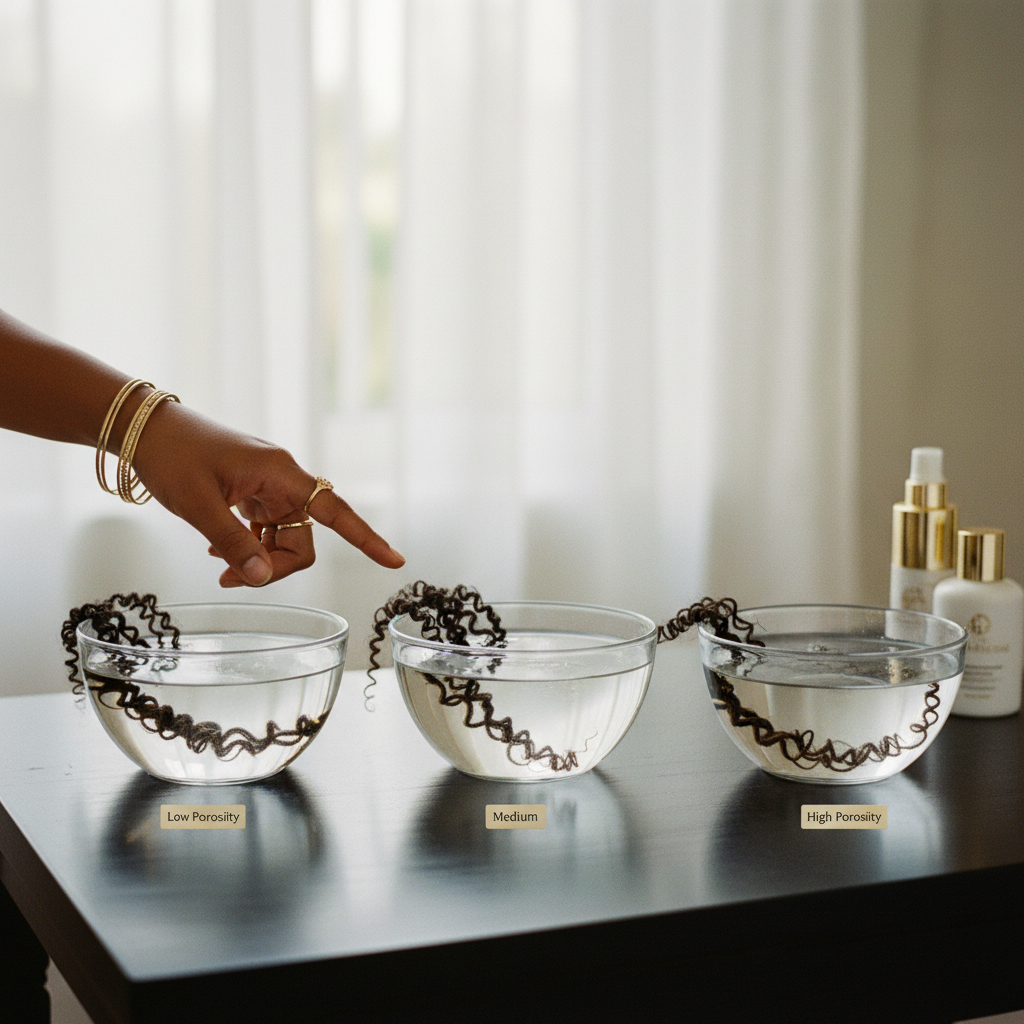
Signs of low porosity
- Water beads on your hair under the shower for several minutes before the strands feel thoroughly wet.
- Products tend to sit on the surface of your coils, leading to visible white build-up or a greasy film.
- Air-drying takes hours, sometimes an entire day, because water struggles to evaporate out of the tightly sealed cortex.
- Clarifying shampoos leave the hair feeling remarkably cleaner because product accumulation occurs quickly on the sealed cuticle.
Signs of high porosity
- Your hair absorbs water the instant you step under the shower.
- Leave-in conditioners disappear into the hair, yet strands feel parched, dry, and rough within hours.
- Hair tangles easily because rough, lifted cuticles snag on neighbouring fibres.
- Colour services process very quickly, and artificial dye fades rapidly during washing.
- The strands lack elasticity, snapping easily when stretched gently while damp.
Evidence-based care strategies for afro hair porosity
Adapting your daily and weekly regime to your porosity profile protects the structural integrity of the hair fibre and limits breakage along the shaft.
Caring for low-porosity afro hair
- Use indirect heat during deep conditioning: Sit under a hooded dryer or use a microwavable thermal cap for 15 to 20 minutes with your conditioner. Mild heat softens the cuticles, widening the space between them to let humectants and conditioning agents penetrate.
- Select lightweight hydrators: Choose leave-ins with water, aloe vera, and glycerin high on the ingredients list. Avoid heavy, solid plant butters as your first layer, as they will coat the cuticles and prevent water entry.
- Clarify regularly: Use an amphoteric or mild anionic clarifying shampoo every 2 to 4 weeks. Build-up exaggerates low-porosity resistance by creating a waterproof film over the cuticle.
Caring for high-porosity afro hair
- Incorporate hydrolysed proteins: Formulations containing hydrolysed wheat, silk, or keratin proteins deposit small peptide fragments into the fissures of damaged cuticles. These proteins temporarily patch the gaps, improving the fibre's tensile resistance and moisture-holding capacity.
- Apply the LOC method: Layer your products systematically: Liquid or leave-in conditioner first, followed by an Oil, and sealed with a heavy Cream or butter (such as shea butter). The heavy outer lipid layer acts as a mechanical barrier against evaporation.
- Maintain an acidic rinse routine: Use conditioners formulated at pH 3.5 to 4.5. Slightly acidic environments cause the keratinised scales of the cuticle to contract and flatten against the hair shaft, reducing friction and fluid loss.
- Minimise heat and friction: Limit flat ironing and blow-drying to rare occasions, always using a silicone- or polymer-based heat protectant. Detangle only when the hair is coated in a slippery conditioner, starting from ends to roots.
When the cause of hair dryness is something else
Dry, brittle afro hair is not always down to porosity alone. Several other factors influence hair health and should not be confused with porosity characteristics:
- Hard water mineral accumulation: High levels of calcium and magnesium in household water bind to the hair shaft, creating an insoluble salt deposit. This mimics high porosity by making hair feel rough, stiff, and brittle. A chelating shampoo containing disodium EDTA or tetrasodium EDTA is necessary to dissolve these mineral layers.
- Seborrhoeic dermatitis and scalp conditions: Severe flaking, itching, and scaling on the scalp alter sebum production and application. An unhealthy scalp environment directly impacts the early growth phase of hair.
- Excessive mechanical tension: Tight protective styles (such as micro-braids or tight weaves) exert traction on the follicle. If hair snaps, it may be due to tension fatigue rather than high porosity.
- Systemic nutrient deficiencies: Inadequate intake of iron, zinc, or essential amino acids alters the structural formation of keratin within the follicle, producing weaker hair fibres before they even emerge from the scalp.
When to seek professional advice
Consult a qualified trichologist or dermatologist if you experience sudden, unexplained hair shedding (telogen effluvium), patches of complete hair loss (alopecia areata or traction alopecia), or persistent scalp pain, burning, or flaking.
Cosmetic hair damage (breakage along the fibre) can usually be handled by an experienced professional afro-hair stylist. If your high-porosity hair fails to retain elasticity despite targeted protein and moisture treatments, the damage to the cortex may be irreversible. In such cases, trimming the damaged ends is often the only permanent solution to prevent split ends from travelling further up the hair shaft.
Watermans: supporting healthy hair habits
While porosity governs the mechanical condition of the existing hair strand, maintaining a clean, balanced scalp environment is crucial for supporting overall hair vitality. Products like Watermans Grow More Shampoo provide a nutrient-rich, sulphate-free cleanse that gently clears away surface debris without stripping away the vital natural lipids of curly and afro-textured hair. Paired with Watermans Condition Me, which includes hydrolysed lupin protein, cholesterol, and natural oils, it helps smooth the outer cuticle layer and delivers targeted conditioning to strands in need of extra slip, strength, and moisture retention.
Frequently asked questions about Afro Hair Porosity and Care
Can I change my hair porosity from high to low permanently?
No, you cannot permanently alter porosity from high to low. Once the outer cuticle scales are chipped, lifted, or worn away by chemicals, heat, or mechanical stress, hair cannot biologically regenerate new cells along the dead fibre. You can, however, temporarily lower porosity by using acidic conditioners, hydrolysed proteins, and sealing butters that patch gaps and compress remaining cuticles until your next wash.
Does the float test work for afro-textured hair?
The float test is generally inaccurate for afro hair. Coily hair textures are naturally coated with sebum and topical styling oils, which repel water due to surface tension and cause damaged strands to float. Conversely, dust or mechanical disturbance can force healthy strands to sink. Assessing how rapidly your hair absorbs water in the shower provides a far more reliable indicator.
How does chemical relaxing affect Afro Hair Porosity and Care?
Chemical relaxers work by breaking internal disulphide bonds within the cortex using highly alkaline formulations (typically pH 12 to 14). This strong alkalinity lifts the cuticles aggressively, stripping the natural 18-MEA lipid layer and substantially increasing porosity. Relaxed afro hair almost always requires high-porosity care strategies, including regular protein treatments and intensive lipid replenishment.
Which oils are best for low-porosity afro hair?
Low-porosity afro hair responds best to lightweight oils with small molecular sizes that can slip past tightly packed cuticles without forming a greasy barrier. Jojoba oil, argan oil, sweet almond oil, and grapeseed oil are ideal choices. Heavier plant butters like pure shea or castor oil are often too dense for virgin low-porosity hair and can cause rapid product build-up.
Mastering your routine
Navigating Afro Hair Porosity and Care successfully comes down to matching your product textures and washing techniques to the physical condition of your cuticles. Porosity is not a flaw or a permanent diagnosis; it is simply a practical guide to how your hair absorbs and holds water. By identifying whether your cuticles are tightly sealed or lifted and fragile, you can introduce appropriate deep-conditioning habits, acidic sealants, and gentle detangling practices that protect your coils, limit mechanical breakage, and sustain long-lasting hydration.
Sources and references
- International Journal of Cosmetic Science: Structural and chemical properties of curly and afro-textured hair fibres, 2017.
- Journal of the Society of Cosmetic Chemists: The effect of chemical treatments on the porosity and lipid layer of human hair, 2015.
- British Association of Dermatologists: Hair breakage, weathering, and cosmetic hair care guidelines, 2020.
- Robbins, C. R.: Chemical and Physical Behavior of Human Hair, 5th Edition, Springer, 2012.
Find these ingredients in Watermans products
- Argan Oil: you will find this ingredient in our Hair Growth Shampoo.
- Zinc: you will find this ingredient in our Hair Vitamins.
- Castor Oil: you will find this ingredient in our Camellia & Black Castor Hair & Body Oil.
- Aloe Vera: you will find this ingredient in our Curly Hair Conditioner.